Ferrari Pit Stop Error: FIA Launches Full Investigation After Mechanic Injury at Bahrain Grand Prix
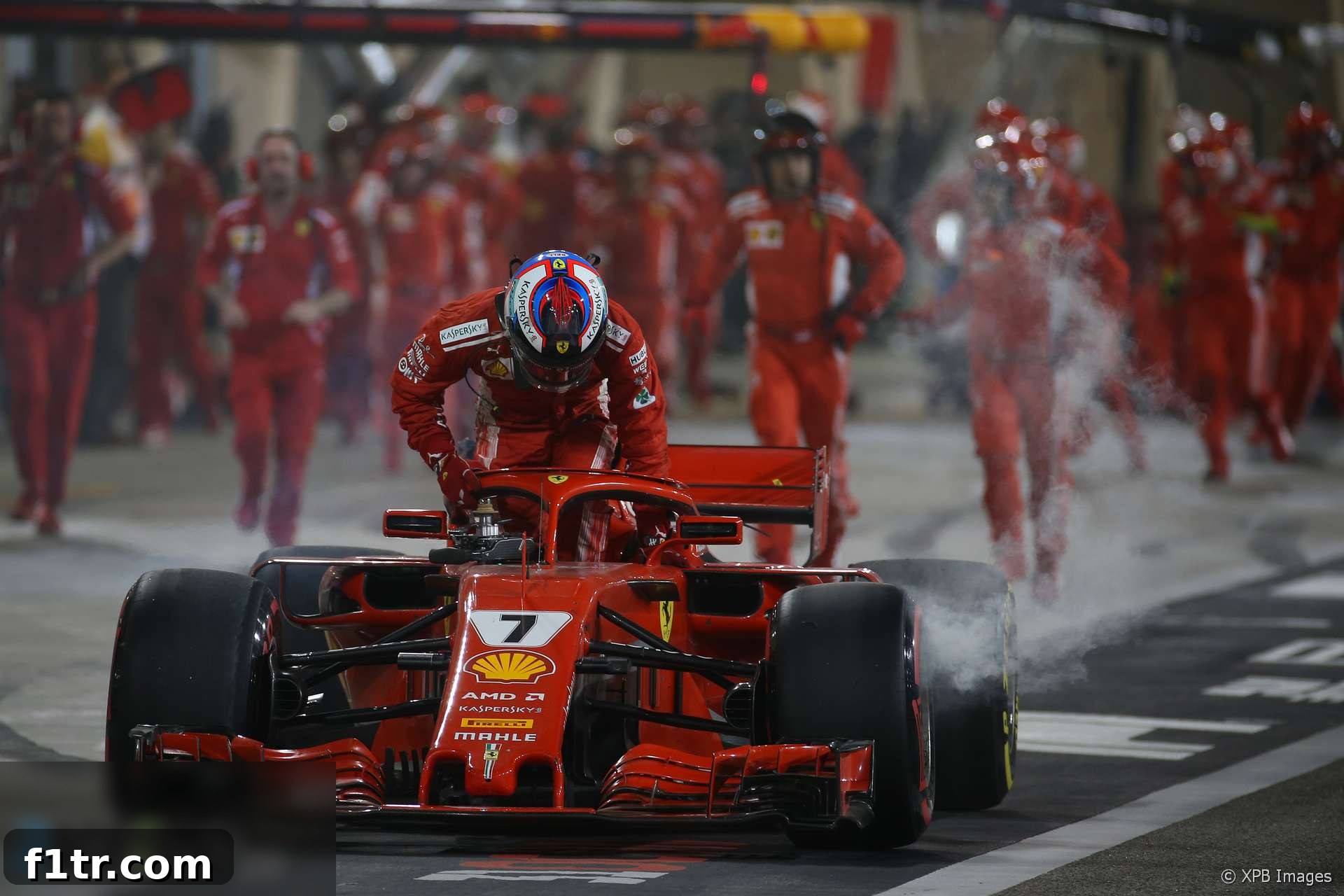
The world of Formula 1 was put on high alert following a serious incident during the Bahrain Grand Prix, where a Ferrari pit stop error led to a mechanic sustaining a broken leg. The sport’s governing body, the FIA (Fédération Internationale de l’Automobile), has declared its intention to launch a thorough investigation into the circumstances surrounding Kimi Räikkönen’s ill-fated pit stop, which saw him released from the box before all wheels were properly secured.
This was not an isolated incident for the Scuderia Ferrari team, marking the second occasion during the race weekend alone that Räikkönen was sent out with an unsecured wheel. The gravity of the situation was compounded by the fact that it mirrored, to some extent, similar unsafe release incidents observed earlier in the season involving both Ferrari and customer team Haas, which utilizes Ferrari-designed rear wheel components. These repeated occurrences have raised significant safety concerns within the paddock, prompting FIA Race Director Charlie Whiting to comment that such incidents are “looking less and less like a coincidence.”
A Troubling Pattern Uncovered
The incident in Bahrain was particularly alarming as it resulted in severe injury to a pit crew member. However, the FIA’s concern was already piqued by earlier events. During the season opener in Melbourne, Haas encountered two unsafe releases. Whiting elaborated on these, explaining, “The two instances in Melbourne were quite clearly wheel gun operator error. They cross-threaded the nuts, thought it was tight, came off, then realised a little bit too late that it wasn’t.” This pointed to human error in the execution of the pit stop, a common challenge in the high-pressure, lightning-fast environment of an F1 pit lane.
Ferrari’s own unsafe release during the Australian Grand Prix, however, presented a different and more perplexing scenario. Whiting noted, “The guy hadn’t even taken the wheel off [before the car was released] which is slightly perplexing.” This suggested a breakdown in communication or procedural checks that allowed a car to be cleared for release before critical operations had even begun. The stark contrast between these types of errors – one a misjudgment during tightening, the other a pre-emptive release – underscored the diverse nature of risks associated with modern pit stops.
FIA’s Commitment to Safety and Learning
The FIA’s primary mandate is to ensure the safety of all participants in motorsport, from drivers and mechanics to track officials and spectators. Recognizing the seriousness of these repeated incidents, Charlie Whiting confirmed that the FIA would delve deep into the matter with Ferrari. This process is not new to the governing body; it mirrors past investigations into similar safety concerns.
Whiting cited a previous instance involving McLaren: “Alonso lost a wheel in testing and we went through it all with McLaren. They gave us a report, we discussed it with the Technical Working Group to understand, make sure everyone else realises these things can happen [and] everyone tries to learn from it.” This established protocol highlights the FIA’s approach: not just to punish, but to understand the root causes of failures. By analyzing detailed reports and engaging with the sport’s Technical Working Group, the FIA aims to disseminate crucial learnings across all teams, fostering a collective effort to enhance safety standards and prevent future incidents.
Consequences and Penalties for Unsafe Releases
Following the Bahrain incident, Ferrari faced immediate repercussions. The team was fined a substantial €50,000 for the unsafe release during the race, which tragically left mechanic Francesco Cigarini with a broken leg. This severe penalty reflects the gravity of the injury and the significant risk posed to personnel. Additionally, Ferrari received a further €5,000 fine for a similar incident during practice in Bahrain, where, fortunately, no one was hurt.
Despite these significant financial penalties, Whiting expressed his belief that stiffer penalties are not necessarily the primary deterrent needed to prevent teams from taking excessive risks during pit stops. He elaborated on the existing framework: “The rules are very clear what happens during a race, the principle being that the driver stopping on the track is a big enough penalty.” This perspective suggests that the sporting consequence – a driver’s retirement from a race, often losing valuable points and potentially impacting championship aspirations – serves as a more potent disincentive than monetary fines alone. The inherent drive for success and performance naturally encourages teams to prioritize flawless execution to avoid such devastating sporting outcomes.
The Evolution of Pit Stop Safety in Formula 1
Pit stops have long been a critical, high-octane element of Formula 1, transforming from relatively slow, rudimentary processes into incredibly choreographed and precise operations. In the early days, a pit stop could take minutes; today, a sub-two-second stop is a routine expectation, demanding unparalleled coordination and speed from a crew of over twenty individuals operating in a confined space. This relentless pursuit of speed has, inadvertently, amplified the inherent risks.
Over the decades, F1 has continually implemented technological advancements and stringent protocols to mitigate these dangers. Innovations like sophisticated wheel guns, advanced sensor systems that detect secure wheel attachment, and automated ‘traffic light’ release systems have become standard. These technologies are designed to minimize human error and ensure a car is only released when it is genuinely safe to do so. However, as the recent incidents demonstrate, even with the most advanced technology and highly trained personnel, the human element and the extreme pressure of competition can still lead to critical lapses. The constant challenge for teams and the FIA is to balance the competitive imperative for speed with the absolute necessity of safety.
Broader Implications and the Quest for Perfection
The series of unsafe release incidents carries significant implications beyond the immediate penalties. For Ferrari, a team synonymous with Formula 1, these errors pose a considerable reputational challenge, particularly as they strive for championship contention. Such high-profile failures can erode trust and confidence among fans and competitors alike.
More broadly, these incidents raise questions about overall F1 safety and the sport’s image. In an era where F1 champions itself as the pinnacle of technological innovation and safety, preventable injuries in the pit lane are a stark reminder that vigilance cannot waver. The psychological impact on pit crew members, who routinely put themselves in harm’s way, also cannot be understated. Knowing that a split-second error could lead to serious injury for a colleague adds another layer of pressure to an already intense job.
The FIA’s investigation will likely delve into various aspects: the specific technical components involved, the training and procedures of pit crews, the communication protocols, and the efficacy of existing safety mechanisms. It could lead to recommendations for improved equipment, revised procedural mandates, or even an overhaul of how release systems are monitored. The goal is clear: to learn from these mistakes and implement robust measures that prevent their recurrence, reinforcing Formula 1’s unwavering commitment to the safety of everyone involved.
In conclusion, the unfortunate incident at the Bahrain Grand Prix serves as a powerful reminder of the inherent dangers in Formula 1’s pursuit of perfection. While the sport continues to push boundaries in speed and technology, the recent pit lane errors underscore the critical importance of human precision, rigorous training, and infallible safety protocols. The FIA’s comprehensive investigation and subsequent actions will be pivotal in ensuring that such incidents become a rare anomaly rather than a concerning pattern, ultimately strengthening the safety fabric of motorsport’s premier category.
Go ad-free for just £1 per month>> Find out more and sign up
2018 F1 Season: Related Insights and Developments
- F1 feared “death knell” for Drive to Survive after Ferrari and Mercedes snub
- McLaren staff told us we were “totally crazy” to take Honda engines in 2018 – Tost
- ‘It doesn’t matter if we start last’: How Red Bull’s junior team aided Honda’s leap forward
- Honda’s jet division helped F1 engineers solve power unit problem
- McLaren Racing losses rise after Honda split
Browse all 2018 F1 season articles