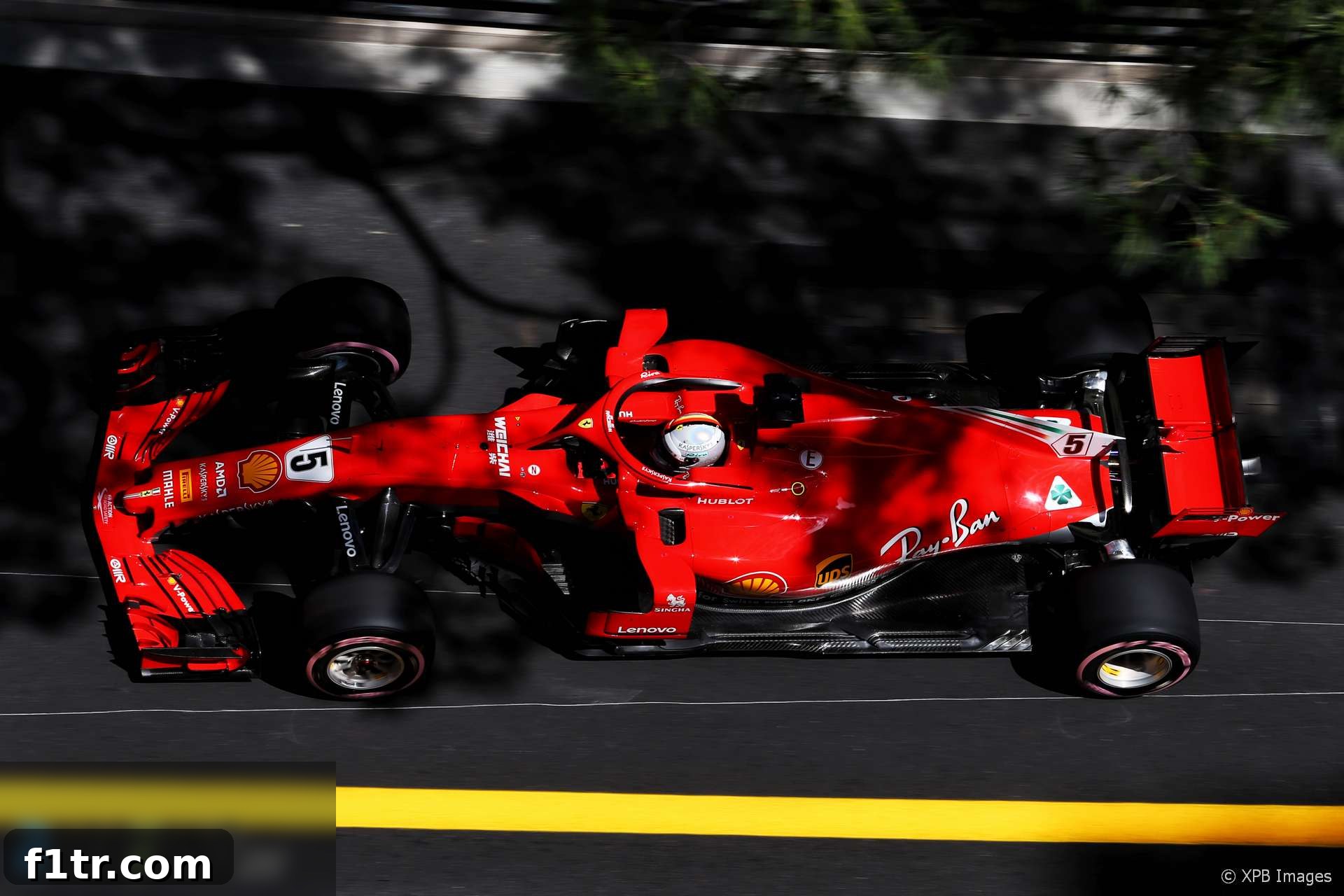
Formula 1’s governing body, the FIA, has officially declared its satisfaction regarding the legality of Ferrari’s power unit, concluding an extensive period of scrutiny. Despite this clearance, the FIA has confirmed plans to implement advanced monitoring systems, commencing with the upcoming Canadian Grand Prix, to enhance oversight of the Scuderia’s engine and ensure ongoing compliance with technical regulations.
The investigation, which spanned several races, saw FIA race director Charlie Whiting working closely with the Ferrari team. Whiting stated that Ferrari successfully demonstrated the conformity of their power unit after rigorous monitoring during practice sessions, notably in Monaco. However, the methods required to verify this compliance were deemed overly complex and time-consuming. This experience highlighted the need for a more streamlined and efficient verification process, prompting the FIA’s decision to introduce new, simpler monitoring protocols for future events.
Addressing the media after the Monaco Grand Prix, Whiting elaborated on the process: “Their duty is to satisfy us that the car complies, and initially, they were finding it hard to satisfy us.” He explained that through a collaborative effort involving the review of extensive data and the implementation of specific software changes by Ferrari, the situation became significantly clearer. “By the time we got to here, looking at data [and] software changes that had been implemented, it became clearer exactly where we were. After the first day of running, we were then able to say we’re happy and we understand it now.” This statement underscores the FIA’s thorough approach to technical compliance and the iterative process often required to fully understand complex F1 technologies.
Whiting further clarified that while Ferrari managed to prove the legality of its innovative design “via a complex routine,” this intricate verification method was not sustainable for routine checks. “We don’t want to have to go through that all the time in order to make sure, so we would rather additional measurements were made,” he asserted. This desire for efficiency is the primary driver behind the introduction of new monitoring tools. These upcoming enhancements are designed to simplify and expedite the process of confirming power unit legality, preventing similar prolonged investigations in the future and ensuring a consistent level of scrutiny across all competitors.
Advert | Become a Supporter & go ad-free
The new monitoring regime will be rolled out starting with the Canadian Grand Prix, providing the FIA with a more direct and unambiguous way to assess the power unit’s operation. Whiting indicated that this improved system will significantly “help us get things done much quicker than we had to.” Furthermore, he hinted at the potential for even more sophisticated sensors and monitoring capabilities to be integrated by the following season, 2019, reflecting a continuous commitment to upholding the sport’s technical integrity. The FIA’s proactive stance aims to ensure that no team gains an unfair advantage through complex design interpretations, fostering a truly level playing field.
Understanding the Core of the Controversy: Ferrari’s Battery Design
At the heart of the FIA’s prolonged investigation lay a specific aspect of Ferrari’s power unit design: its battery system. The dispute centered on how Ferrari’s single energy storage unit was configured and managed. As Whiting explained, “That’s the crux of the matter because other systems treat their battery as one. [With] Ferrari, it’s one battery but they treat it as two.” This unique interpretation raised questions about potential methods for energy deployment, recharge rates, and overall power delivery that might fall into a grey area of the regulations. In Formula 1, even marginal gains in power unit efficiency or deployment strategy can translate into significant on-track performance advantages, making such nuances critical.
The F1 technical regulations are meticulously crafted to govern every aspect of the sophisticated hybrid power units, including the energy recovery systems (ERS) and battery deployment. The ERS system comprises two motor-generator units (MGU-K and MGU-H) and a battery pack that stores recovered energy. Regulations dictate limits on how much energy can be deployed per lap and how quickly it can be recovered. A system that could effectively ‘trick’ the monitoring into believing it’s managing two separate energy sources, even if physically one, could potentially allow for more flexible or aggressive energy usage beyond the spirit of the rules, thereby providing a competitive edge. The new monitoring system is specifically designed to accurately measure “exactly what the difference between the two halves of the battery are,” leaving no room for ambiguity.
The Genesis of the Investigation: A Routine Query
The FIA’s attention was initially drawn to Ferrari’s battery design following a query raised by Mercedes’ technical director, James Allison. This inquiry occurred prior to the Azerbaijan Grand Prix and came shortly after engine designer Lorenzo Sassi joined Mercedes from Ferrari earlier in the year. While the suggestion of a “whistleblower” often carries negative connotations, Whiting was quick to dismiss this characterization. He clarified that such inquiries are a routine part of Formula 1’s competitive landscape. “He just, as many engineers do, come up to us and said ‘this guy started working for us, he tells us this team might be doing that’.”
Whiting emphasized the commonplace nature of engineers making such enquiries, particularly when staff members transition between rival teams. This exchange of personnel, and the knowledge they carry, is a constant factor in F1, often prompting teams to seek clarification from the governing body regarding competitors’ designs. “Don’t forget Lorenzo, his information is at least eight months old, which in Formula One terms I think is quite old,” Whiting added, further downplaying any notion of recent, insider espionage. This detail highlights that while information can spark investigations, the FIA’s ultimate verification relies on its own independent technical analysis and monitoring, not solely on external tips.
Advert | Become a RaceFans supporter andgo ad-free
Mercedes’ Stance and the Broader Context of F1 Legality
Mercedes’ executive director, Toto Wolff, publicly commented on the situation, reinforcing the idea that such queries are standard practice within the sport. He stated, “It was completely normal modus operandi that teams enquire with the FIA about certain legality topics.” Wolff’s comments reflect the intense competitive environment of Formula 1, where every team meticulously scrutinizes its rivals’ performance and technical solutions, constantly seeking clarity from the FIA to ensure fair play. He acknowledged the FIA’s public statement on the matter, noting that “The FIA has made a public statement – Jean and Charlie – about the situation and as they are the governing body, they are perfectly entitled to do so.”
Wolff also initially sought to distance Mercedes from any suggestion of direct accusation, remarking, “No judgement has been made on anything. No protest has been launched. No enquiry has been done. Just the press statement from the FIA. And we trust them.” However, Charlie Whiting subsequently provided a crucial clarification, directly contradicting Wolff’s assertion of “no enquiry.” Whiting emphatically stated that “it was completely incorrect to say nothing was investigated” by the FIA. He underscored the thoroughness of the governing body’s process, reiterating that a detailed investigation was indeed conducted, involving significant technical analysis and engagement with the Ferrari team.
Whiting also took the opportunity to commend Ferrari’s cooperation throughout the process. “They’ve been very helpful the whole way,” he affirmed. This collaborative approach from Ferrari, despite being under intense scrutiny, was crucial for the FIA to reach a conclusive understanding of their power unit’s operation. He described the work as “very detailed and painstaking,” emphasizing the dedication required to delve into the intricate workings of a modern Formula 1 hybrid system. This commitment ultimately allowed the FIA to gain the “comfort that we need” regarding Ferrari’s compliance, solidifying trust in the sport’s regulatory framework.
Implications for Formula 1’s Technical Future
This episode serves as a significant reminder of the continuous battle between innovation and regulation in Formula 1. Teams constantly push the boundaries of technical rules to gain a competitive edge, while the FIA must remain vigilant in interpreting and enforcing those rules to maintain fairness. The introduction of enhanced monitoring systems highlights the FIA’s proactive commitment to adapting its oversight capabilities to the evolving complexity of F1 technology. It reinforces the principle that while innovation is encouraged, it must always operate within the clearly defined parameters of the sporting and technical regulations. Such transparency and rigorous enforcement are vital for the credibility of the sport, ensuring that race results are determined by genuine engineering prowess and driving skill, rather than technical loopholes.
Advert | Become a RaceFans supporter andgo ad-free
2018 F1 Season & Related Insights
- F1 feared “death knell” for Drive to Survive after Ferrari and Mercedes snub
- McLaren staff told us we were “totally crazy” to take Honda engines in 2018 – Tost
- ‘It doesn’t matter if we start last’: How Red Bull’s junior team aided Honda’s leap forward
- Honda’s jet division helped F1 engineers solve power unit problem
- McLaren Racing losses rise after Honda split
Browse all 2018 F1 season articles