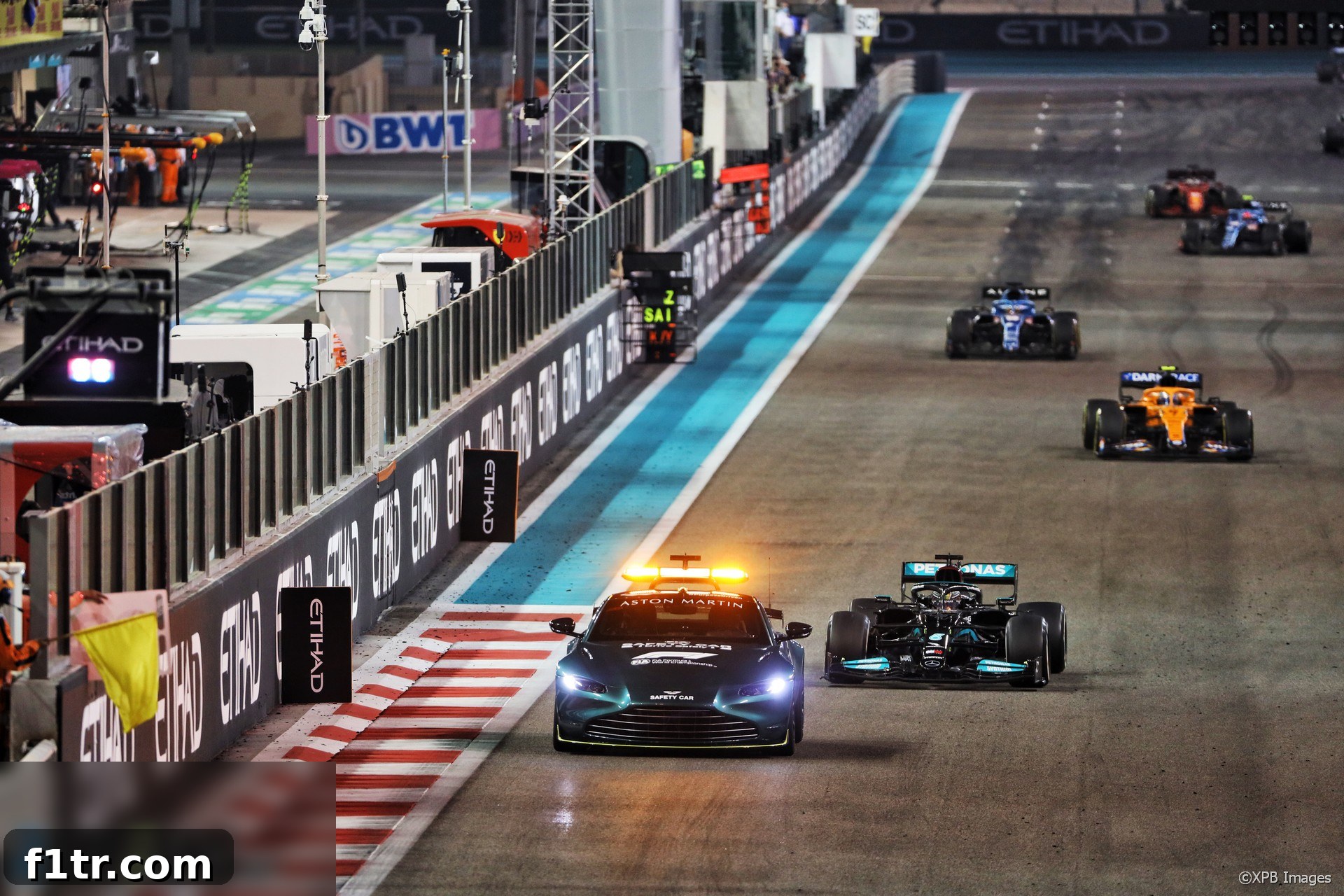
The Fédération Internationale de l’Automobile (FIA) has reconfirmed that its comprehensive internal investigation into the dramatic final laps of the 2021 Abu Dhabi Grand Prix is still actively underway. This critical inquiry aims to thoroughly dissect the events that led to one of Formula 1’s most controversial championship conclusions in recent history.
Following his election, new FIA President Mohammed Ben Sulayem promptly entrusted the governing body’s Secretary General for Sport, Peter Bayer, with the crucial responsibility of conducting a formal and meticulous investigation. The mandate is clear: to review the highly debated decisions made during the championship-deciding season finale, which saw Max Verstappen clinch the title from Lewis Hamilton on the very last lap after an unusual application of Safety Car restart rules by then-Race Director Michael Masi.
Just over two weeks after initially confirming the launch of the inquiry, the FIA issued a fresh statement, reiterating the ongoing nature of their work. This statement also clarified that Formula 1 teams and stakeholders will not be briefed on the investigation’s preliminary findings for another two weeks, emphasizing the depth and sensitivity of the analysis required before any conclusions can be drawn.
“At this stage, no decision has been taken on the outcome of the detailed analysis currently underway into the events of the last Formula 1 Abu Dhabi Grand Prix,” the FIA’s statement read. This underscores the thoroughness of the process, designed to ensure that all facets of the incident are examined without prejudice or pre-judgment.
The statement further detailed the structured approach the FIA is taking, outlining key dates for presenting and approving the investigation’s findings. “As previously announced, the findings of this detailed analysis will be presented at the F1 Commission meeting in London on 14th February after an open discussion with all F1 drivers and then finally have to be approved at the World Motor Sport Council meeting on 18th March in Bahrain, under the authority of FIA President Mohammed Ben Sulayem.” This timeline highlights the FIA’s commitment to involving multiple layers of governance and consultation, including the crucial input from the drivers themselves, whose perspectives on race safety and fair play are paramount.
This latest announcement from the FIA comes amidst widespread speculation, particularly following reports of an interview Peter Bayer gave to the Austrian newspaper Vorarlberger Nahrichten. In the interview, Bayer hinted at a significant possibility regarding the future of Formula 1’s race direction, suggesting that Michael Masi might not continue in his role as Race Director for future Grands Prix.
“Michael did a super job in many ways,” Bayer was quoted saying, acknowledging Masi’s broader contributions to the sport. “We definitely don’t want to lose him. We told him that, but also that there is a possibility that there could be a new race director. I can only make suggestions to the World Council and they will definitely include Michael.” These comments reveal a nuanced situation: while Masi’s efforts were appreciated in many aspects, the controversy surrounding Abu Dhabi has undeniably placed his position under intense scrutiny, necessitating a potential restructuring of the race direction team.
The outcome of the FIA’s deep-dive investigation into the race that singularly defined last year’s world championship has understandably captured immense attention across the global sporting landscape. Media reports and punditry had previously claimed that a decision on Masi’s future could be announced much sooner. However, the FIA’s recent statement firmly reaffirmed the established timeline, dispelling any premature conclusions and emphasizing that due process would be strictly followed.
The findings are set to be presented first to the F1 Commission on February 14th. This body comprises a representative group of key stakeholders connected to Formula 1, including representatives from all participating teams. This initial presentation allows for robust discussion and feedback from those directly involved in the sport’s operational mechanics. Following this crucial consultation stage, the FIA will then announce its final decisions and any resultant actions stemming from the investigation at the World Motor Sport Council meeting. This pivotal gathering is scheduled for Friday, March 18th, in Bahrain – a date that significantly coincides with the first practice session for the season-opening Bahrain Grand Prix, marking a symbolic fresh start for the sport.
Unpacking the Abu Dhabi Controversy: A Defining Moment for F1
The 2021 Abu Dhabi Grand Prix was envisioned as a monumental showdown, a winner-takes-all finale between two titans: Lewis Hamilton and Max Verstappen. What unfolded, however, transcended typical racing drama, evolving into a governance crisis that shook the very foundations of Formula 1. The controversy erupted during a late-race Safety Car period, triggered by Nicholas Latifi’s crash. With only a few laps remaining, Race Director Michael Masi made several critical decisions that dramatically altered the outcome.
Initially, Masi instructed that lapped cars between Hamilton and Verstappen would not be allowed to unlap themselves. This decision was then controversially reversed, with only the five lapped cars directly between the championship protagonists being allowed to pass the Safety Car. Crucially, other lapped cars remained in position, and the Safety Car was then immediately brought into the pits, leaving just one racing lap. This sequence of events created a direct, unhindered fight between Hamilton, on older tires, and Verstappen, who had pitted for fresh softs under the Safety Car. Verstappen, with his significant tire advantage, easily overtook Hamilton, securing both the race win and his maiden world championship.
The immediate aftermath was characterized by outrage from Mercedes-AMG Petronas F1 Team, who lodged two protests against the race classification, citing breaches of sporting regulations. While these protests were ultimately dismissed by the stewards, the widespread perception of an unfair, arbitrary, or inconsistent application of rules fueled a heated debate among fans, pundits, and even within the paddock. The core issue revolved around the interpretation of Articles 48.12 and 48.13 of the Sporting Regulations, specifically concerning when and how lapped cars should be allowed to unlap themselves and the timing of the Safety Car’s return to the pits.
The FIA’s ongoing investigation, therefore, is not merely a formality but a critical exercise in restoring confidence in the integrity and impartiality of race control. Its findings and subsequent actions will be instrumental in defining the future operational procedures for Formula 1 races, particularly in high-stakes situations involving Safety Cars and red flags. President Ben Sulayem’s proactive stance on this matter signals a clear commitment to transparency and robust governance, acknowledging the profound impact the Abu Dhabi events had on the sport’s credibility.
The Road Ahead: Strengthening F1’s Regulatory Framework
The investigation is poised to recommend significant changes, likely focusing on enhancing clarity in sporting regulations, improving communication protocols between race control and teams, and potentially restructuring the race director’s role and support system. The call for an “open discussion with all F1 drivers” on February 14th highlights a crucial aspect of this review: incorporating the practical experiences and safety concerns of those directly competing. Drivers are uniquely positioned to offer insights into how decisions on track impact racing dynamics and safety, making their input invaluable to shaping future guidelines.
The possibility of Michael Masi being replaced as Race Director, as hinted by Peter Bayer, reflects the immense pressure and responsibility inherent in the role. While Masi faced an unprecedented and often criticized tenure, navigating challenges like the COVID-19 pandemic and managing an intensely competitive title fight, the events of Abu Dhabi ultimately exposed vulnerabilities in the existing system. Any new race director, or a revised team structure for race control, would undoubtedly benefit from clearer guidelines, a strengthened support network, and perhaps a more distributed decision-making process to avoid similar controversies in the future.
Ultimately, the FIA’s resolution on March 18th will be a pivotal moment for Formula 1. It is not just about accountability for a single race; it is about reassuring stakeholders, fans, and competitors that the sport operates under a consistent, fair, and transparent regulatory framework. The decisions made will aim to prevent a recurrence of such an incident, solidify trust in race control, and ensure that future championships are decided purely by the prowess of the drivers and teams on track, within the unambiguous bounds of the sporting regulations.
The detailed analysis by the FIA is expected to provide comprehensive recommendations that will shape the evolution of Formula 1’s governance. This includes, but is not limited to, refining Safety Car procedures, clarifying the interpretation and application of various sporting rules, and potentially implementing new technological aids or communication channels to assist race control. The goal is to create an environment where the sporting spectacle is paramount, free from the shadow of regulatory ambiguity or perceived inconsistency.
The world of Formula 1 eagerly awaits the outcome of this critical investigation. The FIA’s commitment to a thorough and consultative process, culminating in transparent decisions, is essential for upholding the sport’s integrity and ensuring its vibrant future. The lessons learned from the 2021 Abu Dhabi Grand Prix will undoubtedly leave a lasting legacy on how Formula 1 is managed, regulated, and perceived globally, reinforcing the principle that fair play and consistent rule application are the cornerstones of competitive sport.
Support independent F1 journalism: Become a RaceFans supporter and go ad-free
Related Formula 1 Articles from the 2021 Season
- Masi ‘basically gifted the championship’ to Verstappen says 2021 FIA steward Sullivan
- Las Vegas race backers looking to extend F1 deal beyond 2025
- Why Mercedes put ‘a reminder of joy and pain’ on display in their factory lobby
- Verdict on error in GT race suggests Mercedes would have lost 2021 Abu Dhabi GP appeal
- Title ‘stolen’ from Mercedes made us ‘underdogs people cheer for’ – Wolff
Browse all 2021 F1 season articles