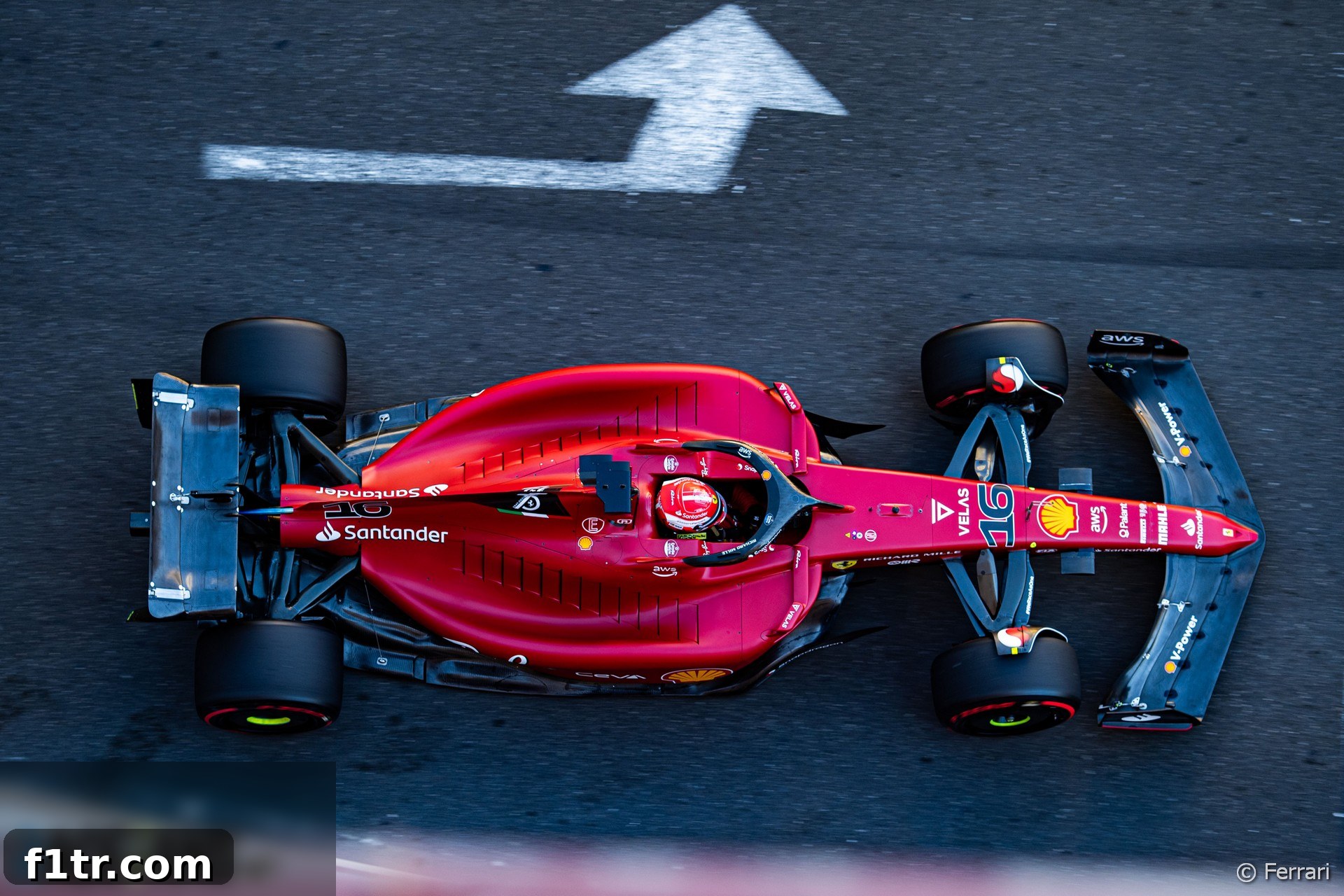
Ferrari’s Reliability Challenge: Addressing Double Retirement at Azerbaijan Grand Prix
The 2022 Formula 1 season has proven to be a rollercoaster of emotions and performance for Scuderia Ferrari. After a triumphant start that saw Charles Leclerc leading the Drivers’ Championship, the team has recently grappled with significant setbacks, culminating in a particularly disappointing double retirement at the Azerbaijan Grand Prix. This unfortunate turn of events, which saw both Carlos Sainz Jnr and Charles Leclerc forced out of the race prematurely, has cast a long shadow over Maranello’s championship aspirations, prompting immediate and decisive action to rectify critical reliability issues.
The dramatic outcome in Baku not only cost Ferrari valuable championship points but also amplified growing concerns regarding the mechanical robustness of their F1-75 challenger. In the aftermath, the team confirmed that a “short-term fix” is being rapidly deployed to tackle the immediate problems ahead of the next race. Concurrently, Ferrari engineers are engaged in intensive efforts to develop comprehensive mid-to-long-term solutions, crucial for safeguarding their competitive edge and ensuring consistent performance throughout the remainder of the demanding Formula 1 season. The stakes are incredibly high, with rival teams aggressively closing the gap and the championship battle intensifying with every passing race weekend, placing immense pressure on the iconic Italian squad.
Carlos Sainz’s Unexpected Hydraulic Failure in Baku
Carlos Sainz’s participation in the Azerbaijan Grand Prix came to an abrupt and disheartening conclusion on lap eight, when a sudden hydraulic failure rendered his F1-75 inoperable. The Spanish driver, who had been pushing hard to establish his position in the early stages of the race, was forced to pull off the circuit, his race ending prematurely in frustration. This incident contributed to a challenging period for Sainz, who has been diligently working to find consistent rhythm and optimal form in the new generation of Formula 1 cars, which demand extreme precision and reliability.
Hydraulic systems are fundamentally critical to the operation of a modern Formula 1 car, controlling vital functions such as power steering, brake-by-wire mechanisms, gearbox actuation, and even specific elements of the suspension setup. A catastrophic failure within this intricate system can instantly disable the vehicle, precisely as Sainz experienced in Baku. Ferrari wasted no time in initiating a thorough investigation, meticulously examining the specific components that led to the failure. “Hydraulic components from Carlos’ car have already been examined,” Ferrari officially confirmed, underscoring the urgent priority placed on understanding and resolving the issue.
The immediate focus for the team is now squarely on the upcoming Canadian Grand Prix. The Circuit Gilles Villeneuve in Montreal is renowned for its high-speed straights and heavy braking zones, making it a particularly demanding track that rigorously tests the durability of every F1 machine. For this crucial event, Ferrari has announced: “A short-term fix is in place for Canada.” This statement suggests the implementation of a targeted repair, a specific component replacement, or a procedural adjustment designed to prevent an immediate recurrence of the exact hydraulic failure Sainz encountered. While such a swift response is commendable and essential, it often indicates a temporary measure rather than a deep, systemic overhaul. The accompanying clarification that “work is on-going on mid/long-term solutions” further supports this interpretation, implying that the underlying cause may be more profound, necessitating extensive engineering efforts for a truly permanent resolution to ensure the F1-75’s robust performance.
The Broader Implications of Recurring Hydraulic Issues
The inherent complexity of Formula 1 cars means that a seemingly isolated component failure can, in fact, trigger far-reaching consequences across the entire system. For Carlos Sainz, this hydraulic problem adds another layer of challenge to an already demanding season, potentially impacting his confidence and his overall record in the championship. From the team’s strategic perspective, any reliability concern, especially one that culminates in a DNF (Did Not Finish), translates into a significant and often irreparable loss of valuable points in the Constructors’ Championship, a fiercely competitive arena where every single point can prove decisive in the intense battle against formidable rivals like Red Bull Racing and Mercedes.
The “short-term fix” is undoubtedly a necessary immediate measure, a critical stopgap designed to keep the car competitive in the immediate future. However, Ferrari’s unwavering pursuit of “mid/long-term solutions” distinctly highlights the team’s profound commitment to ensuring the F1-75’s unwavering dependability throughout the rigorous and extensive F1 calendar. This comprehensive process typically encompasses a multifaceted approach: rigorous laboratory testing, advanced material analysis, iterative design modifications, and meticulous reviews of supplier components and manufacturing processes. All these stages demand considerable time, significant financial investment, and vast engineering resources. The persistent challenge for all Formula 1 teams, particularly championship contenders like Ferrari, lies in the delicate balance required to simultaneously introduce performance upgrades while meticulously enhancing reliability. Under the intense glare of the global spotlight, these technical hurdles facing Ferrari are significantly magnified.
Charles Leclerc’s Heartbreaking Power Unit Failure
Just 13 agonizing laps after his teammate’s retirement, the Azerbaijan Grand Prix delivered yet another devastating blow to Ferrari, as Charles Leclerc’s F1-75 began to emit ominous plumes of smoke from its rear, unequivocally signaling a catastrophic power unit failure. Leclerc, who had been expertly leading the race and appeared to be on course for a crucial, confidence-boosting victory, was forced to dramatically slow down and eventually retreat into the pit lane. His hopes of extending his precarious championship lead vanished in a cloud of white smoke and bitter disappointment. This incident was particularly painful and alarming, as it marked his second retirement within a mere three races due to a persistent power unit problem—a deeply troubling and emerging trend for both the Monegasque driver and his dedicated team.
Leclerc had commenced the season in truly dominant fashion, masterfully showcasing not only his exceptional raw speed but also the F1-75’s formidable performance capabilities. However, a series of unfortunate reliability issues, compounded by several strategic missteps, have progressively eroded his substantial early championship advantage. The Baku power unit failure was especially critical, as it cruelly deprived him of what was widely perceived as an almost certain 25 points. This significant loss allowed his primary rival, Max Verstappen, to capitalize fully and extend his championship lead even further, thereby increasing the pressure on Ferrari to find urgent solutions to these nagging reliability concerns.
The Intricacies of F1 Power Units and Ferrari’s Forensic Analysis
Modern Formula 1 power units represent the zenith of automotive engineering, seamlessly integrating a compact yet incredibly powerful 1.6-litre V6 turbocharged internal combustion engine (ICE) with a suite of sophisticated hybrid components. These include two highly advanced Motor Generator Units (MGU-H and MGU-K), a cutting-edge Energy Store (the high-capacity battery), and complex control electronics that meticulously manage the entire powertrain. These intricate units operate under unimaginably extreme stress, being constantly pushed to their absolute limits across a diverse array of track conditions and demanding race scenarios, which makes their reliability paramount.
Ferrari promptly confirmed that “the power unit Leclerc used in Baku, his second complete unit of the season, has been sent to Maranello for analysis at the factory.” This comprehensive and forensic examination is absolutely crucial for the team to precisely understand the exact nature and root cause of the failure. Engineers at the Maranello factory will undertake a meticulous disassembly of the unit, inspecting every single component with microscopic detail for any signs of stress fatigue, premature wear, or subtle manufacturing defects. This rigorous diagnostic process is painstaking and precise, often requiring several days to yield definitive results and formulate conclusive findings, essential for preventing future recurrences.
An initial assessment of Leclerc’s Baku power unit was expected to be completed with remarkable speed, reflecting the urgency of the situation. Ferrari explicitly stated, “Leclerc’s Baku power unit will arrive at Maranello tomorrow and an initial assessment should be completed by the evening.” This rapid turnaround unequivocally demonstrates the team’s acute understanding of the time-sensitive nature of the problem, as crucial decisions regarding future power unit deployment and overall championship strategy hinge directly on the findings of this immediate assessment, highlighting the high stakes involved in every technical decision.
Strategic Ramifications and Imminent Grid Penalties
The failure of Leclerc’s second power unit of the season presents Ferrari with an extremely challenging and complex strategic dilemma. According to stringent Formula 1 technical regulations, drivers are allocated a limited number of specific power unit components for an entire season before incurring grid penalties. Typically, for a standard 22-race season, this allocation includes three Internal Combustion Engines (ICE), three Turbochargers (TC), three MGU-H units, and three MGU-K units. Exceeding these carefully defined allocations automatically triggers grid penalties, which can severely compromise a driver’s entire race weekend and significantly undermine their championship aspirations.
With Leclerc’s second power unit now compromised and likely unusable, he faces a critical and unenviable choice: “Leclerc will either have to revert to his original power unit or make his final penalty-free power unit change this year.” Reverting to an older power unit, particularly one that has already accumulated substantial mileage and undergone strenuous racing conditions, carries inherent and undeniable risks. Its performance might be subtly degraded due to accumulated wear, and its long-term reliability could be significantly compromised. Furthermore, utilizing an older unit might not even be a viable option if the failure mode discovered in Baku is ultimately revealed to be a systemic issue impacting all units within the current batch.
Conversely, opting for his “final penalty-free power unit change” so early in the season (Leclerc’s power unit for the Spanish Grand Prix was already his second) is an equally significant and precarious gamble. This decision leaves him with virtually no margin for error for the substantial remaining majority of the season. Any subsequent power unit failure or the unforeseen need for a fresh component would automatically trigger debilitating grid penalties, potentially forcing him to start races from the very back of the grid. Such a scenario could be catastrophic, effectively ending his valiant championship challenge and demoralizing the entire team.
It is important to acknowledge that both Ferrari drivers had undergone power unit changes earlier in the season, a measure typically taken proactively. “Both drivers’ power units were initially changed ahead of the Miami Grand Prix, for Sainz, and the Spanish Grand Prix for Leclerc,” Ferrari had previously confirmed. These proactive changes are standard practice, designed to strategically manage component mileage, introduce vital upgraded parts, and optimize performance. However, for Charles Leclerc, the early and repeated failure of his second unit is a particularly distressing and concerning development that demands immediate and thorough attention from the Maranello engineers.
The Intensifying Championship Battle: Ferrari vs. Red Bull
The double retirement in Baku delivered a severe and palpable blow to Ferrari’s championship aspirations, providing Red Bull Racing with a significant and potentially decisive advantage. Max Verstappen skillfully capitalized on Ferrari’s woes, securing yet another dominant victory, while Sergio Perez impressively clinched second place, thereby propelling Red Bull further ahead in both the Drivers’ and Constructors’ Championships. The growing reliability gap between these two top-tier teams has become increasingly evident throughout the season, with Red Bull consistently demonstrating a robust and dependable package, despite encountering a few initial issues at the very start of the season.
Mattia Binotto, Ferrari’s team principal, is now under immense pressure to swiftly and effectively resolve these recurring technical issues. While the F1-75 has undeniably showcased itself as a genuinely quick and formidable car, often capable of matching or even surpassing Red Bull’s blistering pace in qualifying sessions and during crucial early race stints, its Achilles’ heel appears to be its consistency and, most critically, its reliability. In a championship fight where every single point is absolutely vital, unwavering reliability is just as crucial, if not more so, than outright raw speed. Without a dependable car, even the fastest machine will struggle immensely to secure coveted titles and maintain a sustained challenge.
The psychological impact of these setbacks on both the drivers and the wider team cannot be overstated. Charles Leclerc, in particular, has openly expressed his profound disappointment and frustration, highlighting the emotional toll of losing potential race wins due to circumstances entirely beyond his control. Maintaining high morale, unwavering focus, and a strong sense of unity within the team will be paramount as they navigate this challenging period, especially with a densely packed and relentless F1 calendar looming ahead. The mental fortitude of the team will be tested just as much as their engineering capabilities.
Looking Ahead: The Canadian Grand Prix and Beyond
The Formula 1 circus now swiftly shifts its attention to the iconic Circuit Gilles Villeneuve for the highly anticipated Canadian Grand Prix. This legendary track is renowned for its exhilarating high-speed sections, demanding heavy braking zones, and unforgiving concrete walls that punish even the slightest error. This circuit will demand exceptionally robust engines and meticulously reliable components from every team, making it a true and rigorous test of Ferrari’s “short-term fix” for Carlos Sainz’s hydraulic issue, and a critical examination of their overall power unit integrity and longevity.
The Canadian Grand Prix will undoubtedly serve as a crucial litmus test for Ferrari’s ability to recover from the Baku debacles. Will the temporary solutions implemented by the engineers hold firm under the intense pressure of race conditions? What strategic choices will be made regarding Charles Leclerc’s power unit, and will those gambles ultimately pay off in terms of performance and reliability? The team will be working tirelessly, both in their state-of-the-art Maranello factory and trackside in Montreal, to ensure their F1-75s are not only incredibly fast but also perfectly capable of reaching the checkered flag without incident. The remainder of the season will transform into a relentless pursuit of both peak performance and, crucially, unwavering reliability, as these two factors must converge for true championship success.
The legendary Italian team fully understands that to mount a credible and sustained challenge for both the Drivers’ and Constructors’ titles, they must decisively eliminate these costly and recurring mechanical failures. Their dedicated engineers are now embroiled in a high-stakes race against time—not merely against their formidable rivals on the track, but also against the unforgiving clock itself. Their mission is to meticulously iron out every crease and vulnerability in their potent, yet currently fragile, F1-75 challenger. The entire world of Formula 1 eagerly awaits to witness whether Ferrari can dramatically turn their fortunes around and convert their undisputed championship-winning pace into championship-winning reliability, thereby cementing their place at the pinnacle of motorsport.
Further Reading and F1 Updates
Stay informed with the latest developments in Formula 1 by exploring related articles and news:
- Join F1 discussions on Facebook
- Follow F1 news on Twitter
- Get daily email updates on F1 happenings
Related Articles from the 2022 Azerbaijan Grand Prix
- FIA should black-flag cars if their porpoising endangers drivers’ safety – Horner
- Transcript: Why Norris reluctantly complied with McLaren’s Baku team orders
- Montreal is “going to hurt” in stiff 2022 cars say drivers hoping for bouncing fix
- Leclerc was heading to a ‘comfortable win’ before retirement – Ferrari
- F1 should penalise those who ‘obviously’ slow on purpose in qualifying – Norris
Browse all 2022 Azerbaijan Grand Prix articles