Ferrari’s Spa Six Hours Appeal Rejected: ICA Upholds Stewards’ Authority in Key WEC Ruling
In a significant decision impacting the integrity of race management within the World Endurance Championship (WEC), the International Court of Appeal (ICA) has unequivocally rejected Ferrari’s comprehensive attempt to revise the official results of the challenging Six Hours of Spa. This verdict firmly reinforces the authority of race stewards and clarifies the stringent limitations on challenging their on-track judgments, sending a clear message across the motorsport landscape.
The original controversy stemmed from the May event, where race stewards dismissed Ferrari’s initial protest regarding their decision to resume the interrupted race for its full remaining duration. At the time, the stewards provided a precise explanation, highlighting a fundamental tenet of motorsport governance: their operational decisions made during a race are generally not subject to formal appeal. Ferrari’s subsequent move to the ICA represented a high-stakes challenge to this principle, seeking to overturn a classification they believed unfairly disadvantaged them.
The International Court of Appeal’s Definitive Ruling
Following a meticulous and comprehensive hearing that included detailed submissions from Ferrari, their immediate rivals JOTA Porsche and Penske Porsche, and the governing body, the FIA, the ICA ultimately upheld the original verdict of the stewards. The core of their ruling rested on the unwavering principle that the International Sporting Code (ISC) does not permit protests against decisions specifically made by the race stewards. This conclusion underlines a critical aspect of motorsport judicial structure, ensuring clarity and finality in race-day management.
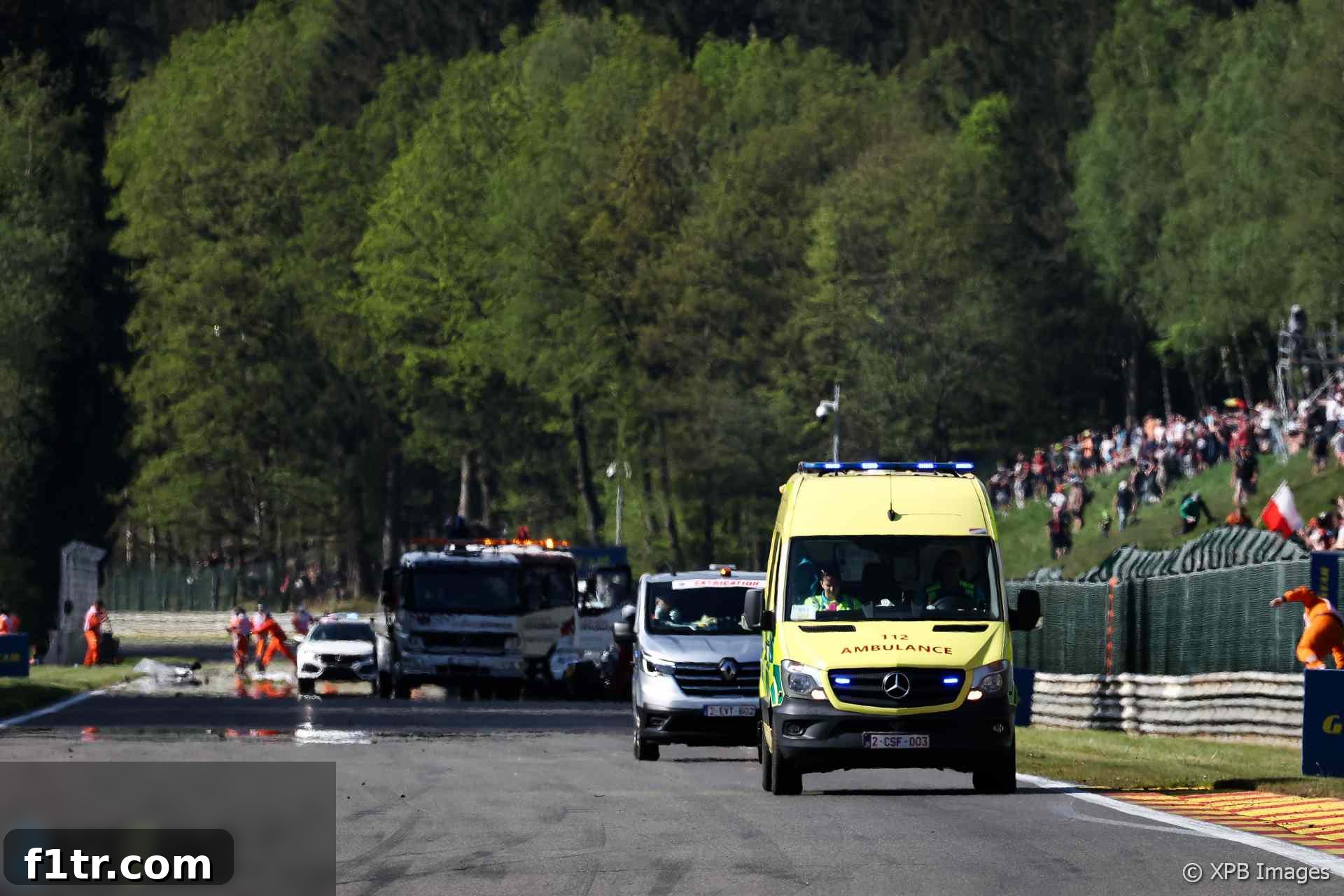
Ferrari’s original protest was formally lodged “against the decision of the stewards number 71 and against the provisional classification.” Document 71, issued by the stewards during the race, had explicitly outlined that the event would be resumed for one hour and 44 minutes following a lengthy suspension of almost two hours. This suspension was necessitated by extensive barrier repairs after a substantial accident on track. It was the duration and conditions of this resumption that formed the bedrock of Ferrari’s discontent and subsequent legal challenge.
In its official conclusions, the court meticulously documented: “The appellant confirmed before the stewards that ‘the protest is [lodged] against the decision of the stewards number 71 and consequently against the provisional classification.’ After having carefully reviewed articles 13.2.1 and 13.7 of the code, the court finds that a decision of the stewards cannot be protested.” This precise citation of the ISC articles serves to firmly anchor the ICA’s decision within established regulatory frameworks, leaving little room for ambiguity.
Ferrari’s Arguments: Disadvantage and Race Duration
At the heart of Ferrari’s appeal was a compelling argument centered on perceived competitive disadvantage due to the extended race duration. Ferrari contended that the effective extension of the race meant the event ran for an actual seven hours and 44 minutes, rather than the scheduled six hours. Their position was that their cars were significantly disadvantaged because the chequered flag did not fall precisely at the traditional six-hour mark. At that specific point in the race, Ferrari’s entries were, by their assessment, in a considerably stronger and more competitive position relative to their rivals, holding a provisional advantage that evaporated during the prolonged running. The Scuderia felt that a fundamental change to the race’s perceived length directly impacted their strategy and eventual classification, leading them to pursue redress through the formal protest and subsequent appeal process.
This argument touched upon a crucial element of endurance racing: the fixed duration. Teams meticulously plan their pit stops, fuel consumption, tire management, and driver stints around the published race length. Any deviation, especially one that adds significant time, can fundamentally alter the competitive landscape, rewarding some strategies and penalizing others. Ferrari’s appeal underscored the financial and sporting investment made by a manufacturer and factory team, highlighting their commitment to ensuring fair competition and adherence to regulations.
FIA’s Defense: Red Flag Periods and Precedent
In robust defense of the stewards’ original decision and the established procedures, the FIA representatives presented a series of counter-arguments that ultimately swayed the ICA. A cornerstone of their stance was the assertion that “when a race is interrupted, the red flag period cannot be considered as part of the race duration.” This fundamental distinction is critical in motorsport, as a red flag signifies a complete cessation of racing, effectively pausing the clock on the competitive running. Therefore, from the FIA’s perspective, the actual racing duration remained precisely six hours, irrespective of the total elapsed time from green flag to chequered flag, which included the significant red flag stoppage for barrier repairs.
Furthermore, the FIA pointed out that “as no official report indicates anything more than a six hours duration of the race, the appellant cannot claim that the race lasted seven hours and 44 minutes.” This emphasized the official documentation and adherence to formal race classifications, which only account for active racing time. To bolster their argument and provide historical context, the FIA representatives also highlighted that the WEC stewards had been explicitly granted the power to amend race times following a crucial precedent set by the 2013 Fuji round. That particular race was severely impacted by adverse weather conditions, primarily heavy rain, leading to it being run almost entirely behind the Safety Car. The experience from Fuji underscored the necessity for stewards to possess discretionary powers to manage unforeseen circumstances and ensure the safest and most practical completion of a race, even if it requires adjustments to the perceived schedule.
The 2013 Fuji event served as a stark reminder of the complexities involved in running endurance races under challenging conditions and the need for flexible governance. The FIA’s reference to this precedent effectively demonstrated a well-established mechanism for managing race interruptions and durations, reinforcing the legitimacy of the stewards’ actions at Spa.
Broader Implications for Motorsport Governance
The ICA’s decision is not merely a verdict on a single incident but carries significant broader implications for motorsport governance, particularly within the WEC and potentially other FIA-sanctioned championships. It emphatically reaffirms the independence and finality of race stewards’ decisions, underscoring that their role is to make on-the-spot judgments in often complex and time-sensitive situations. This ruling clarifies that such operational decisions are distinct from procedural or technical infractions, which might be subject to appeal. It establishes a clear boundary: once stewards have made a ruling on how a race should proceed – especially concerning its duration or resumption – that decision is largely insulated from external judicial review via the appeal process.
This reinforcement of steward authority is crucial for maintaining order, consistency, and prompt resolution of incidents during live events. Without such finality, every contentious decision could lead to prolonged legal battles, potentially undermining championship integrity and causing significant delays in confirming results. The ruling streamlines the dispute resolution process, ensuring that teams and competitors understand the parameters within which protests can be lodged and appeals pursued.
Impact on the World Endurance Championship Landscape
For the World Endurance Championship, this ruling signifies a commitment to robust and unambiguous race management. It sets a precedent that will likely influence future team strategies concerning protests and appeals, encouraging a greater understanding of the International Sporting Code and the powers vested in race officials. Teams must now proceed with an even clearer understanding that steward decisions regarding race interruptions and resumptions are generally sacrosanct.
The verdict reinforces the WEC’s dedication to fair competition under explicitly defined rules, while also acknowledging the practical necessities of managing high-speed, multi-class endurance races that are often subject to unpredictable events like accidents or weather changes. It ensures that the focus remains on the racing itself, rather than protracted legal challenges over operational calls.
In a final logistical note, the hearing itself saw a change of venue, being relocated from Paris to Geneva. This adjustment was made pragmatically to avoid a scheduling conflict with the Paralympic Games, ensuring all parties could attend without unnecessary complications. WEC race director Eduardo Freitas also attended the crucial proceedings, participating via videoconference, highlighting the importance and gravity of the matter at hand for the championship’s ongoing operations.
In conclusion, the International Court of Appeal’s rejection of Ferrari’s appeal marks a decisive moment for the World Endurance Championship. It firmly entrenches the authority of race stewards, delineates the scope of appeals, and reiterates the FIA’s established procedures for managing race interruptions. While undoubtedly a disappointment for Ferrari, this ruling brings clarity and stability to the governance of international motorsport, ensuring that the integrity of race results, once determined by the appointed officials, is preserved.