George Russell on F1 Driver Unity and the GPDA’s Pivotal Role
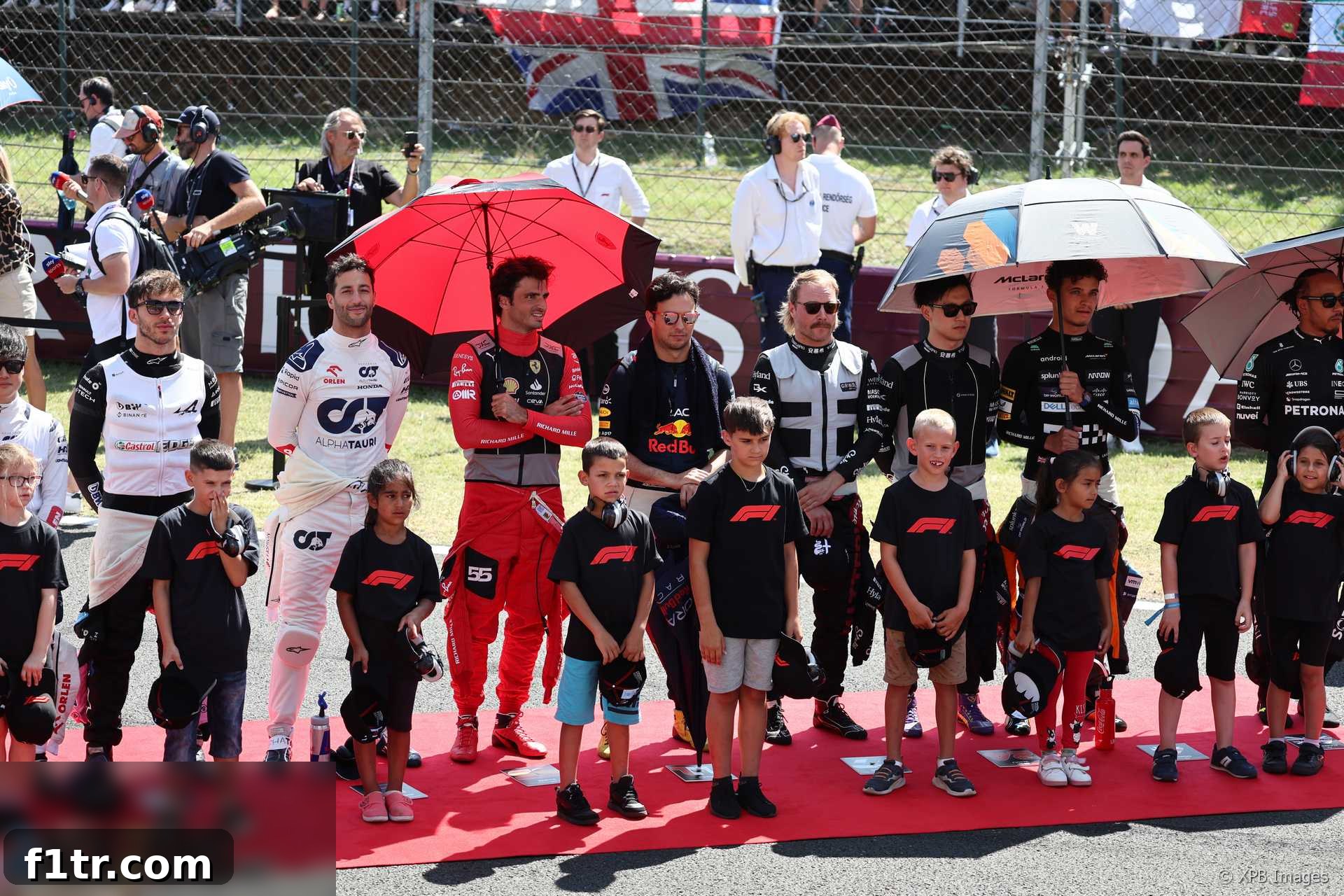
Mercedes driver George Russell, a key figure within the Grand Prix Drivers’ Association (GPDA) as one of its directors, offers an insightful perspective into the collective mindset of the current Formula 1 grid, emphasizing a profound sense of unity among the 20 elite competitors. His remarks shed light on the vital function of the GPDA and the myriad challenges and opportunities facing the pinnacle of motorsport today.
Russell’s appointment as a director of this influential drivers’ union in 2021 underscored his growing stature and commitment to the sport’s future. He works closely alongside former Formula 1 driver Alexander Wurz, who serves as Chairman, and legal consultant Anastasia Fowle, forming a formidable trio dedicated to advocating for driver interests and welfare.
The GPDA stands as a crucial forum for drivers to articulate shared concerns, particularly regarding safety, sporting regulations, and other critical matters within the fiercely competitive world of Formula 1. Its significance was starkly highlighted during last year’s Saudi Arabian Grand Prix in Jeddah. Following a missile attack on a nearby oil depot during Friday practice, the GPDA convened a lengthy and intense meeting late into the night. This gathering was instrumental in processing the immediate concerns of the drivers and subsequently engaging with local authorities to secure assurances of safety before ultimately agreeing to proceed with the race. This incident powerfully demonstrated the GPDA’s capacity to act as a unified front in moments of crisis, prioritizing the well-being of its members while ensuring clear communication with stakeholders.
Speaking to select media outlets, including RaceFans, Russell elaborated on the inner workings of the GPDA and his specific responsibilities within the association, providing a candid glimpse into the dynamics of driver collaboration.
The Collective Voice: Russell’s Role and Driver Unity
“It’s almost like I’m the spokesperson from the collective group,” Russell explained, outlining his primary function. He underscored the remarkable cohesion among the current crop of drivers, stating, “I think it’s a very united group at the moment, between all of the drivers. We talk regularly about certain issues or topics that we want to improve – not just necessarily in Formula 1, but in the sport globally.” This unity allows for a powerful, unified voice when addressing pressing concerns with governing bodies and other relevant parties.
Russell further clarified the division of labor within the GPDA, acknowledging the significant contributions of his colleagues. “Ultimately, there does need to be somebody who’s the spokesperson to take that forward. But I’ve got a huge amount of help from Alex Wurz and Anastasia Fowle who, to be honest, do most of the heavy lifting and I’m just the one in the background to follow up and help where I’m needed.” This collaborative approach ensures that the GPDA operates efficiently, combining the on-track insights of active drivers with the experienced guidance of former professionals and expert legal counsel.
Informal Channels, Formal Impact: How Drivers Communicate
The spirit of camaraderie and shared purpose extends beyond formal meetings. Russell revealed that drivers maintain regular contact outside of the high-pressure environment of race weekends, often initiating discussions via text message before delving deeper into topics during scheduled GPDA meetings. “All of the drivers have a group chat,” Russell shared, humorously adding, “Sometimes it’s just memes – there’s a few unexpected people who send a few random memes – but it’s okay.”
However, beneath the lighthearted banter, the chat serves a crucial practical purpose. “It is always good whenever there’s something ongoing or there’s a delay or something that somebody wants to talk about or improve,” he affirmed. The dynamic nature of Formula 1 means there’s a constant stream of developments requiring driver input. “There’s obviously a lot of changes going on with the sport at the moment, with the sprint races, the format, the Alternative Tyre Allocation, the conditions, the safety aspect of things obviously,” Russell highlighted, pointing to the breadth of issues that require collective driver consideration and feedback.
Addressing Key Concerns: Safety, Sporting, and Driver Experience
Drivers have recently been particularly vocal about their mounting frustrations concerning Pirelli’s wet weather tyre performance this season. Furthermore, public expressions of concern over the lack of visibility in extreme wet conditions have intensified, particularly following the tragic death of Formula Regional racer Dilano van ‘t Hoff in July at Spa-Francorchamps. This heartbreaking incident served as a stark reminder of the inherent dangers of motorsport and underscored the GPDA’s unwavering commitment to pushing for enhanced safety measures.
“The wet is always a bit of a dangerous situation, but we’re obviously finding ourselves in that situation almost week after week at the moment,” said Russell at Zandvoort, where F1 experienced its eighth consecutive rain-affected weekend. “So it’s more of a talking point, more of a topic.” The regularity of wet races has amplified the urgency of these discussions, prompting drivers to seek proactive solutions to improve safety without diminishing the spectacle. Russell emphasized that the pursuit of improvements is a perpetual journey: “But it’s never-ending. If you fast-forward 20 years, there’s still going to be concerns, there’s still going to be things that you need to evolve, adapt to. And I think that’s sport. You’ve got to adapt to the times and roll with it.”
The drivers’ multifaceted concerns typically fall into three distinct, yet often interconnected, categories:
1. Safety: The Paramount Concern
According to Russell, “You’ve got safety – which is obviously, to a degree, quite self-explanatory. You want the circuits to be, to a degree, as safe as possible – no unnecessary risks. There’s always going to be an element of danger and you want the cars to be as safe as possible, naturally, but you’re never going to be able to eliminate all of the risk.” This critical area encompasses everything from track design and barriers to the structural integrity of the cars themselves and the efficacy of safety interventions during races. The GPDA continuously scrutinizes these elements, advocating for advancements that push the boundaries of safety technology and protocols, recognizing the inherent risks but striving to mitigate them as much as humanly possible.
2. Sporting Entertainment: Enhancing the Spectacle
The second category focuses on the “on-track sort of ‘entertainment’ side of things and how exciting the races are.” This involves a broad array of factors directly impacting the quality of racing. Russell specifically mentioned “the tyres are a factor with the degradation, the format, DRS positioning, et cetera.” Discussions here revolve around optimizing race strategy, encouraging more overtakes, and ensuring competitive racing throughout the field. This includes evaluating the impact of sprint races, the Alternative Tyre Allocation rules, and the design and deployment of drag reduction systems (DRS) to strike the right balance between strategic depth and thrilling action.
3. Driver Experience: The Feel of Speed
Finally, Russell outlined a third area, which he conceded is “probably the least important but to the drivers is important, about how it feels to drive the cars.” He elaborated on the universal desire among F1 drivers: “We want the fastest cars, the best cars, the lightest cars, the most power and we think that would add to the spectacle. But you can’t often achieve all of these topics.” This point underscores the drivers’ inherent passion for pure performance and the visceral thrill of piloting the fastest machines on the planet. While acknowledging the need for regulatory compromises for safety and entertainment, drivers instinctively push for cars that are challenging, rewarding, and exhilarating to drive, believing that this passion translates into a more compelling show for fans.
Sebastian Vettel’s Enduring Influence and the Future of F1
The GPDA’s influence isn’t limited to active drivers. Four-time world champion Sebastian Vettel, who retired from F1 at the end of last season, was extended an opportunity to remain involved with the GPDA as a director. This is a testament to the association’s flexibility, as members are not necessarily removed if they cease to be active competitors. Russell enthusiastically expressed his desire for Vettel to continue contributing, highlighting the immense value his experience and perspective could bring.
“We had a few chats with Sebastian at the start of the year, and I think it was important for him to have some time off away from the sport. He’s got a few projects ongoing on the side. And we’ll probably touch base again end of this year to see where he is with that,” Russell said. He emphasized that the decision rests entirely with Vettel: “Ultimately it’s totally in his hands. It would be amazing for Sebastian to stay in the sport in some regard, because he’s a really brilliant person and got a lot of great ideas and could do a lot of good for the sport. But equally, after so much success and so long in the sport, he probably wants to spend a bit more time at home.” The potential for a figure like Vettel, known for his thoughtful insights and strong moral compass, to continue shaping the sport from a driver advocacy standpoint is undeniably significant.
On the sporting front, Red Bull Racing and reigning world champion Max Verstappen have maintained a formidable stranglehold over the sport, achieving an undefeated streak throughout 2023 so far. Despite this period of dominance, George Russell remains optimistic about the overall health and appeal of Formula 1, echoing a sentiment shared by many within the paddock that the sport is fundamentally thriving.
“I think generally speaking, Formula 1 is in a good place,” he assessed. “If it wasn’t for the Red Bull dominance for the last 12 months, it has been quite a lot of exciting racing, close racing, good battles. And that’s where it is at the moment for this fight for second – it is in a good place.” Russell acknowledged the understandable desire for closer competition at the very front, yet highlighted the intense battles raging further down the grid as evidence of the sport’s underlying vibrancy and entertainment value.
He revisited the ongoing tyre debate as a crucial element influencing race dynamics: “Maybe the tyres have been a little bit too hard recently and it’s too many one-stops and not enough degradation to add a bit of spice in there. But, equally, when the tyres are rubbish we also complain. So it’s trying to find that right balance and it’s never quite clear.” This candid observation perfectly encapsulates the perennial challenge of optimizing tyre performance to encourage varied strategies and thrilling finishes, a complex balancing act that the GPDA frequently engages with Pirelli and the FIA to refine.
In conclusion, George Russell’s insights paint a clear picture of a united group of Formula 1 drivers, actively engaged through the GPDA to shape the sport’s future. Their collective voice is a powerful instrument for advancing safety, optimizing sporting regulations for maximum excitement, and ensuring that the driver experience remains at the core of Formula 1’s identity. As the sport continues to evolve, the GPDA, with leaders like Russell and the potential continued involvement of legends like Vettel, will remain an indispensable advocate for those who push the limits on track.
2023 F1 season related articles
- FIA president cleared of alleged interference in two 2023 races
- First week viewing figures for new Drive to Survive season fall again
- Max who? Drive to Survive season six prefers its favourite faces
- RaceFans’ complete 2023 season review
- The F1 drivers who pulled off the 10 biggest charges through the field in 2023
Browse all 2023 F1 season articles