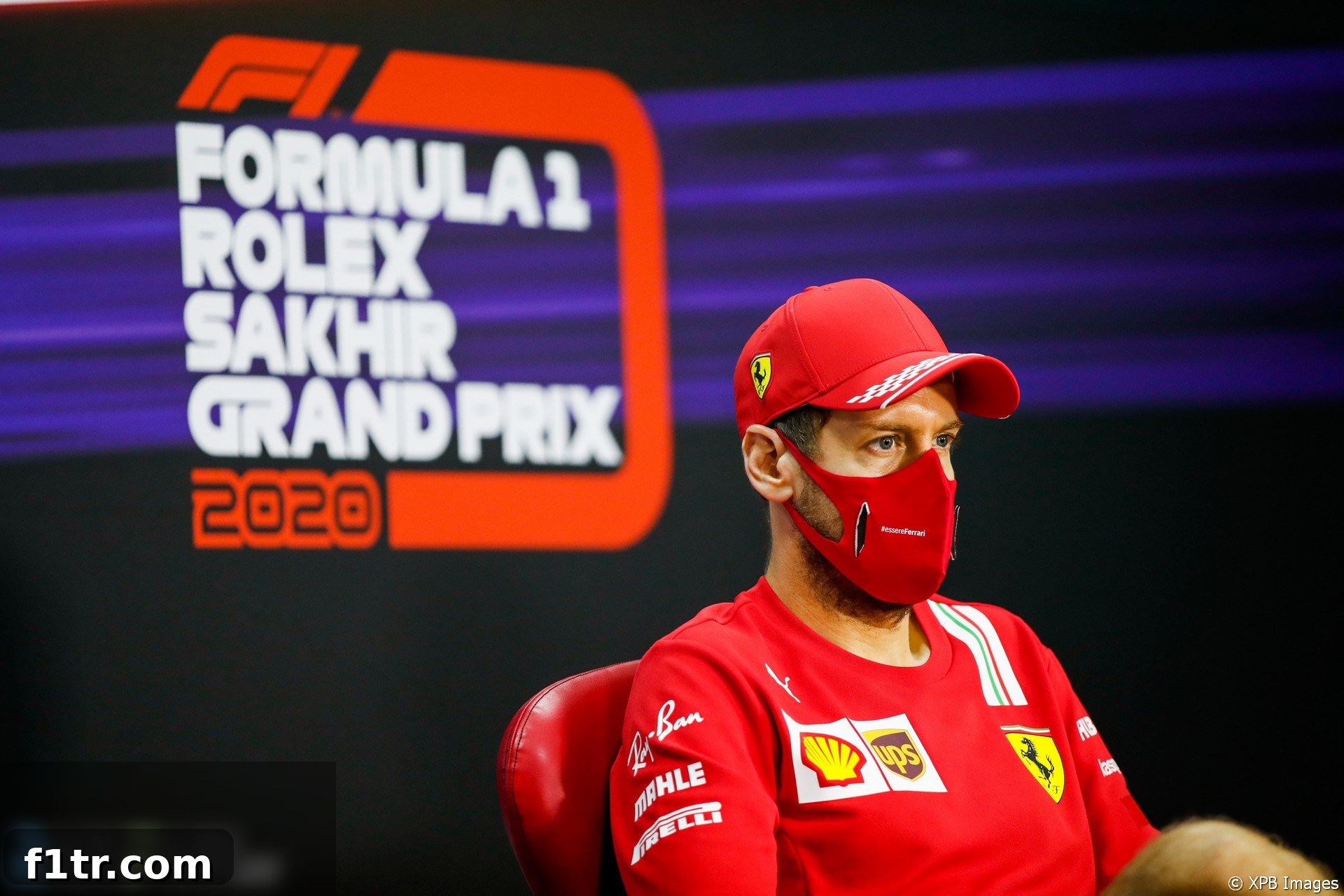
In the rapidly evolving world of Formula 1, safety remains paramount. Following the harrowing incident involving Romain Grosjean at the Bahrain Grand Prix, the focus shifted sharply to circuit design and driver protection. As teams prepared for the subsequent Sakhir Grand Prix, utilizing a faster ‘Outer Track’ layout, questions naturally arose about potential risks. However, four-time world champion Sebastian Vettel conveyed a calm and measured perspective, expressing no undue concerns regarding Formula 1’s decision to employ the high-speed layout for its second successive race in Bahrain. This stance underscores the confidence drivers and the FIA place in the sport’s continuous commitment to safety, even after a severe accident.
Formula 1 Safety: A Driver’s Perspective on the Outer Track
The conversation surrounding the Sakhir Grand Prix inevitably revolved around track safety, particularly in light of Romain Grosjean’s dramatic crash just days prior. Vettel, a veteran of the sport and a respected voice in the paddock, was directly questioned about his preference between racing on the familiar Grand Prix track layout or the newly adopted, quicker Outer circuit. His response offered valuable insight into the mindset of modern F1 drivers and the robust safety protocols in place.
“I don’t think it changes anything in this regard. I don’t think there’s any connection to be made with Romain’s accident last weekend,” Vettel asserted, dismissing the notion that the Outer circuit’s design inherently presented a heightened risk compared to the Grand Prix configuration. His confidence was rooted in the immediate and decisive actions taken by the sport’s governing body.
“It’s good to see, obviously, that we have the red flag and then immediately precautions were taken on that spot. And I think for this week as well around the track there were some more precautions taken. So that’s the least you can do in that short amount of time,” he elaborated. This highlights the crucial role of rapid response and continuous evaluation in F1 safety. Following Grosjean’s crash, the FIA swiftly implemented additional safety measures, specifically reinforcing the barrier where the incident occurred and conducting comprehensive reviews across the entire circuit. These prompt interventions are a testament to Formula 1’s proactive approach to mitigating risks and ensuring driver wellbeing.
Vettel concluded by reinforcing the belief that the fundamental safety standards remain unaffected by the track layout change: “But racing here, I think, doesn’t expose us to anything extra just because the track layout is different.” This sentiment reflects the significant advancements in Formula 1 safety over decades, from car design and cockpit protection to advanced circuit infrastructure and medical response. The Outer Track, while faster and featuring fewer corners, was still subject to the same rigorous safety inspections and modifications, ensuring it met the highest FIA standards before competition commenced.
The transition from the traditional Bahrain Grand Prix circuit to the Sakhir Outer Track presented a unique challenge for teams and drivers. The Outer Track, characterized by its high-speed straights and minimal corner count, promised lap times under a minute, creating a relentless, sprint-like race. While different in nature, the core principles of safety, barrier integrity, and marshal readiness remained consistent. Vettel’s comments served as a vital reassurance, emphasizing that the inherent risks of motorsport are managed through an unwavering commitment to improvement and adaptability, rather than being exacerbated by track variations alone.
Quotes: Dieter Rencken
Latest Buzz: Social Media Highlights from the Motorsport World
The digital landscape of social media frequently offers immediate insights into the lives and careers of motorsport personalities. Here’s a glance at some notable updates from Twitter and Instagram, capturing the latest movements and announcements within the racing community:
Hey guys. I’m pleased to say I’m doing @IMSA with @CGRTeams in 2021. Really excited about this and can’t wait to be in the car for the first time early next year.
— Kevin Magnussen (@KevinMagnussen) December 3, 2020
You can now add @JaitkenRacer and @PiFitti to your Predictions Championship choices and pick them as drivers you support:https://t.co/5cpvJ7szKn #F1 #SakhirGP pic.twitter.com/9KgVtpAwTP
— RaceFans (@racefansdotnet) December 3, 2020
Former Formula 1 driver Kevin Magnussen shared his excitement about embarking on a new chapter in his career, announcing his move to the IMSA WeatherTech SportsCar Championship with Chip Ganassi Racing (CGRTeams) for the 2021 season. This move marks a significant transition for Magnussen, who spent several years competing at the pinnacle of motorsport. His enthusiasm for the new challenge, particularly with a revered team like Chip Ganassi Racing, underlines the diverse and rewarding career paths available to talented drivers beyond F1. Fans are eager to see how his aggressive driving style translates to endurance racing.
In related F1 news, RaceFans.net alerted its community to the inclusion of Jack Aitken and Pietro Fittipaldi as selectable drivers in their Predictions Championship. Both drivers made their Formula 1 debuts under extraordinary circumstances, filling in for established stars. Aitken stepped in for George Russell at Williams when Russell was promoted to Mercedes to replace Lewis Hamilton, who was sidelined due to COVID-19. Fittipaldi, meanwhile, took over Romain Grosjean’s Haas seat following his recovery from the Bahrain crash. Their inclusion in fan prediction games highlights the sudden yet impactful entry of these young talents into the F1 landscape, allowing fans to support their journeys as they seize unexpected opportunities.
- Find more official F1 accounts to follow in the F1 Twitter Directory
Beyond F1: Essential Motorsport Links and News
Delve deeper into the world of motor racing with these insightful links, covering pivotal moments, rising talents, and crucial industry developments:
Advert | Become a Supporter & go ad-free
Leclerc feared Grosjean had died in Bahrain crash (BBC)
Charles Leclerc’s candid admission reveals the chilling reality faced by drivers witnessing such a severe accident. “I saw the crash in my mirrors, was aware straight away that it was extremely serious and I thought the worst straight away,” he stated. This quote underscores the inherent dangers of the sport and the psychological impact on fellow competitors, who are often close friends. Grosjean’s survival and subsequent recovery were a profound relief, but the initial moments were filled with genuine fear for his life, a stark reminder of how close the margins are in Formula 1. Such incidents reinforce the strong bonds and shared humanity within the racing community.
Boschung to replace Aitken at Campos for season finale (Campos)
In the feeder series, the Formula 2 championship often sees driver changes, especially when F1 opportunities arise. Ralph Boschung was confirmed to replace Jack Aitken at Campos Racing for the season finale. This switch was necessitated by Aitken’s F1 debut with Williams. Boschung, already confirmed to race with Campos for the 2021 season, gained valuable early experience by participating in the Bahrain rounds. “The Swiss driver has already been confirmed at Campos for 2021 and has been with the team in Bahrain in preparation for the post-season tests. The 23-year-old has previous experience at this level, driving for the Spanish side in 2017.” This demonstrates the dynamic nature of junior formulae, where drivers constantly seek to gain experience and prove their worth for future progression.
African American-led ownership group to compete in Road to Indy (IndyCar)
Beyond the track, the motorsport world is also making significant strides towards greater inclusivity and diversity. An exciting development saw an African American-led ownership group announce its participation in the Road to Indy series, a crucial ladder system for aspiring IndyCar drivers. “The initiative is part of a broader picture in the IndyCar and Indianapolis Motor Speedway ‘Race for Equality and Change,’ announced in July. The goals include recruiting and developing a diverse workforce throughout all levels of IndyCar and IMS, ultimately creating a community that fundamentally transforms the sport.” This commitment to fostering a more equitable and representative environment is vital for the long-term growth and appeal of motorsport, attracting new talent and a wider fan base. It signifies a collective effort to dismantle barriers and provide opportunities for underrepresented groups within the sport.
ACI Rally Monza Shakdown onboard Neuville (WRC via YouTube)
Experience the raw intensity of rallying with this captivating onboard footage.
We always endeavour to credit original sources. If you have a tip for a link to feature in the next RaceFans round-up please send it in via the contact form.
Advert | Become a RaceFans supporter andgo ad-free
Expert Opinion: Analysing Track Barriers and Enhanced Safety Measures
The immediate aftermath of Romain Grosjean’s fiery crash in Bahrain sparked an intense discussion among experts and fans alike regarding circuit safety, specifically the design and effectiveness of track barriers. A key focus was the deployment of a new tyre barrier at the scene of Grosjean’s accident. Is this enhanced protection a sensible and effective addition? Gavin Campbell, a keen observer of motorsport safety, offered a compelling analysis.
“I think this is a must for Armco that is angled in towards the track like the one Grosjean hit. Armco does a good job generally of dissipating energy down the barrier – which is why they are use to line straights with,” Campbell explained. His insight highlights a critical distinction in barrier design and application. While Armco barriers are effective at distributing impact energy along their length, particularly when struck at an acute angle on straights, they pose a significant risk when a car hits them perpendicularly, especially if the barrier is angled inwards. This specific configuration allows for the possibility of the car penetrating or “splitting” the barrier, as was tragically demonstrated in Grosjean’s incident.
Campbell further elaborated on the rare but devastating nature of such impacts: “There is some concern with formula cars splitting the barrier but again it only split (and not all the way) with a huge direct impact in Grosjean’s crash. Normally with a Armco lined straight its impossible to hit it perpendicular (even if you do your direction of travel is still down the barrier – think those funny-looking spins where the nose gets wiped).” This emphasizes that the unique angle and force of Grosjean’s crash created a worst-case scenario. Standard impacts against Armco typically result in the car sliding along the barrier, distributing the energy more safely. However, a head-on impact at a critical angle can overcome the barrier’s designed protective properties.
The conclusion drawn is a powerful call for enhanced safety measures at vulnerable points: “We have seen a large number of Armco strikes down the years but these are all side/along the barrier impacts – thankfully F1 got away with one here but I think all protruding Armco barriers will need this or similar treatment.” The addition of the tyre barrier in front of the Armco is a crucial step towards preventing a recurrence of Grosjean’s specific type of impact. This layered approach, combining energy-absorbing materials like tyres with the structural integrity of Armco, significantly improves safety by cushioning the initial impact and preventing direct penetration. It reflects Formula 1’s continuous evolution in safety standards, constantly learning from incidents to make the sport safer for all competitors. The ongoing development of barriers, including the increased use of Techpro barriers and re-evaluations of Armco configurations, remains a top priority for the FIA.
Celebrations: Happy Birthday to Our Community Members!
A warm shout-out and happy birthday wishes go out to our valued community members, Noel and Sw6569! We hope you have a fantastic day filled with joy and celebrations.
If you’d like to receive a birthday shout-out in our future round-ups, don’t hesitate to let us know when yours is via the contact form or by adding your date to our dedicated list here. We love celebrating with our readers!
Motorsport History: On This Day in F1
- Born today in 1957: Raul Boesel, a versatile and talented Brazilian racing driver. Boesel competed in Formula 1 for two years, showcasing his skills with both the March and Ligier teams. While his F1 career was relatively brief, he went on to enjoy a significantly longer and highly successful spell in IndyCar racing, where he became a prominent figure. Demonstrating a unique blend of passion and diverse interests, Boesel later transitioned into a career as a DJ, bringing his rhythmic energy from the racetrack to the music scene.