Spa-Francorchamps: F1 Drivers Demand Urgent Action on Wet Weather Visibility After Tragic Incidents
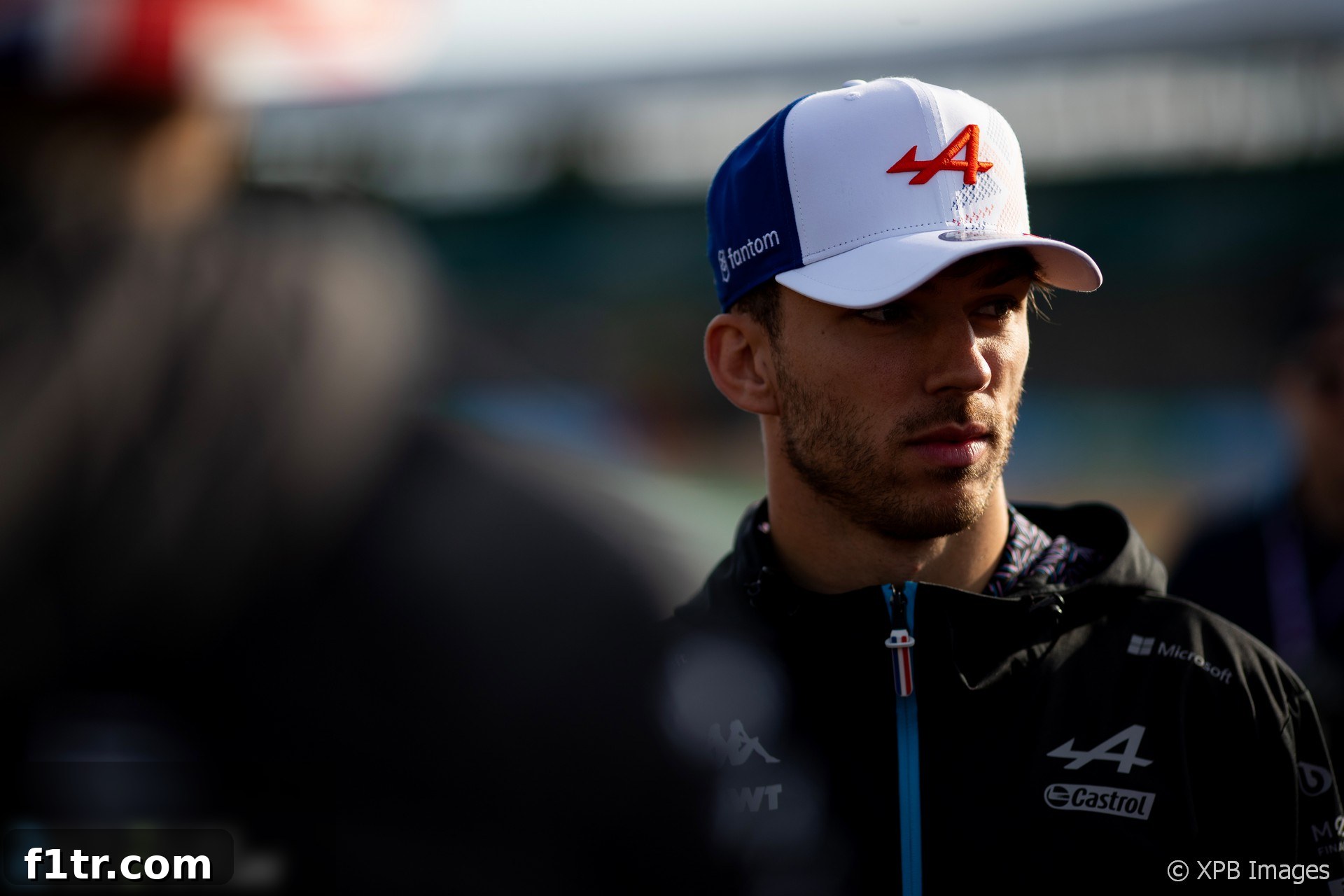
The legendary Spa-Francorchamps circuit, revered by motorsport enthusiasts worldwide for its challenging layout, has once again been the scene of profound tragedy. In the wake of an exceptionally wet race that claimed the life of Formula Regional European Championship (FREC) racer Dilano Van ‘T Hoff, Formula 1 drivers Pierre Gasly and Esteban Ocon have voiced their urgent concerns, sharing harrowing personal experiences that echo the recent fatalities. Their testimonies underscore a critical issue plaguing racing in adverse conditions: dangerously poor visibility caused by tire spray.
Eighteen-year-old Dilano Van ‘T Hoff tragically lost his life after a horrific multi-car accident during a heavily wet race last weekend. Having lost control of his car on the Kemmel Straight, he was struck by an unsighted Adam Fitzgerald, who was also injured in the collision. This incident, occurring in challenging conditions, has reignited the vital discussion around driver safety, particularly at high-speed venues like Spa.
A Haunting Echo: Gasly and Ocon’s Near-Miss in 2012
The Alpine F1 teammates, Gasly and Ocon, revealed a chilling parallel to Van ‘T Hoff’s accident, recalling their own terrifying brush with disaster over a decade ago. In 2012, during a round of the Formula Renault Eurocup – the direct predecessor to the FREC series – they found themselves in a strikingly similar predicament. This first-lap collision, also occurring in extremely wet conditions, saw Javier Tarancon spin on the Kemmel Straight, leaving his car stranded in the middle of the track. Tarancon was subsequently hit, with Norman Nato, Dan de Zille, and Victor Franzoni also caught up in the chain reaction that ultimately led to the race being red-flagged.
Gasly vividly recounted the shared memory with Ocon: “I think visibility in the rain is critical. Unfortunately, what’s happened in Spa – I had a conversation with Esteban on the parade, we had a very similar situation in 2012 Formula Renault 2.0, where we both started from the back of the grid, similar conditions.” His recollection paints a stark picture of the inherent dangers: “To be fair, you’re praying for your life that no one stops in the middle, because you can’t even see five metres ahead of you. It’s really extreme conditions.”
The Unacceptable Risk: When Drivers Race Blind
For Gasly, the primary concern in wet conditions isn’t merely the reduced grip from a slippery track, which drivers are trained to manage, but the profound lack of visibility caused by the spray from other cars. He emphasized that this factor is often the main reason races are delayed or stopped. “I think most of the time it’s the reason why we don’t get on the track is not so much for driving purposes, but just the fact that we just can’t see where we’re going,” he explained.
While acknowledging the inherent risks of motorsport – an accepted part of the sport – Gasly drew a crucial line. “We accept the risk that is part of our sport. And this will always remain. But I think in Suzuka last year we were happy to drive. The problem is we don’t see where we’re going.”
The potential consequences of such impaired vision are catastrophic. Gasly articulated the chilling reality: “From the moment you know you don’t know where you’re going and someone is stopped in front of you in these cars – we’re going extremely fast. You take the risk of taking the life of someone away. This should not be part of this sport. We should not be put in such conditions. Even more with young talents trying to make their way to Formula 1.”
His impassioned plea concluded with a direct call to action for the sport’s governing body: “So it’s clearly something which needs to be addressed. I just request from all the people involved, whether it’s the federation [FIA], to make the right review and analysis and we take actions very quickly.”
A Painful Precedent: The Loss of Anthoine Hubert
Van ‘T Hoff’s tragic death marks the second time a young single-seater racer has been killed on the notoriously challenging stretch from Eau Rouge to Kemmel in just four years. In 2019, French Formula 2 racer Anthoine Hubert – a close friend of Pierre Gasly’s – also perished following a strikingly similar multi-car collision at Raidillon, a high-speed uphill corner complex. In that incident, Juan-Manuel Correa was also seriously injured, highlighting the brutal consequences of high-speed impacts in areas with limited escape routes and visibility.
The emotional toll of these repeated tragedies is immense. Gasly confessed his struggle with the recent events, particularly given his personal connection to Hubert: “I personally decided not to look at the footage because it was so hard to get over what happened with Anthoine. I’m not ready to go through the whole sort of emotions and having this stuck in your mind. So I can’t really make precise comments on what needs to be done.”
Circuit Layout vs. Conditions: The Ongoing Debate
Other drivers, including Lance Stroll and Zhou Guanyu, have publicly called for changes to the iconic Eau Rouge corner, suggesting that the track layout itself may contribute to the danger in such incidents. However, Gasly remains unconvinced that the circuit’s design is the sole or primary factor behind the recent fatalities, instead pointing back to the fundamental issue of visibility.
“I think visibility is clearly one of the priorities which needs to be changed and it needs to be reviewed. Personally, I don’t think it’s related [to track layout],” Gasly stated. He acknowledged the complexity of the problem and the ongoing efforts of experts: “But once again, I don’t have the magic answer and there are people working on it who will be better placed than me and with more information to know exactly what needs to be done to make sure we don’t lose other drivers.”
Esteban Ocon echoed his teammate’s call for a thorough investigation, emphasizing the multi-faceted nature of the incidents. “There needs to be a review on everything that happened,” he affirmed, pointing to the confluence of factors that contributed to the crash. “It is a tragedy. The weather conditions are the things that makes these conditions very tricky. It’s not like there’s only 20 cars in those championships, there’s more than 30. I’ve been in that position in the past, at the back like that, and not seeing anything, and the visibility is the main factor in that race. For most of us, we drive blind in those moments.”
Towards a Safer Future: FIA’s Role and New Technologies
The motorsport community, led by the Fédération Internationale de l’Automobile (FIA), is actively exploring solutions to mitigate the dangers of wet weather racing. One promising avenue involves the development and testing of new bodywork designed to reduce the intense spray generated by racing tires. These “mudguards” are being trialed to improve visibility for drivers following closely behind.
Ocon highlighted these proactive measures: “I’m sure the FIA is looking into it to try to improve the situation. I think we have some ‘mudguard’ tests here next week, or pretty soon, which is supposed to help visibility.” However, he underscored the somber lesson learned: “The issue is that we should not learn the hard way, this way. It’s a very sad moment for motorsport.”
The imperative to act quickly and decisively is clear. The calls from F1 drivers like Gasly and Ocon serve as a powerful reminder that while speed and spectacle are integral to racing, driver safety, particularly for young talents aspiring to the pinnacle of motorsport, must remain the paramount concern. The ongoing dialogue between drivers, teams, and the FIA, coupled with technological advancements, aims to prevent future tragedies and ensure that the thrill of racing does not come at an unbearable cost.
Watch: 2012 Formula Renault Eurocup Spa Race Two Crash
Relive the incident that Gasly and Ocon described, showcasing the extreme conditions and dangers of wet weather racing at Spa-Francorchamps.
Further Reading: Recent Motorsport Insights
- Norris is “growing” closer to the champion who inspired him to race
- Second supplier part failure ‘a frustrating issue we must solve’ – Alpine
- Albon ‘surprised’ to be quicker than Alonso at end of British GP
- Bottas admits Alfa Romeo ‘were expecting to be better than this’ in 2023
- McLaren now “finding performance quicker” after emulating Red Bull’s design
Browse all 2023 British Grand Prix articles