The highly anticipated 2022 Formula 1 season marked a pivotal moment for the sport, ushering in a revolutionary era of technical regulations designed to fundamentally reshape competition. However, an unforeseen consequence of the global pandemic’s impact in 2020 led to a unique twist, potentially offering a significant, albeit unintentional, advantage to certain teams over others. This intricate interplay of delayed regulations and pre-existing sporting handicaps set the stage for one of the most unpredictable seasons in recent memory, forcing teams to navigate unprecedented development challenges.
The Delayed Revolution: F1’s New Technical Era
Formula 1’s ambitious plan to introduce a sweeping overhaul of its technical regulations was originally slated for the 2021 season. These new rules represented a paradigm shift in F1 car design, focusing primarily on dramatically altered aerodynamics. The objective was clear: promote closer racing by reducing the impact of “dirty air” – the turbulent air generated by a leading car that makes it difficult for a following car to maintain downforce and overtake. To achieve this, the regulations emphasized the return of ground effect aerodynamics, simplifying the cars’ top surfaces while channeling air more effectively underneath the car.
Beyond aerodynamics, the new rules mandated a move to larger 18-inch wheels, replacing the long-standing 13-inch rims, and introduced simplified suspension systems. These changes were not merely aesthetic; they demanded a complete rethinking of car philosophy, from chassis design to power unit integration. The aim was to create a more level playing field, reduce development costs over time, and ultimately deliver a more thrilling spectacle for fans worldwide. However, the onset of the COVID-19 pandemic in early 2020 cast a long shadow over these plans.
Pandemic’s Ripple Effect: Regulations Postponed
As the 2020 Formula 1 season faced significant disruption and a delayed start due to the global health crisis, the sport’s governing bodies and teams made a collective decision to postpone the introduction of the new technical regulations by one year. This critical move, announced in March 2020, was primarily a cost-saving measure, designed to alleviate the financial pressures on teams already grappling with an uncertain economic climate. Developing a completely new car under revolutionary rules is an incredibly expensive undertaking, and delaying it allowed teams to defer those massive investments during a period of reduced income.
While the technical regulations were pushed back to 2022, another crucial set of rules, independently agreed upon, remained on track for implementation. This was the Aerodynamic Testing Restrictions (ATR) or the “aerodynamic development handicap” system. This innovative framework limits the amount of aerodynamic development work each team can perform, with the allowance directly proportional to their finishing position in the previous season’s Constructors’ Championship. Top-performing teams receive less wind tunnel and Computational Fluid Dynamics (CFD) time, while lower-placed teams are granted more, in an effort to foster competitive convergence.
The Unintended Consequence: A Strategic Head-Start for Some
The critical intersection of these two decisions created an unexpected dynamic. Originally, the ATR system was envisioned to come into effect *after* teams had a full year to develop their cars under the new technical regulations, allowing everyone an initial, unrestricted period to interpret the new rulebook. The postponement, however, inverted this timeline. Instead of developing their 2022 cars in a free-for-all, teams were forced to undertake the crucial initial design and aerodynamic work on their radically new machines *while already operating under the restrictions of the aerodynamic development handicap*.
This meant that the amount of development work a team could perform on their 2022 car throughout the 2021 calendar year was directly determined by their performance in the 2020 season. For teams like Mercedes, who dominated the 2020 Constructors’ Championship, this was a significant constraint. Conversely, teams that performed poorly in 2020 found themselves in a surprisingly advantageous position, granted more wind tunnel and CFD hours precisely when the foundational work for the new regulatory cycle was being laid.
Ferrari’s Fortuitous Low: A Glimmer of Hope
Perhaps no team exemplified this unintended benefit more clearly than Ferrari. The legendary Italian squad endured a notoriously difficult 2020 season, slumping to a dismal sixth place in the Constructors’ Championship – their worst performance in 40 years. While initially a source of considerable frustration and concern for the Tifosi and the team alike, this poor showing proved to be a silver lining in disguise. According to the ATR rules, finishing sixth meant Ferrari was allotted a considerably greater share of development resources compared to their rivals higher up the grid.
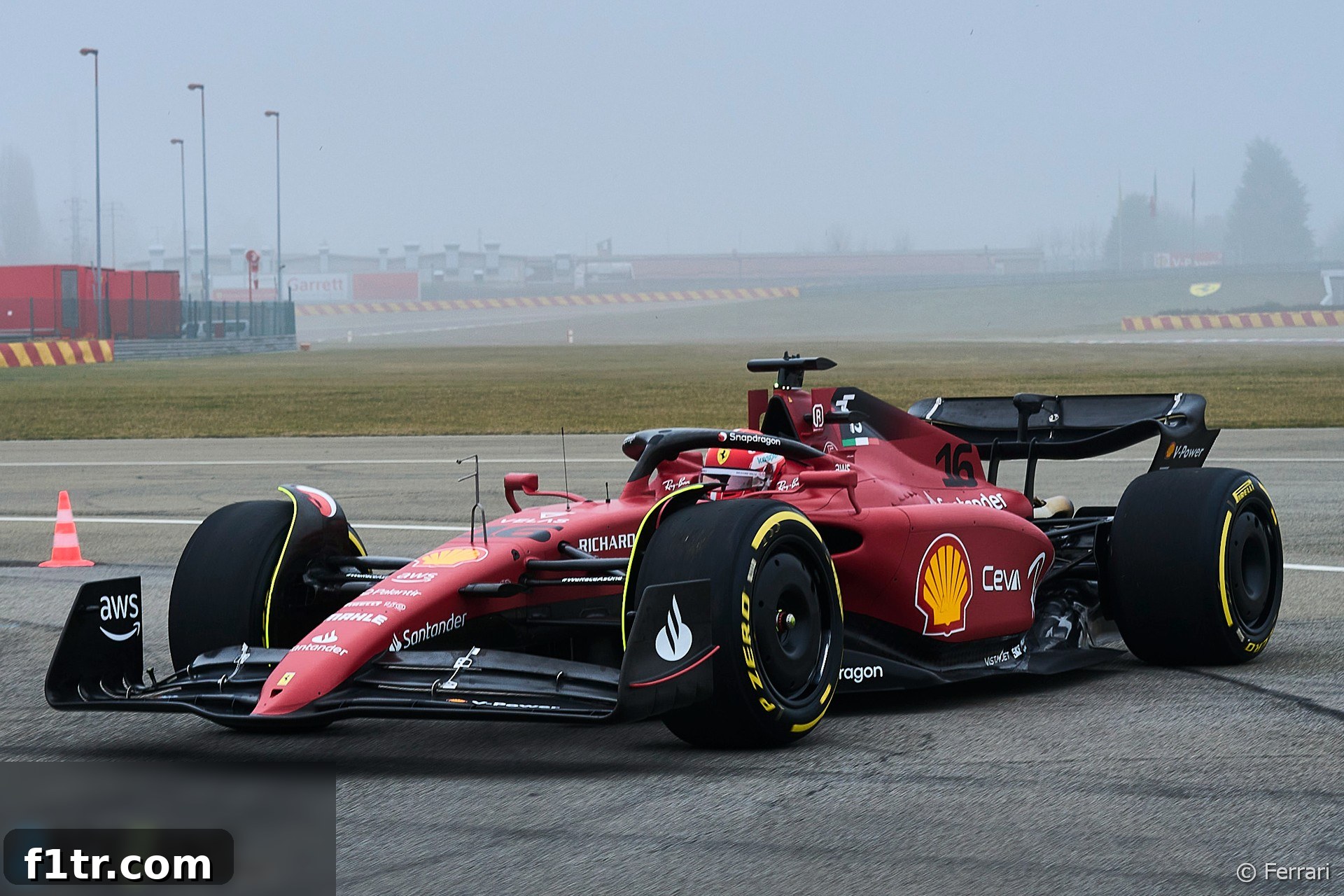
For instance, a team finishing first would receive a baseline percentage of wind tunnel and CFD time, while a team finishing sixth could be allocated a percentage perhaps 10-15% higher. In the incredibly marginal world of Formula 1, where every fraction of a second counts, this additional development bandwidth during the formative stages of a completely new car design can translate into a tangible on-track performance advantage. The extra hours in the wind tunnel, the expanded CFD simulations, and the increased freedom to experiment with different aerodynamic concepts were invaluable assets for Ferrari as they tackled the complexities of their 2022 challenger, the F1-75.
Toto Wolff’s Perspective: Embracing Competition
Mercedes team principal Toto Wolff, whose team had consistently topped the Constructors’ Championship in the years leading up to 2022, was pragmatic about the situation. Despite Mercedes standing to lose the most from the new regulatory framework and the specific handicap timing, Wolff expressed full support for the rules, recognizing their long-term benefits for the sport.
“The ability of having more wind tunnel time is, of course, something you need to bear in mind,” Wolff acknowledged in an interview, confirming the significance of the development advantage. He quantified the potential impact, stating, “The advantage of finishing sixth versus first over the course of the season is a couple of tenths and that of course you need to catch up.” This ‘couple of tenths’ might sound small, but in F1, it can often be the difference between pole position and midfield, or a championship victory and a distant second.
Wolff highlighted Mercedes’ involvement in crafting these regulations, emphasizing their commitment to fostering greater competition across the grid. “We were part of these regulations,” he stated. “I think it’s good to create competition. So we shall see wherever everyone is.” He further warned against complacency, referencing historic upsets: “Personally, I’m not discounting any teams. Everyone could be high up in the standings at the beginning of the season because we’ve seen it in 2009 with the double diffuser. If a team has innovated and discovered opportunities, that could be game changers. Everyone can be ahead at the beginning.” This callback to Brawn GP’s unexpected 2009 dominance, fueled by a clever interpretation of a loophole, underscored the unpredictable nature of significant rule changes.
A Resurgent Ferrari and the Future of the Grid
Wolff also voiced a sentiment shared by many F1 fans: a desire for a competitive Ferrari. “As a fan, I love Ferrari,” he said. “They are the greatest name in Formula 1 and it cannot be that Ferrari is not competing for race victories and titles.” He stressed the importance of seeing Ferrari “in the mix” for the health and excitement of the sport, acknowledging the passion of the Tifosi. His hopes for a multi-team battle proved prophetic, with Ferrari indeed making a strong start to the 2022 season, albeit ultimately falling short of championship glory.
Interestingly, while Ferrari benefited from their 2020 slump, their strong performance in 2021 – where they climbed to third in the Constructors’ Championship – meant their allocation of development resources for the *subsequent* seasons would be significantly curtailed. The ATR system is dynamic, recalibrating annually based on the previous year’s standings. This constant adjustment ensures that the competitive balance mechanism continues to operate, preventing any single team from perpetually leveraging a prior advantage.
Another team whose fortunes shifted due to the delayed regulations was Aston Martin. Operating as Racing Point in 2020, they finished a respectable fourth. However, a less stellar 2021 season saw them drop to seventh in the Constructors’ Championship. This decline, similar to Ferrari’s 2020 experience, ironically granted them a slightly increased allocation of wind tunnel time for their 2022 car development, providing a small but potentially impactful boost as they navigated the new technical era.
The Enduring Impact of a Regulatory Reset
The 2022 Formula 1 season represented a true reset, not just because of the radical new technical regulations, but also due to the unique circumstances surrounding their implementation. The pandemic-induced delay, coupled with the existing aerodynamic development handicap, created an intriguing dynamic that favored teams recovering from a weaker previous season. This structure aimed to level the playing field, making the F1 championship more thrilling and less predictable, ensuring that engineering ingenuity and strategic development decisions played an even more critical role.
As teams embarked on their initial tests with these vastly different cars, the collective hope was for a season defined by fierce, wheel-to-wheel competition and a diverse set of front-runners. The story of the 2022 regulations is a testament to Formula 1’s continuous evolution, where even unforeseen global events can subtly but significantly influence the very fabric of competition, ensuring that the pinnacle of motorsport remains captivating and unpredictable.
2022 F1 Season Articles
- Mercedes told me “you’re wrong” about 2022 car’s problems – Hamilton
- FIA confirms all 10 F1 teams complied with 2022 cost cap
- Steiner “not ashamed” of panning “slow” Schumacher in Drive to Survive
- Albon believes year out of F1 improved him as a driver
- Hamilton sees diversity gains in F1 years on from his ‘traumatising’ experience of racism
Browse all 2022 F1 season articles