The dawn of a new Formula 1 season always ignites a unique blend of anticipation and excitement. For 2022, this sentiment is amplified by sweeping regulatory changes designed to level the playing field, promising a fresh start for teams and drivers alike. As the grid prepares for battle, several compelling narratives dominate the headlines, setting the stage for what could be one of the most memorable seasons in recent memory. From legendary teams chasing elusive victories to iconic drivers pursuing historic milestones, the upcoming championship is poised to deliver drama, triumph, and heartbreak in equal measure.
At the heart of these stories lies Formula 1’s most historic and revered team, Scuderia Ferrari, desperately seeking to reclaim its former glory. For far too long, the famed Prancing Horse has been a bystander in the title fights, its last triumph feeling like a distant memory. Parallel to this quest is the enduring ambition of the sport’s most successful driver, Lewis Hamilton, who continues his relentless pursuit of an unprecedented eighth world championship title. These intertwined tales, along with new regulations, driver changes, and a record-breaking calendar, promise an F1 season brimming with potential.
Ferrari’s Longest Modern Win Drought: A Deep Dive into the Prancing Horse’s Struggle
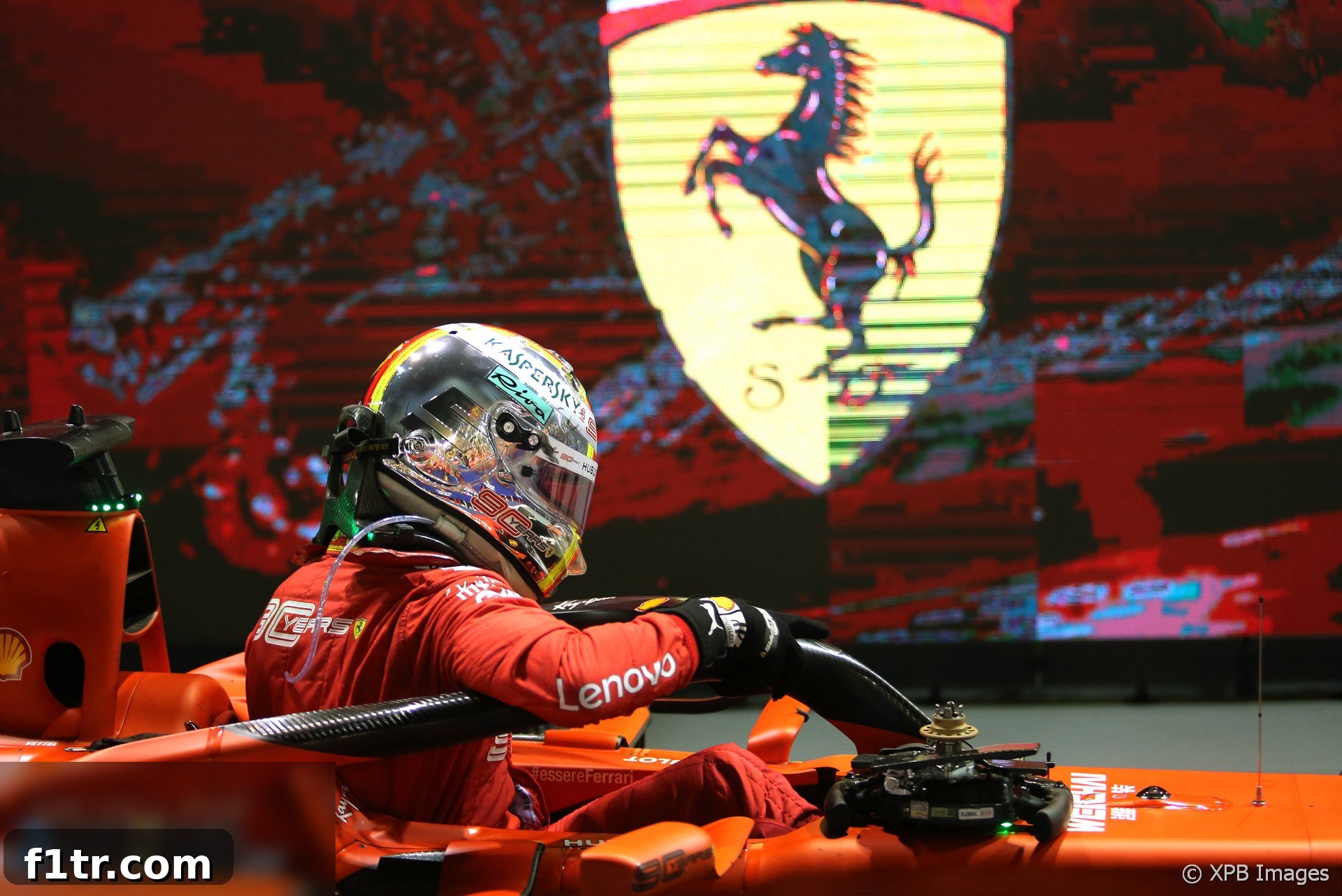
When the five red lights extinguished to signal the start of the 2022 Formula 1 season in Bahrain, an astonishing 910 days had elapsed since Scuderia Ferrari last tasted victory. This prolonged drought, a stark contrast to their illustrious history, weighs heavily on the team and its passionate Tifosi. The last time a Ferrari driver stood atop the podium was Sebastian Vettel at the 2019 Singapore Grand Prix, a moment that now seems like an anomaly rather than a precursor to sustained success. Since that memorable evening, Ferrari has endured a challenging period, marked by inconsistent performance, strategic missteps, and the agonizing wait for a return to the winner’s circle.
In the intervening two and a half years, the competitive landscape of Formula 1 has seen triumphs from various constructors. Mercedes and Red Bull Racing have, predictably, dominated the lion’s share of victories, establishing themselves as the sport’s formidable front-runners. However, the period has also witnessed other teams break through, securing significant wins. McLaren, with Daniel Ricciardo’s emotional triumph at Monza in 2021, Alpine’s stunning victory with Esteban Ocon in Hungary, AlphaTauri’s impressive win with Pierre Gasly at Monza in 2020, and Racing Point (now Aston Martin) claiming a shock victory with Sergio Perez in Sakhir, all demonstrate that success, albeit sporadic, has been achievable for others. Ferrari’s absence from this list underscores the depth of their struggle.
While the current winless streak is undoubtedly frustrating, it is important to place it in historical context. This is not Ferrari’s longest period without a victory. The team famously endured a staggering 1,400 days between Alain Prost’s victory at the 1990 Spanish Grand Prix and Gerhard Berger’s emotional win at Hockenheim four years later. That prolonged period was a defining test of endurance for the team, ultimately paving the way for future successes. The current challenge, however, feels particularly poignant given the hyper-competitive nature of modern F1 and the immense pressure on a team of Ferrari’s stature.
The 2021 season offered glimmers of hope, particularly with Charles Leclerc showcasing flashes of brilliance. His near-victory at Silverstone, where he led for much of the race before being agonizingly caught in the final laps, was a poignant reminder of Ferrari’s potential and the fine margins separating success from frustration. The team will be acutely aware that opportunities like these cannot be squandered. With significant regulatory changes for 2022 offering a reset, Ferrari has invested heavily in developing a competitive package. The hope is that the new era will finally allow them to break this extended drought and return to the pinnacle of Formula 1, satisfying the fervent desires of their global fanbase and adding another chapter to their storied history.
Lewis Hamilton’s Relentless Pursuit of an Eighth World Crown
If Charles Leclerc’s disappointment at Silverstone was palpable, it pales in comparison to the profound emotional toll taken on Lewis Hamilton after the dramatic and controversial conclusion of the 2021 Abu Dhabi Grand Prix. A record-breaking eighth world championship, a title that would definitively cement his status as the greatest of all time, slipped through his fingers on the final lap under circumstances that sparked widespread debate and criticism. The raw emotions of that moment, and the ensuing weeks of silence from the seven-time champion, left millions of fans wondering about his future in the sport.
Hamilton’s eventual re-emergence on social media and his commitment to the 2022 season brought a collective sigh of relief. His decision to continue racing signifies an unwavering determination to overcome adversity and reclaim what he believes was rightfully his. Now, he faces a second opportunity to clinch that elusive eighth title, a feat that would finally move him clear of the legendary Michael Schumacher and establish him as the sole holder of the most Formula 1 world championships. The gravity of this challenge is immense, not only because of the record itself but also due to the context of the previous season’s finale.
The narrative surrounding Hamilton’s 2022 campaign is multifaceted. Firstly, the performance of the Mercedes-AMG Petronas F1 Team’s new car under the radically revised technical regulations will be crucial. Can Mercedes once again produce a championship-contending machine that allows Hamilton to showcase his unparalleled talent? Secondly, the internal dynamic within the team promises to be one of the most compelling storylines. The arrival of George Russell, a highly-touted young British talent, creates an intriguing pairing. Russell has consistently demonstrated his speed and racecraft, and his presence will undoubtedly push Hamilton to his absolute limits. How this partnership unfolds, and whether Hamilton can successfully ward off the challenge from his ambitious new teammate, will be a key determinant in his quest for an eighth crown. This internal rivalry, combined with the external competition, guarantees a gripping season for the Silver Arrows.
Russell’s integration into Mercedes also marks a notable statistical rarity: for the first time in a decade, a Formula 1 team will begin a season with two drivers of the same nationality. The last instances of such a pairing occurred in 2012, when Mercedes fielded German legends Michael Schumacher and Nico Rosberg, and McLaren opted for an all-British lineup with Lewis Hamilton and Jenson Button. This all-British pairing at Mercedes adds another layer of intrigue, evoking memories of past rivalries and promising a potentially explosive, yet ultimately collaborative, dynamic within the team.
Max Verstappen Embraces the Coveted Number One
The agonizing loss for Lewis Hamilton in Abu Dhabi was, conversely, an immense gain for Max Verstappen. The Red Bull Racing driver’s maiden world championship triumph not only marked a historic moment in his career but also ushered in the return of a hallowed tradition in Formula 1: the coveted number one plate. For the first time in eight years, the distinctive ‘1’ will adorn the front of a championship-winning car, signifying the reigning world champion.
Since the introduction of fixed driver numbers in 2014, champions have had the option to retain their personal number or switch to number one. Lewis Hamilton, despite winning multiple titles, consistently chose to stick with his iconic number 44, a nod to his racing roots. Similarly, 2016 champion Nico Rosberg retired immediately after securing his crown, thus never having the opportunity to run the number one in defense of his title. The last driver to proudly display the number one was Sebastian Vettel, following his fourth consecutive championship victory in 2013, before the fixed number system was implemented.
Verstappen’s decision to embrace the number one is a powerful statement of intent and confidence. It’s a clear declaration that he views himself as the current benchmark, a fitting symbol for a driver who fought tooth and nail to achieve his first world championship. While Hamilton occasionally ran the number one in practice sessions at Yas Marina for promotional events, his race car always bore the number 44. Verstappen’s choice signifies a return to a tradition that many fans appreciate, linking the present champion with the rich history of the sport. It symbolizes the pinnacle of achievement and adds another layer of prestige to the 2022 grid, marking a new era with a new world champion at its forefront, eager to defend his hard-won title.
A Compact Calendar Creates Unprecedented Challenges and Global Reach
Liberty Media, the commercial rights holder of Formula 1, continues its ambitious expansion of the sport’s global footprint, pushing the boundaries of the Grand Prix schedule. The 2022 Formula 1 calendar stands as a testament to this ambition, featuring an unprecedented 23 rounds – a new record for the sport. This relentless pursuit of greater income and global engagement, while exciting for fans, presents significant logistical and human challenges for the teams and personnel involved.
After two seasons heavily impacted by the global COVID-19 pandemic, the 2022 schedule represents a significant step towards a more conventional and geographically diverse calendar. For the first time since 2019, iconic venues such as Australia, Canada, Japan, and Singapore are set to return to the schedule, bringing back cherished races that were unfortunately absent from recent championships. These traditional races are vital for F1’s heritage and global appeal, and their return is met with widespread enthusiasm. Intriguingly, China remains the only regular venue yet to make its full return to the F1 calendar, with its absence primarily attributed to ongoing pandemic-related restrictions.
Despite the record number of races, the 2022 season is also slated for its earliest conclusion since 2010, with all 23 Grands Prix scheduled to take place before the end of November. This condensed timeframe means there will be little respite for teams and drivers once the season is underway. The intensity is further amplified by the inclusion of two triple-header weekends, where three races are held on consecutive weekends, all scheduled after the traditional summer break. These gruelling stretches test the physical and mental endurance of everyone in the paddock, from mechanics and engineers to drivers and team principals. The compact nature of the calendar, combined with extensive travel demands, will be a critical factor in team management, resource allocation, and maintaining peak performance throughout the demanding season, truly testing the resilience of the entire Formula 1 ecosystem.
Fernando Alonso: A Founding Member of the Illustrious 350 Club
The enduring careers of Formula 1 drivers are a testament to their passion, skill, and sheer will. Kimi Räikkönen exemplified this longevity, becoming the most experienced driver in Formula 1 history with his 323rd start at the 2020 Eifel Grand Prix, shattering Rubens Barrichello’s long-standing record from nearly a decade prior. Räikkönen further extended this remarkable achievement to 349 starts before his retirement at the close of the 2021 season, setting a new, formidable benchmark.
However, this record is poised to fall once again in 2022, to none other than Räikkönen’s former McLaren and Ferrari teammate, the indomitable Fernando Alonso. The two-time world champion, known for his relentless competitiveness and unwavering commitment, is projected to make his landmark 350th Grand Prix start at the Russian Grand Prix in September. This milestone underscores Alonso’s incredible career longevity and his enduring impact on the sport. Turning 41 this year, Alonso shows no signs of slowing down, having expressed his desire to continue racing in Formula 1. This raises an intriguing question: could Alonso, with his remarkable stamina and passion, become the very first driver in Formula 1 history to reach an astonishing 400 Grand Prix starts? Such an achievement would be an unparalleled testament to his dedication and a truly iconic moment for the sport.
The 2022 season will also see two other highly decorated drivers reach significant milestones. Both Lewis Hamilton and Sebastian Vettel, who made their Formula 1 debuts six years after Alonso, are on track to hit their 300th race starts this year, provided the calendar proceeds as planned. Unlike Alonso, who took a hiatus from F1 before his return, both Hamilton and Vettel have raced every season since their respective debuts, cementing their own legacies of consistent participation and success. These milestones collectively highlight a remarkable era of driver longevity and consistent excellence at the very pinnacle of motorsport.
Welcoming China’s First F1 Racer, Bidding Farewell to Italian Representation
While the Formula 1 calendar may still await the return of the Chinese Grand Prix, the 2022 season marks a groundbreaking moment for the nation: for the very first time in history, China will have a representative on the Formula 1 grid. Guanyu Zhou, a talented 22-year-old racer from Shanghai, makes his highly anticipated debut with Alfa Romeo Racing, becoming the sole rookie on the grid for the year. His arrival is a significant step in Formula 1’s efforts to expand its global appeal and tap into new markets, particularly the enormous potential of the Chinese automotive and motorsport landscape. Zhou’s journey to F1 is inspiring, and his performance will be closely watched by millions back home, as he paves the way for future generations of Chinese drivers.
Zhou’s promotion to Alfa Romeo comes at the expense of Antonio Giovinazzi, who departs the sport. This bittersweet change means that Formula 1 is once again without an Italian driver on the grid, a scenario last seen in 2018. For a nation with such a rich motorsport heritage and the home of iconic teams like Ferrari, the absence of an Italian driver is a notable point of discussion. While Giovinazzi showed glimpses of speed and potential, he ultimately couldn’t secure his seat for the long term. This shift in driver nationalities on the grid reflects the ever-evolving global nature of Formula 1, as talent emerges from diverse corners of the world, bringing new stories and new fanbases into the sport.
Key Driver Milestones to Watch in 2022
The 2022 Formula 1 season is not just about new regulations and championship battles; it’s also a year where several drivers are poised to achieve significant career milestones, cementing their place in the sport’s extensive record books. Assuming the demanding 23-race schedule proceeds as planned, fans can look forward to witnessing these remarkable achievements unfold:
- **Spanish Grand Prix:** A double milestone event will take place at the Circuit de Barcelona-Catalunya. Esteban Ocon is expected to mark his 100th Grand Prix weekend participation, a testament to his growing tenure in F1. Concurrently, Valtteri Bottas, now with Alfa Romeo, will celebrate his 200th Grand Prix weekend participation, highlighting his extensive and successful career at the pinnacle of motorsport.
- **Austrian Grand Prix:** The picturesque Red Bull Ring will host another pair of centennial celebrations. Charles Leclerc is set to participate in his 100th Grand Prix weekend, underscoring his rapid rise and established presence in Formula 1. Adding to this, Esteban Ocon will achieve his 100th Grand Prix race start, demonstrating his consistent presence on the grid.
- **French Grand Prix:** A truly historic moment awaits at Circuit Paul Ricard, as Lewis Hamilton is slated to make his colossal 300th Grand Prix start. This achievement further solidifies his legend, placing him among a very elite group of drivers with such extensive careers.
- **Sebastian Vettel’s 300th Participation:** Another four-time world champion, Sebastian Vettel, is also on course to reach his 300th Grand Prix weekend participation during the season, a reflection of his enduring impact and dedication to the sport.
- **Belgian Grand Prix:** At the iconic Spa-Francorchamps circuit, Pierre Gasly is set to make his 100th Grand Prix start, marking a significant personal milestone for the French driver who has become a consistent points-scorer and race winner.
- **United States Grand Prix:** The vibrant Circuit of the Americas will witness Charles Leclerc’s 100th Grand Prix start, showcasing his continued trajectory as a top-tier driver and a future championship contender.
- **Mexican Grand Prix:** The passionate atmosphere of the Autódromo Hermanos Rodríguez will be the backdrop for Sebastian Vettel’s 300th Grand Prix start, an incredible feat that further highlights his decorated career.
- **Brazilian Grand Prix:** Towards the end of the season, Valtteri Bottas will reach his 200th Grand Prix start at the legendary Interlagos circuit, a testament to his consistent performance and longevity in Formula 1.
These milestones are not just numbers; they represent years of dedication, sacrifice, and relentless pursuit of excellence from these elite athletes. Each start and participation contributes to the rich tapestry of Formula 1 history, making the 2022 season a chapter filled with both new beginnings and celebrated achievements.
Explore more insights and analysis from the thrilling 2022 F1 season.