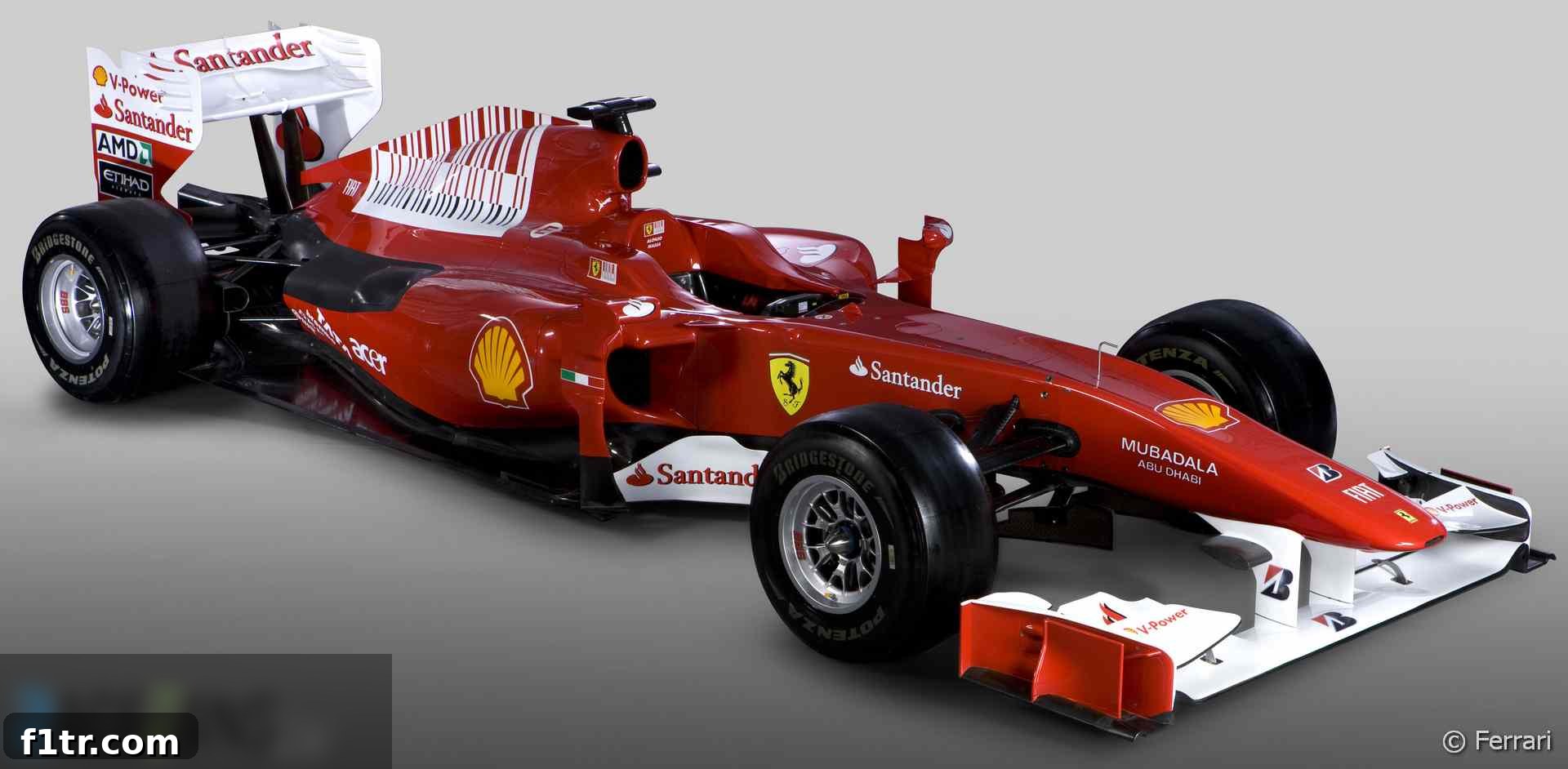
Ferrari F10: Unveiling the Scuderia’s Innovative 2010 Formula 1 Contender
Maranello, Italy – The global motorsport community held its breath as Scuderia Ferrari proudly pulled back the covers on its challenger for the 2010 Formula 1 season: the F10. This highly anticipated car represented Ferrari’s fervent ambition to reclaim its dominant position in the sport after a challenging 2009 campaign. Unveiled to a world eager for innovation and competitive racing, the F10 immediately became a focal point of discussion, showcasing a myriad of design philosophies shaped by significant regulatory changes. This comprehensive overview delves into the F10’s groundbreaking features, its technical prowess, and the strategic decisions made to adapt to the evolving landscape of Formula 1, aiming to restore the Prancing Horse to its rightful place at the pinnacle of motorsport.
The 2010 season brought with it some of the most impactful rule revisions in recent memory, fundamentally altering car design and race strategy across the entire grid. Key among these was the ban on in-race refuelling, which necessitated a much larger fuel tank to carry enough fuel for an entire Grand Prix distance. This single change had a cascading effect on car architecture, primarily influencing weight distribution, packaging, and overall chassis dynamics. Additionally, the Kinetic Energy Recovery System (KERS), which had been optional in 2009, was temporarily removed from the regulations for 2010, simplifying powertrain integration but removing a strategic power boost option that teams had invested heavily in. The F10 was meticulously engineered to not only comply with these new rules but to exploit them for a competitive advantage, aiming to build on Ferrari’s illustrious heritage and legacy in Formula 1.
Aerodynamic Philosophy and Key Design Innovations
The F10’s design philosophy was clearly driven by the acute need to optimize efficiency and performance within the new regulatory framework. One of the most immediately discernible changes, and a direct consequence of the refuelling ban, was the car’s significantly longer wheelbase. This extension was crucial for accommodating the enlarged fuel tank, which had to be strategically positioned within the chassis without compromising the car’s balance. A longer wheelbase aids in achieving a more balanced and stable weight distribution throughout the race, especially as the car’s weight decreases less drastically from fuel consumption over a full Grand Prix. This critical design choice can lead to more consistent tire wear and improved handling characteristics, which would be vital over a full race distance without the mid-race top-ups of previous seasons, demanding a new approach to race management and setup.
As is customary with new F1 car launches, especially those from top-tier teams, some of the F10’s most sensitive aerodynamic secrets were meticulously kept under wraps. The car was deliberately presented with 2009-specification front and rear wings, effectively masking the true, cutting-edge aerodynamic solutions that Ferrari engineers had developed specifically for the demanding 2010 season. Moreover, Ferrari exercised extreme caution, meticulously avoiding showing any direct images of the rear of the car. This calculated move was widely understood as an effort to conceal what was believed to be an aggressive double diffuser design – a controversial yet highly effective aerodynamic device that had dramatically dominated the latter half of the 2009 season and whose legality was initially debated but later confirmed. The double diffuser, by ingeniously manipulating airflow beneath the car to create greater downforce, was a critical area of development for all teams, and Ferrari’s secrecy underscored its immense importance to the F10’s overall performance package and its potential competitive edge.
Nose Cone and Front-End Aerodynamics
Perhaps the most visually striking alteration on the F10 was its entirely revised nose cone. Departing significantly from previous Ferrari designs, the 2010 car featured a nose that was both longer and noticeably higher. This distinctive styling echoed the highly successful and innovative approach seen on Red Bull Racing’s 2009 championship-winning RB5. A high nose allows for a greater volume of air to flow freely underneath the car, which can then be channeled more effectively towards the underbody and diffuser, crucially enhancing overall downforce and aerodynamic efficiency. The regulations mandate that every Formula 1 car must be equipped with onboard camera housings; on the F10, these were strategically moved back from the very tip of the nose, a subtle yet significant modification likely aimed at optimizing frontal airflow, reducing drag, and minimizing any potential disruption to the delicate aerodynamic structures without compromising camera visibility or compliance.
A closer examination of the F10’s front-on silhouette revealed slightly smaller air intakes for cooling. This modification was most likely a direct consequence of the removal of KERS for the 2010 season. KERS components, particularly the energy storage units and associated electronics, generate significant heat and typically require dedicated, substantial cooling apertures. Without KERS, the overall thermal load on the car’s cooling system would naturally be reduced, thereby allowing for more compact and aerodynamically efficient intake designs. Beneath the sleek bodywork, it was anticipated that the radiators, crucial for engine cooling, would adopt a longer and narrower configuration compared to the previous year. This ingenious packaging solution was a necessary compromise to fit them around the now significantly larger fuel tank, a complex engineering challenge that virtually every team on the grid had to address in their 2010 designs. The ability to package these vital components effectively within tight aerodynamic constraints, without compromising performance, was a testament to the engineering prowess of the Scuderia Ferrari team.
Sidepod Design and Airflow Management
Further along the car’s flanks, small but strategically placed turning vanes were clearly evident just in front of the sidepods. These seemingly minor aerodynamic devices play a crucial, sophisticated role in conditioning the airflow before it reaches the more critical areas of the car’s mid-section and rear. They work by precisely guiding and sculpting the air around the bulky sidepods, helping to prevent turbulent flow and optimizing its direction towards the rear wing and diffuser, both key components for generating downforce. The rear-view mirrors were cleverly mounted upon these turning vanes, integrating their structure into the overall aerodynamic scheme rather than acting as standalone disruptive elements. The sidepods themselves featured a more aggressively sculpted and refined aerodynamic shape compared to their predecessors, indicative of intense CFD (Computational Fluid Dynamics) and wind tunnel development. This intricate sculpting is not merely aesthetic; it’s meticulously designed to manage the airflow generated by the front of the car, minimize drag, and maximize the efficiency of the airflow towards the rear of the vehicle, contributing significantly to downforce generation, overall stability, and ultimately, lap time performance.
Launch Event, Pre-Season Testing, and Team Dynamics
The official launch of the F10 was a moment of high anticipation for Tifosi and motorsport enthusiasts worldwide. However, the planned initial shakedown run by Felipe Massa at Ferrari’s private Fiorano circuit was unfortunately cancelled due to adverse weather conditions. This meant that fans and competitors alike would have to wait a little longer to see the F10 in full flight on track. The car was subsequently scheduled to make its public debut during the first collective pre-season testing session at the Circuit de la Comunitat Valenciana Ricardo Tormo, commencing on February 1st. These testing sessions are absolutely critical for teams to collect vital data, validate complex simulations performed during development, and allow drivers to acclimatize to their new machinery and its characteristics. For Ferrari, and particularly for Felipe Massa returning to competitive racing after his serious injury in 2009, these tests would be paramount for building confidence, fine-tuning the car’s setup, and ironing out any initial kinks in the F10’s performance.
The 2010 season also marked a significant shift in Ferrari’s commercial partnerships. The arrival of Santander, the prominent Spanish banking group, as a major sponsor brought with it a notable visual change to the F10’s livery. For the first time since the 2006 season, the car featured prominent white front and rear wings, a clear and striking visual indicator of the new, lucrative partnership. This refreshed aesthetic symbolized a new chapter for the Scuderia, signaling a strong financial backing as they embarked on a fresh championship bid. Concurrently, the logos of former communications sponsor Alice were no longer visible on the car, reflecting the natural evolution of sponsorship deals and commercial strategies in the dynamic world of Formula 1. These changes in livery are more than just cosmetic; they represent significant financial backing and strategic alliances that are fundamental to a top F1 team’s operational capabilities and competitive aspirations.
The driver line-up for Ferrari in 2010 was undoubtedly one of the most exciting and formidable on the grid, pairing the returning Felipe Massa with two-time World Champion Fernando Alonso. Massa’s courageous return to competitive racing after his serious accident in 2009 was eagerly awaited by the entire F1 community, and his extensive experience and expertise in developing a car would be invaluable to the team. Alonso’s highly anticipated move to Ferrari was a dream come true for many fans, and his proven track record for extracting maximum performance from any machinery immediately positioned Ferrari as a formidable championship contender. The combination of an innovative car, designed to excel under new regulations, and a stellar, highly motivated driver pairing set the stage for what promised to be an enthralling and fiercely contested Formula 1 season, with Ferrari firmly in the hunt for titles.
Detailed Technical Specifications of the Ferrari F10
Ferrari provided initial technical specifications for the F10 upon its launch, offering a crucial glimpse into the sophisticated engineering and meticulous attention to detail underpinning their new contender. These details highlight the commitment to advanced materials, precision mechanics, and cutting-edge technology that defines success in Formula 1.
Chassis Specifications
- Structure: The F10 featured a highly advanced carbon-fibre and honeycomb composite structure. This lightweight yet incredibly rigid construction is fundamental for both driver safety in high-speed impacts and dynamic performance, providing exceptional torsional stiffness for precise handling.
- Gearbox: Equipped with a Ferrari longitudinal gearbox, engineered for optimal weight distribution within the chassis and highly efficient power transfer from the engine to the drive wheels.
- Differential: Incorporated a limited-slip differential, a crucial component for controlling traction, optimizing power delivery to the rear wheels, and enhancing stability, particularly when exiting corners under heavy acceleration.
- Gear Shift System: Utilized a semi-automatic sequential electronically controlled gearbox, coupled with a quick-shift mechanism. This state-of-the-art technology allows for lightning-fast gear changes, minimizing power loss during shifts and significantly improving acceleration and overall performance.
- Number of Gears: The gearbox offered seven forward gears, plus reverse, providing drivers with a versatile range to maximize the engine’s power band and adapt to varying track conditions and racing strategies.
- Brakes: Featured high-performance Brembo ventilated carbon-fibre disc brakes. Carbon-fibre brakes are indispensable in F1, offering superior stopping power, incredible fade resistance, and efficient heat dissipation capabilities, vital for maintaining performance lap after lap.
- Suspension: Employed an independent suspension system with push-rod activated torsion springs at both the front and rear axles. This sophisticated setup provides precise control over wheel movement, enhancing mechanical grip, optimizing tire contact with the track surface, and contributing significantly to aerodynamic stability.
- Weight: The car, including water, lubricant, and driver, adhered strictly to the F1 minimum weight limit of 620 kg. Achieving this low weight required meticulous design and the use of advanced, lightweight materials throughout the car while maintaining structural integrity and safety.
- Wheels: Fitted with BBS Wheels, for both front and rear axles, standardized at 13 inches in diameter, a consistent and long-standing feature in Formula 1 regulations.
Engine Specifications: Type 056
At the very heart of the F10 was the formidable Ferrari Type 056 engine, a marvel of modern engineering meticulously built to the strict V8 regulations enforced in Formula 1 at the time.
- Type: 056. This was the specific numerical designation for Ferrari’s 2010 power unit, indicating its iteration and development.
- Number of Cylinders: Eight. Strictly aligned with the regulatory mandate for naturally aspirated V8 engines, a standard for the era.
- Cylinder Block: Constructed from high-strength sand-cast aluminium, featuring a 90-degree V configuration. The 90-degree angle is optimal for packaging, reducing the engine’s height and thus achieving a lower center of gravity, which critically enhances handling and stability.
- Number of Valves: 32 valves (four valves per cylinder), a design chosen to maximize airflow into and out of the combustion chambers for optimal combustion efficiency and ultimately, maximum power output.
- Valve Actuation: Employed a pneumatic distribution system. This advanced valvetrain system uses compressed air instead of traditional metal springs to close valves, allowing for significantly higher engine RPMs (revolutions per minute) and greater reliability at extreme speeds, crucial for F1 engines.
- Total Displacement: 2398 cm³. This figure represents the regulated maximum capacity for Formula 1 engines during this period, ensuring a level playing field among engine manufacturers.
- Piston Bore: 98 mm. A critical dimension influencing various engine performance characteristics, such as torque curve, power delivery, and engine stress.
- Weight: The engine adhered to the minimum weight requirement of greater than 95 kg, a regulation designed to prevent excessively lightweight and potentially fragile engine designs, ensuring robust competition.
- Fuel System: Integrated state-of-the-art electronic injection and ignition systems. These sophisticated electronic controls ensure precise fuel delivery and optimal ignition timing, maximizing power output, enhancing fuel efficiency, and improving engine responsiveness.
2010 Ferrari F10 Picture Gallery
Below are some of the first official images released of the Ferrari F10, offering a closer look at its striking design and innovative aerodynamic details, showcasing the craftsmanship and engineering behind this iconic Formula 1 car.
Related Ferrari F10 Launch Coverage and F1 Insights
- 2010 Ferrari F10 and 2009 Ferrari F60 Side-by-Side: A Visual Comparison of Design Evolution
- Luca di Montezemolo’s Vision: ‘F1 Needs Credibility’ Amidst Rule Changes and Controversies
- The Enduring Legacy of Ferrari in Formula 1: A Journey Through Time and Triumphs
- Recap of the Thrilling 2010 Formula 1 Season: Key Moments, Dramatic Battles, and World Champions
- Felipe Massa: A Profile of Resilience and Talent in Formula 1
- Fernando Alonso: The Enigmatic Champion’s Impact on Formula 1
With its innovative design, meticulous adaptation to stringent new regulations, and a formidable driver pairing, the Ferrari F10 embodied the hopes, aspirations, and immense pressure on the Scuderia for the 2010 Formula 1 season. While the initial launch showcased many advancements and thoughtful engineering solutions, the true test of its capabilities would ultimately come on the unforgiving asphalt of race tracks around the world. The anticipation built around the F10 was not merely for another racing car; it was for a powerful symbol of Ferrari’s enduring spirit, its relentless pursuit of engineering excellence, and its unwavering commitment to returning to the pinnacle of motorsport. The F10 was poised to write the next thrilling chapter in Ferrari’s legendary and storied Formula 1 history, aiming to once again challenge for world championships and delight its millions of passionate fans globally.