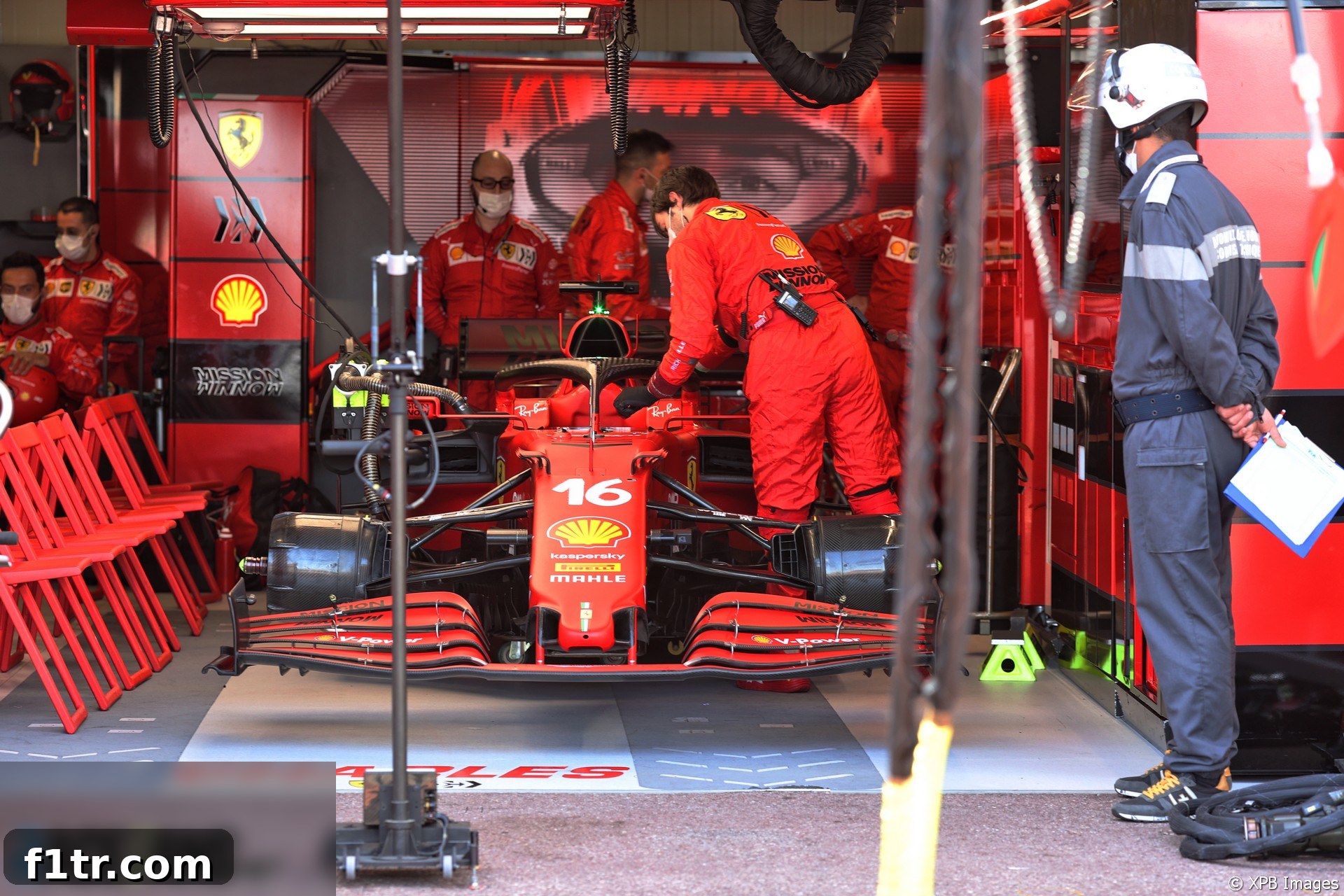
In the highly competitive world of Formula 1, every race presents a unique set of challenges and opportunities. For Scuderia Ferrari, the Monaco Grand Prix, a jewel in the F1 calendar and home race for star driver Charles Leclerc, proved to be a crucible of learning and resilience. Despite the crushing disappointment of losing a strong chance at victory, Ferrari’s Sporting Director Laurent Mekies affirmed that the team has emerged “stronger” from the experience, armed with invaluable lessons that will shape their future approach to precision and performance.
The build-up to the Monaco Grand Prix had been nothing short of electrifying. Charles Leclerc, showcasing his undeniable talent, had magnificently secured pole position, thrilling Tifosi worldwide. However, this triumph was tinged with drama as a crash at the very end of qualifying raised immediate concerns about his car. The team, working against the clock and under immense pressure, meticulously inspected and reportedly repaired his SF21, believing it was fully prepared for the arduous race ahead. The collective confidence within the garage, and indeed among fans, was palpable.
Tragically, this optimism was short-lived. As Leclerc embarked on his reconnaissance lap before the race officially began, a critical fault developed. What should have been a triumphant parade lap quickly turned into a devastating realization. The car, compromised by an unseen issue, was forced to retire before even reaching the starting grid, shattering Leclerc’s hopes and sending a ripple of disbelief through the paddock. The raw emotion of the moment, particularly for Leclerc in his home race, underscored the brutal unpredictability of Formula 1.
In the aftermath, a thorough investigation by the Maranello-based squad revealed a concealed, damaged part on the left-hand side of the car. This was notably opposite to the point of impact where Leclerc’s car had contacted the barrier during his qualifying shunt. The discovery highlighted a critical oversight in their pre-race inspection protocols. Speaking candidly about the incident, Mekies emphasized that this painful experience served as a potent catalyst for immediate and comprehensive improvements in their inspection procedures for all future races, ensuring such a scenario would not be repeated.
“I think as a team we’ve come out of there stronger because we’ve learnt that the process that we have applied there, to assess whether the car was alright, should have been better,” Mekies explained, reflecting on the challenging weekend. His words underscored a profound commitment to self-assessment and continuous improvement. He elaborated on the gravity of the situation, stating, “It’s not something that we take lightly – it’s not something we were taking lightly in Monaco. It’s the extent of the possible consequence of the accident that we didn’t push far enough.” This acknowledgment reveals a team culture that embraces accountability and turns setbacks into opportunities for growth, rather than shying away from difficult truths.
The lessons gleaned from Monaco extend far beyond merely rectifying damage repair protocols. Mekies sees this incident as an integral part of Ferrari’s overarching strategy for holistic team development. “It’s lessons learnt for us, that’s how we improve on every single area,” he asserted. “It’s not different for the accident. It’s how we improve performance, how we improve the operations, how we improve the reliability. It’s making sure we add that to our structured approach.” This philosophy encapsulates the essence of elite motorsport: every experience, whether positive or negative, contributes to the cumulative knowledge base that builds a more robust and resilient organization.
The incident highlighted the intricate challenges of maintaining peak performance in Formula 1, where margins are infinitesimally small, and every component’s integrity is paramount. The pressure to quickly assess and repair a highly complex machine like an F1 car, especially after a high-speed impact, is immense. Ferrari’s admission of overlooking a concealed fault demonstrates a transparency that is crucial for genuine progress. By meticulously dissecting what went wrong, they are fortifying their defenses against similar issues, not just in accident recovery but across their entire operational spectrum, from car design to race day execution.
Mekies further articulated this ongoing process of refinement: “From the additions of all these steps – that can be a bad experience like the one in Monaco or a good experience when we over-perform somewhere – you just build slowly a better team and a stronger team. And we are fully focussed on that aspect.” This statement reinforces the idea that true strength is forged through a relentless pursuit of perfection, where every success and every failure serves as a building block. The Monaco experience, though painful, is now ingrained in their institutional memory, informing future engineering checks, operational decisions, and risk assessments.
One tactical decision that emerged from the Monaco DNF was related to Leclerc’s gearbox. Ferrari initially hoped to avoid replacing it during the repair process, as doing so would have automatically incurred a grid penalty for the subsequent race. Given that the part which ultimately failed (the rear-left hub) was external to the gearbox itself, the team technically could have continued using the same gearbox for the Azerbaijan Grand Prix without penalty, provided it was still functional. However, Formula 1 regulations offer a crucial allowance: if a driver fails to finish a race, they are entitled to take a new gearbox for the next event without penalty. Ferrari shrewdly leveraged this opportunity for the Azerbaijan GP, opting for a fresh gearbox to ensure maximum reliability and performance, a clear demonstration of strategic planning aimed at minimizing future risks.
Charles Leclerc himself provided a candid account of his feelings and his belief in the team’s efforts immediately following his qualifying crash. “I followed everything because obviously after the crash, I was quite worried about it,” he explained, highlighting the natural anxiety that follows such a high-impact incident. He detailed the extensive checks performed by the team: “And they checked everything that was possible to check before Sunday, which is quite tricky, the times are short.” The window between qualifying and the race is often tight, placing immense pressure on mechanics and engineers to perform thorough diagnostics swiftly.
Leclerc’s confidence stemmed from these diligent efforts. “They put the engine on, everything seemed to be completely fine. So I was quite confident, as the team was, to go on track and that everything was going to be fine,” he recounted. This shared confidence underscores the trust and cohesion within the Ferrari camp. However, the subsequent heartbreak was profound. “I did the first sector and everything felt good. But then it broke just before the tunnel, if I remember well, the rear-left hub. So then I understood straightaway that it will be quite difficult to make the start and we confirmed it once we were in the pits.” Leclerc’s detailed recollection paints a vivid picture of the moment optimism turned to despair, and the swift confirmation of the issue back in the garage.
The Monaco Grand Prix was a harsh teacher for Ferrari, delivering a lesson in the critical importance of uncovering hidden vulnerabilities. Yet, by acknowledging their mistake and implementing rigorous new inspection protocols, the team has taken a significant step forward. This incident, while painful, ultimately reinforces their commitment to continuous improvement across all facets of their operation, from engineering to race strategy. It’s a testament to their ambition to build a stronger, more resilient team, ready to contend for championships by learning from every experience, good or bad. The disappointment of Monaco has, paradoxically, become a cornerstone in Ferrari’s relentless pursuit of excellence, propelling them to scrutinize every detail and emerge more robust than ever before.
2021 Azerbaijan Grand Prix Insights
- Aston Martin also confirms it followed Pirelli’s tyre restrictions before crash
- Pirelli confirm teams not to blame for Baku tyre failures following investigation
- “Tyres should not explode like that” says Villeneuve as Pirelli prepares to reveal findings
- Why Alonso is able to enjoy F1 more now than when he left
- Penalty for Safety Car error was just one of Latifi’s frustrations in Baku
Browse all 2021 Azerbaijan Grand Prix articles