The Consistency Conundrum: Ferrari’s Pit Lane Fine Ignites F1 Debate
The thrilling unpredictability of Formula 1 extends beyond the track, often spilling into the intricate world of regulations and penalties. A recent contentious decision by the German Grand Prix stewards, regarding an unsafe release involving Charles Leclerc’s Ferrari, has ignited a significant debate within the paddock. Ferrari found themselves facing a fine for the incident, a resolution they firmly believe was the correct course of action, arguing against the imposition of a time penalty on their driver.
However, this decision has not been met with universal approval. Rival teams and pundits alike have voiced their concerns, arguing that this ruling deviates significantly from past precedents. Many fear it could set a dangerous new standard, potentially incentivizing teams to take greater risks in the pit lane, confident that any infraction might only result in a financial penalty rather than a sporting one that could directly impact their race results or championship standings. The core of the argument revolves around the perceived inconsistency in how such incidents are judged, threatening the very essence of fair play and safety in one of motorsport’s most high-stakes environments.
Ferrari’s Stance: Safety First, Then the Racing Situation
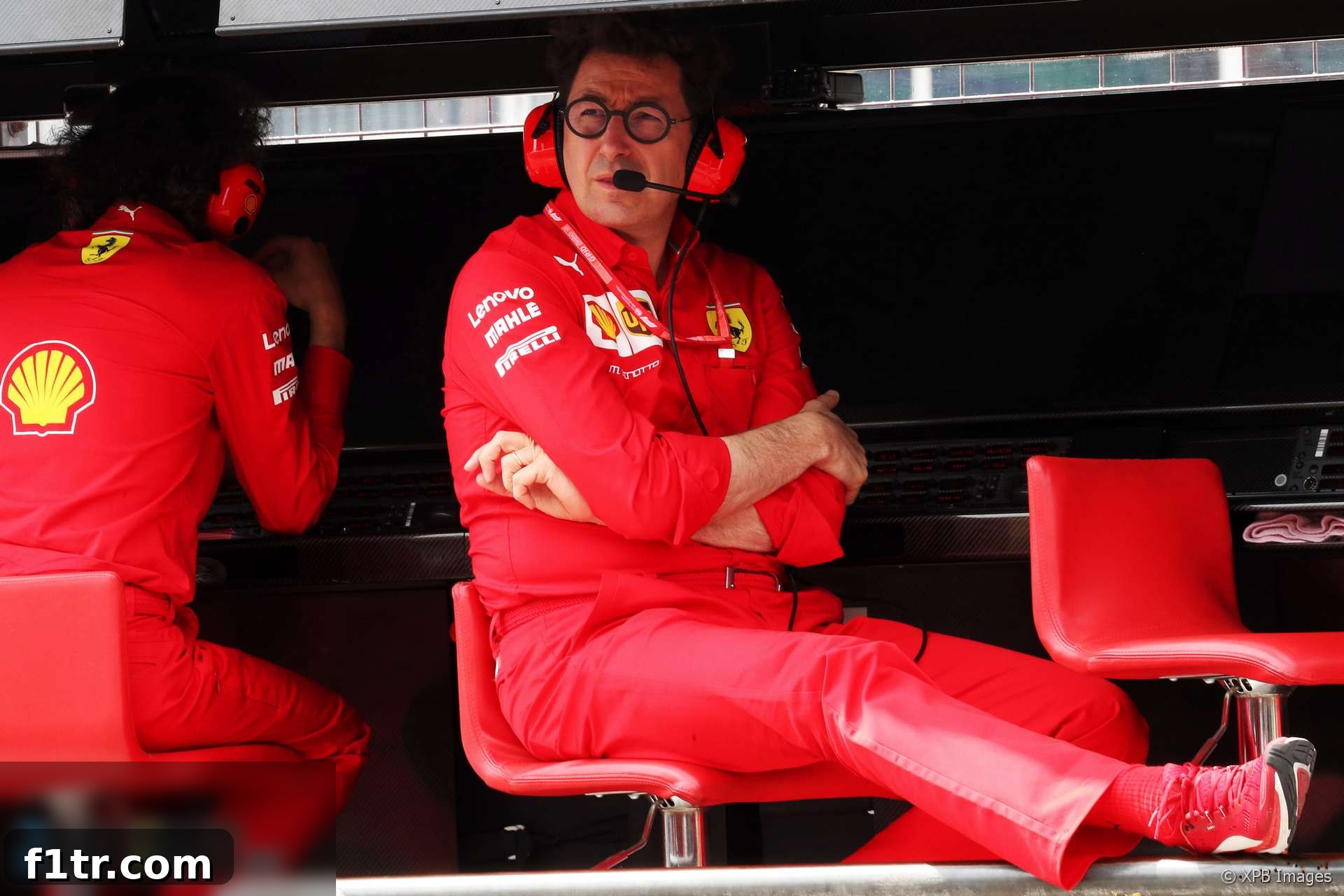
In the aftermath of the Hockenheim incident, Ferrari team principal Mattia Binotto robustly defended the stewards’ decision during Friday’s FIA press conference. Binotto emphasized the complex and often challenging nature of judging situations that unfold rapidly in the pit lane, where split-second decisions dictate outcomes. His argument centered on the paramount importance of safety, particularly for the invaluable pit crew mechanics who operate in incredibly close proximity to high-speed vehicles.
“Several races present difficult situations; difficult situations to judge, difficult situations to act on,” Binotto began, reflecting on the broader context of F1 regulations. He then delved into the specifics of Leclerc’s case. “During the weekend at Hockenheim, I think that the drivers met with the FIA on the Thursday and discussed the approach. What was key was certainly to be safe respective to the mechanics in the pit lane.”
Binotto elaborated, “For example, in the case of Charles, the Red Bull team was ready for a pit stop and was just in front of him. I think the way that Charles drove was very safe in respect of the mechanics and the pit crew.” He acknowledged the operational challenge Leclerc faced: “Yes, he had to slow down to be careful with the cars coming in, but that’s a racing situation. I think that as a team, when you’ve got such traffic, again, I think what is key is safety first.” Ferrari’s principal concluded by asserting his belief in the consistency of the ruling, stating, “In a racing situation where we have been fined, I don’t think there will be a much different situation or different judgement in the future. I think the way it has been judged was the proper one.” This perspective underscores Ferrari’s confidence that the stewards weighed all factors, prioritizing the immediate safety aspect and discerning that a financial penalty was an adequate response without unfairly impacting the sporting outcome for an incident they viewed as primarily an operational challenge rather than a blatant safety disregard by the driver.
Red Bull’s Counterpoint: The Call for Consistency
The sentiment from other teams, however, diverged sharply from Ferrari’s viewpoint, particularly from Red Bull Racing. Christian Horner, Red Bull team principal, voiced significant concerns over the precedent set by the Hockenheim decision, drawing a direct comparison to a similar incident earlier in the season involving his own driver, Max Verstappen. Verstappen had received a five-second time penalty for an unsafe release during the Monaco Grand Prix, a ruling that directly impacted his race result.
Horner articulated the perceived discrepancy: “Max got a penalty in Monaco for what was an unfair release and it was deemed that it was because he touched the car of Valtteri Bottas.” He acknowledged that the specifics of each incident can vary, stating, “It’s a tricky one, they are slightly different incidents.” However, he quickly pivoted to the fundamental issue at hand: the critical need for a consistent application of the rules across all races and teams. “But I think that what you want to see more than anything is an element of consistency because otherwise, from a team point of view, from the guy that’s releasing the car, what call does he make when he’s making that release now?”
Horner’s point highlights a crucial operational challenge for teams. Pit stop releases are high-pressure, split-second decisions made by the pit crew. If the penalty for an unsafe release is inconsistent – sometimes a time penalty, sometimes a mere fine – it creates ambiguity and uncertainty. This lack of clarity can lead to confusion for the crew members responsible for the release, potentially influencing their judgment in future races and, more importantly, undermining the perceived fairness of the competition. The essence of Formula 1 regulations is to ensure a level playing field, and any perceived deviation from consistent enforcement can lead to frustration and accusations of bias, impacting the integrity of the sport.
The Broader Implications: Safety, Precedent, and Sporting Integrity
The debate surrounding Ferrari’s fine extends far beyond the immediate incident at Hockenheim; it touches upon fundamental principles of Formula 1: safety, the role of precedent in stewarding decisions, and the overall sporting integrity of the championship. Pit lane safety is non-negotiable. With cars moving at high speeds and mechanics operating in extremely confined spaces, any unsafe release poses a significant risk not only to the drivers involved but, crucially, to the human element of the pit crew. The FIA has always emphasized stringent safety protocols, and any ruling that might appear to diminish the severity of an unsafe release, particularly one where contact or a clear obstruction occurred, warrants scrutiny.
One of the central arguments against the Hockenheim ruling is the potential for it to establish an undesirable precedent. If the penalty for an unsafe release becomes primarily financial, irrespective of the degree of danger or obstruction, it could be argued that teams might be less deterred from taking aggressive release strategies. A time penalty, which directly affects a driver’s race position and championship points, is often seen as a more potent disincentive for sporting infractions. A fine, while a monetary cost, may be considered a lesser evil, especially for well-funded teams, potentially turning a critical safety issue into a calculable business risk. This could inadvertently encourage a ‘pay-to-play’ mentality, where the financial penalty becomes an acceptable cost for gaining a strategic advantage, thereby compromising the sporting ethos.
The role of the stewards in ensuring consistency is paramount. They are tasked with interpreting and applying complex regulations across diverse incidents that, while similar in nature, often have unique contextual elements. However, the expectation from teams, drivers, and fans alike is that similar infractions should yield similar penalties. This consistency builds trust in the officiating body and provides clear guidelines for all competitors. When perceived inconsistencies arise, as highlighted by Christian Horner, it erodes that trust and can lead to frustration, suggesting that the rules are applied differently depending on the team or the specific circumstances, rather than the objective nature of the offense.
The FIA’s challenge is to balance the need for flexibility in judging unique race incidents with the overarching requirement for clear, consistent application of penalties. Discussions between drivers and the FIA, as mentioned by Binotto, are vital for clarifying guidelines and ensuring that the sporting regulations evolve to meet the demands of modern F1. However, the outcome of these discussions must translate into tangible, predictable enforcement on track. Without this, the pit lane, a place of choreographed precision and immense pressure, risks becoming a flashpoint for ongoing controversy rather than a testament to engineering and teamwork excellence.
Looking Ahead: The Future of Pit Lane Regulations
The debate sparked by the Ferrari unsafe release penalty at the German Grand Prix underscores the continuous need for clarity and consistency in Formula 1 regulations. While Binotto stands firm on Ferrari’s belief that the stewards made the right call for the specific circumstances, Horner’s concerns about setting precedents and maintaining consistency resonate deeply within the paddock. The FIA’s ability to navigate these complex issues, providing clear guidelines and enforcing them fairly and consistently, will be crucial for maintaining the integrity of the sport.
As Formula 1 continues to push the boundaries of technology and competition, the rules governing critical areas like the pit lane must evolve in parallel. Ensuring that penalties for unsafe releases are both effective deterrents and consistently applied across all teams and incidents will be key to safeguarding the welfare of all personnel and upholding the fairness that fans expect from the pinnacle of motorsport. This discussion serves as a powerful reminder that every decision, no matter how seemingly small, contributes to the intricate tapestry of Formula 1’s sporting landscape.
2019 F1 Season Insights and Related Articles
- Crying in the Melbourne car park at 2019 grand prix was my career low – Ocon
- McLaren Racing reports reduced £71 million loss in 2019
- Kvyat: Hockenheim podium last year was “my biggest achievement” so far
- How the FIA’s new encrypted fuel flow meter targets Ferrari’s suspected ‘aliasing’ trick
- “He smashed my office door”: 23 must-see moments from ‘Drive to Survive’ season two
Browse all 2019 F1 season articles