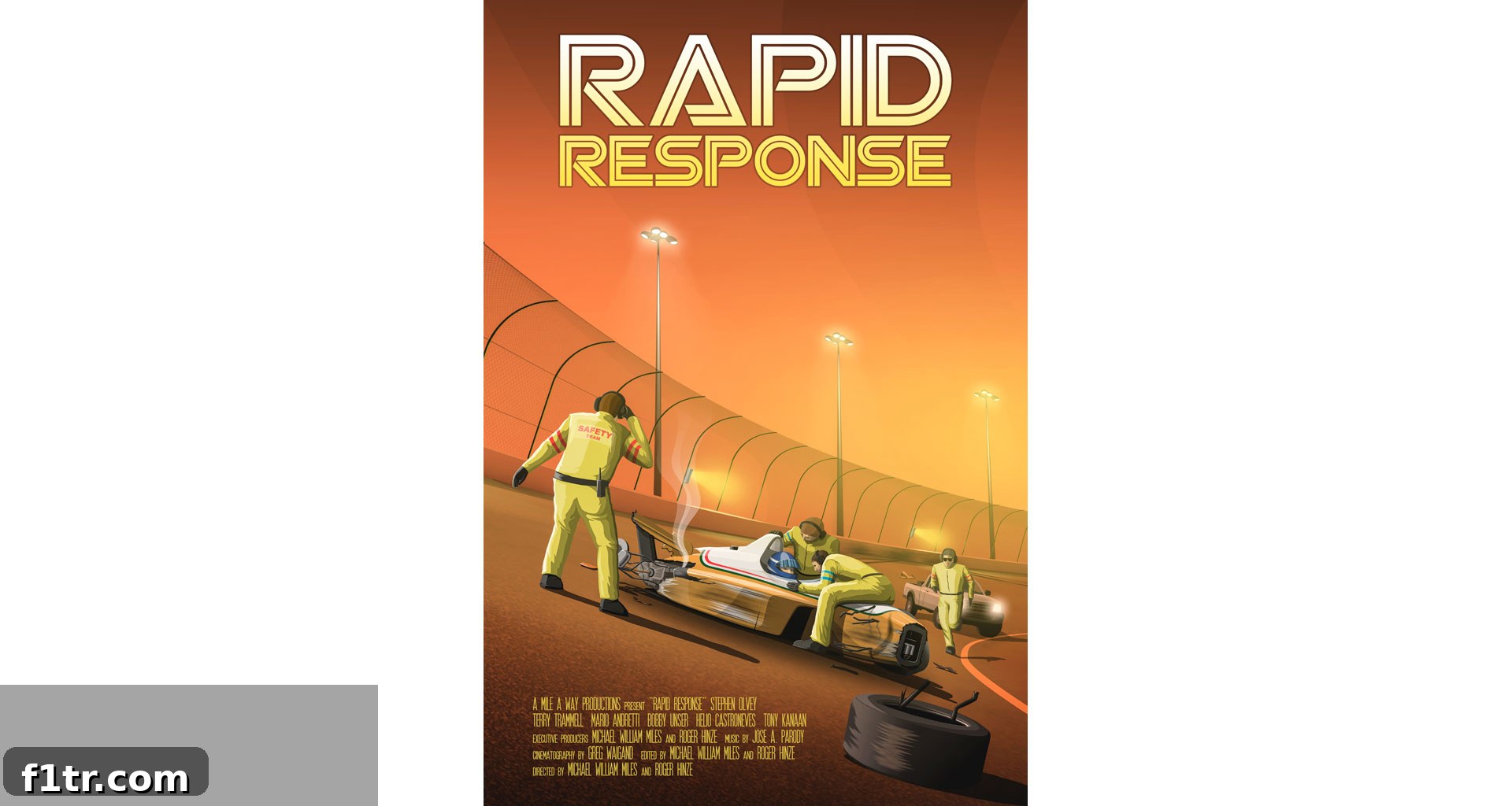
“Rapid Response”: A Timely Examination of Motorsport Safety as Tragedies Persist
In the immediate aftermath of recent heartbreaking incidents at Spa-Francorchamps and other high-speed venues, the release of the new documentary, “Rapid Response,” dedicated to the complex and often painful history of motorsport safety, takes on profound significance. The film’s producers have voiced their deep sympathy for all those affected by last weekend’s fatal crash at Spa, which tragically claimed the life of Anthoine Hubert and left Juan Manuel Correa severely injured. Despite these somber events casting a shadow over the racing world, the eagerly anticipated launch of “Rapid Response” is set to proceed as planned this week, underscoring the enduring and critical importance of its message.
This powerful documentary is not merely a recounting of accidents but a meticulously crafted narrative exploring the relentless pursuit of safety innovations, primarily within the high-stakes realm of American open-wheel racing, particularly IndyCar. It promises to offer viewers an unflinching look at a pivotal era in motorsport, featuring never-before-seen footage and testimonials that illuminate the sacrifices made and the lessons learned. The timing of its release serves as a poignant reminder that while motorsport has made colossal strides in driver protection and incident management, the inherent dangers remain a stark and undeniable reality that demands continuous vigilance.
Unveiling the Decades-Long Battle for Safer Racing
Advert | Become a Supporter & go ad-free
“Rapid Response” is slated to open its doors to audiences this Friday, promising a deep dive into the historical efforts to revolutionize safety standards in American open-wheel racing. The film meticulously documents the journey of dedicated doctors, safety personnel, and engineers who, for decades, grappled with the formidable challenge of developing a scientific framework to enhance motorsport safety. It’s an examination of a specific and defining period, highlighting the incredible commitment and ingenious solutions that gradually transformed a notoriously perilous sport into one that prioritizes driver welfare without sacrificing the thrill of competition.
The documentary courageously incorporates footage of several fatal crashes, a decision made not for sensationalism, but to underscore the brutal realities that prompted fundamental changes. Among the tragic events depicted are the deaths of Gonzalo Rodriguez in 1999, Gordon Smiley in 1982, and the joint fatalities of Eddie Sachs and Dace MacDonald in 1964. Each incident, while devastating, often served as a grim catalyst for specific advancements in car design, track configuration, medical response, and driver equipment. These moments, though difficult to witness, are crucial to understanding the progressive evolution of safety protocols and technologies. The British Board of Film Classification has rated the film 12A, acknowledging its mature themes while deeming it suitable for a wider audience with parental guidance.
The producers’ approach is deliberate and focused. In a statement provided exclusively to RaceFans, they articulated their intent: “We are truly saddened by the events at Spa that claimed the life of Anthoine Hubert and injured driver Juan Manuel Correa, and our thoughts go out to the teams, friends, and family of the drivers. ‘Rapid Response’ specifically explores advancements in safety within American open-wheel racing and how doctors, safety personnel, and engineers struggled for decades to build a scientific approach to improve safety in motor sport. The film is an examination of a specific set of doctors and safety personnel in American open-wheel racing over a distinct time period.” This statement clearly defines the historical and geographical scope of the documentary, setting appropriate expectations for its audience.
A Historical Lens, Not a Contemporary Commentary on Racing Safety
A crucial aspect emphasized by the film’s creators is its specific historical context. They clarify that “Rapid Response” should not be interpreted as a direct commentary on modern racing safety or the safety standards prevalent in any other contemporary racing series. This distinction is vital, as it allows the film to deeply explore the foundational struggles and breakthroughs of a past era without being misconstrued as an assessment of current practices, which have evolved significantly due to those very pioneering efforts. The documentary aims to educate and inform, offering a historical perspective rather than a critique of today’s safety protocols.
The producers explain their rationale: “While these are uncomfortable topics to discuss, we produced ‘Rapid Response’ to look back at the history of motor sport and build a better understanding of the progression of racing safety. ‘Rapid Response’ concludes with the acknowledgment that motor racing safety has improved, but it can never be considered safe.” This powerful concluding thought encapsulates the core paradox of motorsport: the pursuit of speed will always carry inherent risks, making continuous vigilance and innovation paramount. It serves as a stark reminder that despite all advancements, the possibility of serious injury or fatality can never be entirely eliminated from high-speed competition.
The documentary’s focus on the period when safety was not merely an add-on but an active, scientific endeavor, sheds light on how medical professionals transitioned from rudimentary first aid to sophisticated trauma care, how engineers moved from basic structures to energy-absorbing chassis, and how tracks were redesigned to minimize impact severity. These transformations were driven by empirical data, dedicated research, and, tragically, by the harsh lessons learned from fatal incidents. The film stands as a profound tribute to those who dedicated their lives to mitigating the dangers that once seemed insurmountable, laying the groundwork for the safer racing environments we see today.
Recent Tragedies Underscore the Timeless Message of Ongoing Innovation
The unfortunate string of recent events amplifies the relevance of “Rapid Response” in a poignant manner. Beyond the Spa incident involving Anthoine Hubert and Juan Manuel Correa, the film’s release also closely follows the tragic death of American racing driver Jessi Combs during a Land Speed Record attempt just last week. These incidents, occurring across different disciplines and eras of motorsport, serve as stark and painful reminders that the spirit of daring and pushing boundaries, while essential to the sport’s appeal, comes with an ever-present element of risk, regardless of the specific setting or advancements in technology.
The producers’ statement gravely notes: “Anthoine Hubert, Juan Manuel Correa, and Jessi Combs are just three drivers who have recently suffered serious or fatal injuries in motor sport among many drivers who have been injured in motor racing in recent years.” This acknowledgment highlights a critical truth: while safety advancements have dramatically reduced the frequency and severity of accidents, the sheer speeds and forces involved in motor racing mean that catastrophic outcomes remain a possibility. Every incident, no matter how rare, reinforces the message that the work of safety pioneers is never truly finished and that the motorsport community must remain perpetually committed to improvement.
The documentary serves as a profound call to action, urging the motorsport community to continue the relentless pursuit of perfection in safety. “Rapid Response is a look back at the pioneers in safety from a past and markedly more dangerous period in motor racing, but their work isn’t finished. The sport needs pioneers who will always push to improve safety and strive to make it safer,” the statement passionately asserts. This isn’t just a historical retrospective; it’s a forward-looking plea for ongoing innovation, vigilance, and unwavering commitment to driver welfare. From improved helmet technologies and HANS devices to stronger chassis materials, advanced impact absorption zones, and sophisticated barrier systems, the evolution of safety is a continuous, dynamic process fueled by both human ingenuity and the harsh, unfortunate necessity born from tragedy.
“Rapid Response” will officially release on September 6th, 2019. In recognition of its potentially distressing content, all audience members are advised that the film examines motor racing injuries and fatalities, and viewer discretion is strongly advised. This warning is a testament to the film’s honest and impactful portrayal of its subject matter, ensuring viewers are prepared for its powerful and often confronting narrative while honoring the memory of those who contributed to its critical message.
Read RaceFans’ comprehensive review of “Rapid Response” to gain deeper insights into this compelling and vital documentary and understand its place in the ongoing dialogue about motorsport safety.
Advert | Become a RaceFans supporter andgo ad-free
Explore More IndyCar Content
- IndyCar driver McLaughlin cleared of injury after crashing through barrier at Barber
- Schumacher says his IndyCar feels like ‘an F2 car, just with better tyres’
- IndyCar “way faster than Formula 1” in some corners, says Grosjean
- FIA to award more F1 superlicence points to IndyCar drivers from 2026
- Schumacher to race full-time in IndyCar with RLL in 2026
Browse all IndyCar articles