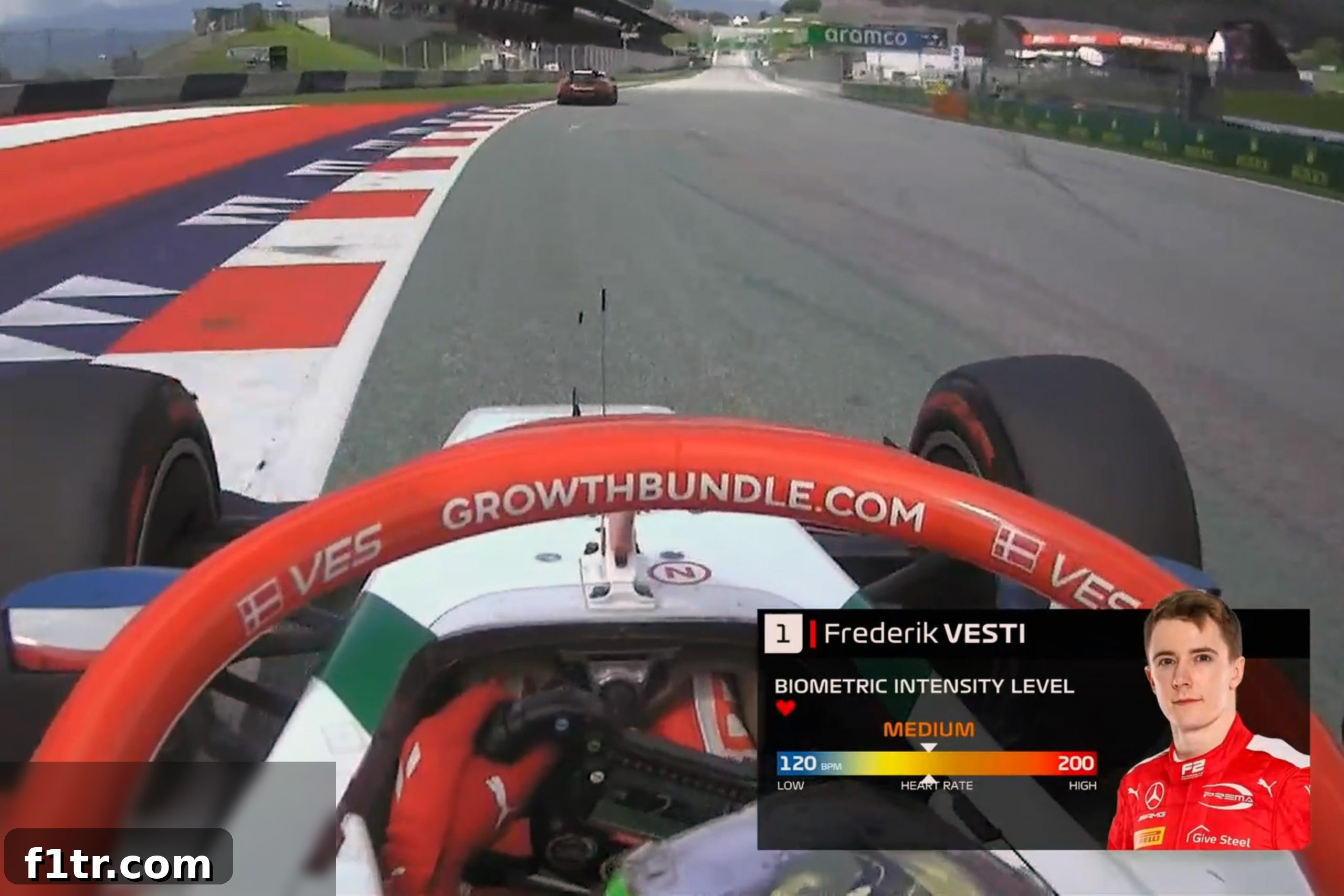
In the high-octane world of Formula 2, where future champions hone their skills, innovation is constantly sought to enhance both performance and the fan experience. A recent trial of live heart rate monitors during an F2 race in Austria has captivated audiences and drivers alike, with Mercedes junior driver Frederik Vesti expressing significant enthusiasm for its potential. This pioneering step aims to provide an unprecedented glimpse into the immense physical and mental demands placed upon these elite athletes as they navigate the fiercely competitive circuits.
The trial, which saw Vesti and his closest championship rival, Théo Pourchaire, fitted with these cutting-edge monitors, broadcast real-time biometric data directly to the world feed. Spectators were treated to a dynamic graphic displaying their heart rates, fluctuating within a demanding range of 120 to 200 beats per minute. This transparent display offered a compelling visual narrative, revealing the physiological intensity accompanying every overtake, braking zone, and high-speed corner.
Vesti, fresh from a strong weekend performance, lauded the initiative, believing it offers invaluable insight into the sheer effort required to compete at this level. “I watched 10 seconds of the [sprint] race yesterday where I saw my heart rate going up while I was doing an overtake,” Vesti recounted, highlighting the immediate feedback the system provided. “I think it’s a pretty cool thing.” This direct correlation between on-track action and physiological response bridges a crucial gap, allowing fans to truly comprehend the hidden struggles and triumphs behind the visor.
While the initial rollout has been a resounding success, Vesti acknowledged that further development is needed, particularly regarding the comfort and integration of the device within the confines of the cockpit. “There’s a bit more development to do on how it feels and when you have it done,” he noted. However, he remains optimistic about its future, emphasizing, “but I think it’s a really good starting point and it’s a good addition to the fans. They can see what sort of pressure we’re on, it’s not only physical pressure it’s also mental, and I think it shows it pretty well.” This statement underscores the dual nature of racing demands – not just the brute force required but also the intense psychological fortitude.
Unveiling the Demands: Physical and Mental Fortitude in F2
Formula 2 racing is far more than just accelerating and braking; it’s a relentless test of endurance, precision, and mental resilience. The introduction of live heart rate data serves as a powerful testament to this reality. Physically, drivers endure extreme G-forces during cornering, braking, and acceleration, which can strain the body significantly. High cockpit temperatures, especially in warmer climates, lead to considerable dehydration and fatigue. Sustained periods of high heart rate, as observed during the trial, are indicative of the cardiovascular strain and the immense physical conditioning required to maintain peak performance for an entire race distance.
Beyond the physical, the mental demands are equally, if not more, taxing. Drivers must process vast amounts of information at breakneck speeds: track conditions, tyre degradation, fuel management, rival positions, team radio instructions, and strategic decisions, all while operating a finely tuned machine inches away from competitors. A surging heart rate during an overtaking maneuver, for example, not only reflects the physical exertion but also the acute mental focus, risk assessment, and split-second decision-making involved. The pressure to perform flawlessly, lap after lap, with championship hopes and career aspirations on the line, contributes significantly to this heightened state of physiological arousal.
For motorsport enthusiasts, these heart rate monitors offer a novel dimension to their viewing experience. No longer confined to observing external events, fans can now delve into the internal state of their favourite drivers. Imagine watching a championship-deciding overtake, not just seeing the cars battling, but simultaneously witnessing the driver’s heart rate spike, mirroring the tension and excitement unfolding on screen. This real-time biometric feedback fosters a deeper connection and empathy between the fans and the athletes, transforming a passive viewing experience into a more immersive and engaging spectacle.
From Trial to Mainstream: The Future of Biometric Data in Motorsport
The successful trial in Formula 2 paves the way for potential wider adoption across motorsport, with discussions already underway regarding its introduction into Formula 1. F1 has previously experimented with similar driver-centric graphics, albeit often in limited capacities or with delayed data. The F2 trial suggests a robust and reliable system is now viable for live broadcast, offering unprecedented transparency into driver performance.
The implications of this technology extend beyond mere entertainment. For teams, live biometric data could offer invaluable insights into driver fatigue, optimal performance zones, and even contribute to tailored fitness regimes. Analyzing a driver’s heart rate patterns could help engineers understand how certain track sections or car setups impact physiological stress, potentially leading to performance optimizations. For the drivers themselves, it offers a tangible measure of their effort and a tool for self-assessment, helping them refine their physical and mental preparation.
The integration of such advanced telemetry aligns with a broader trend in professional sports, where data analytics and athlete monitoring are becoming increasingly sophisticated. From cycling power meters to basketball player tracking, biometric data enriches the narrative, informs strategy, and deepens fan engagement. Motorsport, with its inherent technological advancements, is a natural fit for this evolution, promising a future where the human element of racing is understood and appreciated more profoundly than ever before.
Frederik Vesti’s Championship Quest: Navigating Pressure and Ambition
While the biometric data trial added an intriguing layer to the Austrian Grand Prix weekend, Frederik Vesti’s primary focus remained on his championship aspirations. The Prema driver delivered a strong performance, securing a podium finish in the feature race. Despite momentarily leading, he ultimately conceded the top spot to Richard Verschoor on the penultimate lap. Nevertheless, Vesti’s consistent points haul allowed him to extend his championship lead over Théo Pourchaire to a healthy 20 points, marking a significant milestone just past the halfway point of the season.
Despite his commanding position, Vesti maintains a grounded and focused mindset, carefully avoiding the pitfalls of premature celebration or overthinking the title. When asked about the prospect of winning the championship, he offered a nuanced perspective: “There are two answers to that. One is you don’t think about it and just go for the win every time. The other one is that you go for the win every time, but if there is a place where there’s high risk you maybe think a little bit more about it.” This highlights the delicate balance between aggressive pursuit of victory and calculated risk management, a hallmark of any successful championship campaign.
However, Vesti quickly emphasized the detrimental effects of excessive contemplation. “But the thing is if you think too much about it, it’s definitely not going to help. So it’s important to clear the head and go for every point and every race win possible.” This mantra of clearing the mind and focusing on immediate objectives is critical in high-pressure environments like Formula 2. The mental discipline required to compartmentalize pressure and concentrate solely on the task at hand is a defining characteristic of top-tier racing drivers.
With just six race weekends remaining in the Formula 2 season, the championship battle is entering its most critical phase. Three of these crucial rounds are scheduled before the traditional August summer break, placing immense pressure on drivers to perform consistently. The upcoming round at Silverstone presents a particular challenge for Vesti, as he has yet to stand on the podium in a single-seater race at the iconic British circuit. Overcoming this personal hurdle will be another testament to his evolving skill and mental resilience as he pushes towards the ultimate goal of the Formula 2 title.
Conclusion: A New Era of Fan Engagement and Driver Understanding
The introduction of live heart rate monitors in Formula 2 signifies an exciting leap forward in how motorsport engages with its global audience. By offering a transparent window into the physiological and psychological crucible that drivers endure, this innovation enriches the fan experience and fosters a deeper appreciation for the athletes’ extraordinary capabilities. As Frederik Vesti and his rivals continue their intense championship pursuit, the data generated from these monitors will not only tell the story of overtakes and podium finishes but also the silent, internal battles fought and won within the cockpit. This blend of cutting-edge technology and raw human endeavour promises a more compelling and insightful future for Formula 2 and motorsport as a whole.
Formula 2 News & Updates
- Formula 2 to debut in Miami and Montreal after Iran war cancellations
- Ex-McLaren junior Dunne’s move to Alpine finally confirmed
- Schumacher says his IndyCar feels like ‘an F2 car, just with better tyres’
- The Formula 2 team with an older driver line-up than almost half the F1 grid
- FIA to award more F1 superlicence points to IndyCar drivers from 2026
Browse all Formula 2 articles