The world of Formula 1 embarked on a pivotal new era in 2022, not only with groundbreaking car designs aimed at improving racing but also with a significant overhaul of its officiating structure. The FIA’s decision to replace long-serving race director Michael Masi and divide his demanding role between two experienced appointees – Niels Wittich, former DTM race director, and Eduardo Freitas, known for his work in the World Endurance Championship and the Le Mans 24 Hours – signaled a clear intent to restore much-needed credibility and consistency to the sport’s regulatory framework. This move came in the wake of the deeply controversial conclusion to the 2021 championship in Abu Dhabi, which had cast a shadow over F1’s integrity and highlighted the immense pressure on a single individual in such a crucial position.
The appointment of dual race directors was conceived not merely as a change in personnel but as a strategic restructuring. By sharing the arduous duties throughout the demanding Formula 1 season, the aim was to lighten the individual workload, allowing for greater focus, reduced stress, and ultimately, more consistent and defensible decision-making. In the intricate ecosystem of motorsport, while the race stewards are solely responsible for levying penalties against competitors, the race director holds the pivotal authority to interpret and apply the rules on any given race weekend. This distinction underscores the profound influence of the race director in shaping the dynamics and fairness of competitive racing.
One of the most immediate and impactful changes introduced by the new regime manifested at the very first race of the 2022 season: a significantly tougher stance on track limits. For several seasons prior, the application of track limits rules in Formula 1 had been notoriously inconsistent, varying wildly from circuit to circuit, corner to corner, and even session to session. This ambiguity often led to frustration among drivers, teams, and fans alike. To address this perennial issue, the FIA declared a simplified, uncompromising definition: track limits would be unequivocally defined by the white lines marking the edge of the racing surface. This new directive promised no ambiguity, no exceptions, and a strict, universal standard for all.
This ‘black-and-white’ approach to track limits was initially met with widespread approval from many fans and stakeholders within the sport. There was a palpable hope that this definitive stance would finally put an end to the endless debates and controversies that frequently overshadowed the on-track action. The expectation was that by setting a clear, objective boundary, the need for subjective interpretation would be minimized, leading to fairer and more transparent racing. The impact of this revised approach has been undeniably pronounced throughout the 2022 season, particularly evident in the first half of the championship.
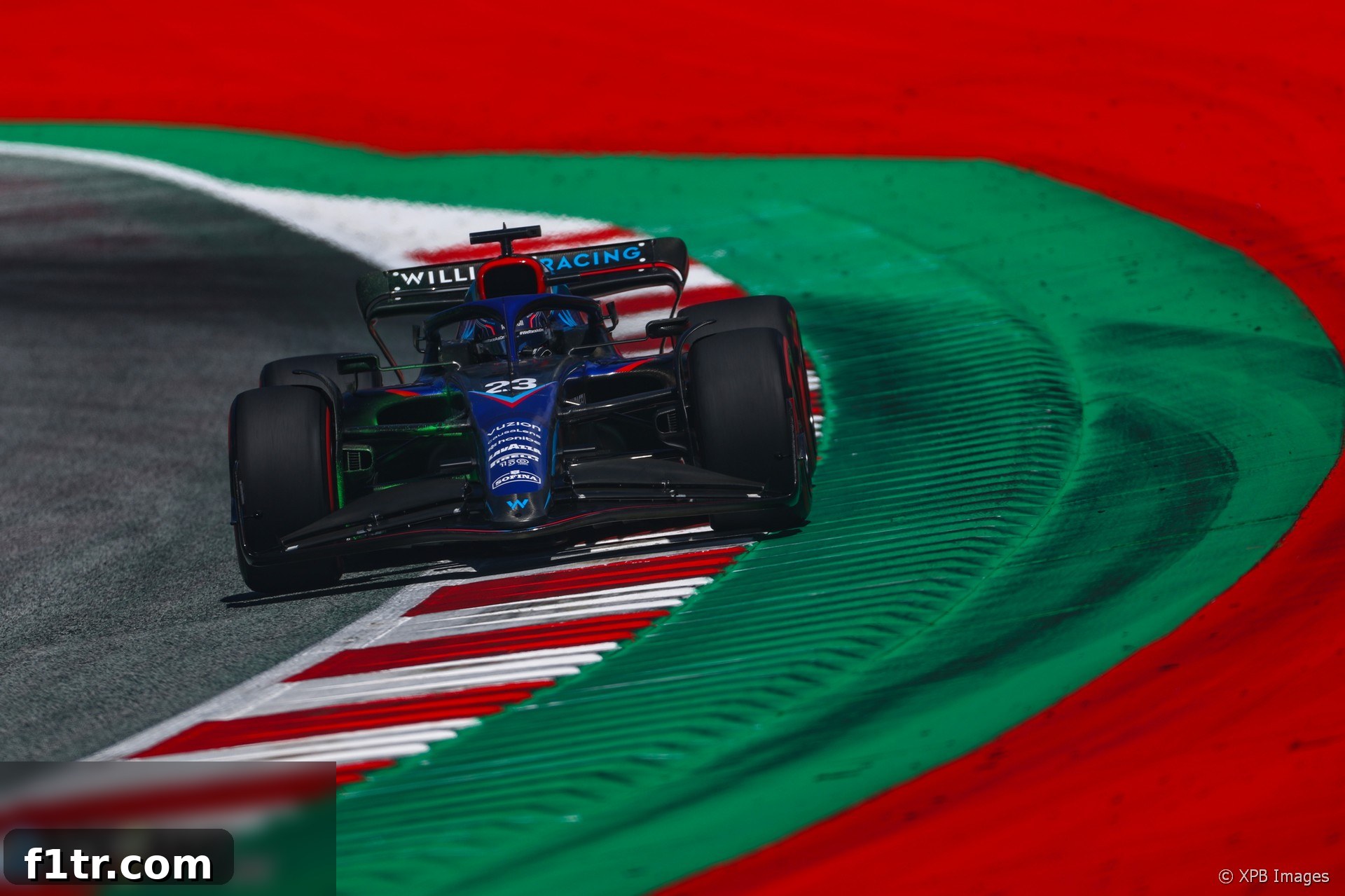
Through the initial 11 races of the season – marking the exact halfway point of the championship – the FIA’s panels of stewards had already deleted an astonishing total of 233 lap times. These deletions occurred across all competitive sessions, including qualifying, sprint races, and the main Grands Prix, stemming from a collective 196 distinct track limits offences. Such figures vividly illustrate the dramatic shift in enforcement. Williams driver Alexander Albon emerged as the most frequent offender, accumulating 16 track limits infringements, closely followed by seven-time world champion Lewis Hamilton, who tallied 14 breaches. This statistical evidence unequivocally demonstrated that even the most seasoned drivers were grappling with the new, stringent enforcement.
Track Limits Infringements Through First Half of 2022 Formula 1 Season:
| Rank | Driver | Team | Track Limits Infringements | Total Lap Times Deleted | Time Penalties |
|---|---|---|---|---|---|
| 1 | Alex Albon | Williams | 16 | 17 | 1 |
| 2 | Lewis Hamilton | Mercedes | 14 | 17 | 0 |
| 3 | Pierre Gasly | AlphaTauri | 13 | 16 | 1 |
| = | Kevin Magnussen | Haas | 13 | 16 | 0 |
| = | Sergio Perez | Red Bull | 13 | 13 | 0 |
| 6 | Sebastian Vettel | Aston Martin | 12 | 16 | 1 |
| 7 | Lando Norris | McLaren | 11 | 14 | 1 |
| = | Carlos Sainz Jnr | Ferrari | 11 | 13 | 0 |
| = | Yuki Tsunoda | AlphaTauri | 11 | 13 | 0 |
| = | Zhou Guanyu | Alfa Romeo | 11 | 13 | 1 |
| = | Fernando Alonso | Alpine | 11 | 11 | 0 |
| 12 | Mick Schumacher | Haas | 10 | 13 | 0 |
| = | Nicholas Latifi | Williams | 10 | 11 | 0 |
| 14 | Max Verstappen | Red Bull | 9 | 12 | 0 |
| 15 | Lance Stroll | Aston Martin | 8 | 12 | 0 |
| 16 | Charles Leclerc | Ferrari | 7 | 8 | 0 |
| = | George Russell | Mercedes | 7 | 7 | 0 |
| 18 | Daniel Ricciardo | McLaren | 6 | 8 | 0 |
| 19 | Esteban Ocon | Alpine | 2 | 2 | 0 |
| 20 | Valtteri Bottas | Alfa Romeo | 1 | 1 | 0 |
| 21 | Nico Hulkenberg | Aston Martin | 0 | 0 | 0 |
The consequences of this zero-tolerance policy reached a dramatic peak during the Austrian Grand Prix weekend at the Red Bull Ring. Under the previous race director, Michael Masi, the Styrian and Austrian Grands Prix held at the same circuit in 2021 recorded a combined total of 31 track limits transgressions across both qualifying sessions and races. Crucially, no lap times were deleted for drivers exceeding the white lines at Turns one, seven, or eight during those events. However, the 2022 Austrian Grand Prix presented a stark contrast. Between just Friday’s qualifying session and Sunday’s main Grand Prix, drivers committed a staggering 64 total track limits offences – more than double the combined total of the two preceding race weekends at the Red Bull Ring. This exponential increase highlighted the profound impact of the new officiating philosophy and the challenges it posed to drivers on a circuit notorious for tempting excursions beyond the white lines.
Track Limits Infringements Across Last Three Red Bull Ring Weekends:
| Year | Round | Turn 1 | Turn 7 | Turn 8 | Turn 9 | Turn 10 | Total Infringements |
|---|---|---|---|---|---|---|---|
| 2021 | Styrian Grand Prix | 0 | 0 | 0 | 4 | 6 | 10 |
| 2021 | Austrian Grand Prix | 0 | 0 | 0 | 7 | 14 | 21 |
| 2022 | Austrian Grand Prix* | 11 | 1 | 1 | 17 | 34 | 64 |
*Figures exclude sprint race
By the time the chequered flag waved at the conclusion of the Austrian Grand Prix, four prominent drivers – Pierre Gasly, Lando Norris, Zhou Guanyu, and Sebastian Vettel – had each been handed five-second time penalties by the stewards for accumulating four separate track limits breaches. Additionally, three other high-profile drivers – Lewis Hamilton, Carlos Sainz Jnr, and Sergio Perez – received official warnings from race control in the form of black-and-white flags after committing three offences. These penalties significantly influenced race outcomes and standings, underscoring that the new rules carried tangible consequences for drivers who strayed from the designated racing surface.
Following the race, McLaren driver Lando Norris voiced his concerns regarding the blanket application of the rules across all corners of the circuit. He argued for a more nuanced approach, differentiating between corners where a genuine advantage could be gained and those where an excursion was more a consequence of driver error or mechanical issue. “The last two corners, I completely understand,” Norris explained, “There, you run wide, you pretty much gain an advantage.” However, he contrasted this with an incident at Turn 1, where he received a penalty: “I had one in turn one, or wherever I got my penalty, where I’ve just locked up the front tyres, I’ve hit the sausage [kerb], I’ve lost like a second up to the hill and then I get track limits for that? I’ve been punished enough, because I’ve lost one second. So it’s a bit stupid, some of them.”
Despite his personal frustration and the penalty incurred, Norris acknowledged the underlying principle that drivers themselves had advocated for. He conceded, “We’ve also said that we want it to be strict since last year and we want it to be the same every time and so on. Us drivers always want something different and something better and so on. It’s just a difficult track to always judge the limits so finely.” This statement highlights the inherent tension between the drivers’ desire for absolute consistency and the practical challenges of racing at the absolute limit, where minute errors can lead to breaches. Even Norris’s team principal, Andreas Seidl, expressed satisfaction with the consistent application of the rules, despite one of his drivers receiving a penalty. Seidl stated, “In terms of track limits, all teams and drivers were screaming for consistency or more consistency in the past. In the end that’s why we ended up with a black-and-white rule which is ‘you need to stay within the track limits in any place on the track’, which means you need to stay within the white line. To be honest, even having a penalty, for us I’m quite happy with that because it’s easy to understand for everyone.” This sentiment reflects a broader acceptance within team management that clarity, even if it leads to penalties, is preferable to subjective and inconsistent rulings.
The sheer volume of lap times deleted and penalties issued during the Austrian Grand Prix weekend was indeed remarkable. However, it is crucial to note that not every driver struggled to adhere to the track limits. Across all three competitive sessions – Friday’s qualifying, Saturday’s sprint race, and Sunday’s Grand Prix – two drivers successfully navigated the entire weekend without incurring a single deleted lap time: Esteban Ocon and Valtteri Bottas. Ocon notably secured a strong fifth-place finish, while Bottas, starting from the back of the grid, narrowly missed out on points. Their performances serve as compelling evidence that maintaining discipline within the white lines is not only achievable but also compatible with competitive racing. Arguably, this demonstrates that there is no inherent excuse for drivers failing to adhere to the limits, especially at the pinnacle of motorsport.
While the new strict enforcement of Formula 1 track limits has brought a degree of clarity, it has also highlighted a lingering issue: the perceived inconsistency in its application across different circuits and racing scenarios. If Formula 1 and the FIA are committed to this uncompromising stance, the very least drivers should be able to expect is absolute uniformity in how the rules are applied at every track and in every corner. However, for some drivers, this has demonstrably not been the case, leading to renewed frustration and confusion.
The closing stages of the British Grand Prix at Silverstone served as a prime example, reigniting heated debates about how track limits rules are enforced during intense wheel-to-wheel racing. Several incidents involving Charles Leclerc, Sergio Perez, Max Verstappen, and Mick Schumacher, despite appearing to push or exceed the limits, were deemed unworthy of investigation by the stewards. This left drivers perplexed about what constituted an acceptable use of the circuit’s perimeter during both offensive and defensive maneuvers. Ahead of the Red Bull Ring weekend, Fernando Alonso was one of the most vocal critics, articulating the widespread frustration. “We have been told that it was very clear to police the white lines,” Alonso explained. “Other things – the stewards’ decisions – can be changeable between race tracks, opponents or whatever. But the white lines will be this year very clear – and it was not in Silverstone.”
Alonso’s concerns over the haphazard application of the rules were further exacerbated during the Austrian Grand Prix itself. He spent the opening 12 laps of the race battling behind Nicholas Latifi’s Williams, a period during which he claimed Latifi left the circuit six times before eventually pitting. While Latifi was officially recorded as breaching track limits three times in the race, he notably did not receive a black-and-white flag from race control – a perceived inconsistency that further fuelled Alonso’s criticisms. Such discrepancies undermine driver confidence in the system and raise questions about the fairness of competition, especially when a driver feels disadvantaged by the unenforced infractions of a rival.
If Formula 1 and the FIA harbored any hopes for a race weekend where track limits would not dominate discussions, then the following circuit on the schedule, Paul Ricard, presented perhaps the most formidable challenge. The Le Castellet track is infamous for its vast asphalt run-off areas, offering minimal natural deterrents to discourage drivers from exploiting the track limits, particularly on corner exits. Unlike circuits with gravel traps or grass verges, where exceeding the white line typically results in a significant time loss or even damage, Paul Ricard’s expansive paved run-offs allow drivers to maintain throttle and potentially gain an advantage without immediate penalty. This design feature inherently encourages drivers to push beyond the white lines, knowing the consequences are often minimal compared to a natural circuit. In the 2021 French Grand Prix, only one driver, Antonio Giovinazzi, had a single lap time deleted for exceeding track limits on the exit of Turn 6 – the sole corner actively monitored by race control during the race. Given the 2022 season’s strict enforcement, it was a safe bet that the tally of track limits infringements at Paul Ricard would be substantially higher, intensifying the debate once more.
Ultimately, the ongoing debate surrounding Formula 1 track limits boils down to a fundamental question of balance: how to ensure fair and consistent application of rules without stifling the inherent aggression and skill that defines elite motorsport. Whether Formula 1 and the FIA choose to persist with this ‘one size fits all’ approach to track limit enforcement, or opt for a more nuanced interpretation, the drivers themselves remain the most significant variable in determining the frequency of penalties. Their ability to adapt, maintain discipline, and operate within the defined boundaries directly influences whether they face time penalties or enjoy a clear race. While the burden is now unequivocally on the drivers to adhere to the track limits, the responsibility also lies with the sport’s governing bodies to ensure that the current system is applied with unwavering consistency and transparency across all circuits and all racing situations. This commitment to consistent application is not merely a matter of fairness but a necessity for safeguarding the integrity and credibility of Formula 1 as it navigates this bold new era.
Become a RaceFans Supporter
RaceFans is run thanks in part to the generous support of its readers. By contributing £1 per month or £12 per year (or the same in whichever currency you use) you can help cover the costs of creating, hosting and developing RaceFans today and in the future.
Become a RaceFans Supporter today and browse the site ad-free. Sign up or find out more via the links below:
- Become a RaceFans Supporter
- RaceFans Supporter FAQ
2022 F1 Season
- Mercedes told me “you’re wrong” about 2022 car’s problems – Hamilton
- FIA confirms all 10 F1 teams complied with 2022 cost cap
- Steiner “not ashamed” of panning “slow” Schumacher in Drive to Survive
- Albon believes year out of F1 improved him as a driver
- Hamilton sees diversity gains in F1 years on from his ‘traumatising’ experience of racism
Browse all 2022 F1 season articles