Welcome to our comprehensive Formula 1 round-up, where we bring you the most engaging stories and insights from across the motorsport world. This edition features a candid reflection from rising star George Russell on the high praise he’s received, a delve into trending social media topics, and a thought-provoking discussion on the evolving nature of F1 circuit design. We also compile essential links to keep you abreast of developments in F2, Formula E, and other key areas of racing, alongside a glimpse into F1 history.
George Russell: Navigating Praise and Performance Pressure
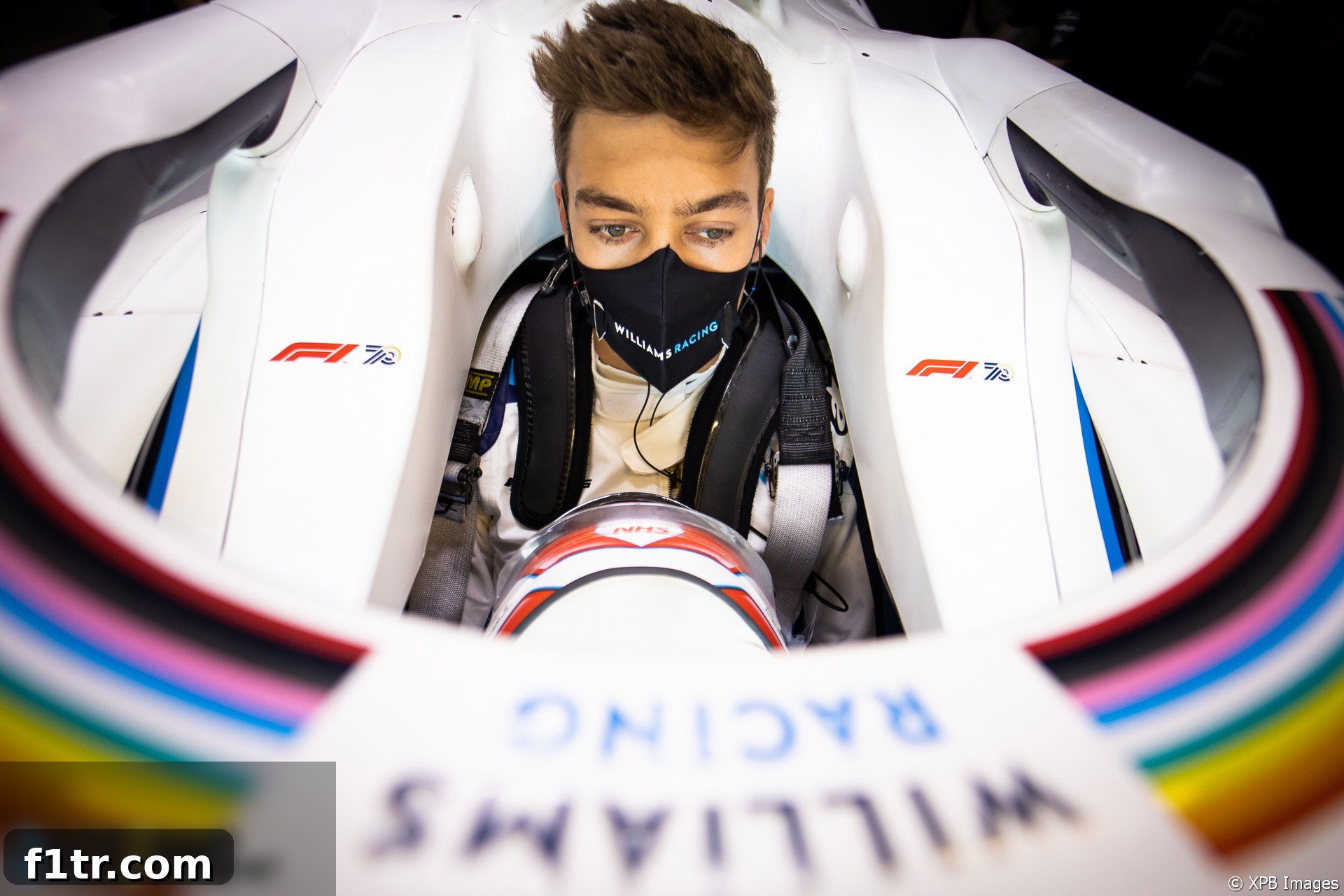
One of Formula 1’s most talked-about talents, George Russell, has garnered significant attention and commendation from esteemed figures within the sport. Drivers of the caliber of Lewis Hamilton and Fernando Alonso have publicly identified Russell as a future star, fueling high expectations for his career trajectory. Despite this overwhelming endorsement, Russell exhibits a remarkable level of humility and focus, ensuring that such accolades do not detract from his primary goal: consistent on-track performance.
The Philosophy of a Future Champion: Staying Grounded
Russell’s approach to the praise he receives offers a valuable insight into the mindset required to thrive at the pinnacle of motorsport. While acknowledging and appreciating the positive comments from his peers, he views them as secondary to the relentless pursuit of excellence. This perspective is critical in an environment where external validation can easily become a distraction. For Russell, the true measure of success lies in his weekly efforts and results, not in the flattering words of others.
I obviously really appreciate these comments without a shadow of a doubt. But it’s almost sort of background noise, really, because I know I have to continue to perform week in, week out and as fantastic as it is to get a pat on the back and the praise from these guys, I’ve got to back that up with the job I do on track.
So I’ve always tried not letting comments like this get into my head or anything. I’m doing this for myself and my family. And the biggest amount of pressure I have is from myself and not from anybody else.
This self-imposed pressure, rather than external expectations, serves as Russell’s primary motivator. It reflects a deep understanding that sustained success in Formula 1 demands unwavering dedication and a personal commitment to improvement. His journey through the junior ranks and his standout performances in challenging machinery have consistently demonstrated his raw talent and formidable work ethic. By focusing on his internal drive and the demands of the sport itself, Russell is building a foundation that promises not just fleeting moments of brilliance, but a career defined by sustained high performance and a genuine shot at championship contention. This mature outlook is often a defining characteristic of truly elite athletes, setting them apart in highly competitive fields.
Quotes courtesy of Dieter Rencken
Advert | Become a RaceFans supporter andgo ad-free
Social Media Pulse: Key Discussions and Fan Engagement
Social media platforms continue to be a vital space for Formula 1 fans and personalities alike, offering immediate updates, vibrant discussions, and unique glimpses into the world of motorsport. Here, we highlight some notable posts that sparked conversation and provided insights into the broader F1 narrative.
Max Verstappen’s New Acquisition: A Private Jet
Na vakantie van de koning weer een primeur voor onze #podcast: @Max33Verstappen koopt eigen privé-jet. Van een celeb. Met gewaagde registratie. Luister nu!
SoundCloud https://t.co/rdWziTCN12
Apple https://t.co/lv6qAVnHID
Spotify https://t.co/NjZn3Xeqs3#maxverstappen pic.twitter.com/j7VM7eTbu2— The Mic High Club Luchtvaart Podcast (@MicHighClub) November 20, 2020
A buzz-generating post from ‘The Mic High Club Luchtvaart Podcast’ highlighted exciting news for fans of Max Verstappen: the acquisition of his very own private jet. This revelation, originally shared in Dutch, quickly captivated the F1 community, offering a glimpse into the luxurious and often necessary lifestyle of top-tier athletes who traverse the globe for their sport. A private jet provides unparalleled convenience, allowing drivers to manage their demanding schedules with greater efficiency and privacy, crucial for maintaining peak performance. Such personal news often resonates with fans, providing a human element to their racing heroes and sparking discussions about the broader implications of success in Formula 1.
F1 Seeks Fan Feedback: Saudi Arabian GP Survey
|@F1 is running a survey on the #SaudiArabianGP: https://t.co/Dy2IBPVBvx #F1 pic.twitter.com/OP4A5w4XDG
— Keith Collantine (@keithcollantine) November 20, 2020
Prominent motorsport journalist Keith Collantine drew attention to an important initiative by Formula 1: a fan survey concerning the Saudi Arabian Grand Prix. This public outreach signifies F1’s ongoing commitment to listening to its global audience and understanding their perceptions of new race venues and events. Fan surveys are an invaluable tool for sports organizations, providing direct feedback that can shape future decisions, improve event experiences, and strengthen the bond between the sport and its followers. The introduction of races in new territories often generates varied responses, making such data collection crucial for maintaining a healthy and engaged fanbase while strategically expanding the sport’s global footprint.
- For an extensive list of official F1 accounts and key motorsport figures to follow, explore our dedicated F1 Twitter Directory.
Deeper Dive: Essential Motorsport News and Stories
Beyond the immediate F1 headlines, the world of motor racing is a dynamic landscape of developments across various series. This curated selection of links offers opportunities to explore further, providing context, in-depth analysis, and diverse perspectives from the wider motorsport community.
Advert | Become a Supporter & go ad-free
Yuki Tsunoda on his journey to become Japan’s next Formula 1 driver (F2)
This insightful Formula 2 feature profiles Yuki Tsunoda, detailing his ambitious journey towards becoming the next Japanese driver in Formula 1. The article includes a significant quote from Tsunoda, aligning with the often-stated philosophy of Red Bull’s motorsport advisor, Helmut Marko: “I agree with (Helmut Marko). If you’re a good driver, like George Russell, Lando Norris or Charles Leclerc, then I think you only need one year in F2 – they didn’t need two or three years.” This sentiment highlights the high expectations placed on top talents in F2, where exceptional performance is seen as a fast track to F1, emphasizing quality over extended periods in the feeder series. It underscores the intense competition and rapid progression required for aspiring Grand Prix drivers.
Sette Camara first to be confirmed at rebranded Dragon / Penske Autosport (Formula E)
In the world of electric motorsport, Formula E confirms Sergio Sette Camara as the inaugural driver for the newly rebranded Dragon / Penske Autosport team. This announcement is a crucial step in finalizing the grid for the upcoming Formula E season, intensifying the anticipation for driver confirmations. With only two vacant seats remaining — one alongside Sette Camara at Dragon and another at Mahindra Racing — the driver market is buzzing with speculation. Formula E continues to attract a strong and diverse lineup of talent, showcasing its growing appeal and competitive landscape in global motorsport.
Ronnie O’Sullivan takes swipe at Hamilton over achievement of becoming F1’s greatest (Daily Star)
A fascinating cross-sport commentary emerged as snooker legend Ronnie O’Sullivan weighed in on the ongoing debate surrounding Lewis Hamilton’s status as one of Formula 1’s greatest drivers. Published in the Daily Star, O’Sullivan’s remarks ignited discussion by suggesting that Hamilton’s achievements, while monumental, are influenced by the significant performance advantage of his Mercedes car. He drew comparisons to individual sports like tennis (with Roger Federer) and long-distance running (with Eliud Kipchoge), where athletes compete on what he perceives as a more “level playing field.” This perspective fuels a perennial debate in F1: how much of a driver’s success is attributable to their innate skill versus the technological superiority of their machinery? O’Sullivan’s comments underscore the complexity of evaluating greatness in a team-dependent sport like Formula 1, contrasting it with the perceived purity of individual athletic contests.
Statement on Covid-19 testing (FIA)
The FIA and Formula 1 released a joint official statement detailing the results of their rigorous Covid-19 testing protocols. The report confirmed that between November 13th and November 19th, a total of 746 tests were administered to drivers, team personnel, and other essential staff. Of these, three individuals tested positive, in addition to the previously announced positive case involving Pirelli’s head of F1 and car racing, Mario Isola. This transparency highlights F1’s unwavering commitment to public health and safety, showcasing the stringent measures implemented to ensure the continuity and integrity of the racing season amidst global health challenges. The meticulous testing regime allowed the sport to navigate its calendar successfully, setting a benchmark for major international events.
Catching up with the champ: Lewis answers your questions (Mercedes via YouTube)
Fans were treated to an exclusive “Catching Up with The Champ” session, where Lewis Hamilton directly addressed questions submitted by his global fanbase. This engaging YouTube video from Mercedes provides a unique and candid platform for fans to connect with the seven-time world champion. Such interactive content offers invaluable insights into Hamilton’s thoughts on racing strategies, career milestones, and personal interests, effectively humanizing the legendary driver. It fosters a stronger bond between the team, the driver, and their dedicated supporters worldwide, making fans feel closer to their motorsport heroes.
We always endeavour to credit original sources. If you have a tip for a link to feature in the next RaceFans round-up, please send it in via the contact form.
Advert | Become a RaceFans supporter andgo ad-free
Fan Perspective: The Great Debate Over F1 Track Design
The characteristics and evolution of Formula 1 circuits are perennial topics of debate among enthusiasts and experts alike. Today’s “Comment of the Day” spotlights a widely shared sentiment regarding the perceived uniformity of modern tracks, igniting an important discussion about circuit design principles, safety considerations, and the unique challenges they present to drivers.
Are Modern F1 Circuits Lacking Unique Character?
Long-standing Formula 1 fan, @Stefmeister, eloquently expresses a common “gripe” about how similar the F1 calendar has felt over the past fifteen years or so. This observation points to a discernible trend where contemporary circuit designs, along with modifications to historic venues, tend to share similar characteristics. These include vast run-off areas, consistent high-grip surfaces, and a general smoothing out of the natural irregularities that once defined iconic tracks.
A gripe I’ve had for a while now is how same-y the calendar has got the past 15-ish years. The circuits all have similar characteristics, They follow similar design traits with similar run-offs and similar surfaces among other things. You go back 20-30 years and each circuit felt different with it’s own characteristics and challenges, Some which came from the layout itself but others which came from the track surface.
Hungary for example used to be really bumpy with a low grip surface that offered a different challenge to others, Monaco and other street circuits tended to be similar. Yet now they all have very similar surfaces in terms of offering good grip and been fairly smooth and if a track gets a bit bumpy the resurface it in those areas to remove them. Even Monaco and other street circuits are resurfaced regularly so lack that aspect of what those types of circuits used to offer.
@Stefmeister
The sentiment articulated by @Stefmeister resonates with many who yearn for the distinctive challenges once posed by circuits. For instance, the Hungaroring was renowned for its notoriously bumpy, low-grip surface, which demanded a unique blend of driver finesse and precise car setup. Similarly, classic street circuits, including the legendary Monaco Grand Prix, historically presented raw, unforgiving tests of skill due to their inherent topography and often imperfect road surfaces. These older tracks forced drivers to adapt to vastly different conditions week in and week out, enriching the competitive landscape.
In contrast, modern F1 circuit design is heavily influenced by safety imperatives and the pursuit of optimal racing lines, often leading to highly engineered tracks with consistent high-grip surfaces and extensive asphalt run-offs. While these advancements undeniably enhance driver safety and can sometimes promote closer racing by reducing the immediate penalty for minor errors, critics argue that they inadvertently diminish the unique character and natural challenge of individual circuits. The frequent resurfacing, even at historic venues like Monaco, eradicates the bumps and undulations that once made each track a distinct entity, demanding varied driving styles and engineering compromises. This trend towards homogenization, as argued by many fans, reduces the diversity of challenges across the F1 calendar, making races feel less distinct and potentially less thrilling for purist fans. Striking an optimal balance between paramount safety, modern sporting demands, and preserving the unique character of racing circuits remains a pivotal discussion for the future trajectory of Formula 1.
Community Corner: Happy Birthday!
We extend our warmest birthday wishes to two cherished members of the RaceFans community: Polishboy808 and Piyush Arya! We hope you both have a truly fantastic day filled with celebration and joy.
Should you wish to receive a special birthday shout-out in an upcoming round-up, please don’t hesitate to inform us of your birth date via our contact form. Alternatively, you can add your details to our community birthday list by clicking here. We love celebrating with our dedicated readers!
Motorsport History: On This Day in F1
- Exactly 45 years ago today, Formula 1 was rocked by one of its most remarkable and impactful driver transfers. Two-time world champion Emerson Fittipaldi made the audacious decision to leave a top-tier team and sign with the nascent, Brazilian-backed Copersucar outfit. This move was a seismic event in the sport, as Fittipaldi, then at the zenith of his career, chose to champion a national project over continued success with established giants. It highlighted his profound sense of national pride and entrepreneurial spirit, marking a significant and memorable chapter in F1 history that continues to be celebrated for its sheer audacity and the personal conviction behind a champion’s groundbreaking decision.