The F1 Grid Dilemma: Should Three-Car Teams Be the Solution for Young Drivers?
The perennial debate over Formula 1’s future often circles back to one critical question: how do we ensure a vibrant talent pipeline and competitive grids? Mercedes Motorsport CEO Toto Wolff recently reignited discussions by suggesting that F1 teams should be permitted to run third cars, exclusively for young drivers. While seemingly a straightforward solution to accommodate emerging talent, this proposal, like many quick fixes in F1, unveils a complex web of historical context, competitive implications, and profound financial challenges. This article delves into the potential ramifications of three-car teams and explores whether they truly offer a sustainable path forward for the sport or merely serve as a superficial band-aid for deeper structural issues.
A Glimpse into F1’s Multi-Car Past
The concept of Formula 1 teams fielding more than two cars is far from new; in fact, it harks back to the very dawn of the World Championship. The inaugural Grand Prix at Silverstone on May 13th, 1950, saw powerhouses like Alfa Romeo and Talbot Lago each entering four cars. This trend continued into the 1950s, with dominant teams leveraging their resources. The 1952 German Grand Prix, for instance, witnessed an unprecedented four Ferraris sweeping the top four positions, a feat later mirrored by Mercedes at the British Grand Prix three years later, and subsequently by Maserati and Cooper.
Even in later decades, special circumstances led to multi-car entries. In the 1970s, McLaren famously ran two cars in their regular Marlboro livery alongside a third in Yardley colors, navigating intricate contractual obligations. While the team’s F1 debut in Monaco in 1966 featured a single entry for team owner Bruce McLaren, by 1978, at the Italian Grand Prix, McLaren remarkably campaigned five cars. However, such instances gradually faded. The 1985 German Grand Prix marked the last time a constructor, Renault, entered a trio of cars for Derek Warwick, Patrick Tambay, and Francois Hesnault, on a Grand Prix grid.
Following this period, the sport’s regulations were explicitly amended. Article 8.6 of today’s Formula 1 sporting regulations unequivocally states: “No more than 26 cars will be admitted to the championship, two being entered by each competitor.” This rule has ensured a grid where teams line up two-by-two, a standardized approach that has defined modern F1 for decades. Yet, despite the clear mandate, the discussion around three-car teams has resurfaced with renewed vigor.
Join the RaceFans community and support independent F1 journalism by becoming a Supporter. You’ll enjoy an ad-free experience and exclusive content.
Toto Wolff’s Bold Proposal: A Fix for Mercedes’ Driver Surplus?
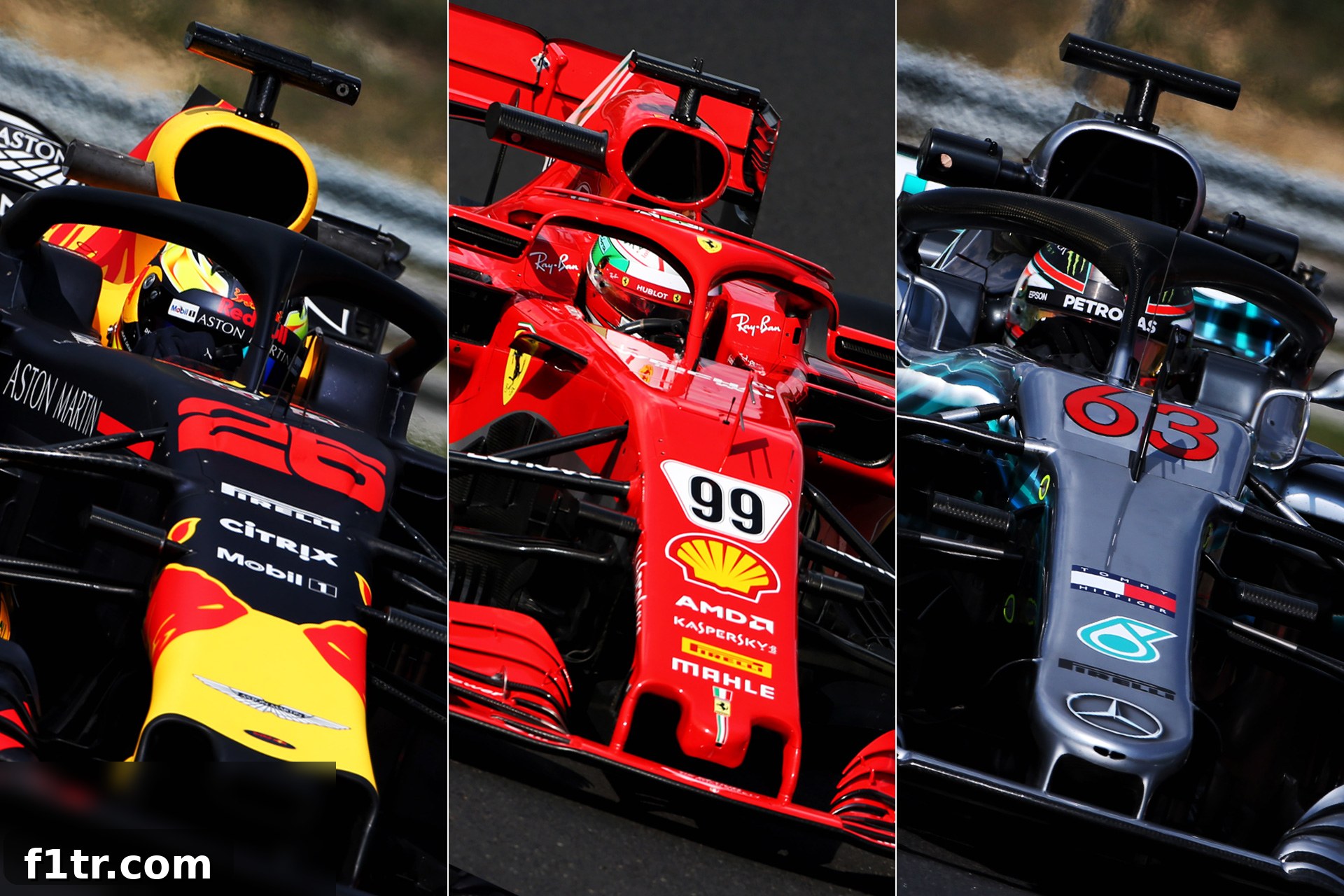
The recent push for three-car teams stems directly from a dilemma faced by Mercedes Motorsport CEO Toto Wolff. With a surplus of talented drivers under contract and next year’s W10s already assigned to a multiple champion and a multiple race-winner, Mercedes, like other top teams, grapples with finding seats for their promising juniors. Wolff’s logic is compelling on the surface: allowing top teams to run third cars would provide a much-needed avenue for accommodating gifted young drivers who might otherwise face unemployment, while simultaneously bolstering grid numbers.
“I like the idea,” Wolff explained, “because I felt the more cars we had in the field, the more opportunity we give to young, exciting drivers to fight in a competitive car against experienced drivers, it would create great stories.” He believes this could offer “an easier access for talent.” This perspective highlights a genuine concern within F1: the difficulty for young drivers, even those with significant junior category success, to secure a coveted F1 seat. A third car, theoretically, offers a bridge between feeder series and the pinnacle of motorsport.
Unintended Consequences: The Domino Effect of Three-Car Teams
While the immediate advantages of accommodating young talent and potentially filling grids seem appealing, F1’s history is replete with examples of “quick fixes” generating more problems than they solve. The introduction of three-car teams, especially for top constructors, could trigger a cascade of unintended and potentially detrimental effects on the sport’s competitive landscape and financial ecosystem.
Competitive Imbalance and Grid Monotony
Consider a future Formula 1 grid where the top twelve positions are routinely occupied by cars from as few as four dominant teams, instead of the current six or more. This scenario would inevitably reduce the diversity of front-running competitors, leading to more predictable race outcomes and potentially diminishing fan engagement. The thrill of seeing different constructors battle for podiums and points would be significantly diluted if the top echelons were consistently monopolized by a handful of mega-teams. Smaller, independent teams would find themselves pushed further down the order, making it even harder for them to attract sponsors and talent.
Skewed Constructors’ Championship and Strategic Advantages
The impact on the Constructors’ Championship would be profound. Currently, points are awarded to the top ten finishers. Imagine a situation where three three-car teams could potentially fill nine out of those ten scoring positions, leaving a solitary spot for a “lucky interloper” from another team. This would not only make the championship a foregone conclusion for the dominant teams but also severely hamper the ability of midfield teams to earn crucial prize money, further exacerbating the financial disparity in the sport.
Furthermore, the strategic advantages afforded to teams running three competitive cars would be immense. As Wolff himself alluded to after Valtteri Bottas’s qualifying crash in Australia, having multiple cars offers critical flexibility. A third car could be used for experimental setups, to act as a buffer in qualifying, or to execute complex race strategies such as tactical blocking or varying tire strategies across multiple cars. These benefits would disproportionately favor the wealthiest teams, those with the financial muscle to afford and operate a third car, further entrenching their dominance. This creates a deeply imbalanced playing field, where success is increasingly dictated by budget rather than pure ingenuity or sporting prowess.
Become a RaceFans supporter and go ad-free – support independent F1 journalism!
A Mathematical Minefield for Points Allocation
While some propose mitigation strategies, such as extending points further down the order or prohibiting third cars from scoring points, these solutions introduce their own complexities. Imagine a scenario where the ‘Big Four’ teams each run three cars and lock out the top 12 positions, but their third cars are ineligible for points. This would lead to the driver finishing 13th on track suddenly picking up points for ninth. Such a system would become a mathematical nightmare, confusing for fans and undermining the intuitive understanding of race results. It exemplifies how pandering to specific circumstances can create a multitude of unforeseen logistical and sporting problems.
The Root of the Problem: F1’s Commercial Inequity
The recurring discussion about three-car teams or grid expansion is ultimately a symptom of deeper, systemic issues within Formula 1, particularly its historical commercial inequity. This isn’t a new revelation; the problem was starkly evident around 2013 when the grid faced the threat of shrinking to just eight teams. HRT had collapsed, while Manor-Marussia, Caterham, and Sauber were all teetering on the brink of financial ruin. The idea of eight teams running three cars seemed like an “obvious fix” then, but it failed to address the sport’s fundamental commercial imbalances.
The Ecclestone Era and Manufacturer Exodus
Despite Formula 1’s multi-billion dollar turnover, three of those struggling teams ultimately folded. In their place, only one new entry, Haas, has arrived, and its unique Ferrari partnership makes it an outlier. A sport that consistently loses teams faster than it can replace them is indicative of poor health. The root cause lies in how F1’s commercial rights were historically managed. In the early 2000s, the FIA, under Max Mosley, controversially hived off F1’s commercial rights to Bernie Ecclestone for a relative pittance. Ecclestone, in turn, negotiated deals with teams that initially saw them collectively receive a mere 23 percent of F1’s retained revenues.
Such a meager share made it incredibly difficult for teams to operate sustainably. While motor manufacturers flocked to F1 during this period – all but Toyota doing so by acquiring existing teams – they eventually realized the poor return on investment. The subsequent loss of major players like Jaguar Racing, Honda, BMW, Toyota, and Renault was not merely a consequence of the global economic crisis. It was a clear signal that F1, under its prevailing commercial structure, was not a cost-effective marketing platform or a viable technological showcase. Manufacturers sought greater slices of F1’s income, eventually securing a collective 50 percent, but by then, the damage was irreversible.
The departure of these automotive giants left F1 poorer in terms of grid size, gravitas, and spectacle. Red Bull purchased Jaguar’s team; Honda eventually became an engine supplier after a brief B-team stint; Genii/Lotus was sold back to Renault after years of losses; and Toyota withdrew completely, moving to the World Endurance Championship. The underlying problem persists: F1’s financial model disproportionately benefits the commercial rights holder, not the teams themselves. This imbalance is starkly illustrated by F1’s value soaring from the initial $313 million Ecclestone paid the FIA to the $8 billion Liberty Media eventually paid for the sport.
The Financial Implications of Grid Expansion
To operate at its full potential – a 26-car grid, which could accommodate six more bright young talents – F1 would need to significantly dilute its revenue distribution. Mercedes and Ferrari are already vociferously protesting proposed post-2020 budget cuts. Imagine the outcry if their shares were further reduced by an additional 20 percent to accommodate three more teams (or even just 13 teams running two cars each).
Under the current revenue structure, which conveniently pays down to tenth place (mirroring the current number of teams), ten teams share approximately a billion dollars annually, averaging around $100 million each. While payouts vary significantly based on performance, heritage, and special bonuses (Ferrari, for example, might receive $150 million compared to Sauber’s $35 million), expanding the grid would necessitate a fundamental redistribution. If the present “cake” were sliced thirteen ways to accommodate a 26-car grid, each team would receive an average of 23 percent less income. Ferrari’s take could drop to $115 million, and Sauber’s to $27 million. No team boss would willingly sanction grid growth under such circumstances. Conversely, demanding that Liberty Media cover these shortfalls would mean its shareholders lose out on an estimated $300 million in profits – an equally unpalatable proposition for investors.
Beyond Three Cars: Rethinking Young Driver Development
Whether through three-car teams or organic grid growth, there appears to be no straightforward, long-term solution for integrating promising youngsters like F2 championship leader George Russell or established talent Esteban Ocon into current F1 grids, unless they arrive with extraordinarily wealthy benefactors. Even then, open seats are a scarcity.
The Challenges for Rookies and Team Reluctance
The inherent complexity of modern Formula 1 cars, coupled with severely limited track time for testing, makes teams exceptionally reluctant to take risks on unproven youngsters. The stakes are too high, and the expectation for immediate performance too great. This explains why a team like Sauber, which historically built its reputation by gambling on talents such as Felipe Massa and Kimi Räikkönen, recently re-signed the veteran Finn at the ripe age of 38. The security of an experienced driver often outweighs the potential, but uncertain, benefits of a rookie.
Radical Solutions: Relegation and Incentives
If three-car teams are impractical and grid expansion financially unfeasible, F1 must explore alternative mechanisms to encourage teams to invest in emerging talent. One radical proposal could be a relegation system: just as performance points are essential for gaining an F1 superlicence, perhaps they should be mandatory to retain a seat at motorsport’s top table. Drivers consistently finishing in the lower quarter of the championship could face relegation, regardless of their backing or team’s competitiveness. While cries of unfairness for drivers in uncompetitive cars would undoubtedly arise, is such a system any less fair than a talented Russell or Ocon ending up unemployed due to a lack of opportunities? F1 has never been about inherent fairness, but rather about maximizing opportunities and rewarding merit. If opportunities are squandered, a driver may not deserve a place, irrespective of their financial support.
Equally, teams should be offered substantial incentives to take on rookies, particularly the F2 champion. These incentives could range from additional testing allowances to financial bonuses for fielding a designated young driver. With Liberty Media actively targeting a younger demographic, a grid filled with “Golden Oldies” aged 40-plus will hardly deliver their stated objective. The irony is stark: some current drivers are old enough to be the fathers of the very fans Liberty is striving to attract.
Conclusion: A Call for Fundamental Reform
The debate around three-car teams for young drivers underscores a deeper crisis within Formula 1: a disconnect between its aspiration as the pinnacle of motorsport and its current structural realities. While Toto Wolff’s suggestion aims to address a genuine problem of driver development and grid size, it is a superficial remedy that sidesteps the sport’s fundamental commercial inequities and competitive imbalances. The history of F1 demonstrates that quick fixes often lead to unforeseen consequences, further entrenching the dominance of the wealthy few and stifling genuine competition. For F1 to truly thrive, ensuring a healthy talent pipeline and competitive grids, it must move beyond stop-gap solutions and implement fundamental reforms to its revenue distribution model and sporting regulations. Without a serious re-evaluation of its future, Formula 1 risks not having one, a prospect far worse for business than any number of hands-out needed to encourage teams to take calculated risks on the next generation of motorsport stars.
Follow Dieter on Twitter: @RacingLines
Become a RaceFans supporter and go ad-free – support independent F1 journalism!
RacingLines Columns
Dive deeper into Formula 1 analysis and commentary from our expert contributors:
- The year of sprints, ‘the show’ – and rising stock: A political review of the 2021 F1 season
- The problems of perception the FIA must address after the Abu Dhabi row
- Why the budget cap could be F1’s next battleground between Mercedes and Red Bull
- Todt defied expectations as president – now he plans to “disappear” from FIA
- Sir Frank Williams: A personal appreciation of a true racer
Browse all RacingLines columns
Go ad-free for just £1 per month>> Find out more and sign up