The lifeblood of any sport lies in its ability to nurture and integrate future talent, and Formula 1 is no exception. For a sport to maintain its thrilling competitive edge and captivate global audiences, a robust and accessible pathway for rising stars is absolutely critical. Under the leadership of FIA president Jean Todt and Stefano Domenicali, who previously headed the single-seater commission before ascending to Formula 1’s top role, significant efforts were made to streamline and promote the junior racing ladder. This ambitious vision theoretically aimed to enable promising young drivers to progress systematically through the ranks, from Formula 4, through F3 and F2, all the way to the pinnacle of motorsport: Formula 1 itself.
Advert | Become a Supporter & go ad-free
To further enhance the visibility and appeal of this talent pipeline, both the FIA Formula 3 and Formula 2 championships are strategically positioned on the support bills of Formula 1 Grand Prix weekends. This prime placement ensures that these series are globally broadcast, offering an unparalleled platform for the brightest young talents to showcase their skills directly to F1 team principals, potential sponsors, and millions of passionate fans worldwide. Success in these and other designated junior series earns drivers crucial Super Licence points, a metric devised by the sport’s governing body and teams to objectively gauge a driver’s readiness for promotion to the elite league. The theory is straightforward: the more Super Licence points a driver accrues, the more prepared and deserving they are for a coveted F1 seat. However, as is often the case in the complex world of Formula 1, theory and reality can diverge significantly.
The F1 Talent Trap: Why Young Drivers Struggle to Break into Formula 1
Even the most meticulously designed career ladders become obsolete if the top rung offers no tangible destination. Many aspiring drivers are rapidly discovering a harsh truth: without open seats, even the most impressive haul of Super Licence points becomes as futile as slick tyres on a rain-soaked Spa-Francorchamps circuit. While Spa’s unpredictable weather eventually gives way to drier conditions, the current scarcity of Formula 1 opportunities shows no signs of dissipating in the near future, casting a long shadow over the dreams of an entire generation of racers.
The $200 Million Barrier: An Unyielding Grid
Formula 1 appears to be actively discouraging the entry of new teams, a policy cemented by the controversial anti-dilution fee. This substantial $200 million payment, required from any prospective newcomer, is subsequently divided among the existing teams. This formidable financial barrier effectively limits the grid to its current configuration of 10 teams and 20 cockpits, a structure expected to remain firmly in place until at least 2026. Compounding this issue are the “new era” regulations introduced in 2022, which brought about increasingly complex car designs and severe restrictions on testing. In this environment, teams are naturally gravitating towards proven experience rather than taking a chance on youthful potential, further narrowing the already constricted path to F1.
The F2 Champion’s Dilemma: A Vicious Circle
Adding another layer of complexity is a specific regulation within Formula 2 that stipulates its champion is thereafter barred from competing in the series. While seemingly designed to encourage progression, this rule inadvertently forces the most successful young talents into a cruel paradox: they lose their primary racing platform just as they need to consolidate their experience and make their final push for F1. This creates a “vicious circle” where they have no opportunity to gain the crucial F1 experience that might secure a seat, and no F1 seat means no chance to continue racing in the primary feeder series. With limited top-tier single-seater options outside of F1 – perhaps IndyCar offering a notable alternative – these champions often find themselves in an untenable position, unless they possess the backing of a multi-billionaire family or an “exotic passport” that aligns with a particular commercial market need.
Consequently, many deserving champions end up sidelined, while less accomplished but financially well-supported drivers are promoted. While some argue that this phenomenon is an inherent part of Formula 1’s history, where financial backing has often outweighed raw ability, the current situation feels particularly acute. When even highly talented academy drivers, benefiting from the substantial support of powerhouses like Renault, Ferrari, and Red Bull, find themselves with nowhere to go, it signals a deeper systemic issue. The sport, in its current configuration, appears to have raced itself into a significant dead end concerning its talent development.
Oscar Piastri: A Champion Overlooked
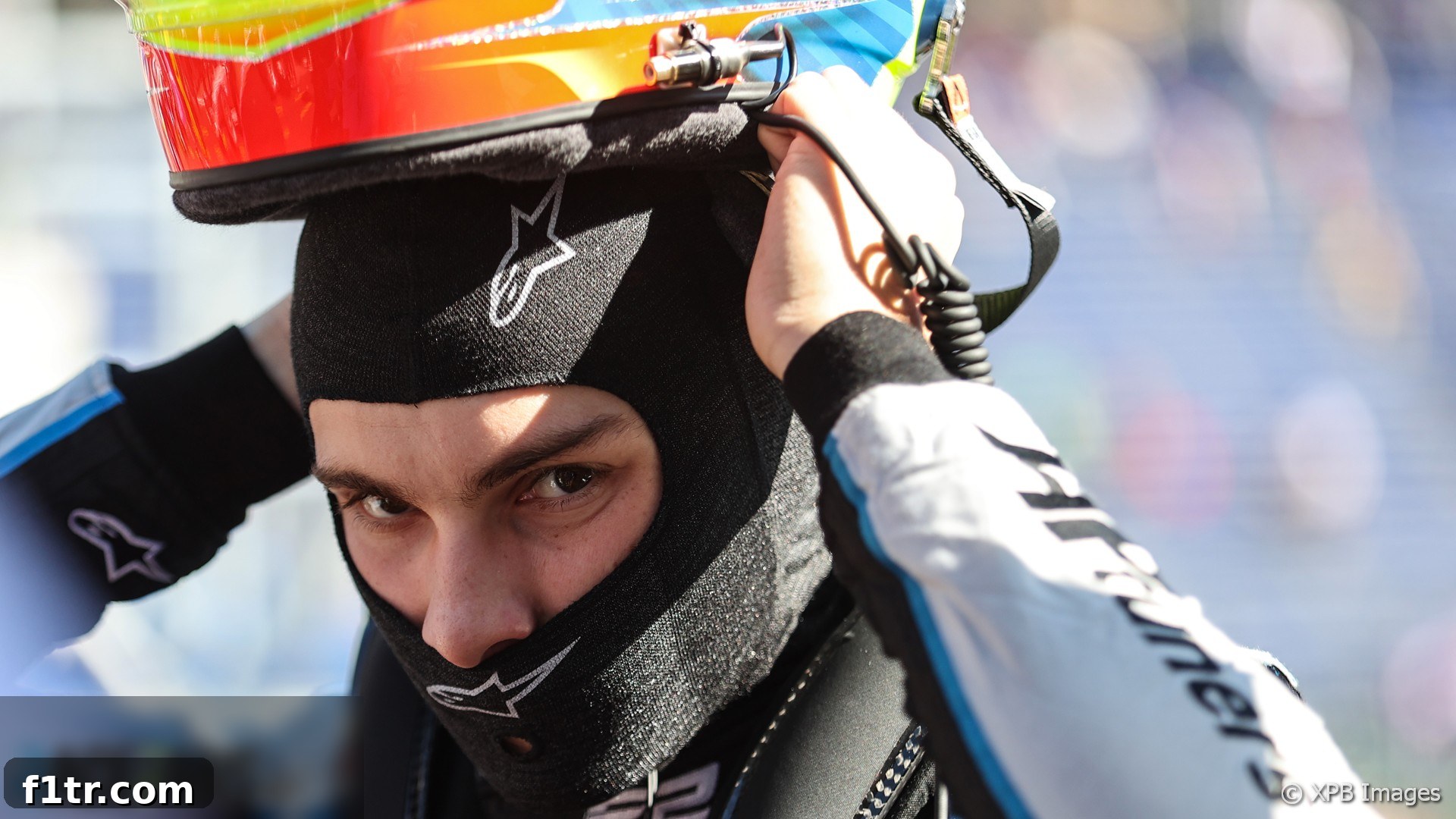
At the time of writing, with precisely six months remaining until the highly anticipated start of the 2022 Formula 1 season, a single vacant seat remains to be filled. This elusive spot is at the Sauber-run Alfa Romeo team, where 41-year-old Kimi Raikkonen, a veteran who made his F1 debut in 2001, is heading towards retirement. A diverse field of as many as five drivers is reportedly vying for this coveted position, ranging from current Alfa Romeo placement Antonio Giovinazzi and Formula E champion Nyck de Vries, to rising Chinese F2 driver Guanyu Zhou. However, conspicuously absent from this list is Australian Oscar Piastri, a prodigious talent whose junior championship record stands comparison with the early careers of current F1 stars like Charles Leclerc and George Russell.
Advert | Become a RaceFans supporter andgo ad-free
“I think I’ve done a good job of putting myself in a pretty prime position for an F1 seat,” the then 20-year-old Alpine development driver candidly expressed in Monza after securing pole position for a critical F2 event. “I’ve won two championships in a row and [I’m] leading a third. We’re still only halfway through this F2 year so a lot can still change.” Piastri’s sentiment, however, was tinged with palpable disappointment: “But all the moves in F1 are happening now or have already happened. So it’s a bit disappointing the way it’s kind of played out because I really don’t know what more I could have done.”
Piastri is on the cusp of an extraordinary achievement: a remarkable trio of consecutive titles. After clinching the Formula Renault Eurocup in 2019 and the FIA Formula 3 series last year, he is currently leading the fiercely contested Formula 2 standings after 15 of 24 races. His career is managed by compatriot and nine-time Grand Prix winner Mark Webber, who himself admits that his own entry into Formula 1 would likely not have materialized had he not been given a crucial break by Paul Stoddard’s perennially underfunded Minardi team. Significantly, when Webber joined F1, the grid comprised 11 teams, providing 22 cars and therefore more opportunities for young drivers.
Mark Webber’s Blunt Assessment
“Sometimes in Formula 1 timing can be a little bit against you and ultimately he’s been a little bit of a victim of his own success in terms of the speed he’s come through,” believes Webber, offering a nuanced perspective on Piastri’s predicament. Webber elaborates on the grim reality: “When you have a [super]licence and there’s no seats it’s obviously not much use,” he stated in an exclusive interview. He highlighted the pervasive influence of finance in modern F1: “25% of the grid now are heavily-financed drivers, so that’s the way it is currently. But it probably won’t be any higher than that in the future, hopefully.”
Webber passionately advocates for a return to meritocracy: “Then we may get a [few] more of the guys that come through with the desire, passion, intensity. The sport has to hunt for the [next] Leclerc, Verstappen, Norris, Russell. That’s what the sport is about, they want to be there, they want to win, and they’re self-motivating individuals. That’s what Oscar is. There are some young [drivers] that I believe are ready for F1 and Oscar is certainly one of them.”
Another significant barrier, according to Webber, is the remarkably slow rate of driver turnover among those who already hold F1 seats. “In Formula 1 it’s sometimes harder to get out than to get in,” he suggests. “We see some drivers, they just can’t leave and teams sometimes don’t quite have the balls to go for young talent [so] they recycle some guys that have those 100 grands prix under their belt.” This preference for established, albeit sometimes stagnant, talent directly blocks the path for the next generation, perpetuating the problem of limited opportunities.
Advert | Become a RaceFans supporter andgo ad-free
The former Red Bull driver acknowledges the undeniable power of financial backing in the pipeline of young driver talent. “Oscar doesn’t need to: He’s bringing performance, he’s bringing the stopwatch, he’s bringing one of the key facets. And his level of maturity for his age is extraordinary.” Webber points out the stark contrast: “We know [funding] can turbocharge it if you’ve got eight figures, but that’s something Oscar has never had and never will have so he’s going to have to get there on talent alone.” Piastri’s journey is thus a pure test of skill against a system often swayed by financial might.
A Glimmer of Hope: Mandatory Rookie Practice
One potential “saving grace” for drivers like Piastri could materialize from Formula 1’s plans to institute compulsory Friday practice running for rookies during Grand Prix weekends. This initiative, if implemented effectively, offers a dual benefit: not only would it provide crucial, real-world track experience for young drivers, but it also creates (and should be designed to create) genuine opportunities for these youngsters to shine. By participating on the same day, in the same machinery, and on the same circuit as the regular F1 drivers, rookies could directly demonstrate their capabilities and potentially catch the eye of team principals.
“That’s an absolute no-brainer for Alpine,” says Webber, referring to Piastri’s current team. “If [Oscar] wins the championship he’s unemployed in junior racing, he can’t race [in F2] of course but he’ll have a lot of superlicence points. So that won’t be a problem.” While such Friday running would undoubtedly be a welcome step, it raises a critical question: is it truly enough? An F2 champion, regardless of who eventually claims the title, surely deserves more than a few hours of mandated practice. These drivers, who have proven their mettle across multiple junior categories, require genuine pathways and meaningful opportunities to secure a full-time F1 seat.
The Imperative for F1: Nurturing Future Stars
If Formula 1 genuinely aspires to cultivate a sustainable and vibrant future, it carries an inherent responsibility to deliver tangible and accessible opportunities for exceptional talents such as Oscar Piastri. The sport cannot afford to continually lose its brightest prospects due to a stagnant grid and a preference for recycled experience over burgeoning skill. Overlooking a generation of champions not only diminishes the perceived value of the feeder series but also risks alienating an entire generation of fans who want to see merit rewarded.
British prime minister Benjamin Disraeli once famously declared, “The youth of a nation are the trustees of posterity.” This profound sentiment holds equally true for Formula 1. The young drivers of today are the custodians of the sport’s future, the ones who will continue to push the boundaries of speed, skill, and spectacle. Failing to invest in them, to clear their path and provide genuine chances, is not merely a missed opportunity for individual careers, but a fundamental betrayal of Formula 1’s long-term health and its legacy.
Related Insights
- No happy ending for Ricciardo’s made-for-Netflix redemption arc
- No ‘two alphas’ for Red Bull as team forms its longest-running driver line-up
- Will Mercedes come to the rescue of Ocon’s career a third time?
- How the midfield’s hottest team mate rivalry boiled over
- Petty officialdom or deserved decisions? Five drivers stripped of wins in 2024
Browse all News Focus articles