Formula 1’s Unprecedented Reliability: A Double-Edged Sword for the 2024 Season?
The 2024 Formula 1 season is rapidly unfolding as one of the most captivating and fiercely competitive world championships in recent memory. Beyond the thrilling battles for supremacy and the impressive diversity of race-winning teams and drivers, this year stands out for another remarkable reason: it is poised to become Formula 1’s most reliable season in its illustrious history. This unprecedented level of mechanical and operational robustness is sparking vital conversations among fans, teams, and pundits alike about its profound impact on the sport.
Formula 1 has undergone seismic shifts over the decades. In its earlier eras, a significant portion of the grid often failed to complete a Grand Prix. It was not uncommon for at least a third of starting drivers to retire from a race, with some championships even seeing more retirements than classified finishers over the course of a year. The sport was a relentless test of not just driver skill and courage, but also the sheer durability and engineering prowess of machines often pushed to – and beyond – their mechanical limits. This stark contrast with today’s landscape highlights a dramatic evolution in automotive technology, safety standards, and regulatory frameworks.
Advert | Become a Supporter & go ad-free
Advertisement
To accurately gauge this remarkable reliability, it’s crucial to understand the official definition of a ‘classified finisher’ by the FIA. A driver does not necessarily need to be running at the very end of the race to be counted as having finished. The key criterion is having completed more than 90% of the race distance – or 90% of the laps covered by the winner in the event of a shortened race. For instance, Lando Norris, despite retiring from the Austrian Grand Prix after a crucial clash with Max Verstappen while battling for the lead, was still classified as a finisher. Having completed 64 out of 71 laps, he met the 90.1% threshold, ensuring his performance, despite the incident, was officially recorded as a finish.
This stringent yet flexible rule helps paint a clearer picture of overall car and driver performance throughout a season. Since 2003, when the FIA began a concerted effort to gradually introduce measures aimed at reducing costs and encouraging the development of more robust, longer-lasting cars, Formula 1’s reliability rate has soared dramatically. These initiatives, spanning engine freezes, limits on component usage, and refined safety protocols, have fundamentally reshaped the engineering philosophy within the sport. The result? We are now witnessing the lowest rate of retirements in F1 history.
Throughout the initial 16 rounds of the 2024 season, drivers have started Grand Prix events a total of 319 times. From these attempts, there have been an astonishing 292 classified finishes, translating to an unparalleled finishing rate of 91.54%. This statistic firmly positions 2024 as the season with the fewest retirements ever recorded. It’s not merely the cars that are proving exceptionally reliable – with this year’s technical-related retirement rate of 3.45% almost matching the incredibly low 3.43% seen in 2021 – but also the drivers exhibiting exemplary discipline and racecraft on track. The historically low rate of collisions and spins further underscores this trend. This collective improvement has contributed to a remarkable streak of seven consecutive races without a Safety Car intervention, and a mere single lap of Virtual Safety Car across the last 440 laps of competitive racing.
However, this unprecedented level of reliability prompts a critical question for the sport: is it ultimately enhancing or harming the quality of racing in Formula 1 this season?
Advert | Become a RaceFans supporter andgo ad-free
Advertisement
The Case For Enhanced Reliability
Proponents argue that a high rate of reliability unequivocally improves Formula 1 by providing more of what fans truly crave: racing itself. With fewer drivers dropping out due to mechanical issues or incidents, more cars remain on track for the entirety of the Grand Prix. This translates directly into more on-track action, sustained battles, and strategic depth that can evolve over the full race distance. Fans, whether trackside or watching globally, get to enjoy a longer, richer spectacle with more side-by-side racing and overtakes.
Furthermore, heightened reliability fosters a more merit-based competition. When retirements are rare, the true performance of drivers and their meticulously engineered machines takes centre stage. The best drivers, in the most capable cars, consistently have the opportunity to score points, allowing the final championship standings to be a far truer and fairer representation of who deserves to be in each position. This reduces the element of luck, ensuring that talent and strategy, rather than mechanical lottery, dictate outcomes.
Another significant benefit is the reduction in emotional disappointment. It is undeniably better for the sport when the random element of mechanical failures does not rob drivers of hard-earned results. Imagine the widespread frustration if a driver like Charles Leclerc had suffered a sudden mechanical breakdown in the closing laps of a pivotal race like Monaco or Monza? Better reliability means less heartbreak for drivers, teams, and fans, ensuring that podiums and victories are genuinely earned through skill and performance, rather than inherited through others’ misfortune.
The Case Against Excessive Reliability
Conversely, critics contend that the current level of reliability in Formula 1 might be excessively high. For a sport that prides itself on being the absolute pinnacle of motorsport and engineering innovation, the extreme rarity of car breakdowns suggests that modern F1 machines are perhaps not being pushed to their ultimate limits. Some argue that this diminishes the traditional challenge of endurance and engineering robustness, which has historically been a core tenet of Formula 1’s identity.
A further concern is how this unwavering reliability can disadvantage the midfield and lower-tier teams. In an era where mechanical failures are almost non-existent, the top teams benefit disproportionately. How many more valuable points might teams like Haas, Williams, or Sauber have accumulated this year if just a couple of cars ahead of them had retired from a handful of races? Instead, the dominant teams can almost monopolize the top ten finishing positions, making it incredibly difficult for others to break into the points and creating a more rigid pecking order. This can lead to less diverse results and potentially a less dynamic championship battle beyond the very top.
Moreover, without the unpredictable element of reliability problems striking at any moment, some fans feel they miss out on a crucial “wildcard” factor. The sudden, dramatic sight of the world feed cutting to the race leader with smoke billowing from the rear of their car, instantly turning the entire dynamic of the race – and potentially even the championship – on its head, used to be an unforgettable part of F1’s spectacle. While devastating for the affected driver, these moments injected an raw, unscripted drama that added to the sport’s entertainment value, an element that is now largely absent.
Advert | Become a RaceFans supporter andgo ad-free
Advertisement
My Perspective: Embracing the Evolution of F1
Whether one views Formula 1 in its current iteration as an insult to the pioneering spirit of its origins or as a necessary adaptation, the undeniable reality is that the sport had to evolve towards greater sustainability and efficiency to ensure its long-term survival. The FIA’s resolute push to curb spiralling costs, coupled with static power unit regulations and the sheer skill and professionalism demonstrated by modern F1 teams and their drivers, has culminated in fewer retirements than ever before. And in my view, this is overwhelmingly a positive development.
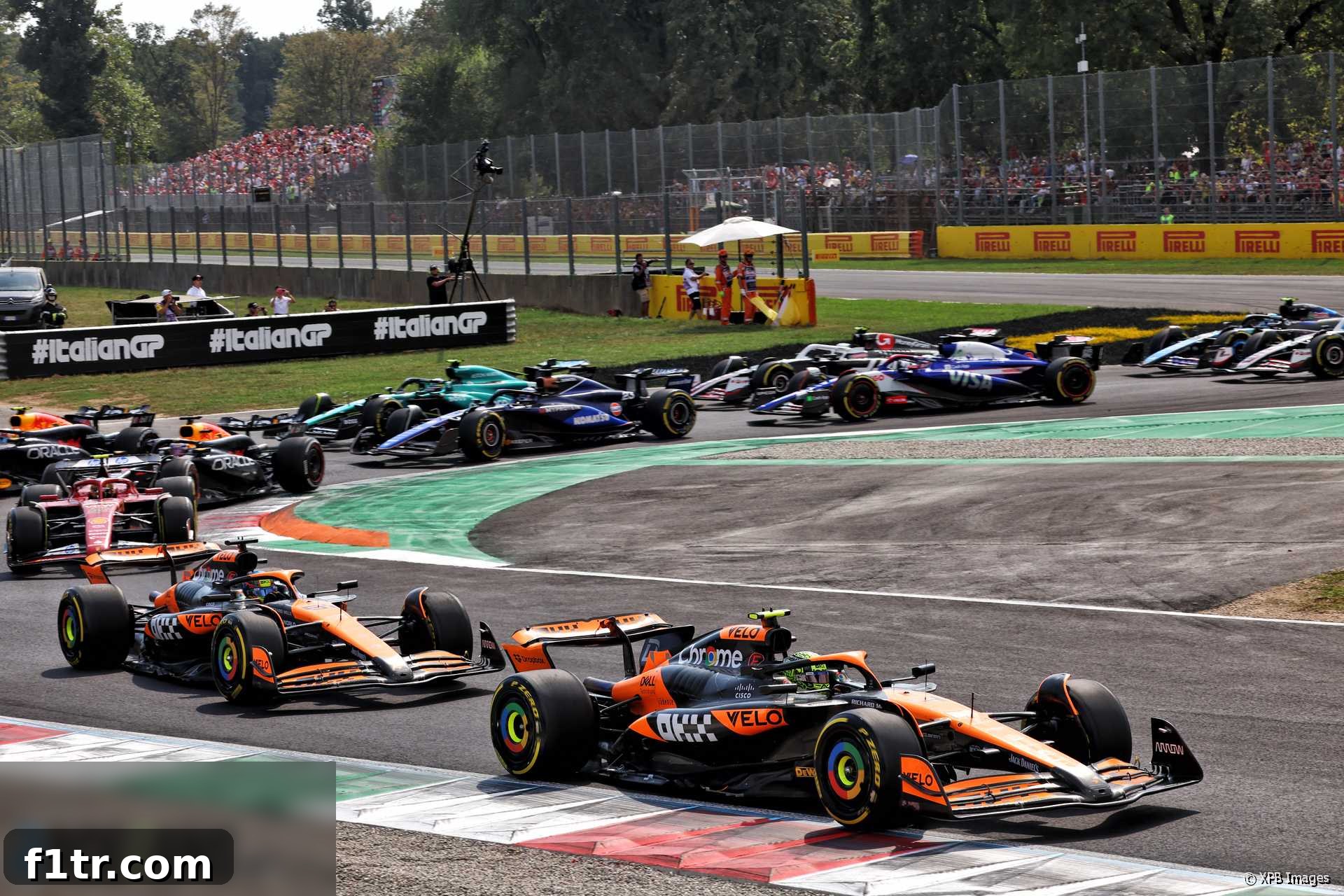
Image: An illustrative placeholder for a car breakdown, signifying the reduction of such incidents in F1 2024.
Given a choice between a third, or even half, of the grid routinely dropping out every race, and the current season where over 90% of cars are consistently running at the chequered flag, this record reliability is unequivocally preferable. While drivers suddenly losing crucial points, hard-earned podiums, or even potential victories due to a trivial fuel line failure or, worse, critical brake problems, may have injected an element of unpredictable excitement at times, it ultimately results in an unsatisfying and unfair outcome. Formula 1 is not, and has never truly been, endurance racing. We should be grateful that teams can reliably engineer their cars to last the demanding 300km of a Grand Prix distance, race weekend after race weekend.
This heightened reliability is beneficial on multiple fronts. For fans, it arguably leads to a more ‘pure’ championship, where the immense effort and talent of drivers are not regularly undone by factors beyond their control. This allows for a clearer assessment of skill and strategy. It’s also significantly better for the tireless mechanics, who are spared from spending countless extra hours fixing and rebuilding cars during what is already the longest season in history. Furthermore, it benefits the teams’ finance departments, as they are able to operate more efficiently within the confines of the budget cap, spending less on emergency repairs and re-fabricating parts.
The improvements extend beyond just mechanical breakdowns and failures. Drivers are hitting each other with far less frequency, which is a genuine testament to the extraordinary abilities and professionalism of the current grid. The remarkable run of seven consecutive races without a Safety Car intervention or major accident – even with several wet races in that sequence – powerfully demonstrates the exceptionally high level of racecraft among the 20 drivers. This professionalism is further underscored by the impressive volume of different race winners seen across the field, highlighting a deep and competitive talent pool.
While the current, unparalleled rate of reliability is a defining characteristic of the 2024 season, it is unlikely to persist indefinitely. Teams will undoubtedly have absorbed crucial lessons from the seismic power unit revolution of 2014, yet with new technical regulations on the horizon for 2026, we can reasonably anticipate that the retirement rate will see an increase as teams grapple with fresh engineering challenges. But until then, 2024 represents Formula 1 at its most competitive in a significant period – and the sport’s record-breaking reliability rate is playing a pivotal role in enabling that thrilling spectacle.
You Say
Is a record-high reliability rate making Formula 1 better? Have your say in this weekend’s poll.
Do you agree that the current record-high reliability rate in F1 is making the sport better?
- No opinion (1%)
- Strongly disagree (29%)
- Slightly disagree (18%)
- Neither agree nor disagree (11%)
- Slightly agree (22%)
- Strongly agree (19%)
Total Voters: 114
A RaceFans account is required in order to vote. If you do not have one, register an account here or read more about registering here. When this poll is closed the result will be displayed instead of the voting form.
Advert | Become a RaceFans supporter andgo ad-free
Advertisement
Debates and polls
- What must Formula 1 fix with its new rules – and what should it leave unchanged?
- ADUO: Do F1 teams who fall behind deserve to get help to catch up?
- F1 is considering doubling its sprint races. Do you want more or fewer?
- Will this be a fight or a rout? 20 questions for the 2026 Formula 1 season
- Which Formula 1 team has the best-looking car – and the worst – for the 2026 season?
Browse all debates and polls