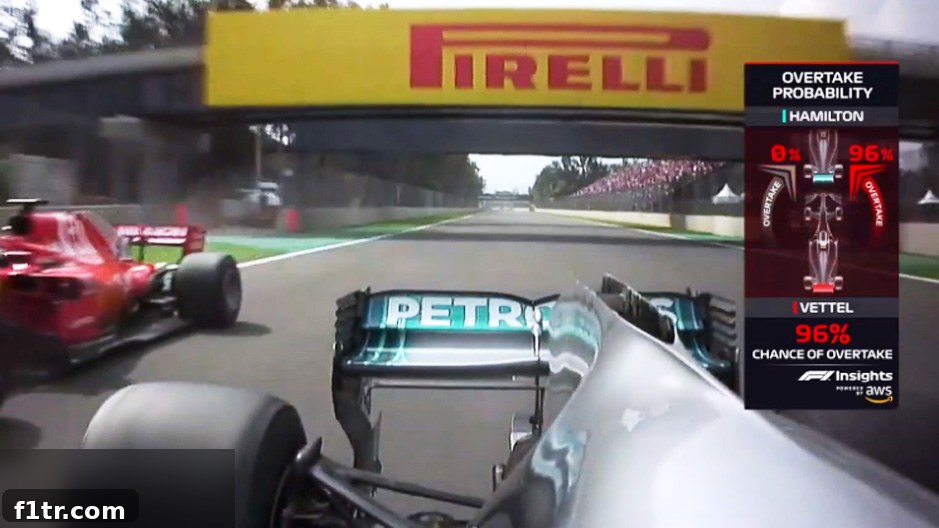
Formula 1, often hailed as the pinnacle of motorsport, is not only about blistering speed and courageous driving but also an intricate dance of strategy, engineering prowess, and split-second decision-making. For years, the complex nuances of these elements often remained a mystery to many viewers. In a significant stride towards greater transparency and fan engagement, Formula 1 introduced a suite of revolutionary new graphics in 2019, designed to unlock a deeper understanding of the sport’s multifaceted nature.
These cutting-edge visualizations, powered by advanced machine learning and real-time data streams, marked a pivotal moment in sports broadcasting. The sport’s commercial rights holder proactively sought feedback on these innovative graphics, which prominently featured compelling real-time metrics such as “Overtake Probability,” “Car Performance,” and “Pit Stop Advantage.” This commitment to involving fans in the ongoing evolution of the viewing experience underscored F1’s dedication to enhancing accessibility and comprehension for both seasoned enthusiasts and newcomers alike.
Unlocking the Race: A Closer Look at F1’s Groundbreaking 2019 Graphics
The 2019 season heralded a new era for Formula 1 broadcasting, moving beyond basic lap times and sector splits to deliver truly insightful, data-driven analysis directly to the screen. These sophisticated graphics are generated instantaneously during races, a feat made possible by applying advanced machine learning algorithms to Formula One Management’s (FOM) extensive real-time data feeds sourced directly from the teams’ cars, combined with a vast archive of historical race information. This powerful fusion of contemporary telemetry and historical context allows the system to predict and analyze race scenarios with astonishing accuracy, offering unprecedented insights into the heart of the action.
The goal was clear: to transform raw, complex data into easily digestible visual stories that enrich the fan experience. By demystifying the intricate strategies and technical aspects of Grand Prix racing, F1 aimed to foster a deeper connection between the sport and its global audience, making every overtake attempt, tire management decision, and pit stop strategy a moment of enhanced understanding and excitement.
Overtake Probability: Predicting the Thrill of the Chase
One of the most instantly impactful and widely discussed additions was the “Overtake Probability” graphic. This innovative tool transcends simply showing which car is ahead; it quantifies, in real-time, the likelihood of a successful pass in a given moment. The system processes an incredible array of variables, including car speed, current lap times, tire degradation levels, track position, historical overtaking success rates at specific corners of the circuit, and even the relative performance and skill metrics of the drivers involved. From this complex data matrix, the graphic dynamically displays a percentage chance of an overtake attempt succeeding, adding a layer of predictive excitement to the broadcast.
For fans, this graphic introduces an exhilarating new dimension to watching races. An overtake is no longer just a surprise event; viewers can now actively gauge the difficulty and strategic implications of a driver’s push for position. It helps to explain why some passes are incredibly challenging while others seem straightforward, factoring in crucial elements like tire grip, engine power modes, the availability of Drag Reduction System (DRS), and the condition of the tires on both cars. This real-time probabilistic analysis transforms passive viewing into an active strategic appreciation, allowing fans to understand the true risk and reward behind every audacious challenge on the track.
This capability not only elevates the excitement but also empowers commentators with data-driven narratives, enabling them to provide more informed and engaging insights as the race unfolds. It’s a testament to how data analytics can enhance the storytelling of live sports.
Car Performance: Decoding the Pace and Endurance Battle
Beyond the immediate thrill of an overtake, Formula 1 is a relentless, strategic battle against time, attrition, and the delicate balance of component wear. The “Car Performance” graphic was introduced to illuminate this crucial aspect of the sport. This sophisticated visualization integrates a multitude of critical data points such as real-time tire wear rates, precise tire temperature readings, estimations of fuel load, and comprehensive historical performance data specific to each car and driver combination over various stints. The graphic’s primary purpose is to reveal the overall performance trajectory of a car during a stint and, most importantly, to predict how long a driver can realistically maintain their current competitive pace before their lap times inevitably “fall off a cliff,” making them vulnerable to aggressive rivals.
Understanding tire degradation and optimal operating temperatures is paramount in F1 strategy, and this graphic makes these complex factors remarkably transparent. Fans can now visually track a driver’s tire health and anticipate strategic decisions such as imminent pit stops or the need for a driver to shift into defensive driving modes. It powerfully highlights the delicate balance drivers must strike between aggressively pushing their car to its limits and meticulously preserving their tires and other components. This insight enriches the understanding of why a car might suddenly lose pace or, conversely, gain it back after a perfectly timed pit stop, providing vital context to the unfolding race narrative and showcasing the strategic genius often hidden beneath the surface of the race.
Pit Stop Advantage: The Strategic Heartbeat of Formula 1
Pit stops are arguably some of the most critical race-defining moments, capable of turning fortunes in a mere matter of seconds. The “Pit Stop Advantage” graphic was meticulously developed to demystify the complex, real-time calculations that underpin these crucial strategic decisions. It is designed to clearly show whether a driver can gain a significant strategic advantage by pitting earlier (an “undercut” maneuver) or later (an “overcut” strategy) than a direct rival who is either ahead or behind them on the track. This involves a sophisticated, multi-variable analysis encompassing current track position, the precise gap to rivals, estimated pit stop time (including potential traffic in the pit lane), the comparative tire degradation of both cars involved in the strategic battle, and even anticipated changes in track conditions or incident probabilities.
This graphic provides an immediate and intuitive visual representation of the potential gain or loss resulting from a particular pit stop strategy. It dramatically enhances viewers’ comprehension of the intricate strategic dance that unfolds during a Grand Prix, clarifying why race engineers and team principals opt for specific timing for their tire changes. By making these complex, real-time calculations transparent and visible, F1 elevates the fan’s understanding of strategic chess, transforming what might otherwise seem like a simple routine tire change into a pivotal moment of tactical brilliance, calculated risk, or costly misjudgment. It truly allows fans to appreciate the strategic depth of Formula 1 racing, bringing them closer to the decision-making process.
The Vision and Technology: Ross Brawn and the AWS Partnership
The driving force and visionary behind these significant enhancements was F1’s managing director of motorsport, Ross Brawn. A legendary figure in Formula 1 with an illustrious career spanning championship-winning engineering and influential team principal roles, Brawn possessed a deep understanding of the immense potential of F1’s unparalleled technological prowess to enrich the spectator experience. He eloquently articulated that these new graphics would “harness F1 technology to give fans a deeper understanding of the sport,” effectively bridging the gap between the highly technical, often opaque world of Formula 1 and its vast, diverse global audience.
To bring this ambitious vision to life, Formula 1 forged a crucial strategic partnership with Amazon Web Services (AWS). This collaboration was instrumental, as AWS provided the scalable, robust cloud computing infrastructure and advanced machine learning capabilities absolutely necessary to process the colossal amounts of real-time data generated by each F1 car during every single Grand Prix weekend. From thousands of precision sensors embedded on every car constantly streaming data to extensive historical race archives, AWS’s state-of-the-art technology enabled FOM to transform raw, intricate data into actionable, easy-to-understand insights that could be broadcast instantly and seamlessly. This groundbreaking partnership vividly showcased how cutting-edge cloud technology and artificial intelligence could revolutionize sports broadcasting, making complex analytics accessible and engaging to millions worldwide.
This initiative represents far more than just a cosmetic update to the broadcast; it signifies a fundamental shift in how F1 approaches fan engagement. By providing real-time strategic insights and demystifying the racing process, F1 aims to not only entertain but also profoundly educate its audience, fostering a deeper, more intellectual appreciation for the multifaceted challenge of Grand Prix racing. The seamless blend of high-octane action with intelligent data visualization ensures that every fan, regardless of their prior knowledge or experience with the sport, can grasp the key strategic moments and enjoy the race on a more profound, informed level.
Fan Feedback and the Evolving Future of F1 Broadcasting
Crucially, FOM, in close collaboration with its technology partner AWS, actively sought feedback from fans on all three new graphics. This direct channel for audience input powerfully demonstrates F1’s unwavering commitment to iterative improvement and its dedication to tailoring the viewing experience to precisely what its global fanbase truly desires. Engaging the community in such a direct and impactful way ensures that future innovations are genuinely impactful, resonate deeply with the global F1 fanbase, and continue to meet the evolving expectations of modern sports spectators.
The introduction of these 2019 graphics marked a truly pivotal moment in sports broadcasting, effectively setting a new benchmark for how complex, data-rich sports can be presented in an engaging and understandable manner to a mass audience. It unequivocally highlighted F1’s leadership in integrating advanced analytics, artificial intelligence, and machine learning into its live event coverage. As technology continues its relentless march forward, it is highly probable that Formula 1 will continue to lead the charge, introducing even more sophisticated visualizations, predictive analytics, and interactive elements to further immerse fans in the unparalleled thrill, intricate strategy, and sheer engineering brilliance that defines Grand Prix racing. The journey towards a fully transparent, deeply insightful, and uniquely understandable F1 experience is an ongoing one, with these 2019 graphics serving as a foundational and highly significant step.
Stay Connected: Don’t Miss Anything New from RaceFans
To truly enhance your Formula 1 experience and stay abreast of every development, analysis, and breaking news story from the exhilarating world of F1, we invite you to stay connected with RaceFans. Join our vibrant community and never miss a beat:
- Join RaceFans on Facebook to engage in lively discussions with fellow F1 enthusiasts, share your insights, and discuss the latest happenings on and off the track.
- Follow RaceFans on Twitter for real-time news updates, live commentary during electrifying race weekends, and exclusive insights delivered straight to your feed.
- Get daily email updates from RaceFans directly to your inbox, ensuring you receive comprehensive summaries, in-depth analyses, and all the essential news from the fast-paced world of Formula 1.
Explore More: The Unforgettable 2019 F1 Season
The 2019 Formula 1 season was a truly memorable year, packed with dramatic races, intense championship rivalries, and significant moments that undeniably shaped the sport’s rich history. Delve deeper into the key events, compelling stories, and standout performances from that captivating season with our dedicated archives:
- Crying in the Melbourne car park at 2019 grand prix was my career low – Ocon
- McLaren Racing reports reduced £71 million loss in 2019
- Kvyat: Hockenheim podium last year was “my biggest achievement” so far
- How the FIA’s new encrypted fuel flow meter targets Ferrari’s suspected ‘aliasing’ trick
- “He smashed my office door”: 23 must-see moments from ‘Drive to Survive’ season two
Browse all 2019 F1 season articles