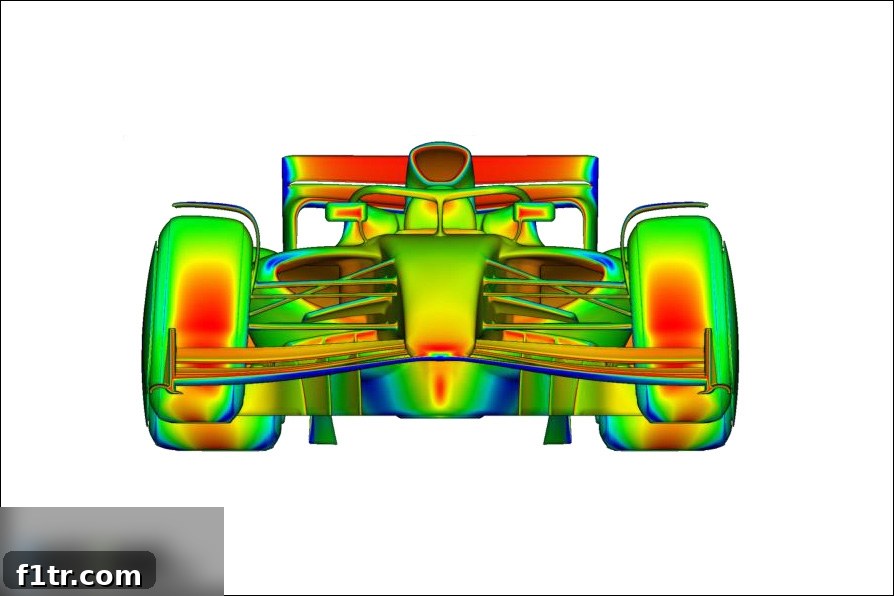
Formula 1, the pinnacle of motorsport, is known for its relentless pursuit of innovation and technological advancement. However, a significant debate has emerged among teams regarding the new aerodynamic regulations slated for the 2021 season. These proposed rules, designed to revolutionize the sport, have sparked concerns that they offer too little freedom for engineering ingenuity and creative design, potentially stifling the very spirit of F1.
The overarching goal behind this radical overhaul of the technical regulations is noble: to foster closer racing and enhance the on-track spectacle. By simplifying aerodynamic surfaces and reducing the impact of ‘dirty air,’ the governing bodies aim to enable cars to follow each other more closely, leading to more overtakes and thrilling contests. While this objective is widely supported, the methods proposed to achieve it have left many team principals and technical directors uneasy, fearing the consequences for the sport’s technical soul.
Advert | Become a Supporter & go ad-free
Documents reviewed by industry insiders reveal that the 2021 Formula 1 cars will be governed by an unprecedentedly detailed and extensive set of technical regulations. This level of prescription marks a significant departure from previous regulatory cycles, prompting apprehension within the highly competitive F1 paddock. Red Bull Racing team principal, Christian Horner, was among the first to voice his team’s skepticism, suggesting that the regulations are unlikely to be met with enthusiasm by any aerodynamic department.
The Aerodynamicist’s Dilemma: Innovation vs. Prescription in Formula 1
Christian Horner articulated the core of the issue with characteristic candour, highlighting the fundamental tension between prescribed design and the innate drive for innovation in Formula 1. “I doubt there’s any aero department that’s read those rules and got particularly excited about them,” he stated. For aerodynamicists, whose profession thrives on pushing boundaries and finding ingenious solutions within a set of constraints, the prospect of highly prescriptive design principles runs contrary to their very nature. “For any aerodynamicist, prescriptive design is not in their DNA,” Horner emphasized, highlighting the potential for these new F1 aerodynamic rules to curb the innovative spirit that has always defined Formula 1’s technical arms race.
The immediate reaction from his team, upon reviewing the newly released specifics of the 2021 F1 regulations, was telling. Horner noted, “Some of the regulations were released yesterday I think and there’s probably a few long faces in the aero department today.” This sentiment, he believes, is not exclusive to Red Bull, despite their historical prowess in aerodynamic design. While Red Bull’s success over the years hasn’t been *solely* dependent on aerodynamics, the ability to innovate and optimize every facet of the car remains fundamental to their competitive strategy. The current detailed rules have raised numerous questions that teams are eager to address in upcoming, and seemingly endless, meetings with the sport’s regulators, seeking clarity and potential amendments to ensure the future of technical creativity in F1.
The Threat of a “Monotype” Series and Escalating Costs
Adding another layer to the concern, Alfa Romeo team principal Frederic Vasseur warned of the significant financial implications and the risk of Formula 1 morphing into a less distinct, ‘specification chassis’ series. Vasseur’s apprehension stems from the idea that if the “room of freedom” for design and development becomes too restricted, teams will ultimately converge on highly similar car concepts. “I’m a bit scared that if the room of freedom is too small at the end we will end up with like a ‘monotype’ but it won’t be a ‘monotype’ and we will have to spend millions for this,” he explained, pointing out a critical paradox of the 2021 F1 regulations.
This paradox is particularly troubling for teams across the grid, regardless of their budget or current competitive standing. The very essence of Formula 1 lies in its distinct constructors, each striving to engineer a faster, more efficient, and aesthetically unique machine. A ‘monotype’ series, where all cars are virtually identical save for livery and engine, contradicts this fundamental principle, potentially eroding the technological prestige of F1. Yet, Vasseur’s point underscores a critical economic reality: even with highly restricted technical freedom, the development, testing, and manufacturing processes in F1 are inherently expensive. Teams would still be compelled to invest vast sums of money to find marginal gains within the narrow scope of the rules, but with diminished returns in terms of innovative differentiation or competitive advantage gained through unique design philosophies. This could lead to a less engaging sport for fans and a more frustrating experience for the engineers involved, who would find their creativity constrained despite the immense financial outlay.
A Path to Evolution: Gradual Opening Up of F1 Regulations
In contrast to the immediate anxieties expressed by some team principals, Renault managing director Cyril Abiteboul offered a more measured and long-term perspective on the 2021 F1 regulations. While acknowledging the initial prescriptive nature of the new rules, he suggested that this might be a necessary starting point for such a substantial shift in technical philosophy. “Looking at 2021, it’s going to be such a step change I think it’s not bad to start with some things that are fairly prescriptive and according to the result that we see, then to progressively open up,” Abiteboul argued, proposing a phased approach to regulatory freedom.
His reasoning hinges on the understanding that Formula 1 is a constantly evolving sport, and the regulations introduced in 2021 will not be static. They will inevitably be refined and expanded upon in subsequent seasons. Abiteboul believes that after an initial period where the baseline is established and the true impact of the new rules on racing quality is assessed, there will be ample opportunity to reintroduce greater technical freedom. Teams will still possess their formidable aerodynamic capabilities and departments, ensuring that the competitive pursuit of incremental gains and innovative solutions remains an integral, if initially constrained, part of F1. The sport’s history is replete with examples of rules evolving over time, allowing for renewed engineering challenges and continuous development.
Learning from the Past: The 2014 F1 Regulation Shift and Its Lessons
Abiteboul also drew a pertinent parallel to a previous significant regulatory overhaul in Formula 1: the 2014 season, which introduced the V6 turbo-hybrid power units. That radical change, while intended to modernize the sport and enhance sustainability, inadvertently led to a prolonged period of dominance by one manufacturer and a perceived lack of competitive parity. “But I think we need to be careful because last time there was such a massive change to regulations – it was 2014 – and that created a cycle that I understand people criticised a lot for the fact that it locked up a performance differentiator so that’s why I think it’s not bad to do that initially and open up,” he cautioned, emphasizing the importance of learning from historical regulatory impacts.
The lesson from 2014 is crucial for the architects of the 2021 F1 regulations. While innovation is universally celebrated, an unintended consequence of poorly managed radical shifts can be the creation of an insurmountable competitive advantage for one team, leading to predictable seasons and diminished excitement for fans. Abiteboul’s pragmatic approach suggests that starting with a more controlled, prescriptive framework for 2021 might prevent a similar outcome. By gradually easing restrictions once the new era has found its footing, the sport can ensure that competitive balance is maintained while still allowing for the eventual resurgence of engineering creativity and performance differentiation, thereby satisfying both the purists who cherish technological advancement and those yearning for thrilling, unpredictable racing.
Balancing Act: Innovation, Competition, and Spectacle in Formula 1
The debate surrounding the 2021 Formula 1 aerodynamic regulations perfectly encapsulates the perennial challenge faced by the sport’s governing bodies: how to strike a delicate balance between fostering groundbreaking technical innovation, ensuring fierce on-track competition, and delivering an exciting spectacle for a global audience. The teams, as the primary innovators and constructors, naturally advocate for maximum design freedom, believing that this is where true engineering excellence shines and their brands differentiate themselves on the world stage of motorsport.
On the other hand, the sport’s administrators, including the FIA and Formula 1 management, are tasked with safeguarding the overall health and appeal of the championship. Their objective is to create an environment where multiple teams can genuinely compete for victories, preventing long periods of dominance that can deter viewership and diminish fan engagement. The 2021 F1 rules are a bold attempt to reset the competitive landscape, address the critical issue of ‘dirty air’ that currently makes close racing incredibly difficult, and potentially reduce the financial barriers to entry and sustained participation. However, as Vasseur’s comments suggest, the ambitious goal of cost reduction might not be fully achieved if teams are still spending millions with limited avenues for differentiation.
The proposed regulations represent a critical juncture for Formula 1. While the intention to improve racing and enhance the spectacle is clear and commendable, the means to achieve it are subject to intense scrutiny from the very teams that bring the sport to life. The concern from team principals like Horner and Vasseur is not merely about a perceived lack of freedom but about the potential for unintended consequences: a homogenized grid where cars look and perform too similarly, escalating costs despite limited innovation, and ultimately, a diluted product that loses its unique blend of technology and drama. Abiteboul’s hopeful outlook offers a potential compromise, suggesting that the initial constraints could evolve into a more open framework once the foundational changes have settled. The ongoing discussions and the sport’s ability to adapt these rules in the coming years will be crucial in determining whether the 2021 Formula 1 regulations achieve their ambitious goals without sacrificing the innovative spirit that lies at the heart of Grand Prix racing.
Advert | Become a RaceFans supporter andgo ad-free
2021 F1 Season: Related Articles
- Masi ‘basically gifted the championship’ to Verstappen says 2021 FIA steward Sullivan
- Las Vegas race backers looking to extend F1 deal beyond 2025
- Why Mercedes put ‘a reminder of joy and pain’ on display in their factory lobby
- Verdict on error in GT race suggests Mercedes would have lost 2021 Abu Dhabi GP appeal
- Title ‘stolen’ from Mercedes made us ‘underdogs people cheer for’ – Wolff
Browse all 2021 F1 season articles