The exhilarating world of Formula 1 finds itself at a pivotal crossroads, grappling with questions of expansion, financial equity, and the sport’s future trajectory. At the heart of this intricate debate lies the ambitious joint venture between Andretti Global and automotive giant General Motors (GM) through its Cadillac brand. Their declared intent to enter Formula 1, with Cadillac eventually becoming an engine manufacturer, has stirred a complex mixture of anticipation and apprehension among the existing ten teams, igniting fervent discussions across the paddock and beyond.
Last month marked a significant milestone for the Andretti-Cadillac bid when the FIA, the sport’s governing body, officially approved Andretti’s application to join the Formula 1 grid as an 11th team. This approval was contingent on Andretti securing a commercial agreement with Formula 1 itself, the commercial rights holder. Andretti’s vision, initially unveiled earlier, included Cadillac as a strategic branding partner, a move designed to leverage the immense heritage and global appeal of the American luxury marque. However, the subsequent developments have further illuminated the multifaceted challenges inherent in expanding one of the world’s most exclusive sporting enterprises.
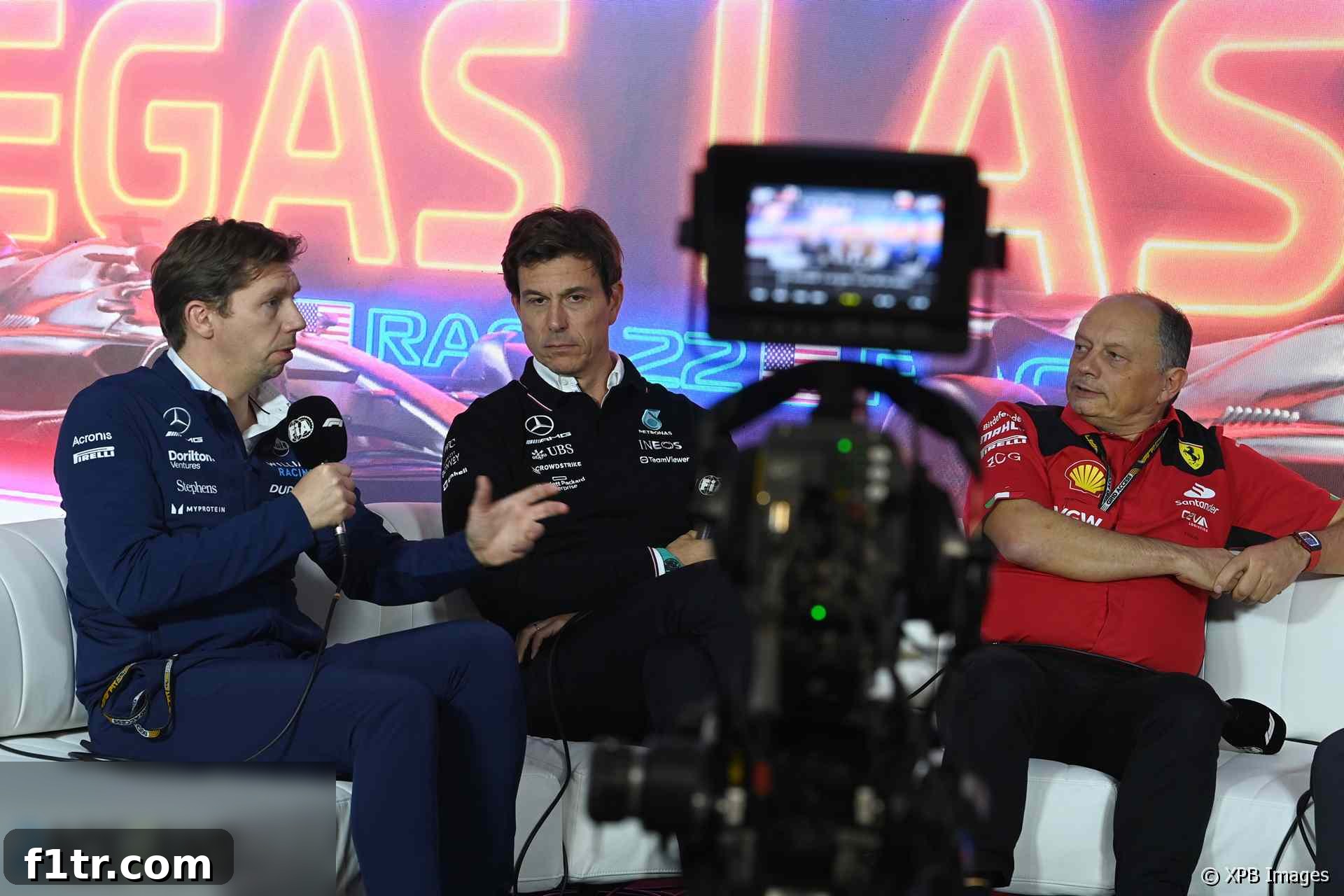
While Formula 1 management and the majority of its current teams have maintained a cautious, if not outright resistant, stance towards expanding the grid by adding an 11th competitor, their reception of the General Motors brand as a potential power unit supplier has been notably more welcoming. This dichotomy underscores a fundamental distinction in how the sport perceives different forms of expansion. Frederic Vasseur, the team principal of Ferrari, articulated this sentiment clearly, stating, “I think every single new engine supplier is welcome in F1. But it’s not the same story as the 11th team. It’s two separate questions. I think the real question is on the engine suppliers and we can have a new engine supplier.” His remarks encapsulate the prevailing view: an engine manufacturer brings technological advancement, increased competition, and potentially more robust research and development to the sport, benefits that are largely unburdened by the financial concerns associated with an additional racing entity.
Cadillac’s Commitment and the Engine Manufacturer Prospect
Reinforcing its long-term commitment to Formula 1, General Motors recently made a significant announcement: it has formally applied to become an accredited Formula 1 engine manufacturer, with an eye towards supplying power units from the 2028 season onwards. This bold declaration signals a deeper, more profound engagement than a mere branding partnership, positioning GM as a serious technological player within the sport. However, GM’s commitment comes with a critical proviso: it will only enter Formula 1 as an engine manufacturer in conjunction with Andretti. This stipulation inextricably links Cadillac’s engine ambitions to the success of Andretti’s bid to become the 11th team, effectively forcing F1 and its teams to consider both aspects of the proposal as a single, indivisible package.
The prospect of a major American automotive OEM like General Motors committing to developing an F1 power unit from scratch is, on many levels, an enticing one for the sport. It aligns with Formula 1’s stated goals of attracting new manufacturers, especially with the impending overhaul of power unit regulations in 2026, which aims to make the sport more sustainable and relevant to road car technology. A brand of GM’s stature could significantly boost F1’s appeal in the crucial North American market, potentially drawing new sponsors, fans, and technological innovation. It represents a validation of F1’s global reach and its status as a pinnacle of motorsport engineering. Yet, even this attractive proposition fails to fully sway the existing teams on the contentious issue of grid expansion.
The Dilution Dilemma: Why 11 Teams Remains a Sticking Point
Despite the undeniable prestige and potential benefits brought by a titan like General Motors, Formula 1 teams remain largely unpersuaded that the sport should permit an 11th team to join the grid. The crux of their resistance lies firmly in the financial implications, specifically the dilution of prize money and other commercial revenues. Toto Wolff, the outspoken team principal of Mercedes, acknowledged GM’s significance but reiterated the financial concerns. “GM is one of the big players, no doubt, and I guess if they say they want to join the sport in ’28, they are serious about it. It’s a good commitment,” he conceded. However, he swiftly pivoted to the core issue: “But we’ve got to see whether the commercial rights holder deems this to be a good entry or not. For many teams, it’s a big dilution which can make the difference between big losses or less losses, and I haven’t changed my opinion on that.”
Wolff’s statement highlights the precarious financial tightrope many F1 teams walk, even in an era of surging popularity. The current commercial agreements in Formula 1 distribute prize money based on constructors’ championship standings, but crucially, this revenue pool is shared among a fixed number of participants. Introducing an 11th team would, by definition, mean dividing the existing pie into smaller slices, impacting the financial health and competitive viability of established teams. For teams that operate on tighter budgets, even a marginal reduction in prize money can have significant operational consequences, affecting everything from development budgets to staff retention. The existing “anti-dilution fee,” reportedly set at $200 million, is widely considered by the current teams to be insufficient to compensate for the projected long-term losses from revenue sharing, especially given the rapid increase in F1’s valuation and commercial income in recent years.
The argument extends beyond mere financial mathematics. Wolff further emphasized the need for empirical data to justify such a monumental shift. “We haven’t seen any data. Just to say ‘it’s going to be awesome’ – where’s the case? What are the numbers? How much can we gain in popularity? What’s the name worth? How much more can the sport be attractive? What’s the facts? And if those facts are positive, I have no doubt that F1 consider it in that way.” This call for concrete evidence underscores the teams’ desire for a robust, data-driven business case that clearly demonstrates how an 11th team, even one backed by Cadillac, would generate enough additional revenue to offset the dilution for all existing stakeholders. They seek assurances that the potential upside in terms of market growth, sponsorship opportunities, or increased broadcasting deals would genuinely expand the overall revenue pool significantly enough to benefit everyone, rather than merely re-distributing existing wealth.
James Vowles, the team principal of Williams, a team historically operating with more constrained resources, echoed Wolff’s pragmatic view. Vowles had previously expressed concerns that adding an 11th team posed a substantial financial risk for Formula 1 and, by extension, for teams like Williams. While acknowledging the stature of GM, he reaffirmed his unwavering stance on the core issue. “GM, I think, is a good company to bring into our sport. We have no discussions with them, but I just think they’re the sort of company, the sort of OEM that will grow our sport as a result of things. But my view hasn’t changed on the additional 11th team, fundamentally. It’s still around the finances of Williams, which is where my focus is.” His statement succinctly highlights the imperative for team principals to prioritize the financial stability and long-term viability of their own outfits above all else. For a team like Williams, which has undergone significant restructuring and investment in recent years, any threat to its hard-won financial footing is met with extreme caution.
The 2025 vs. 2028 Conundrum: A Question of Timing and Commitment
The intricate timing of Andretti’s proposed entry further complicates the debate. Andretti Global still aims to bring its team into Formula 1 at the earliest possible opportunity, potentially as soon as the 2025 season. This timeline, however, predates Cadillac’s readiness to supply engines by three years, as GM has committed to 2028. This significant gap raises a critical question: what power unit would Andretti utilize during its initial seasons on the grid? Haas team principal Guenther Steiner highlighted this conundrum, questioning the viability and fairness of allowing Andretti to enter without its promised integrated OEM partner. “I think it’s good news that GM wants to come into Formula 1. I don’t know the exact detail of how this process works because I never looked into it to do an engine in my life,” Steiner observed, underscoring the complexity of engine manufacturing in F1. He then added, “I don’t know if it changes something because I don’t know the details of this. It’s ’28: What is happening until ’28?”
Steiner’s query cuts to the heart of the matter: if the primary allure of the Andretti-Cadillac bid is the eventual entry of a major OEM as an engine supplier, is it prudent or even logical to allow the team to join the grid years before that crucial element materializes? This three-year interim period could see Andretti reliant on a customer engine from an existing supplier, a scenario that might diminish the overall impact and unique selling proposition of their entry. It raises questions about the immediate technological contribution and the true “newness” of the venture during that period. For the current teams, it potentially represents a dilution of revenue without the immediate, tangible benefits of a fully integrated, new-to-F1 engine manufacturer.
Broader Implications for Formula 1’s Future
The Andretti-Cadillac saga transcends a simple debate about grid numbers; it touches upon the fundamental strategic vision for Formula 1. On one side, the FIA, under its president Mohammed Ben Sulayem, has expressed a clear desire for growth and expansion, viewing new teams and manufacturers as vital for the sport’s long-term health and global appeal. On the other, Liberty Media, the commercial rights holder, and the existing teams are primarily focused on maximizing the commercial value and financial stability of the sport as it currently stands. The tension between these two philosophies highlights the delicate balancing act required to manage a global motorsport phenomenon.
Ultimately, the decision rests not just with the FIA, which has approved the sporting aspect, but crucially with Formula 1’s commercial leadership, who must agree on the terms of entry. This process involves complex negotiations, where the potential benefits of bringing a major American OEM and an iconic motorsport family like Andretti to the grid must be weighed against the very real financial concerns of the existing teams. The outcome of these discussions will undoubtedly shape the future landscape of Formula 1, influencing its commercial structures, competitive dynamics, and its global appeal for years to come. Whether a compromise can be reached that satisfies all parties, integrating Cadillac’s engine ambitions with Andretti’s team entry in a way that truly enhances the sport for everyone, remains the multi-million dollar question.