Formula 1 Rules Under Review After Verstappen-Norris Austin Clash: The Quest for Fair Racing
Formula 1 is on the brink of significant changes to its driving guidelines, a move spurred by the widespread controversy surrounding the on-track confrontation between Max Verstappen and Lando Norris at the recent Austin Grand Prix. This high-stakes incident, which ignited a fiery debate among drivers, teams, and fans, has pushed the sport’s governing body to re-evaluate the very principles of competitive racing. Expectations are high that these crucial amendments could be implemented before the current season concludes, aiming to bring much-needed clarity and consistency to F1’s sporting regulations.
Advert | Become a Supporter & go ad-free
The core of the Austin controversy stemmed from a dramatic moment at Turn 12 on lap 52, where several drivers voiced strong concerns over the stewards’ decision-making. During a heated defensive move, Verstappen left the track while fending off Norris, yet crucially, he escaped any penalty. In stark contrast, Norris received a five-second time penalty for also leaving the track, albeit while attempting to gain a position from Verstappen. This perceived disparity in judgments sparked a wave of discontent, highlighting a fundamental flaw in the existing rules and their interpretation.
The Austin Flashpoint: Verstappen’s Controversial Defensive Tactic
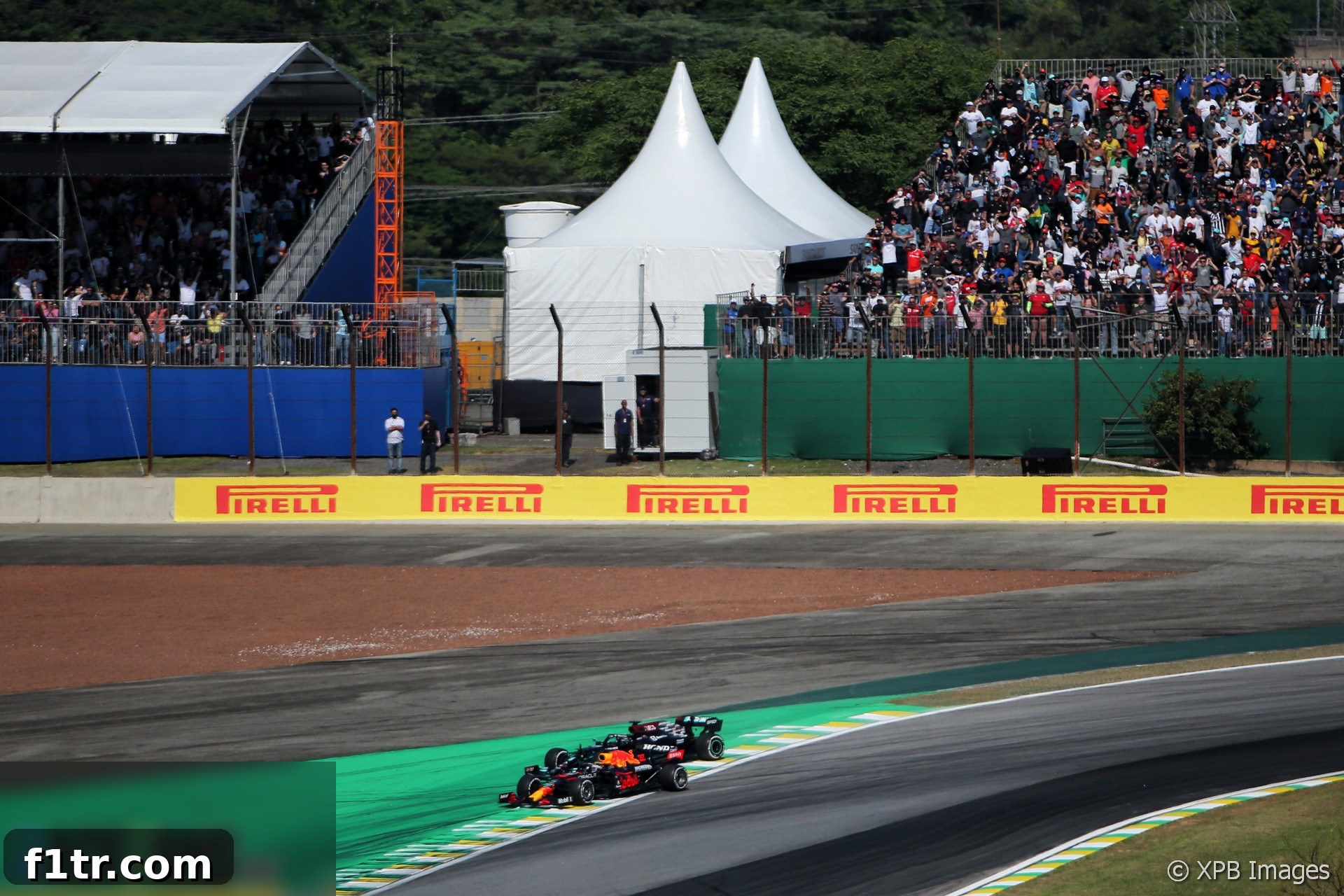
The incident at the Circuit of the Americas was more than just a fleeting moment of contact; it became a symbol of a deeper issue within Formula 1’s regulatory framework. As Norris and many of his competitors meticulously pointed out, the Red Bull driver executed a highly aggressive defensive maneuver. Verstappen deliberately braked exceptionally late, pushing the limits of his car and ultimately straying beyond the defined track boundaries. By doing so, he strategically leveraged a particular racing guideline: a driver attempting an overtake on the outside does not retain the right to the corner if the driver on the inside reaches the apex ahead of them. This rule, designed to ensure fair play, was arguably exploited by Verstappen to retain his position through a maneuver that many deemed unsporting and potentially unsafe.
The Austin case served as a stark reminder of similar incidents that have previously plagued the sport. Just a week later, in Mexico, Verstappen attempted an almost identical tactic against Norris at Turn 4. However, this time, the outcome differed significantly. Norris managed to reach the apex first, and despite Verstappen again forcing him off the track, the McLaren driver was allowed to keep his hard-earned position. This contrasting result only intensified the debate, emphasizing the subjective nature of rule enforcement and the urgent need for clearer guidelines that leave less room for ambiguity.
Drivers Demand Clarity: A Common Consensus Emerges
The Austin incident continues to be a major point of contention among the F1 paddock. Drivers are advocating strongly for rule amendments that would prevent competitors from defending their position on the inside of a corner in a manner that forces rivals off track. Lando Norris himself articulated the sentiment: “In Austin, I don’t think anyone should have got a penalty. We both kind of did things wrong.” However, he quickly added a critical qualification, “I feel like I was made to do something wrong.” This statement encapsulates the frustration felt by many, suggesting that the existing rules compelled him into an disadvantageous situation.
Norris further elaborated on the widespread agreement within the driver community: “The majority of drivers feel like that was the same thing. That’s why you’ve heard of some of the rule changes that might be coming and those types of things. It’s because there’s a common consensus that it wasn’t correct, what happened in the result that I had last weekend.” This collective call for change underscores the severity of the issue and the urgent desire for regulations that promote fair and predictable racing.
This isn’t the first time Max Verstappen has been at the center of such tactical defending. Lewis Hamilton, his championship rival from 2021, pointed out striking similarities to incidents that occurred during their intense title fight. Hamilton recalled instances where the Red Bull driver employed comparable defensive strategies, often avoiding penalties, further cementing the perception of inconsistent officiating and a grey area within the rulebook that needs immediate attention.
Advert | Become a RaceFans supporter andgo ad-free
A Glimpse into the Past: Precedents and Evolving Regulations
Then, as now, other drivers questioned why maneuvers they deemed illegal were permitted. The expectation among drivers that such aggressive, seldom-seen defensive tactics should warrant a penalty is partly rooted in historical precedents where similar moves were indeed penalized. Intriguingly, such actions were once explicitly prohibited under a specific regulation that was, somewhat controversially, removed from the rule book at the beginning of the 2017 season. Understanding this historical context is crucial to grasping the current predicament facing F1’s lawmakers.
A notable and highly relevant example, bearing striking similarities to the recent Verstappen incidents, occurred at the 2014 Italian Grand Prix. This race featured a battle between Kevin Magnussen, then driving for McLaren, and Valtteri Bottas, who was with Williams. In that instance, Magnussen was found culpable and subsequently handed a five-second time penalty by the stewards.
While no two racing incidents are ever perfectly identical, especially considering varying track layouts and corners, the fundamental facts of the Magnussen-Bottas case align remarkably well with the Verstappen-Norris encounters, making comparison invaluable. Magnussen defended the inside of a corner, and Bottas had clearly moved ahead of him on the outside as they approached the turn. Magnussen then braked so late that he pulled ahead at the apex, consequently forcing Bottas off the track on the outside. The crucial and only significant difference between this 2014 incident and what transpired between Verstappen and Norris in Austin was that Magnussen, despite his aggressive defense, managed to keep his car within the strict boundaries of the track.
Despite staying on track, Magnussen received a penalty. He was sanctioned with a five-second time penalty for breaching Article 38.1 (f) of the sporting regulations. This specific article explicitly stated that drivers must not “illegitimately prevent a legitimate overtaking manoeuvre by a driver.” It is a critical piece of information that this clause, along with a similar one that prohibited drivers from “illegitimately impeding another driver during overtaking,” was removed from the F1 rulebook in 2017. This removal fundamentally altered the landscape of defensive driving and is at the heart of the current debate.
The Evolution of F1 Regulations: A Shifting Philosophy
However, simply reinstating the old Article 38.1 (f) might not be the straightforward solution many hope for in outlawing Verstappen’s aggressive ‘divebomb defence’. The fundamental philosophy governing the policing of incidents in Formula 1 underwent a significant transformation in the aftermath of the controversies that marred the 2021 season, particularly the highly contentious Abu Dhabi Grand Prix. The sport moved away from broadly worded rules to a more prescriptive approach.
Today’s driving guidelines incorporate much tighter and more detailed descriptions of what constitutes a legitimate overtaking maneuver and what does not. These definitions are far more specific than the former, broader statement that simply prohibited “illegitimate” defenses. The intent was to reduce ambiguity and provide clearer parameters for stewards when making critical decisions. However, the incidents in Austin demonstrate that even with more specific rules, interpretation and consistent application remain a challenge.
Advert | Become a RaceFans supporter andgo ad-free
The old rule relied heavily on stewards recognizing and adhering to established precedents for how particular infringements were typically handled. But in practice, this system proved to be inconsistent and often ineffective. Enforcement became highly susceptible to the prevailing mood of the day, a situation exacerbated during high-stakes championship battles. The enforcement of these rules deteriorated to such an extent that by late 2021, baffled drivers were candidly informed that the nature of penalties might vary significantly depending on which specific panel of stewards was presiding over a race weekend. Such an admission highlighted the urgent need for a more robust and predictable system.
Given this history, a straightforward return to the previous, more broadly defined regulations appears improbable. Those rules were designed for an era where interpretation by stewards was a more accepted and central component of enforcement. While interpretations and precedents undoubtedly remain a feature of the current, more specific regulations, and inconsistencies in rule enforcement still occur, at least the present system provides stewards with concrete definitions of what is considered ‘legitimate’ or ‘illegitimate’ to guide their judgments. Any revision will likely build upon this specificity, rather than reverting to vagueness.
The Path Forward: Transparency and Unwavering Commitment to Fair Play
Regardless of the specific approach the FIA ultimately chooses to revise its driving guidelines, there is one obvious and universally beneficial improvement they could implement immediately: greater transparency. The FIA should publish these crucial guidelines, just as they do with the majority of Formula 1’s other regulations. This would empower fans, media, and indeed the drivers themselves, to fully understand what constitutes legal and fair racing. Clarity in the rulebook is not just for the officials; it’s essential for the integrity of the sport and the understanding of its passionate global audience.
Because ultimately, whatever rules the FIA meticulously crafts, drivers, by their very nature, are competitive individuals who will always test those regulations to their absolute limits. It is this relentless pursuit of the fastest lap and the cutting edge that makes Formula 1 so thrilling. However, without clear, consistent, and openly accessible guidelines, this pursuit can quickly devolve into controversy and resentment. The ongoing review of F1’s racing rules is not merely a bureaucratic exercise; it is a vital step in safeguarding the sport’s fairness, competitive balance, and its reputation for exhilarating, yet legitimate, on-track battles.
Miss nothing from RaceFans
Get a daily email with all our latest stories – and nothing else. No marketing, no ads. Sign up here:
2024 Mexican Grand Prix: Further Insights and Driver Reactions
The discussions surrounding the Austin incident continued to echo through the paddock during the 2024 Mexican Grand Prix weekend, with drivers and teams still grappling with the implications of the current rulebook. Here are some related stories that provide further context and driver perspectives:
- McLaren have no regrets over pitting Norris shortly before red flag came out
- Leclerc fined, avoids same penalty as Verstappen after apologising for swearing
- Leclerc not in the clear over swearing as Verstappen claims he went unpunished
- Majority of drivers wanted racing rules to change “straight away” – Russell
- Verstappen was “over the limit” with Norris but others would do same – Leclerc
Browse all 2024 Mexican Grand Prix articles