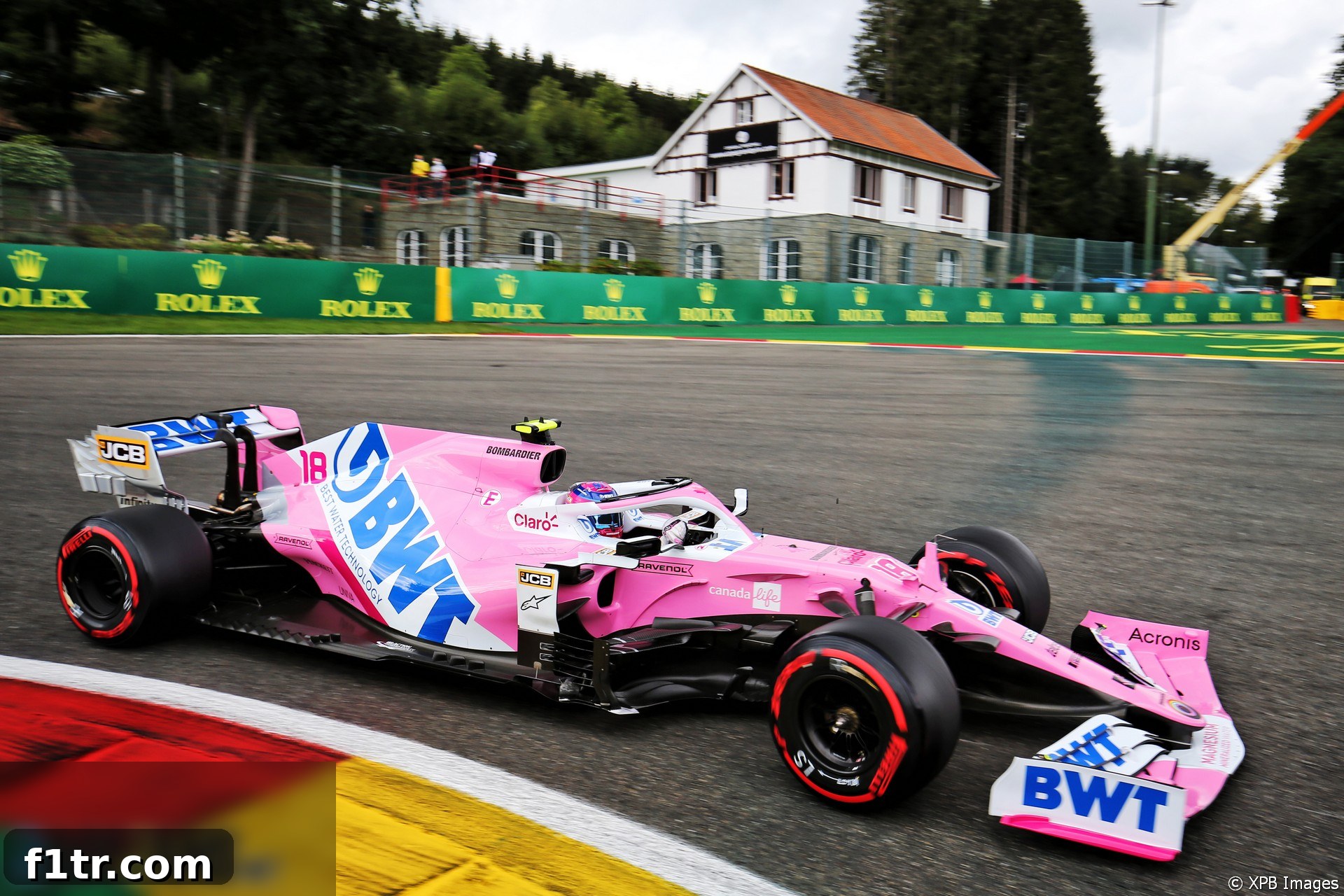
Ferrari Escalates ‘Pink Mercedes’ Controversy with Appeal Against Racing Point Reprimand at Belgian Grand Prix
The saga surrounding Racing Point’s RP20 car, dubbed the “Pink Mercedes” due to its striking resemblance to last year’s championship-winning W10, took another significant turn at the Belgian Grand Prix. Following the issuance of a further reprimand to Racing Point for their controversial brake duct design, Scuderia Ferrari promptly announced its intention to appeal the stewards’ decision. This move underscores Ferrari’s unwavering commitment to challenging what they perceive as regulatory breaches, keeping the contentious issue firmly in the spotlight of Formula 1.
The Genesis of the ‘Pink Mercedes’ Controversy
The debate ignited early in the 2020 Formula 1 season when rivals, most notably Renault, raised concerns about the legality of the Racing Point RP20. The car’s design, particularly its front and rear brake ducts, bore an uncanny resemblance to the 2019 Mercedes-AMG F1 W10. This sparked allegations that Racing Point had effectively copied significant portions of the Mercedes car, potentially infringing upon Formula 1’s “Listed Parts” regulations. These rules dictate which components teams must design and manufacture themselves and which can be purchased from external suppliers.
Renault formally protested Racing Point’s brake ducts at the Styrian Grand Prix, triggering a comprehensive investigation by the FIA. Brake ducts, while seemingly minor components, are crucial for both cooling the brakes and, more significantly, for their aerodynamic impact on airflow around the wheels. Their design can significantly influence a car’s overall aerodynamic efficiency and performance.
FIA’s Initial Verdict and Penalties
After a thorough review, the FIA stewards concluded that Racing Point had indeed contravened the Sporting Regulations, specifically regarding the process by which they acquired and developed the brake duct designs. While the regulations permitted the purchase of brake ducts from a competitor prior to the 2020 season, they were reclassified as ‘Listed Parts’ for 2020. The stewards found that Racing Point had used CAD data provided by Mercedes for their 2019 car to design their 2020 brake ducts, effectively circumventing the spirit, if not the precise letter, of the new regulations.
Consequently, Racing Point was hit with a substantial €400,000 fine and docked 15 constructors’ championship points for the transgression at the Styrian Grand Prix. However, crucially, the stewards determined that the brake ducts themselves were not inherently illegal once installed on the car. This nuanced ruling meant that while the design *process* was deemed unlawful, Racing Point could continue using the contentious components in subsequent races, albeit with a reprimand for each future event where they were used, acknowledging the ongoing breach of the design process.
The First Round of Appeals: Renault’s Retreat, Ferrari’s Resolve
Immediately following the FIA’s initial verdict, both Renault and Ferrari announced their intention to appeal, arguing that the penalties imposed were too lenient and did not adequately address the scale of the infringement. They believed that allowing Racing Point to continue using the parts, even with a reprimand, did not serve as a strong enough deterrent against similar practices in the future and could undermine the integrity of the ‘Listed Parts’ regulations.
However, in a surprising turn of events, Renault later decided to withdraw its appeal. The French manufacturer cited a desire to focus on its on-track performance and a belief that the FIA’s ruling had provided sufficient clarification on the regulatory framework for future seasons. This left Ferrari as the sole team continuing to pursue the case against Racing Point, demonstrating the Scuderia’s deep conviction that the matter required further judicial review to establish a clear and unambiguous precedent.
The Belgian Grand Prix: A New Reprimand, A Renewed Challenge
The controversy resurfaced at the iconic Spa-Francorchamps circuit during the Belgian Grand Prix. As anticipated, given the stewards’ previous ruling, Racing Point received yet another reprimand for fielding their RP20 cars, driven by Sergio Perez and Lance Stroll, with the same rear brake duct design that had been the subject of Renault’s original protest. This marked the sixth consecutive Grand Prix where the team had been found in breach of the design process, leading to a consistent series of reprimands.
In response to this latest reprimand, Ferrari wasted no time in notifying the Belgian Grand Prix stewards of its intention to appeal the decision. This formal notice opens a 96-hour window for the Italian team to submit its comprehensive appeal dossier to the FIA International Court of Appeal. Ferrari’s persistence highlights their belief that the current penalties are insufficient and that a more significant sanction is warranted to properly address the regulatory breach and uphold the competitive balance of the sport.
Stewards’ Justification: The Principle of Consistency
The stewards at the Belgian Grand Prix, in issuing the reprimand, referenced the rationale established in previous rulings. They acknowledged Racing Point’s confirmation that the brake ducts used at Spa were identical to those employed in the preceding five rounds, dating back to the Styrian Grand Prix. The core of their decision rested on the principle of consistency, stating: “The facts in this case are therefore identical to the situation in the previous five grand prix.”
They further elaborated, “The stewards of the 2020 Belgian Grand Prix note the belief of the stewards at the preceding events that it is important for the orderly conduct of the sport that the interpretation of the regulations by the stewards be reasonably consistent.” This commitment to consistency extended to penalties, leading them to apply another reprimand. While commendable, this consistency is precisely what Ferrari is challenging, arguing that the consistent penalty itself is inadequate.
The Technical Heart of the Matter: Brake Ducts and Listed Parts
To fully grasp the magnitude of this controversy, it’s essential to understand the significance of brake ducts within Formula 1 car design and the intent behind the ‘Listed Parts’ regulations. Brake ducts are not merely for cooling; they are sophisticated aerodynamic devices. Their internal and external geometries are meticulously crafted to manage airflow around the wheels, reducing drag, optimizing downforce, and influencing the crucial wake behind the car. A performance advantage gained through a copied design, even of a seemingly small component, can translate into tenths of a second per lap, which is immense in Formula 1 terms.
The ‘Listed Parts’ regulations were introduced to ensure that each constructor genuinely designs and builds a significant portion of their car. This prevents ‘customer teams’ from simply buying or copying entire cars from larger manufacturers, thereby preserving the unique DNA and intellectual property of each team and maintaining the competitive spirit of constructor-led innovation. Ferrari’s argument posits that Racing Point’s approach undermines the fundamental purpose of these regulations, blurring the lines between true constructors and client teams.
Implications for Racing Point: On-Track Performance vs. Off-Track Scrutiny
For Racing Point, this ongoing legal battle casts a long shadow over their otherwise impressive 2020 season performance. The team consistently demonstrated strong pace, often challenging the established front-runners, a fact that only intensified the scrutiny over their car’s design. While the reprimands themselves do not directly impact their points total from the Belgian Grand Prix, a successful appeal by Ferrari could lead to more severe retroactive penalties, potentially including further points deductions, which could significantly alter their position in the Constructors’ Championship.
Beyond championship points, the controversy also impacts Racing Point’s reputation. The “Pink Mercedes” label, while highlighting their car’s performance, simultaneously evokes questions about their originality and design philosophy. As the team transitions to Aston Martin F1 Team in 2021, resolving this issue definitively will be crucial for establishing their identity and credibility as a standalone constructor committed to independent innovation.
Ferrari’s Strategic Pursuit: Upholding Sporting Integrity
Ferrari’s decision to persist with the appeal, even as the sole challenger, speaks volumes about their principles and strategic objectives. For the Scuderia, this is more than just about a few points or a single team. It’s about upholding what they perceive as the fundamental sporting integrity of Formula 1. They believe that a lenient approach to what they view as intellectual property infringement could set a dangerous precedent, encouraging other teams to adopt similar strategies in the future, ultimately harming the sport’s innovative spirit and fair competition.
Furthermore, from a competitive standpoint, Ferrari has a vested interest in ensuring a level playing field. If Racing Point gains a significant performance advantage through designs derived from a competitor, it impacts all other teams striving to develop their own unique solutions. Ferrari’s appeal, therefore, serves as a powerful statement against what they consider unfair advantages and a call for stricter enforcement of the regulations.
Broader Ramifications for Formula 1
The “Pink Mercedes” controversy and Ferrari’s persistent appeal carry significant broader ramifications for Formula 1. It highlights the ongoing tension between the “spirit of the regulations” and the “letter of the law.” While Racing Point may argue they meticulously adhered to the technicalities, the perception of an unfair advantage through reverse-engineering or excessive reliance on another team’s IP challenges the spirit of independent constructor competition.
This case also puts the FIA under pressure to clarify and potentially tighten its regulations regarding intellectual property, team collaborations, and the ‘Listed Parts’ rules for future seasons. A clear resolution is vital to prevent similar disputes and ensure that all teams operate within a well-defined and equitable framework. The outcome of Ferrari’s appeal could therefore shape the future technical and sporting landscape of Formula 1, influencing how teams design and develop their cars for years to come.
The Road Ahead: What to Expect from the Appeal
With Ferrari’s notice of appeal now formally lodged, the process will move to the FIA International Court of Appeal. This independent judicial body will review the evidence, hear arguments from both Ferrari and Racing Point, and potentially from the FIA itself, before delivering a final verdict. The possible outcomes range from upholding the stewards’ original decision (a reprimand), to imposing more severe penalties on Racing Point (e.g., further fines, additional points deductions, or even a requirement to redesign the parts), or even dismissing Ferrari’s appeal entirely.
The timeline for such an appeal can vary, but typically, these processes take several weeks or even months to reach a definitive conclusion. Until then, the shadow of the ‘Pink Mercedes’ controversy will continue to loom over the 2020 Formula 1 season, adding another layer of intrigue to an already unpredictable championship.
In conclusion, Ferrari’s decision to appeal Racing Point’s reprimand at the Belgian Grand Prix is a testament to the enduring nature of this significant F1 controversy. It highlights the complex interplay between technical regulations, sporting ethics, and competitive strategy in motorsport. As the legal battle continues, the entire Formula 1 community watches closely, anticipating a resolution that will not only impact the championship standings but also set a critical precedent for the future integrity and innovation of the sport.
2020 Belgian Grand Prix Related Articles
- 2020 Belgian Grand Prix Star Performers
- Ricciardo believes Renault’s Spa set-up breakthrough will work on other tracks
- ‘He should have let me pass’: How Raikkonen saw Giovinazzi’s crash
- Sub-54 second laps will produce a “big mess” in qualifying on Bahrain Outer circuit
- McLaren expect Ferrari will “strike back” after Monza
Browse all 2020 Belgian Grand Prix articles