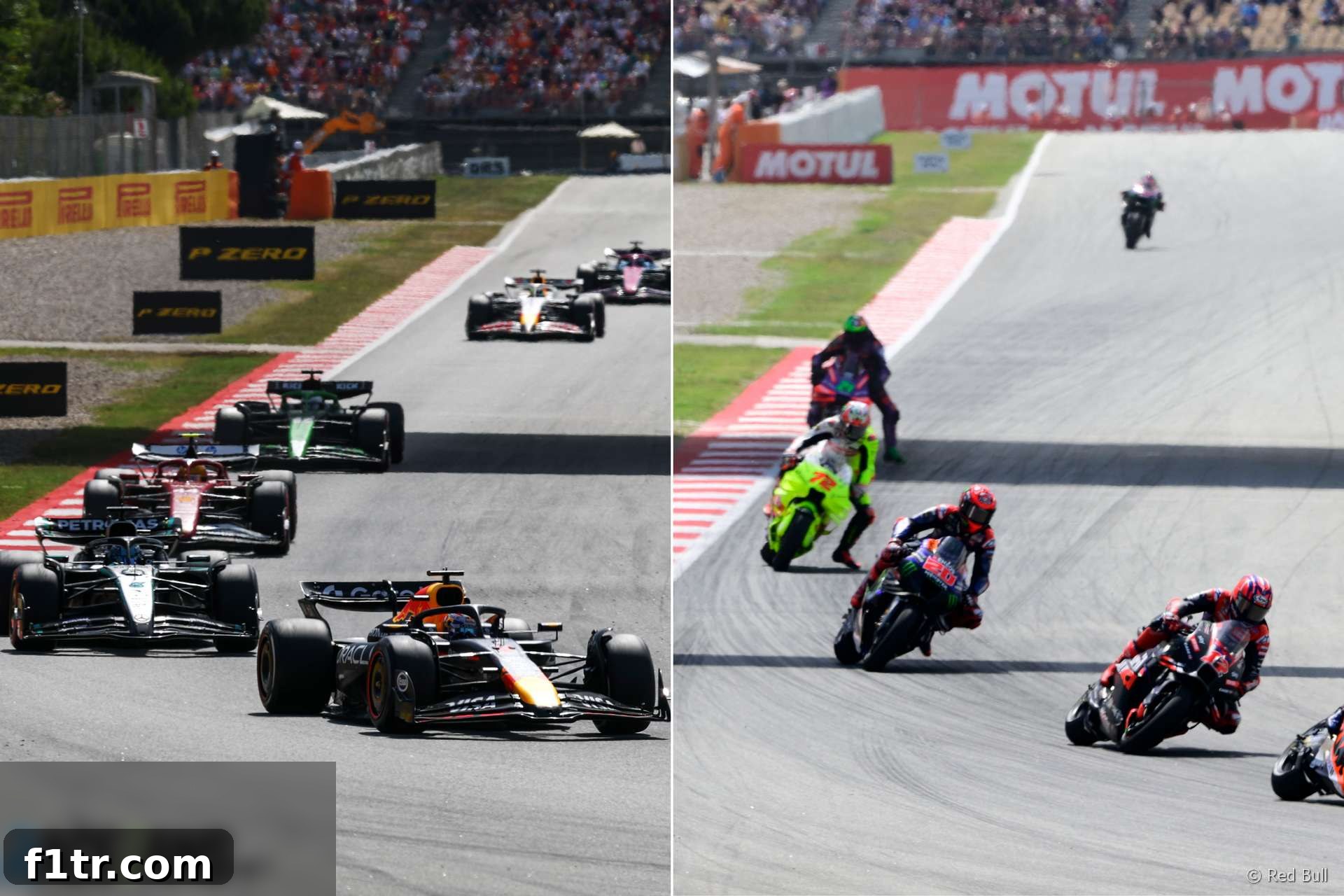
Just over a month ago, Liberty Media formally completed their significant acquisition of Dorna Sports, the long-standing commercial rights holder for Moto GP. This landmark deal means Liberty Media now holds an 84% stake in the premier motorcycle racing series, an event that profoundly reshapes the landscape of global motorsport and sparks widespread discussion.
For the very first time in history, the two most prestigious world championships in circuit racing – Formula 1 on four wheels and Moto GP on two – are united under the control of a single corporate entity. This unprecedented alignment presents a wealth of strategic opportunities, and Liberty Media has made it clear they are eager to leverage this unique position to foster growth and enhance the appeal of both properties.
“We are thrilled to begin our partnership with the Moto GP management team and, while early days, are working closely with them to support their strategic direction and accelerate the company’s growth,” stated Derek Chang, CEO of Liberty Media. This declaration underscores Liberty Media’s ambitious vision to apply its proven strategies, which saw Formula 1’s global popularity soar, to the world of Moto GP, aiming for a similar trajectory of expansion and increased fan engagement.
While Liberty Media has consistently emphasized that Formula 1 and Moto GP will be managed as distinct entities, particularly concerning broadcast rights negotiations, the inherent scope for collaboration and cross-promotion between these two motorsport titans is undeniably vast. Their shared ownership opens doors to innovative marketing campaigns, synergistic content creation, and potentially, revolutionary event formats that could captivate a broader, more diverse audience than either series could achieve alone.
Over the years, F1 and Moto GP have graced many iconic circuits together, sharing the asphalt at venues such as Silverstone, the Red Bull Ring, Circuit de Barcelona-Catalunya, Circuit of the Americas (COTA), and Losail International Circuit. These shared locations have often hosted both championships within the same racing season, albeit on separate dates. However, despite this common ground, there has never been a meeting where both world championships have been featured on the same bill, running their respective Grand Prix weekends concurrently at the same track. This historical separation has maintained their individual prestige, but Liberty Media’s acquisition now brings the possibility of such a combined event from the realm of speculation into concrete discussion, prompting a global debate among fans and industry insiders.
The commercial benefits of being able to promote the superstar drivers of Formula 1 alongside the legendary riders of Moto GP at a single, unified race weekend are compelling. Such an event would undoubtedly generate unparalleled media attention, attract a massive influx of spectators, and open new avenues for sponsorship and merchandising. It would represent a unique selling proposition in the sports entertainment landscape. Logistically, certain circuits are uniquely positioned to host such a grand spectacle. Silverstone, for instance, boasts two full, independent pit complexes – the International Pit Complex along the Hamilton Straight and the National Pits between Woodcote and Copse corner (which Moto GP utilized up until as recently as 2022). This dual infrastructure makes it an obvious front-runner, offering the necessary facilities to accommodate both series simultaneously without significant operational overlap.
This tantalizing prospect, however, immediately raises a fundamental question that reverberates through the motorsport community: just because Liberty Media *could* combine their two most valuable motorsport assets into one blockbuster event, *should* they? Would fans genuinely embrace a double-bill featuring a motorcycle Grand Prix immediately followed by a Formula 1 Grand Prix at the very same track? The answer is far from straightforward, igniting a lively debate among motorsport enthusiasts worldwide who weigh the potential excitement against the risks of dilution and logistical complexities.
The Allure of the Dual Spectacle: Why a Combined Event Might Thrive
On the face of it, the idea of a combined F1 and Moto GP weekend presents an almost irresistible proposition for any passionate motorsport fan. Imagine the sheer thrill of witnessing the absolute pinnacle of both two-wheeled and four-wheeled racing over a single, extended weekend. For the ultra-petrolheads, it would be a double dose of adrenaline, offering unparalleled value for money and an unforgettable experience that transcends conventional racing events. This unique format could also serve as a powerful catalyst for audience crossover, potentially converting dedicated bike fans into Formula 1 enthusiasts, and vice versa. Exposure to both disciplines at their highest level could significantly broaden motorsport’s overall appeal, drawing in new fans who might otherwise only follow one specific category.

Beyond the immediate fan experience, the commercial upside for Liberty Media is substantial. A joint event would attract immense global media attention, driving viewership figures and social media engagement to unprecedented levels. This heightened visibility would be a goldmine for sponsors, offering them access to a diverse and massive audience that spans multiple motorsport demographics. Ticket sales would likely surge, potentially setting new attendance records, and merchandise revenue would undoubtedly see a significant boost. Such an event could become a unique flagship within Liberty Media’s portfolio, showcasing the very best of what they have to offer in the world of high-octane, global racing entertainment.
Navigating the Challenges: Concerns and Potential Pitfalls
Despite the obvious excitement, combining two of the planet’s most prestigious and popular sports series on the same Sunday carries significant risks, primarily the potential for diluting the unique appeal and prestige of both. As is often observed in combat sports, an event boasting a “double main event” often paradoxically has no true main event. Each series, F1 and Moto GP, stands as the absolute pinnacle of its respective discipline, commanding its own dedicated following and delivering a standalone spectacle of speed, skill, and drama. Merging them into a single, potentially over-saturated event could inadvertently diminish the individual grandeur that makes each series so compelling, potentially reducing them to a mere part of a larger, less focused offering.
Logistically, a combined weekend presents a monumental challenge for organizers. Formula 1 weekends are already densely packed with multiple practice sessions, qualifying rounds, sprint races (at certain events), and the main Grand Prix, alongside crucial supporting series like Formula 2 and Formula 3. Moto GP weekends follow a similarly intensive schedule with their own practice, qualifying, Sprint races, and the Grand Prix, supported by Moto2 and Moto3. Integrating two such demanding schedules into one without sacrificing crucial track time, compromising safety, or utterly overwhelming spectators would require extraordinary planning, significant infrastructure adaptations, and inevitably, substantial compromises from both championships. The differing demands for track preparation, safety marshals, medical staff, and even the type of rubber laid down on the track by cars versus bikes add layers of complexity.
Furthermore, the issue of junior categories is a critical concern that weighs heavily on the long-term health of motorsport. Both F1 and Moto GP weekends serve as vital platforms for their respective feeder series: F2 and F3 for Formula 1, and Moto2 and Moto3 for Moto GP. These categories are not merely curtain-raisers; they are crucial developmental stages for future champions, providing essential track experience, competitive pressure, and showcasing emerging talent to teams and sponsors. If the two Grand Prix championships were to combine into a single event, it is almost inevitable that some of these junior series would have to miss out on valuable track time, potentially harming the progression of young drivers and riders and undermining the future talent pipeline of both sports. Balancing the desire for a combined main event with the imperative to nurture the next generation of talent is a delicate act that cannot be overlooked.
Another crucial aspect is the distinct nature of their fan bases. While there is certainly an overlap of general motorsport enthusiasts, many fans are deeply loyal to either four-wheeled or two-wheeled racing. Some might attend purely for Formula 1 and feel that the Moto GP action unnecessarily prolongs their day or dilutes the focus, or vice versa. The diverse demands for paddock space, pit garage facilities, hospitality areas, and even safety protocols between bikes and cars also add intricate layers of complexity. Such intricacies highlight that simply putting them on the same track back-to-back isn’t as straightforward as it might initially seem; it requires a holistic consideration of the entire event ecosystem and spectator experience.
Historical Context and Shared Circuits
The history of Formula 1 and Moto GP sharing venues is rich and extensive, featuring some of the world’s most iconic racing circuits. Tracks like the Circuit of the Americas in the USA, Jerez in Spain, Phillip Island in Australia, and Sepang in Malaysia have long hosted both championships, albeit always on separate dates. This shared heritage demonstrates that the physical infrastructure can accommodate both sports from a circuit design perspective, ensuring compatibility with the demands of both car and bike racing. However, hosting them concurrently demands a level of logistical coordination and resource allocation far beyond what has been previously attempted for individual events.
Silverstone, as previously mentioned, remains the most frequently cited candidate for a joint event due to its unique dual pit lane facilities, which offer separate and independent operational bases for each series. This distinct advantage allows for a seamless flow of activity without critical bottlenecks. Other circuits with substantial infrastructure, such as Circuit of the Americas or even some newer purpose-built facilities in the Middle East, might also be considered. However, few offer the immediate, seamless segregation of paddock and pit facilities that Silverstone does, making it a uniquely suited venue for minimizing disruption and ensuring that each championship can maintain its high operational standards and distinct identity even within a shared weekend.
The Road Ahead: Balancing Innovation with Tradition
We live in an era of franchise crossovers and ambitious entertainment ventures, so it seems almost inevitable that Formula 1 and Moto GP will, at some point, share a circuit over a single weekend under Liberty Media’s innovative stewardship. The commercial imperative to maximize revenue and the desire to create a truly spectacular, once-in-a-lifetime event are powerful motivators. However, as both series represent the absolute pinnacle of their respective forms of racing, it is paramount for Liberty Media to respect their individual identities, the unique heritage they embody, and the distinct cultures that have grown around them over decades.
The fundamental question for Liberty Media is not simply *if* they can combine them, but *how* they can do so without compromising the integrity, excitement, and distinct qualities that make each championship so beloved by its dedicated fanbase. Perhaps a meticulously planned format, where major events are staggered across an extended long weekend, or innovative ticketing options that cater to both specific and combined interests, could be explored. The key will be to enhance, rather than diminish, the fan experience, ensuring that any joint venture truly elevates both Formula 1 and Moto GP to new heights, rather than diluting their individual brilliance. Ultimately, the decision will weigh heavily on fan sentiment, logistical feasibility, and the long-term vision for global motorsport under Liberty Media’s innovative, yet responsible, leadership.
Past Fan Sentiment: Should F1 and Moto GP Run a Joint Race Weekend?
In a previous poll, fans were asked their opinion on whether Formula 1 and Moto GP should run a joint race weekend together. The results provided a compelling snapshot of public sentiment on this divisive topic:
Do you agree that Liberty Media should organise a combined race weekend with Formula 1 and Moto GP?
- No opinion (2%)
- Strongly disagree (47%)
- Slightly disagree (11%)
- Neither agree nor disagree (7%)
- Slightly agree (16%)
- Strongly agree (17%)
Total Voters: 159
The results of this poll clearly indicate a strong leaning towards disagreement among the surveyed audience, with a significant majority of 58% (comprising 47% strongly disagreeing and 11% slightly disagreeing) against the idea of a combined race weekend. In contrast, only 33% expressed some form of agreement (16% slightly agree, 17% strongly agree), while a small 2% held no opinion. These figures highlight a prevalent concern among fans about such a radical change to the established formats of both championships. The sentiment underscores the challenge Liberty Media faces in winning over a potentially skeptical fan base, emphasizing the need for any proposed combined event to be exceptionally well-conceived and executed to address these core reservations.
Related Discussions and Insights
For more in-depth discussions on the evolving world of motorsport and fan opinions, explore our other debates and polls:
- What must Formula 1 fix with its new rules – and what should it leave unchanged?
- ADUO: Do F1 teams who fall behind deserve to get help to catch up?
- F1 is considering doubling its sprint races. Do you want more or fewer?
- Will this be a fight or a rout? 20 questions for the 2026 Formula 1 season
- Which Formula 1 team has the best-looking car – and the worst – for the 2026 season?
Browse all debates and polls