The Fédération Internationale de l’Automobile (FIA), the global governing body for motorsport, has unveiled a comprehensive new set of guidelines for its stewards, detailing how they should address and penalize instances of “misconduct” by drivers. This landmark move marks a significant step towards greater transparency and accountability within the sport, affecting various championships under the FIA’s purview, most notably Formula 1.
Advert | Become a Supporter & go ad-free
The introduction of these detailed regulations comes just two months after Formula 1 drivers publicly called for enhanced “transparency” regarding the use of funds collected from fines levied against them. Concerns had been raised about the perceived arbitrariness of some penalties and a lack of clarity on how the substantial sums generated were being utilized to benefit the sport. The new guidelines aim to address these concerns head-on by providing a clear, structured framework for disciplinary action.
In 2023, the FIA significantly increased the maximum fine stewards could issue to an unprecedented €1 million, signaling a heightened seriousness with which it views breaches of conduct. The guidelines, which are set to take effect for the upcoming 2025 season, introduce a tiered system of fines and penalties. This system differentiates between various levels of FIA championships, ensuring that drivers participating in the most prominent series, such as the FIA Formula 1 World Championship, face the most substantial sanctions, reflecting the greater visibility and responsibility associated with their positions.
The need for clearer and more consistent disciplinary action has been underscored by several high-profile incidents in recent years. For instance, last year, AlphaTauri driver Yuki Tsunoda was fined a considerable €40,000 – half of which was suspended – for using an ableist slur during a radio communication with his team. The uncensored broadcast of this message on F1 TV highlighted the wide reach and impact of driver communications. Similarly, Ferrari’s Charles Leclerc faced a €10,000 fine, also half suspended, for using offensive language during an official FIA press conference in Mexico. These incidents, while met with penalties, also sparked discussions about the clarity of rules and the consistency of their application.
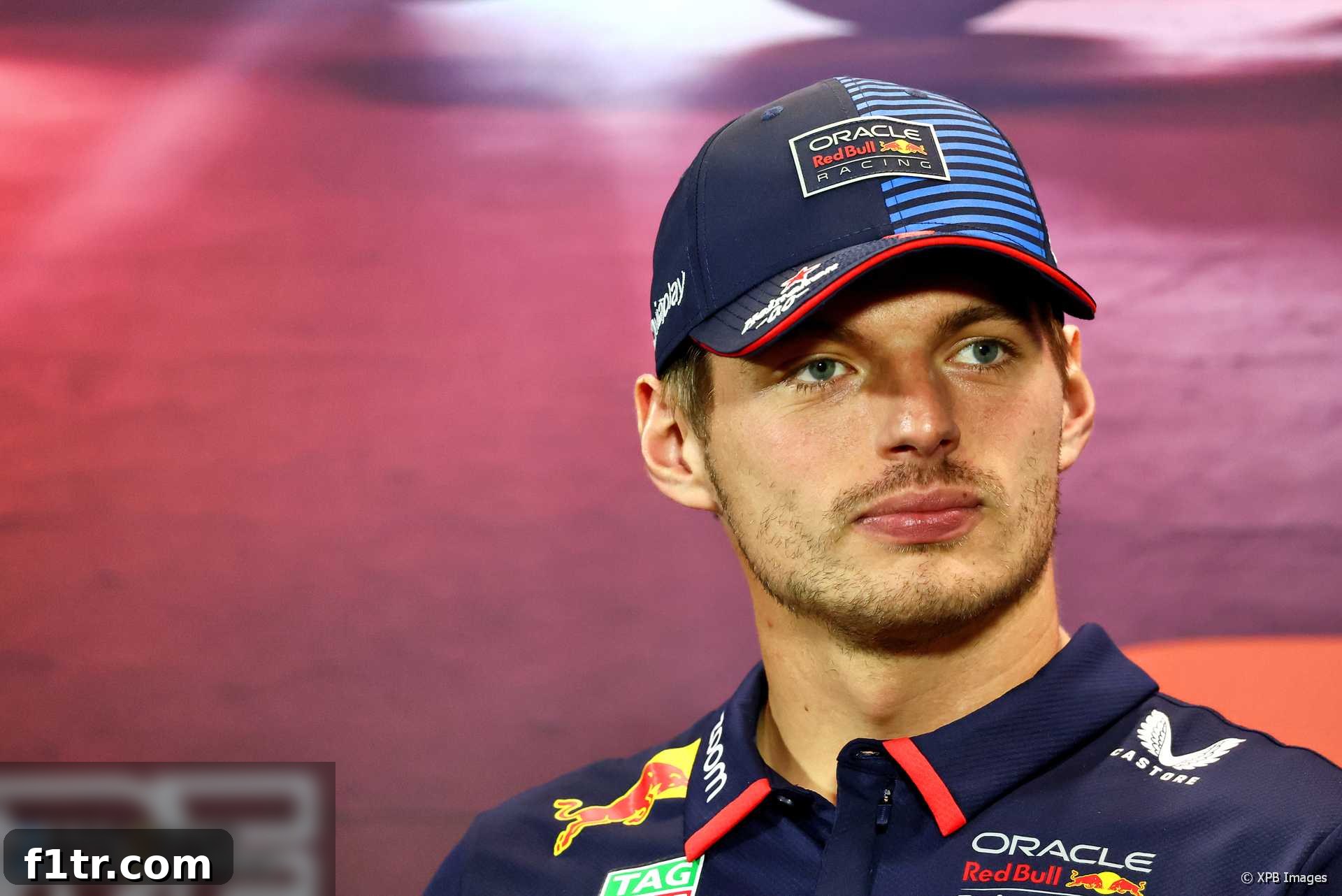
Max Verstappen, the reigning world champion, also found himself in disciplinary crosshairs after swearing during a pre-race press conference at the Singapore Grand Prix. His penalty involved being ordered to perform public service for the FIA in Rwanda, a non-financial sanction reflecting the nature of his infringement. Verstappen’s strong reaction, characterized by his subsequent refusal to speak at length in several FIA press conferences, brought into focus the delicate balance between driver expression and official decorum, further emphasizing the urgency for explicit guidelines.
The FIA has stated that the following guideline penalties will serve as a foundational structure for all future infringements. However, the governing body explicitly noted that stewards retain the crucial power to take into account both mitigating and aggravating factors specific to each incident. This crucial clause ensures that while a clear framework exists, a degree of flexibility and contextual judgment can still be applied, preventing a rigid, one-size-fits-all approach. The comprehensive list of penalties includes not only financial fines but also, for repeated and more severe infringements, the possibility of suspensions and championship points deductions, underscoring the FIA’s commitment to maintaining the highest standards of sportsmanship and respect within motorsport.
Advert | Become a RaceFans supporter andgo ad-free
FIA Guidelines: Fines and Punishments for Driver Misconduct Explained
The newly unveiled FIA guidelines provide a clear, tiered structure for addressing various forms of driver misconduct, aiming to promote fairness, consistency, and a high standard of behavior across all championships. Each regulation targets specific types of infractions, with penalties escalating for repeat offenders. Understanding these categories is crucial for drivers, teams, and fans alike.
Article 12.2.1.f ISC: Causing Moral Injury or Loss to the FIA
This article specifically addresses actions, words, or writings that inflict moral injury or loss upon the FIA, its various bodies, members, or executive officers. More broadly, it covers any conduct detrimental to the interests of motor sport and the core values upheld by the FIA. This could encompass public defamation, baseless accusations, or severe criticisms that undermine the integrity or reputation of the governing body. The initial fine of €10,000 serves as a strong deterrent, with subsequent offenses leading to significant increases in fines, combined with a one-month suspended suspension for a second offense, and ultimately a one-month suspension plus a deduction of championship points for a third offense. A suspended suspension means the driver is put on notice; if they commit another similar offense within a specified period, the suspension will be activated in addition to any new penalty, serving as a powerful probationary measure.
Article 12.2.1.l ISC: General Misconduct
Defined broadly under Article 20 of the ISC, “Misconduct” encompasses a wide range of unsportsmanlike behavior or actions that bring the sport into disrepute, but do not necessarily fall under other specific categories. This might include aggressive behavior towards officials, inappropriate conduct in the paddock, or other actions deemed unprofessional. The penalties mirror those for Article 12.2.1.f, starting with a €10,000 fine for a first offense, escalating to a €20,000 fine and a suspended one-month suspension for a second offense, and culminating in a €30,000 fine, an activated one-month suspension, and championship point deductions for a third offense. This consistent escalation across similar categories highlights the FIA’s intent to instill discipline and respect.
Article 12.2.1.n ISC: Public Incitement to Violence or Hatred
This is arguably one of the most serious categories, targeting any public statements or actions that incite violence or hatred. Such behavior is unequivocally unacceptable and poses a grave threat not only to the sporting environment but also to societal values. The FIA takes a zero-tolerance stance on such matters, reflecting its commitment to promoting a positive and inclusive image for motorsport. The penalties are stringent, beginning with a €10,000 fine and rapidly escalating to a €20,000 fine coupled with a suspended one-month suspension, and for a third offense, a €30,000 fine, an active one-month suspension, and a deduction of championship points. This swift escalation underscores the critical importance of preventing hate speech or incitement within the sport’s platform.
Article 12.2.1.o ISC: Political, Religious, and Personal Statements Without Approval
This regulation addresses the making and display of political, religious, or personal statements or comments, particularly those that violate the FIA’s general principle of neutrality, unless prior written approval has been obtained. This article has been a subject of considerable discussion, balancing freedom of expression with the FIA’s mandate to maintain a neutral and inclusive environment, free from divisive commentary that could alienate fans or stakeholders. The first offense carries a €10,000 fine, which may be suspended, alongside a mandatory public apology and repudiation of the comments. This emphasizes the importance of immediate public correction. Subsequent offenses increase the financial penalty and introduce suspended suspensions and, eventually, championship point deductions, reinforcing the FIA’s commitment to its neutrality policy, especially in high-profile international competitions where this article is particularly relevant.
Article 12.2.1.p ISC: Failure to Comply with Official Ceremony Instructions
This article deals with a more operational form of misconduct: the failure to comply with the FIA’s instructions regarding the appointment and participation of persons during official ceremonies at any FIA championship event. This includes pre-race grid procedures, podium ceremonies, or other mandated appearances. Such non-compliance undermines the professional presentation and order of events, which are crucial for the sport’s global image. The initial fine for this offense is €15,000, slightly higher than the starting fines for other categories, perhaps reflecting the direct disruption to event management. A second offense results in a €30,000 fine and a suspension of access to the Reserved Area(s) of the event for the next competition. A third offense escalates significantly to a €45,000 fine, a six-month suspension of access to Reserved Area(s), and a deduction of championship points. This specific penalty targets the practical impact of a driver’s actions on event operations and professional conduct.
| Regulations | First offence | Second offence | Third offence |
|---|---|---|---|
| Article 12.2.1.f ISC: Any words, deeds or writings that have caused moral injury or loss to the FIA, its bodies, its members or its executive officers, and more generally on the interest of motor sport and on the values defended by the FIA. | €10,000 | €20,000 plus one-month suspension –which is suspended. | €30,000 plus one-month suspension plus deduction of championship points. |
| Article 12.2.1.l ISC: Any Misconduct. Misconduct is defined under Article 20 of the ISC. | €10,000 | €20,000 plus one-month suspension –which is suspended. | €30,000 plus one-month suspension plus deduction of championship points. |
| Article 12.2.1.n ISC: Any public incitement to violence or hatred. | €10,000 | €20,000 plus one-month suspension – which is suspended. | €30,000 plus one-month suspension plus deduction of championship points. |
| Article 12.2.1.o ISC: The general making and display of political, religious and personal statements or comments notably in violation of the general principle of neutrality promoted by the FIA under its Statutes, unless previously approved in writing by the FIA for International Competitions, or by the relevant ASN for National Competitions within their jurisdiction. | €10,000 plus public apology and repudiation of comments. Fine may be suspended. | €20,000 plus public apology and repudiation of comments plus one month suspension – which is suspended. | €30,000 plus public apology and repudiation of comments plus one month suspension plus deduction of championship points. |
| Article 12.2.1.p ISC: Failure to comply with the instructions of the FIA regarding the appointment and participation of persons during official ceremonies at any competition counting towards a FIA championship. | €15,000 | €30,000 plus suspension of access to Reserved Area(s) of event for next event. | €45,000 plus suspension of access to Reserved Area(s) of event for six months plus deduction of championship points. |
Beyond the base fines and penalties outlined above, the FIA has introduced a crucial multiplier system. This system ensures that the financial consequences of misconduct are proportional to the profile and reach of the championship in which the incident occurs. This means that an identical offense could result in significantly different financial penalties depending on the series, reflecting the varying levels of responsibility and impact associated with each championship.
- Level 1 (International Series): Multiple of one (Article 12.2.1.o is not applicable to International Series)
- Level 2 (FIA regional championships and FIA cups): Multiple of two
- Level 3 (FIA world championships, except FIA Formula 1 World Championship): Multiple of three
- Level 4 (FIA Formula 1 world championship): Multiple of four
The highest multiplier, Level 4, is reserved exclusively for the FIA Formula 1 World Championship. This reflects Formula 1’s unparalleled global viewership, commercial significance, and the immense role its drivers play as international ambassadors for motorsport. An F1 driver’s actions resonate far more widely and carry greater implications for the sport’s image. Consequently, any base fine outlined in the regulations will be quadrupled for an incident occurring within F1. For example, a €10,000 base fine for a first offense would translate to a €40,000 penalty for an F1 driver. This multiplier system ensures that accountability is commensurate with the platform and the potential impact of a driver’s behavior.
Advert | Become a RaceFans supporter andgo ad-free
Broader Implications and the Future of Driver Conduct
These new comprehensive guidelines signify the FIA’s unwavering commitment to upholding the highest standards of integrity, respect, and sportsmanship across all levels of motorsport. By establishing a clear, predictable, and escalating scale of penalties, the governing body aims to foster an environment where drivers understand the explicit boundaries of acceptable conduct, both on and off the track.
The tiered system, coupled with the multiplier for various championships, is a well-thought-out approach to ensure that disciplinary actions are not only transparent but also equitable and impactful. It addresses past criticisms regarding arbitrary punishments and provides a robust framework for stewards to apply rules consistently while still allowing for the consideration of specific circumstances.
For drivers, these guidelines mean an increased onus on their public statements, interactions with media, and behavior during official events. While freedom of expression remains a vital principle, it is now clearly delineated against the FIA’s overarching goals of promoting a neutral, respectful, and violence-free sporting environment. The specific inclusion of penalties for political, religious, and personal statements highlights the ongoing debate surrounding athletes’ voices in global sports and the organizations’ attempts to manage their public image.
Ultimately, these updated regulations are designed to reinforce the core values of motorsport. They serve as a powerful reminder that professional racing extends beyond mere competition; it involves being a role model, respecting the sport’s institutions, and contributing positively to its global appeal. As the 2025 season approaches, all eyes will be on how these guidelines are implemented and how they shape the future landscape of driver conduct and accountability within the thrilling world of FIA motorsport.
Explore more Formula 1 news and articles