Formula 1, the pinnacle of motorsport, often captivates millions with its blend of speed, strategy, and drama. Yet, beneath the glamour and fierce competition, lies a complex web of regulations that can, at times, baffle even its most dedicated followers. Recent incidents have starkly highlighted how the sport’s intricate rulebook and its interpretation by stewards can lead to decisions that are not only difficult to comprehend but also deeply frustrating, casting a shadow of inconsistency over crucial race outcomes.
The inherent complexity of Formula 1 rules is a double-edged sword. While it adds depth to the strategic battles, it can also create scenarios where similar incidents are treated disparately, or where the intent behind a rule seems to be lost in its application. This lack of clarity and perceived inconsistency can erode fan trust and diminish the integrity of the competition.
Advert | Become a Supporter & go ad-free
Two particular episodes from recent races served as potent examples of this phenomenon. In one instance, a team found itself penalized with a 10-second penalty for both its cars simply for engaging in a discussion about pit stop strategy with their drivers during the formation lap. In stark contrast, another incident saw a driver aggressively barge a rival off the track, going off circuit himself, yet controversially retain the position he gained. The stewards’ initial decision: no foul. On the surface, these rulings appeared to contradict fundamental principles of fair play and clear communication, leaving fans and pundits alike grappling for explanations.
The Stroll-Ricciardo Incident: A Question of Basic Racing Ethics
The incident involving Lance Stroll and Daniel Ricciardo during the Styrian Grand Prix quickly became a flashpoint for debate. On the penultimate lap, Stroll executed an overly aggressive maneuver on Ricciardo, forcing both cars wide and off the racing surface. Despite the clear cut-and-dry nature of the event – gaining an advantage by forcing another competitor off track – the stewards initially deemed it a legitimate racing incident, allowing Stroll to retain his position.
This decision immediately drew widespread criticism. For many, it represented a fundamental misinterpretation of racing etiquette and the sporting regulations. It begged the question: if drivers are permitted to gain positions by simply pushing rivals off the circuit, what prevents races from descending into chaos? The bedrock of circuit racing dictates that drivers must leave sufficient room and gain positions fairly, without resorting to forceful contact or compromising a competitor’s trajectory off the track.
Credit, however, must be given to the stewards for their subsequent admission of error. F1 Race Director Michael Masi publicly acknowledged the mistake, stating after a thorough review and discussion with drivers, that “with the benefit of hindsight in that situation with Lance and Daniel, a swap of positions would have been the best and correct outcome in the circumstances.” This retrospective acknowledgment, while commendable for its honesty, raised further pertinent questions: Why wasn’t this incident immediately flagged for investigation, especially when compared to similar aggressive moves, such as Max Verstappen’s clash with Charles Leclerc at the very same corner in the previous year, which did warrant a closer look? And more crucially, why couldn’t a retroactive penalty be applied, restoring Ricciardo’s rightful position and points?
The reluctance to apply retrospective penalties in F1, while understandable in terms of finality, often leaves a bitter taste when a clear injustice has occurred. The integrity of the championship hinges on consistent and fair adjudication, and when errors are admitted, mechanisms for rectification should ideally be explored, even if challenging to implement without setting problematic precedents. The Stroll-Ricciardo case serves as a critical reminder that even the most basic tenets of racing must be upheld consistently to maintain the sport’s credibility.
The Haas Pit Stop Penalty: A Flawed Interpretation of “Driver Aids”
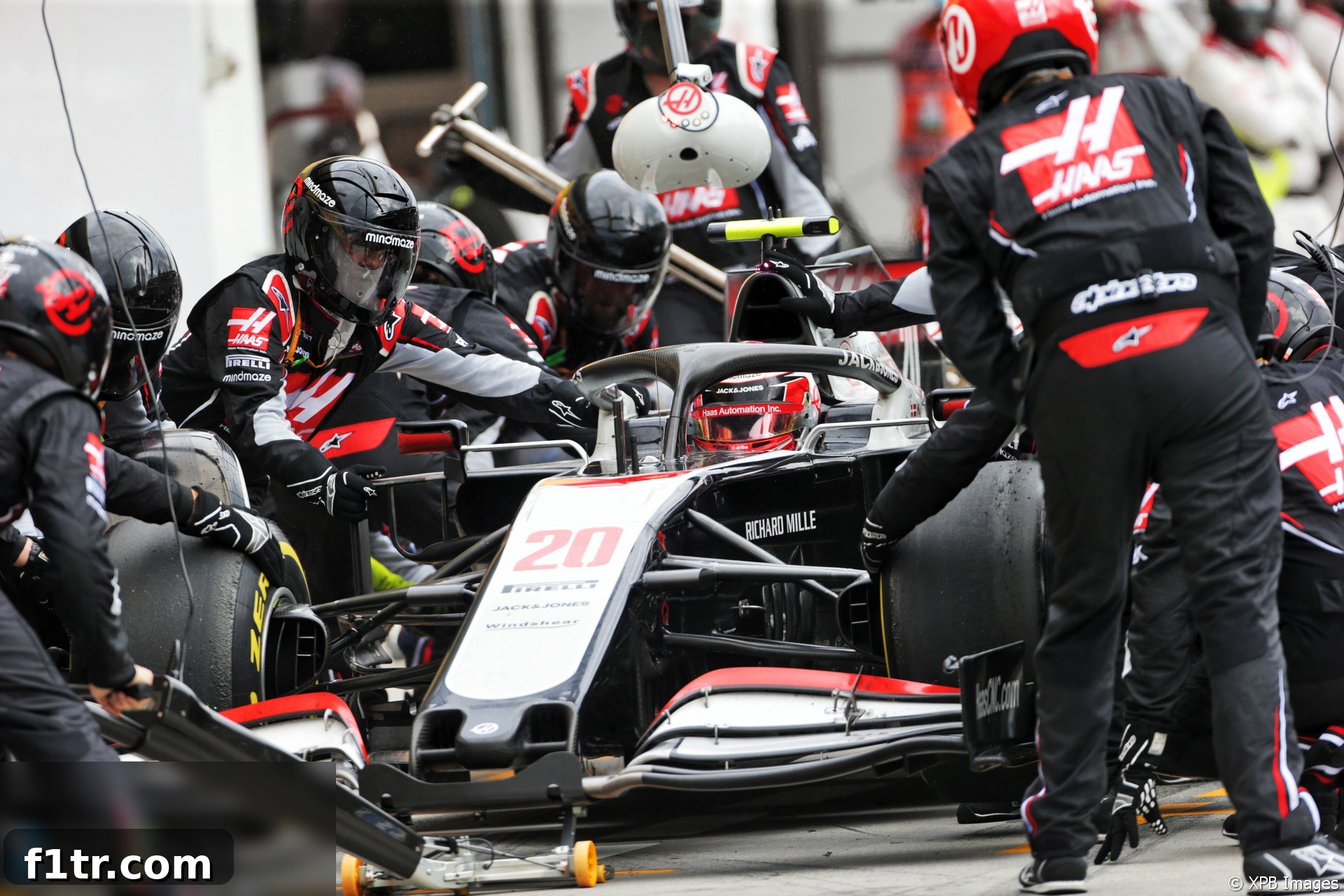
In stark contrast to the unpunished aggression, the Haas F1 team found itself ensnared in a regulatory quagmire during the Hungarian Grand Prix, incurring a 10-second penalty for both Kevin Magnussen and Romain Grosjean. Their “offence”? Discussing a strategic pit stop for slick tyres on the formation lap – a brilliant gamble that ultimately proved inspired, earning Magnussen two valuable points for ninth place.
Advert | Become a RaceFans supporter andgo ad-free
The penalty stemmed from a peculiar interpretation of rules concerning “driver aids.” The official rationale was that the radio communication constituted a prohibited driver aid on the formation lap. This reasoning left many scratching their heads. How, precisely, does a strategic radio call about an impending pit stop function as a “driver aid” in the same vein as, say, a system designed to assist with optimal clutch release or fuel mixture settings?
The root of this perplexing decision lies in a technical directive issued four years prior, which aimed to prevent teams from providing instructions that could help drivers optimize their launch settings for near-perfect starts. The directive, however, was broadly worded, creating an unintended side-effect: a sweeping ban on *all* team-to-driver radio instructions during the formation lap. Consequently, a pit call, a perfectly legal and strategic decision at any other point in the race, became an illegal “driver aid” in this specific window.
This situation highlights a critical flaw in Formula 1’s regulatory framework: the reliance on non-public technical directives. These directives, often crucial for understanding the nuances of certain rules, are not readily available to the public, making it virtually impossible for fans and even some within the sport to fully grasp the rationale behind certain penalties. This opacity breeds confusion and fosters a sense of injustice when teams are penalized for actions that seem perfectly reasonable within the broader context of the race.
Haas’s strategic call to switch to slicks early on a drying track was a bold and intelligent move, precisely the kind of daring strategy that makes Formula 1 exciting. Such gambles, when successful, should be rewarded, not stifled by an arcane interpretation of a rule never intended for this purpose. The current rule inadvertently discourages innovative strategy, robbing the sport of potential moments of brilliance and diminishing the spectacle for fans. It’s illogical and frankly counterproductive to ban teams from making tactical pit calls on one lap of the race while allowing them on all others.
The Broader Implications: Transparency, Consistency, and Fan Engagement
These two incidents, though different in nature, collectively underscore a pressing need for greater clarity, consistency, and transparency within Formula 1’s regulatory landscape. For a sport that prides itself on being at the forefront of technology and competition, its rulebook often feels antiquated and inconsistently applied.
Fans, as the lifeblood of any sport, have a right to expect a basic understanding of the rules of fair play. When they witness blatant illegal moves go unpunished, or teams penalized for seemingly innocuous strategic decisions based on secret directives, it chips away at their faith in the sport’s integrity. The mystique of Formula 1 should come from its engineering prowess and driver skill, not from an impenetrable regulatory system that leaves both participants and spectators bewildered.
Advert | Become a RaceFans supporter andgo ad-free
The FIA and Formula 1 must strive for a regulatory environment that is not only robust but also accessible and understandable. This means reviewing existing rules for unintended consequences, making technical directives public, and ensuring that steward decisions are consistent and clearly communicated. The goal should be to minimize ambiguity and ensure that the spirit of competition is upheld without arbitrary penalties or unaddressed fouls.
Ultimately, the health of Formula 1 depends on its ability to maintain credibility and engage its audience. Transparent and consistently applied rules are fundamental to this. Without them, the sport risks alienating its fanbase and losing its unique appeal as the ultimate test of human and machine.
2020 F1 Season: Related Articles and Key Moments
The 2020 Formula 1 season, despite the challenges of a global pandemic, was packed with drama, strategic battles, and pivotal moments that continued to shape the sport’s narrative. From surprising penalties to heroic drives, the season provided ample material for discussion and analysis. Understanding the context of the rules and their application during this period helps shed light on the ongoing debates about consistency and fairness in F1.
- Grosjean to make F1 test return tomorrow for first time since Bahrain horror crash
- Pictures: Wrecked chassis from Grosjean’s Bahrain fireball crash to go on display
- Bottas vs Rosberg: Hamilton’s Mercedes team mates compared after 78 races each
- F1 revenues fell by $877 million in Covid-struck 2020 season
- Hamilton and Mercedes finally announce new deal for 2021 season
Browse all 2020 F1 season articles