F1 Drivers Raise Alarms Over Controversial Chinese Grand Prix Sprint Race Format
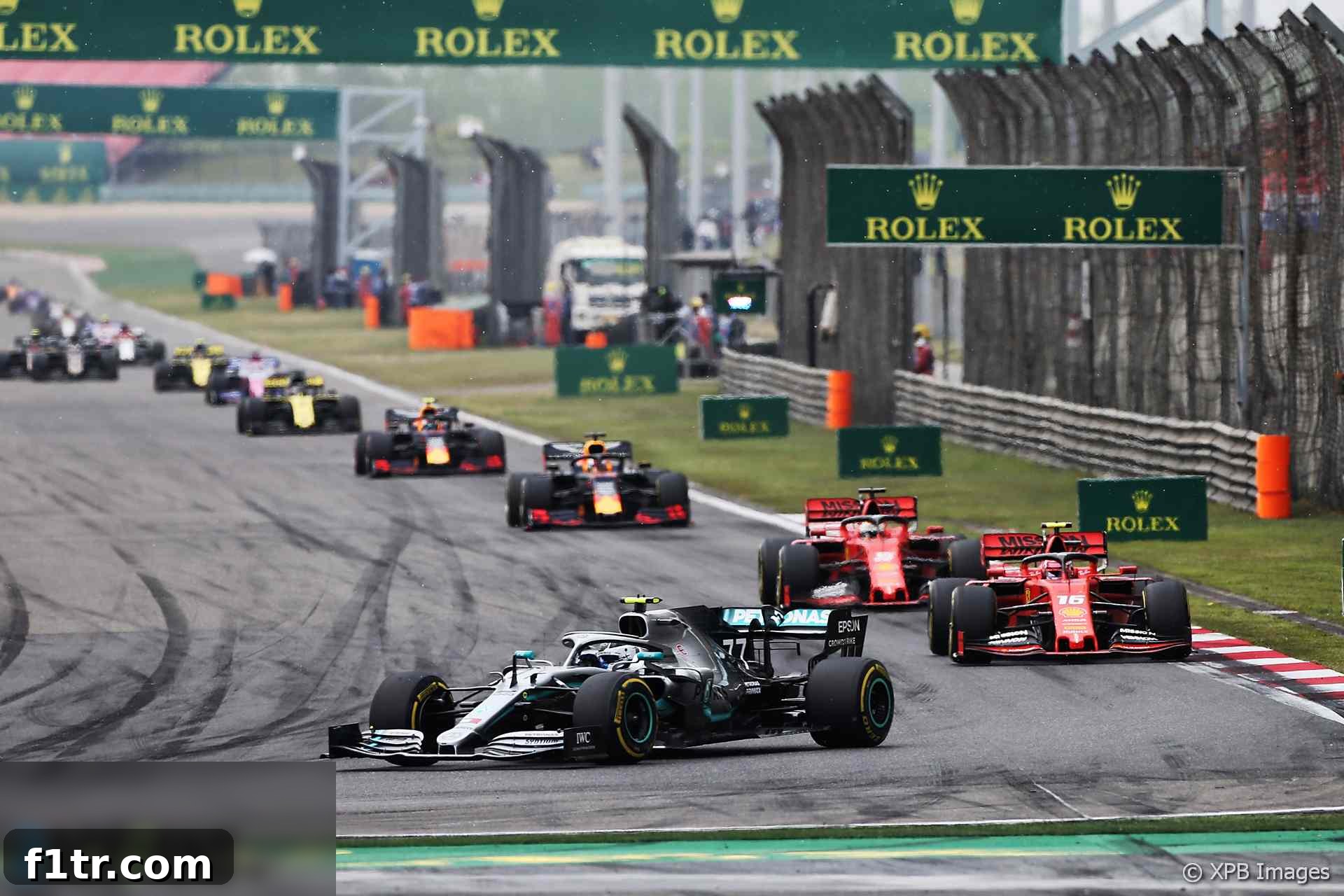
Formula 1 drivers have voiced strong criticisms regarding the decision to host the season’s inaugural sprint event at the upcoming Chinese Grand Prix. As the series prepares to return to the Shanghai International Circuit for the first time in five years, the condensed sprint weekend format, offering only a single practice session compared to the usual three, has sparked significant concern among the grid’s top competitors. Drivers fear the severe lack of preparation time could lead to unforeseen technical challenges, potential rule infringements, and even safety hazards on a track many have not raced on with the current generation of cars.
Advert | Become a Supporter & go ad-free
The Shanghai International Circuit, a fan and driver favorite renowned for its long straights and challenging corners, last hosted a Grand Prix in 2019. The intervening years have seen a radical overhaul of Formula 1’s technical regulations, introducing ground-effect cars that are immensely powerful but highly sensitive to track conditions and setup. This significant evolution makes a return to an unfamiliar venue with minimal practice a particularly thorny issue for teams and drivers alike.
The Core Grievance: Limited Practice, High Stakes
A standard Formula 1 Grand Prix weekend typically grants teams three one-hour practice sessions before qualifying. This allows ample time to acclimatize drivers to the circuit, conduct extensive setup work, evaluate tire performance, and troubleshoot any mechanical or aerodynamic issues. Sprint weekends, however, drastically compress this schedule, offering just one hour of practice before drivers head straight into the Sprint Qualifying session. This fundamental difference is at the heart of the drivers’ collective apprehension.
Carlos Sainz Jnr, a prominent voice among the drivers, revealed that the matter was directly raised with the FIA and Formula 1 management during a drivers’ briefing. He emphasized the inherent risks of approaching a circuit after a five-year hiatus with so little preparation time, especially given the strict technical regulations governing the cars. “What we said in the drivers’ briefing, we said to the FIA and Formula 1, with these kind of cars to go to a track with one hour of practice and straight into qualifying, with the regulations that they put us [under], with the plank wear and things like this, and how tricky one bump could make the car, I think it’s not a good choice to choose to [hold a] sprint after four or five years absence,” Sainz articulated, highlighting the complexity and sensitivity of modern F1 machinery.
The Peril of Plank Wear: A Costly Consequence
One of the most significant concerns articulated by Sainz revolves around the meticulous management of plank wear. F1 cars are fitted with a mandatory wooden plank on their underside, designed to ensure a minimum ride height. Excessive wear of this plank, typically caused by the car running too low and frequently hitting the track surface, can lead to disqualification. This exact scenario played out dramatically at the United States Grand Prix last year, where both Sainz’s Ferrari teammate Charles Leclerc and Mercedes’ Lewis Hamilton were disqualified after their cars failed post-race plank wear inspections.
The delicate balance between achieving optimal aerodynamic performance and maintaining legal ride height is a fine art, typically perfected over multiple practice sessions. With only an hour to understand the unique undulations, bumps, and kerbs of the Shanghai International Circuit – a track they haven’t experienced in five years – teams face an unprecedented challenge. Setting the car too aggressively low in pursuit of performance could easily backfire, leading to costly disqualifications and severely impacting championship standings. The drivers’ warning underscores a very real fear of falling afoul of these stringent technical regulations due to insufficient data and track time.
Resurfacing Risks and Grip Gambles: Echoes of Istanbul
Adding another layer of uncertainty to the Chinese Grand Prix weekend is the potential for track resurfacing. Reports suggest sections of the Shanghai circuit may have undergone resurfacing work since F1 last visited. Such changes can drastically alter grip levels, making tire management and car setup even more unpredictable. Sainz vividly recalled a similar situation at Istanbul Park in 2020, where newly resurfaced asphalt led to extremely low grip and a chaotic, unpredictable race weekend, famously dubbed “Istanbul 2.0.”
“We also heard there’s been resurfacing going on, so Istanbul 2.0 maybe on the cards,” Sainz remarked, expressing a clear hope that history would not repeat itself. Low grip conditions, especially when combined with a lack of practice, heighten the risk of accidents, making the challenge not only about performance but also driver safety. The prospect of grappling with a completely unknown track surface under the pressure of a sprint format is a significant source of anxiety for the drivers and their engineering teams, transforming the event into a high-stakes gamble.
Track Integrity and Unforeseen Hazards: The Drain Cover Dilemma
Beyond car setup and track surface, drivers also highlighted the vulnerability of a single practice session to unforeseen track issues. Sergio Perez pointed out the devastating impact a loose drain cover could have. Such incidents are not uncommon in Formula 1; testing in Bahrain earlier this year was disrupted by a drain cover issue, as was practice for the Las Vegas Grand Prix last November. Poignantly, a McLaren car was damaged by a drain cover at the Shanghai International Circuit itself during F1’s second race there in 2005, providing a historical precedent for this specific concern.
“I just hope that there are no issues with the track, any drain holes, any issues like that,” Perez stated, emphasizing how such problems would immediately throw teams “out of sync” with their already tight schedule. A disruption to the sole practice session would leave teams with virtually no opportunity to prepare, escalating the risks exponentially. This fear underscores the fragility of the sprint format when introduced to a circuit returning to the calendar after such a long absence.
Driver Voices: A Unified Front of Concern
The sentiment against the Chinese Grand Prix sprint format is broadly shared across the paddock, with key drivers articulating specific reasons for their discontent.
Carlos Sainz: The Articulated Advocate
Carlos Sainz’s arguments were particularly comprehensive, weighing the “show” against the “sporting integrity.” While acknowledging Shanghai’s qualities as a racing circuit – “I think [Shanghai] as a race circuit is a great one. I think it’s one of our favourite ones for everyone, it’s just a great racing track and a track that offers a good possibility to overtake, so a sprint makes sense to have it there” – his core objection remained the timing and lack of preparation. He contrasted the potential excitement for viewers with the practical anxieties of engineers and drivers: “It just shows the uncertainty. Maybe for you guys at home it’s exciting, but for engineers and drivers, it’s something that for me, in my opinion, we shouldn’t take the risk and have a normal weekend.” Sainz’s measured critique suggests that a sprint race in Shanghai would be acceptable under different circumstances, specifically if drivers had more recent experience with the track.
Advert | Become a RaceFans supporter andgo ad-free
Sergio Perez: Navigating the Unknown
Sergio Perez, who has never raced at Shanghai with Red Bull Racing, highlighted the particular disadvantage for drivers and teams who have undergone significant changes since 2019. “For the show, probably it’s a good thing. But I think from the preparation side, it’s going to be definitely one that is going to be really hard. I’ve never raced there, for example, with Red Bull so it’s going to be quite a lot to do in a single practice,” he explained. His perspective underscores how the lack of recent experience, combined with the inherent challenges of integrating into a new team or car package, exacerbates the sprint weekend’s inherent difficulties. It’s not just about knowing the track, but knowing it intimately with your current machinery.
Max Verstappen: A Consistent Critic of the Sprint Format
Max Verstappen, arguably the most outspoken critic of F1’s sprint race format in general, did not mince words regarding the Chinese Grand Prix decision. Calling it “not great,” Verstappen reiterated his long-standing view that the sprint format often detracts from the purity of the sport, especially when combined with such unique circumstances. “When you have been away from a track for quite a while, I think you never know what you’re going to experience, right? So it would have been better to have a normal race weekend there,” he stated.
Verstappen acknowledged the potential for the sprint to “spice things up” for entertainment purposes, but firmly placed sporting performance and driver experience above it. “But purely from a driving perspective, the performance perspective of the sport, I think it’s not the smartest thing to do,” he concluded. His comments reflect a desire for a more traditional approach that prioritizes thorough preparation and the genuine challenge of a full race weekend, rather than manufactured excitement at the expense of predictable and fair competition.
The F1 Decision: Balancing Showmanship and Sporting Integrity
The decision to schedule a sprint race for the Chinese Grand Prix, despite the clear and vocal concerns from the drivers, reflects a broader tension within Formula 1. On one side are the commercial and marketing imperatives to enhance the “show,” attract new audiences, and provide more on-track action throughout the weekend. Sprint races are designed precisely to achieve this, offering competitive sessions on both Friday and Saturday.
On the other side lie the sporting integrity, driver safety, and technical challenges that the drivers have so clearly articulated. The FIA and Formula 1 are tasked with balancing these competing interests. While the allure of an unpredictable, high-stakes sprint race after a long absence might appeal to some stakeholders and a segment of the fanbase, the potential for technical infringements, safety incidents, or a less-than-optimal sporting spectacle due to insufficient preparation time cannot be ignored. The drivers’ concerns serve as a crucial barometer for the health and fairness of the competition.
As teams head to Shanghai, the focus will undoubtedly be on minimizing risks while maximizing learning in the single practice hour. Engineering teams will likely rely heavily on simulation data, historical information, and strategic conservatism in initial car setups. However, the true test will be how quickly drivers can adapt to the current track conditions, including any resurfacing, and how effectively they can push the limits of their complex machinery without overstepping regulatory boundaries. The Chinese Grand Prix is set to be a weekend of immense challenge, high drama, and potentially significant consequences, all amplified by the controversial sprint format.
Ultimately, the performance in Shanghai will not only dictate the early season championship narratives but also provide valuable feedback to Formula 1 and the FIA on the viability and wisdom of scheduling sprint events in such unique circumstances. The drivers have made their anxieties clear; now, the world waits to see how these concerns manifest on track.
2024 Chinese Grand Prix
- Alonso and Sainz incidents prompt changes to Formula 1’s rules
- Aston Martin fail in bid to have Alonso’s Shanghai penalty reviewed
- Mercedes cleared over Hamilton pit stop infraction as ‘nearly all teams in breach’
- Aston Martin petitions FIA to review Alonso’s penalty for Sainz collision
- “You need to be more on it”: 12 unheard radio exchanges from the Chinese GP
Browse all 2024 Chinese Grand Prix articles