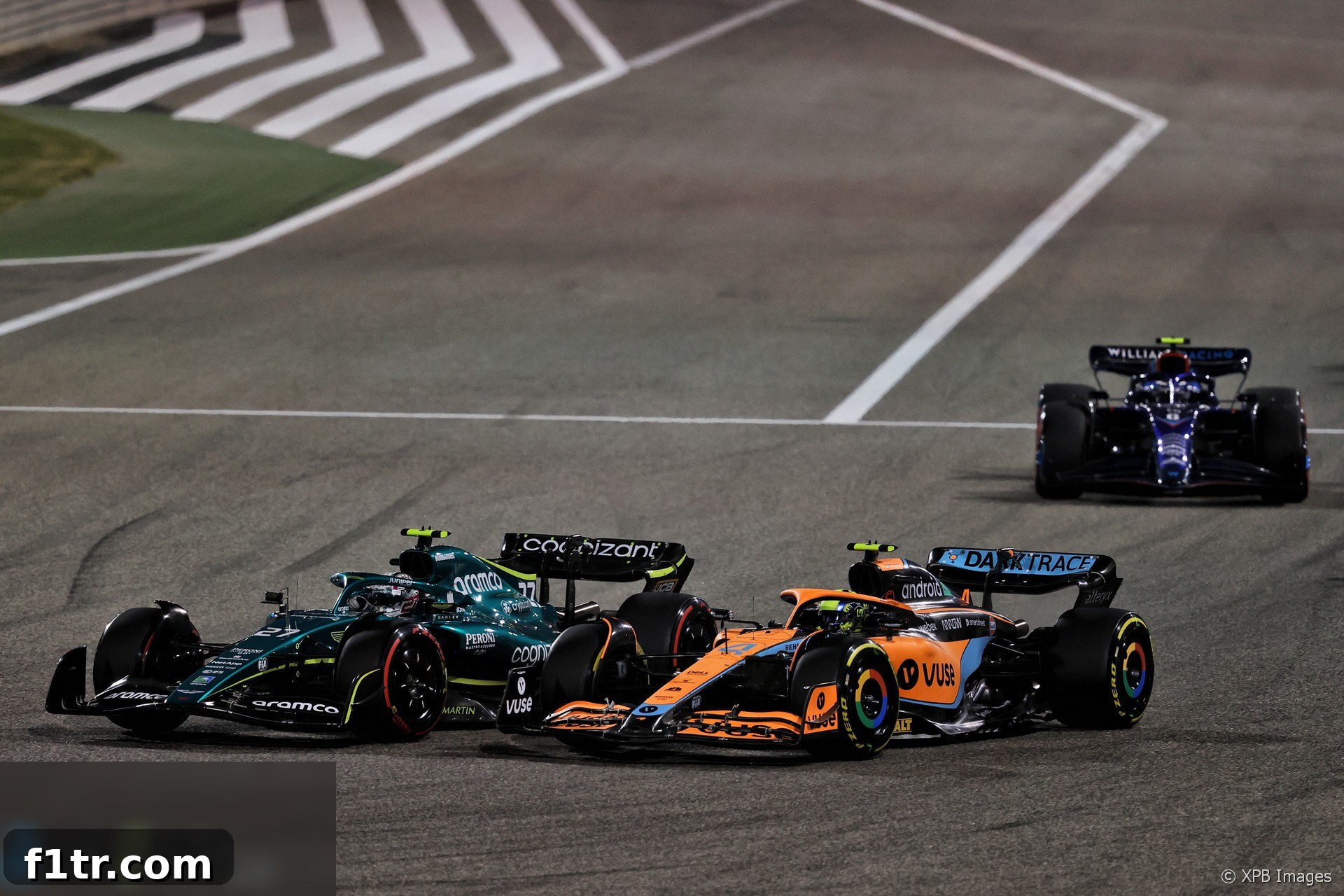
Evaluating the 2022 F1 Rule Changes: Did Overtaking Improve at the Bahrain Grand Prix?
The dawn of the 2022 Formula 1 season brought with it the most significant overhaul of technical regulations in decades. The primary objective of these drastic changes was clear: to foster closer racing and make it easier for drivers to follow each other, thereby promoting more exciting overtaking opportunities. As the lights went out for the Bahrain Grand Prix, the motorsport world held its breath, eager to see if these ambitious rule modifications would deliver on their promise. However, the initial response from the drivers themselves was a complex tapestry of praise, frustration, and cautious optimism, highlighting the intricate nature of F1 racing dynamics.
The Ambitious Goal: Revolutionizing F1 Aerodynamics
At the heart of the 2022 technical regulations was a fundamental shift in aerodynamic philosophy. Previous generations of F1 cars relied heavily on complex wing designs to generate downforce, creating a phenomenon known as “dirty air.” This turbulent wake significantly hampered a following car’s performance, causing a loss of downforce and making it exceedingly difficult to challenge for position. The new rules aimed to mitigate this by reintroducing ground effect aerodynamics, simplifying front and rear wings, and introducing stricter controls on aero devices. The vision was to allow cars to generate downforce primarily from the underside, making them less susceptible to the aerodynamic wash from the car ahead and theoretically facilitating closer wheel-to-wheel combat.
The Bahrain International Circuit, with its mix of fast straights and technical corners, served as the first proving ground for these revolutionary concepts. But did the initial test truly validate the success of these aerodynamic principles in the high-stakes environment of a Grand Prix?
Driver Perspectives: A Mixed Verdict on Overtaking
The paddock buzzed with diverse opinions following the season opener, reflecting the varied experiences of the drivers on track. While some hailed the changes as a significant step forward, others remained skeptical, underscoring the complexities of Formula 1 where car performance, tire management, and driver skill all play pivotal roles.
Lando Norris: Frustration with Overheating Tires and Limited Attack
Among those expressing disappointment was McLaren driver Lando Norris. Despite the promise of closer racing, Norris found himself struggling to effectively challenge other cars once he drew near. His experience highlighted a persistent issue: tire overheating.
“It was tough,” he stated. “It wasn’t as good as I was expecting, which is a bit frustrating. I was expecting a little bit more.” Norris elaborated that the moment he got close to another car, the loss of aerodynamic grip meant his tires, particularly the rears, would quickly overheat. “When you get close you still just light up the rears, as easy as you need to, and you lose the front. The tyres get hot, you just go off a cliff again.” This rapid degradation meant he was no longer in a position to attack, turning a potential overtaking opportunity into a struggle for tire management. He conceded that the changes had made racing only “a little bit better,” observing, “You see how much of a train everyone was in at the beginning, there’s a bit more fighting then normal. But you still lose a lot of downforce. I would say maybe not as much as what everyone was hoping.”
Norris’s comments underscored a crucial point: while the new rules might have reduced dirty air, the delicate balance of tire thermodynamics and car setup still presented formidable obstacles to sustained attacking. The McLaren, in particular, appeared to struggle with tire degradation in traffic, exacerbating the challenge for Norris.
Kevin Magnussen: Enthusiastic Praise for Closer Following
In stark contrast, Kevin Magnussen, making a sensational return to Formula 1 with Haas, was effusive in his praise for the technical shake-up. His strong fifth-place finish undoubtedly contributed to his positive outlook, but his observations went beyond mere result-driven euphoria.
“Following the other cars is so much better,” Magnussen told Channel 4. “It’s going to be a lot better racing. There’s going to be tracks that we didn’t see any racing on in the past that now we can actually race on, I’m sure.” Magnussen’s experience suggested that the core objective of allowing cars to run closer together was indeed being met. He acknowledged a nuanced effect of the rules: while the slipstream effect (the tow) might be reduced due to cleaner air, the Drag Reduction System (DRS) had become more potent.
“When you slipstream someone, you catch them a little slower because the slipstream effect is less,” he explained. “The DRS effect is bigger, actually, so on your own you have a bigger effect. It’s not so much easier to overtake but you’re just closer all of the time. You can stay there, your tyres don’t go off. So it’s a good change.” This distinction is key: the ability to maintain proximity to a rival without destroying tires creates sustained pressure, even if the final act of overtaking still requires skill and opportunity. Magnussen’s Haas seemed particularly adept at managing its tires in traffic, allowing him to capitalize on this enhanced ability to follow.
Esteban Ocon and Fernando Alonso: Nuances on DRS and Tyre Degradation
Other drivers offered further nuances, demonstrating that the impact of the rules was not monolithic. Esteban Ocon of Alpine largely concurred with Magnussen on the improved ability to follow but held a different view on the power of DRS. While Magnussen felt the DRS effect was bigger, Ocon suggested, “DRS is actually less powerful than it was.” This discrepancy likely stems from differing car setups and how much drag each car sheds when activating its rear wing, highlighting that general rules have specific car-by-car implications.
Ocon, however, echoed the sentiment on general towing: “Towing in general is less powerful than it was.” He maintained a positive outlook on the overall direction of the rules, stating, “You can follow, let’s put it like this, a lot closer than before, and the car is less affected by following another one. So that’s going very much in the right direction. It still does affect you a little bit but it has reduced the towing effect quite a lot, and the DRS was still powerful, but I didn’t feel as big as the previous years.”
Ocon’s experienced teammate, Fernando Alonso, offered perhaps the most insightful perspective, emphasizing a crucial external factor: tire degradation. Alonso agreed that “following was definitely easier,” a sentiment he had noted during pre-season testing. However, he cautioned against drawing premature conclusions about overtaking itself, suggesting that many of the passes seen in Bahrain were heavily influenced by tire differences.
“But overtaking is still not as easy as it seems on TV,” Alonso stated. “I think all the overtaking that we saw today was because one car had two seconds’ more pace and newer tyres than others. So I met cars that I was two seconds faster than and I overtook in few corners. And I met also cars that were two seconds faster than me and they overtook me in two or three corners. So I think the tyre is the biggest differentiating factor still, not the following.”
Alonso’s assessment underscores a fundamental truth in modern F1: tire strategy and degradation remain paramount. Bahrain is notoriously abrasive on tires, leading to significant performance differentials between cars on fresh versus worn rubber. This meant that even if following was easier, a significant pace advantage, often stemming from tire condition, was still the primary enabler of clean overtakes.
The Bahrain Context: A Unique Test Case
The Bahrain Grand Prix circuit presents a specific set of challenges that can influence the perception of overtaking. Its long straights are conducive to DRS-assisted passes, but its high-speed corners and aggressive surface mean tire degradation is always a critical factor. This characteristic meant that cars with significantly fresher tires often had an undeniable performance advantage, allowing them to carve through the field with relative ease, irrespective of the new aerodynamic rules.
“I think what makes it very easy to pass and the moves you saw is probably the tyre difference here,” Ocon confirmed. “When somebody is up to nine, 10 laps tyre difference and somebody pits with fresh tyres, there is no competition, it’s another category.” This highlights that while the rules may have created a better environment for *potential* overtakes, the inherent characteristics of a circuit and the ever-present challenge of tire management can still overshadow the impact of aerodynamic changes on any given race day.
Looking Ahead: More Data Points Required
As F1 motorsport director Ross Brawn wisely commented after the race, Bahrain was merely the first data point in a long season that will truly reveal whether the new rules have achieved their intended purpose. Drawing definitive conclusions after a single event, particularly one with such unique tire characteristics, would be premature.
The calendar promised further insights with circuits like the Jeddah Corniche Circuit, a high-speed street track designed with the new generation of cars in mind, offering a different test. Following that, Australia’s Albert Park, which underwent significant modifications to its layout specifically to improve overtaking, was another key venue for evaluating the rules. These diverse circuit characteristics will provide a more comprehensive picture of the efficacy of the 2022 regulations.
“We need to see more examples,” Alonso wisely concluded. “I know that it is tempting to write conclusions after one race… but I think we need to be calm.”
Conclusion: A Promising Start, But Patience is Key
The 2022 Formula 1 technical regulations certainly represent a bold step towards enhancing the spectacle of racing. The initial feedback from the Bahrain Grand Prix suggests a mixed, yet largely promising, outcome. While drivers like Kevin Magnussen found significant improvements in the ability to follow closely and maintain tire life, others like Lando Norris encountered familiar hurdles of tire overheating when attempting to attack. The crucial role of tire degradation, particularly at circuits like Bahrain, cannot be overstated as a primary factor influencing overtakes, often eclipsing the direct impact of aerodynamic changes.
Ultimately, the true success of these regulations in fostering consistently better and easier overtaking will only be revealed over the course of the season, as cars adapt, and diverse track layouts offer different challenges. The foundation for closer racing appears to have been laid, but the intricate dance between aerodynamics, tires, strategy, and driver skill will continue to define the art of overtaking in Formula 1.
2022 Bahrain Grand Prix Articles
- How “class act” Hulkenberg’s reserve outings showed his readiness for an F1 return
- Alfa Romeo working on fix for Bottas and Zhou’s “very poor” starts
- China is first country to score points on its debut since the championship began
- “I don’t hold back”: Verstappen’s full radio transcript from his luckless Bahrain GP
- Mercedes’ straight-line speed deficit due to drag levels, not power unit – Wolff
Browse all 2022 Bahrain Grand Prix articles