Formula 1’s CEO, Stefano Domenicali, has articulated a clear vision for the future of the sport’s global calendar, aiming for a stable 24-round season while simultaneously offering a lifeline to historic circuits that are prepared to adapt and invest. This strategic direction reflects F1’s burgeoning global appeal and its commitment to balancing tradition with an evolving commercial landscape, ensuring the championship remains vibrant and accessible to a new generation of fans.
“The number that we were targeting this year, but due to the reasons that you know very well we didn’t achieve, but what we want to do next year is 24. And I think 24 is the right number,” Domenicali confirmed in an interview with the official F1 website. He elaborated on this target, explaining, “It’s the number that is required with the market. It’s really, I would say, the right balance between that and between the complexity of the logistics of the people that are working. But I would say this is the number on which we should target to be stable for a long time.” This statement underscores F1’s ambition to maximize its commercial reach without overburdening the operational teams and logistical infrastructure required to move the world’s most advanced motorsport circus across continents.
This 24-race aspiration is not a new concept for Domenicali. In March 2022, he revealed that there was sufficient interest from event promoters to potentially construct a 30-event calendar, showcasing the sheer global demand for hosting a Formula 1 Grand Prix. However, by August of the same year, he clarified that 24 rounds should be F1’s “maximum,” stating unequivocally that he “did not want to discuss any more than that number.” This indicates a pragmatic approach, recognizing the limits of a sustainable schedule despite overwhelming commercial opportunities. The sport’s governing body, through the Concorde Agreement, currently permits a maximum of 24 rounds per season, with an extension to 25 only possible if teams unanimously vote in favor.
Despite the stated 24-race ceiling, F1’s long-term commercial strategy suggests a degree of flexibility. The subsequent advertising for a ‘commercial manager [for] race promotion’ role listed a primary responsibility as “supporting the head of race promotion in executing on F1’s business strategy of growing the future race calendar to up to 25 races, which will include the research, evaluation, prospecting, and negotiation of potential new race locations.” This duality highlights the constant tension between ambitious growth targets and the practical and contractual limitations of the sport.
One of the most prominent examples of this calendar expansion and its impact on existing venues is the situation in Spain. While the Circuit de Catalunya, near Barcelona, currently hosts the Spanish Grand Prix with a contract extending until at least 2026, the capital city of Madrid has expressed significant interest in hosting a future F1 race. “It is true that Madrid wants to host a race in the future, and no decision has been taken so far,” Domenicali revealed, characterizing this interest as “another great sign of the state of the health of F1.” He emphasized that the eventual decision on which Spanish venue will be chosen “will not involve at all any political discussion,” stating that only “commercial and technical and sporting discussion will be taken in the next couple of months. And for the best of F1, we will take the right decision. I’m sure about it.”
The prospect of a Madrid Grand Prix has undeniably spurred the Circuit de Catalunya to enhance its facilities and overall event experience. Domenicali acknowledged this positive competitive dynamic, noting, “We need to remember that we still have years of contract with Barcelona, and we are really very, very happy in the way that Barcelona is handling the future because of course [Madrid’s interest] has helped them to react, to push for the improvement that is needed at all levels everywhere.” This situation exemplifies F1’s strategy of leveraging market demand to drive improvements across all its venues, ensuring that fans consistently receive a top-tier experience. The Spanish market, buoyed by the strong performances of national heroes Fernando Alonso and Carlos Sainz Jr., is currently experiencing an incredible surge in F1 viewership and engagement, further intensifying the demand for a premier event.
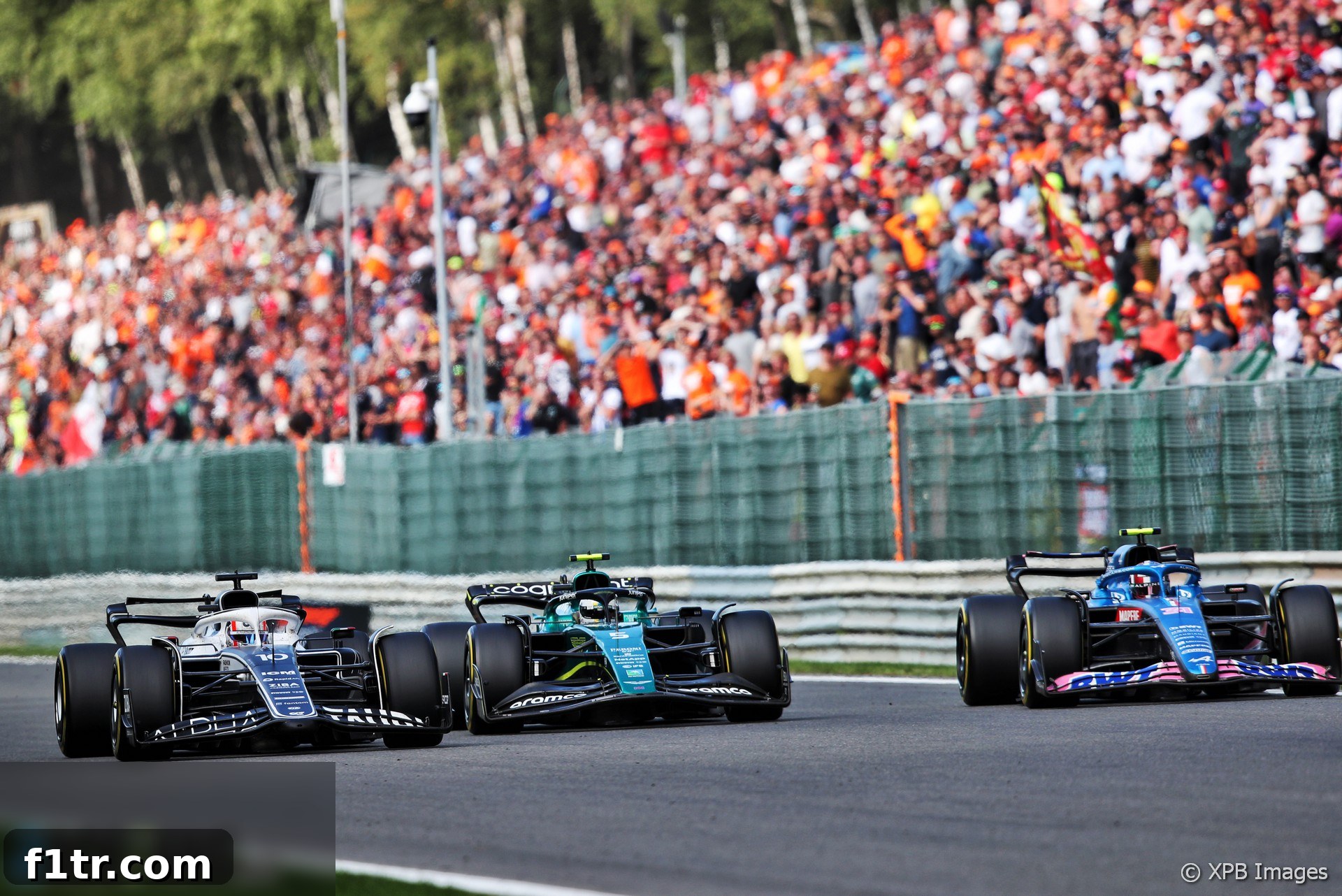
While new venues like Madrid vie for a spot, the fate of established European classics remains a topic of intense discussion. The Belgian Grand Prix at Spa-Francorchamps, a circuit revered by drivers and fans alike, is currently the only race with a contract expiring this year, making its future uncertain. The 2024 F1 calendar is largely set, with 23 races already contracted, and the Chinese Grand Prix, absent since the Covid-19 pandemic, is also slated for a return. Should Spa secure another contract extension, it would effectively leave no immediate room for new or returning events, at least not within the 24-race limit for 2024. However, Domenicali remains optimistic about future opportunities, describing it as “great that we have this kind of opportunity for the future” to potentially host a Madrid-based race.
Madrid’s earliest opportunity to join the F1 calendar would likely be in 2027. Domenicali firmly believes that Spain cannot realistically host two Formula 1 races in a single year, despite precedents in 1994, 1997, and from 2008 to 2012 when the country hosted both the Spanish and European Grands Prix. He explained the shift in philosophy: “In that time the vision was not so big. We were still [with a] European-centric calendar. Today we have a worldwide calendar approach with more races. I think that in Europe, even in the future, I am expecting to see races where the rotational principle could be applied. But not two in the same year [in the same country].” This suggests a move towards regional rotation, ensuring broader representation across the continent rather than multiple races in one nation.
Interestingly, Italy presents an exception to this ‘single-country’ rule, being set to host two races – at Monza and Imola – in the next two seasons and potentially beyond, with contracts extending through 2025. Following the unfortunate cancellation of the Emilia Romagna Grand Prix at Imola this year due to devastating floods, the promoter anticipated that F1 would be open to extending their contract to 2026 to compensate for the missed event. Domenicali confirmed these discussions, stating, “What’s on the table, to be once again correct, is really we are discussing to see how we can extend the contract for one year, because I think that place deserves that and we are going to discuss the details very shortly.” This demonstrates F1’s willingness to be flexible and supportive of established venues, especially in challenging circumstances.
The recent history of Spa-Francorchamps highlights the demanding nature of F1’s calendar decisions. The Belgian Grand Prix only secured its spot on the 2023 calendar after a planned revival of the South African Grand Prix, last held in 1993, ultimately fell through. It appears a similar scenario might unfold for 2024, potentially granting Spa-Francorchamps another reprieve and allowing Formula 1 to return to the iconic circuit for another year. Beyond Belgium, the British and Japanese Grands Prix, widely considered cornerstones of the championship, are next in line for contract expiry, with their current deals concluding in 2024. Despite the influx of new events in recent seasons, Domenicali insists that F1 remains committed to retaining its heritage races.
“For sure it’s very important that the historical races have their own personality,” Domenicali asserted. He dismissed criticism that F1 disregards its historical roots, countering, “And I’m laughing when I hear people that are saying F1 is not respecting the historical races. It’s absolutely the other way around.” He then provided a crucial clarification on what “historic” truly means in the modern era of Formula 1: “What I have always said is that the word historic has great responsibility, but historic cannot be seen as an old and out of fashion place. This is not historical, it’s old.” This distinction is central to F1’s philosophy; heritage is valued, but it must be accompanied by continuous improvement and adaptation.
Domenicali stressed the need for tracks to evolve with the sport’s burgeoning popularity. “I think that what we want is to use this incredible moment where F1 is growing to make sure that everyone is doing the right thing, and that’s it,” he explained. He highlighted a significant demographic shift, noting, “It’s a matter of understanding that the world is evolving. When you hear, and you maybe can be shocked, that a certain new generation of guys or people that are now in love with F1 do not have a clue who was the driver of five years ago, not [even] 55. And they don’t have a clue on a certain technical element of what we are doing. It would be wrong not to recognise it.” This observation underscores the necessity of appealing to a diverse and rapidly changing fanbase, many of whom are drawn to the spectacle and excitement without deep historical knowledge.
While acknowledging the changing landscape, Domenicali affirmed the commitment to traditional venues. “I’m not saying they’re right. I’m saying that we need to understand what is the right balance of the [historic] things that we need to take in order to take the right decision for the future,” he said. He further clarified, “So historical races will be always part of the calendar, but there is the need for some of them to recognise the step change that they have to do to, for example, work on the infrastructure.” The message is clear: the essence of the track layout may remain, but the surrounding facilities and fan experience must meet contemporary expectations. “That is not changing the layout of the races. But the fans are coming more and more with their different needs and if you don’t give them what they deserve, it’s not any more historical, it’s an out of context place where we shouldn’t go.”
The Belgian Grand Prix promoter serves as a prime example of a historic track successfully adapting to F1’s evolving demands. Domenicali credited their proactive approach for securing contract extensions. “If you remember, there were two years ago when there was the discussion of Belgium [being off] the calendar. And the [result] was Belgium is in the calendar. But they reacted very well,” he recounted. “They invested in infrastructure that is related to the best experiences that we want to give to the fans. That’s the right thing that we want to see from the place where it has this historic approach, or historical approach in terms of being always there.” This illustrates that commitment to enhancing the fan experience and modernizing facilities is key to a historic venue’s longevity on the Formula 1 calendar.
Become a RaceFans Supporter and Go Ad-Free
RaceFans is powered by the generous support of its dedicated readers. By contributing a small monthly or annual sum, you directly help cover the operational costs of creating, hosting, and continually developing RaceFans. Your support ensures the continued provision of high-quality, independent Formula 1 coverage.
As a RaceFans Supporter, you can enjoy an uninterrupted, ad-free browsing experience across the entire site. Join our community of supporters today and help us continue our mission. Learn more or sign up via the links below:
- Become a RaceFans Supporter
- RaceFans Supporter FAQ
Related Articles: 2024 F1 Season Developments
- Norris ‘even more’ sure Canada penalty was wrong after review request fails
- McLaren seeking more than just downforce gains from major upgrade
- Winning more races won’t necessarily lead to F1 seat – Palou
- Red Bull’s testing restriction will “massively affect” 2024 car development
- Schumacher’s set-up input gives Mercedes a “super advantage” – Wolff
Browse all 2024 F1 season articles