F1 22: Your Ultimate Guide to the Miami International Autodrome
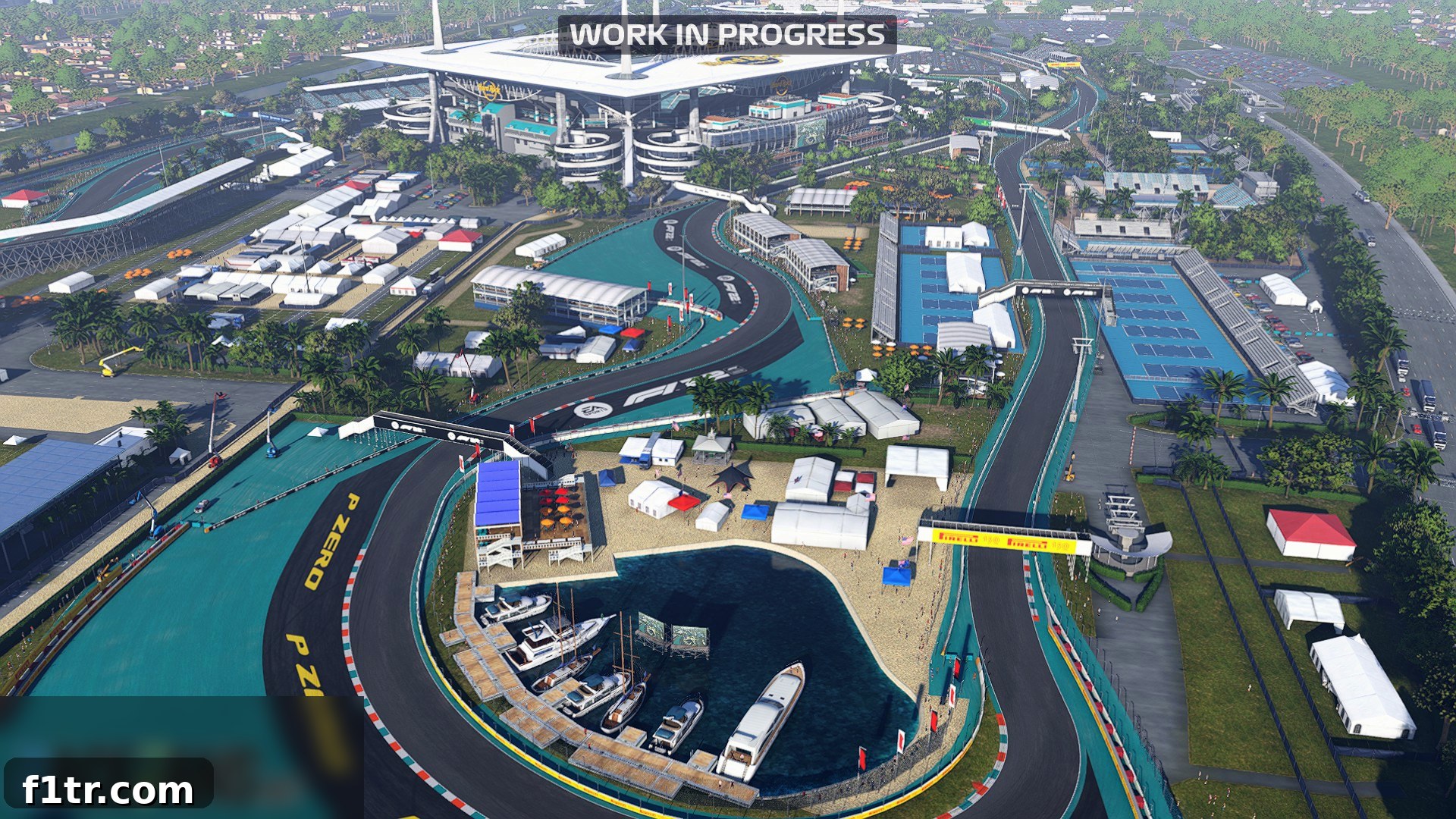
The highly anticipated Miami International Autodrome, the newest jewel in Formula 1’s crown, has been fully unveiled in Codemasters’ official F1 22 game. This reveal offers racing enthusiasts an exciting first look at the 19-turn, 5.4-kilometre circuit before its real-world debut at the inaugural Miami Grand Prix. Set against the vibrant backdrop of the Hard Rock Stadium, this temporary facility, designed by Apex Circuit Design, took just over a year to construct, promising a unique and challenging experience for drivers and an exhilarating spectacle for fans.
As Formula 1 continues to expand its global footprint, particularly in the United States, the Miami circuit embodies the sport’s blend of high-octane performance and glamorous venues. Its virtual representation in F1 22 provides an invaluable opportunity for players to learn every nuance of the track, from its high-speed straights to its tight, technical sections, giving them a head start in mastering what is set to become one of the most talked-about circuits on the calendar.
Navigating the Miami International Autodrome: A Turn-by-Turn Analysis
Sector 1: The Stadium Start and Rapid Entry
The Miami International Autodrome begins with a brisk sprint from the start/finish line towards a critical three-turn sequence. Turn 1, a challenging right-hander, demands precise braking and turn-in, dictating the pace for the subsequent corners. Drivers quickly transition into a swift left-hand bend (Turn 2) before flowing into a longer, sweeping right-hander (Turn 3). This section, while featuring asphalt run-off for minor errors, penalises any deviation from the optimal line, making a clean exit crucial for maintaining momentum. The track then rapidly picks up speed as it weaves around the perimeter of the iconic Hard Rock Stadium, creating an immersive atmosphere from the very first moments of the lap.
Following this initial technical challenge, the circuit opens up into some of its quickest corners. Turns 4 and 5 form a high-speed left-right combination, requiring immense commitment and a delicate touch on the brakes, often just a momentary lift or “dab” as seen in the F1 22 simulation. These bends are pivotal for sustaining high average speeds and pushing the limits of aerodynamic grip, offering minimal opportunity for recovery before the next complex sequence.
Sector 2: The Iconic Marina and Key Overtaking Opportunities
Immediately after the high-speed Turns 4 and 5, drivers encounter a distinctive trio of tightening left-handers: Turns 6, 7, and 8. This section notably sweeps around the much-discussed ‘fake marina,’ a unique visual feature that adds a distinct Miami flavour to the circuit. From a performance perspective, perfecting the apex and exit of Turn 8 is absolutely critical, as it feeds directly into the first of two significant acceleration zones. This long straight is a prime location for deploying DRS, making it a crucial area for both defending position and executing aggressive overtakes. The combination of its visual appeal and demanding technical requirements ensures this part of the track will be a constant highlight.
Beyond the demanding Turns 6-8 complex, the circuit briefly transitions through a series of flat-out bends, which, despite being officially numbered, are taken without any lift of the throttle. This high-speed section, with its sweeping right and left turns, demands unwavering commitment and exceptional aerodynamic stability from the cars, drawing comparisons to high-speed street circuits like Jeddah. Crucially, the second DRS activation zone begins shortly after Turn 9, further enhancing the speed differential that drivers can exploit. This extended period of high-speed running funnels directly into the braking zone for Turn 11, setting it up as one of the most promising overtaking spots on the entire circuit.
Turn 11 itself is a slower, acute corner, strategically placed to encourage bold braking manoeuvres and potential dive-bombs. However, the true challenge intensifies immediately thereafter, as any drivers still contesting position side-by-side must quickly navigate a famously twisty and narrow section of the track. This demanding sequence underscores the Miami circuit’s unforgiving nature, requiring immediate consolidation of any successful overtake with flawless, precise driving.
Sector 3: The Tight Chicane, Power Zone, and Distinctive Pit Entry
The narrow and intricate character of the circuit culminates in the extremely tight Turn 14-15 chicane. This challenging segment has drawn comparisons from drivers, notably Yuki Tsunoda, to the demanding nature of a Formula E circuit, highlighting its technicality and potential for incidents. While run-off is available straight ahead for those who misjudge their braking, the close confines of the chicane significantly elevate the risk of track limits infringements, penalties, and even Safety Car-inducing accidents. Navigating this sequence perfectly demands absolute precision, disciplined throttle application, and a considerable degree of bravery, serving as a genuine test of a driver’s skill and composure.
Exiting the demanding chicane, drivers prepare for Turn 16, a sharp corner that initiates the second major acceleration zone. This section is predominantly straight, providing another critical opportunity for DRS activation and the chance to build immense speed. This high-velocity blast culminates in a very slow left-hand hairpin, Turn 17, which requires heavy braking and meticulous car placement. This powerful combination of extreme straight-line speed followed by a tight hairpin offers yet another prime overtaking spot, where a driver’s late-braking capabilities could prove decisive in the latter stages of a lap or race.
The lap concludes with two fast, flat-out corners, Turns 18 and 19. At the apex of the latter, drivers can activate DRS for the third and final time as they hurtle towards the start/finish line, completing a challenging and exhilarating tour of the Miami International Autodrome. A truly distinctive feature of this circuit is its unique pit lane entry. Unlike most tracks where the pit lane is situated on the inside, here it is located on the outside of the track. Drivers must remain to the right after the Turn 17 hairpin and then navigate a slow chicane to effectively enter the pit lane. This unusual configuration introduces an additional strategic element and demands careful execution from drivers and teams.
Strategic Implications and Circuit Design Philosophy
Despite the slightly intricate pit lane entry, initial simulations suggest that the time lost during a pit stop at Miami could be comparatively lower than at many other circuits. This intriguing characteristic could significantly influence race strategies, potentially encouraging teams to explore more aggressive multi-stop tactics to gain track position or react dynamically to evolving race conditions. The interplay between tire degradation on the new asphalt, the high-stress demands of the demanding chicane, and the efficiency of pit stops will undoubtedly be critical factors in determining success at the Miami Grand Prix. Teams will meticulously analyse data from F1 22 and early practice sessions to fine-tune their approaches.
The Miami International Autodrome undeniably continues Formula 1’s recent trend of embracing dynamic tracks in iconic city locations. While some purists might argue that its inclusion on the calendar owes more to the allure of the venue than the inherent nature of its layout, the designers have demonstrably made concerted efforts to integrate features conducive to exciting, wheel-to-wheel racing. The circuit successfully incorporates a sufficient number of generously long and wide straights, strategically paired with well-placed DRS zones, ensuring that genuine overtaking opportunities should be plentiful. Furthermore, several corners are engineered to fully showcase the incredible performance capabilities of modern F1 cars, allowing drivers to push the limits of aerodynamic grip and experience immense G-forces.
Conversely, the tight and twisty sections, particularly within the challenging third sector, represent a deliberate design compromise aimed at introducing a distinct technical challenge. While these might not be the fastest segments of the track, they demand exceptional car control, precise throttle modulation, and unwavering focus, adding another crucial layer of complexity to a driver’s lap. This thoughtful blend of high-speed sections and intricate, low-speed complexes creates a varied driving experience that will comprehensively test every aspect of the car and driver’s abilities. The temporary nature of the circuit also implies that track evolution throughout the Grand Prix weekend will be a significant variable, constantly altering grip levels and challenging teams to continuously adapt their setups.
Anticipating the Inaugural Miami Grand Prix
With the comprehensive F1 22 simulation now available and the momentous Grand Prix weekend rapidly approaching, the entire racing world eagerly anticipates its first real-world glimpse of how current Formula 1 cars will truly perform on this brand-new tarmac. The opening practice session will provide invaluable data and crucial initial feedback from drivers regarding the track’s grip levels, surface characteristics, and the practical feel of its unique features. Will the designed overtaking opportunities translate effectively to reality? How will tire degradation patterns emerge on the varied surfaces? These pressing questions and many more will soon find their answers as the cars hit the track.
The Miami Grand Prix is poised to be far more than just another race; it represents a significant event designed to captivate a new generation of fans while simultaneously offering a genuine sporting challenge that will push teams and drivers to their limits. From the high-speed thrills of the opening sector to the precision required through the demanding chicane and the strategic complexities introduced by the unique pit lane, the Miami International Autodrome promises to deliver an exhilarating, unpredictable, and truly memorable spectacle. Both F1 22 players honing their virtual skills and real-world racing enthusiasts have an immense amount to look forward to as Formula 1 makes its exciting, high-profile debut in Miami.
More from the 2022 F1 Season
- Mercedes told me “you’re wrong” about 2022 car’s problems – Hamilton
- FIA confirms all 10 F1 teams complied with 2022 cost cap
- Steiner “not ashamed” of panning “slow” Schumacher in Drive to Survive
- Albon believes year out of F1 improved him as a driver
- Hamilton sees diversity gains in F1 years on from his ‘traumatising’ experience of racism
Browse all 2022 F1 season articles