2018 F1 Pre-Season Testing: Unpacking McLaren’s Performance and Key Insights
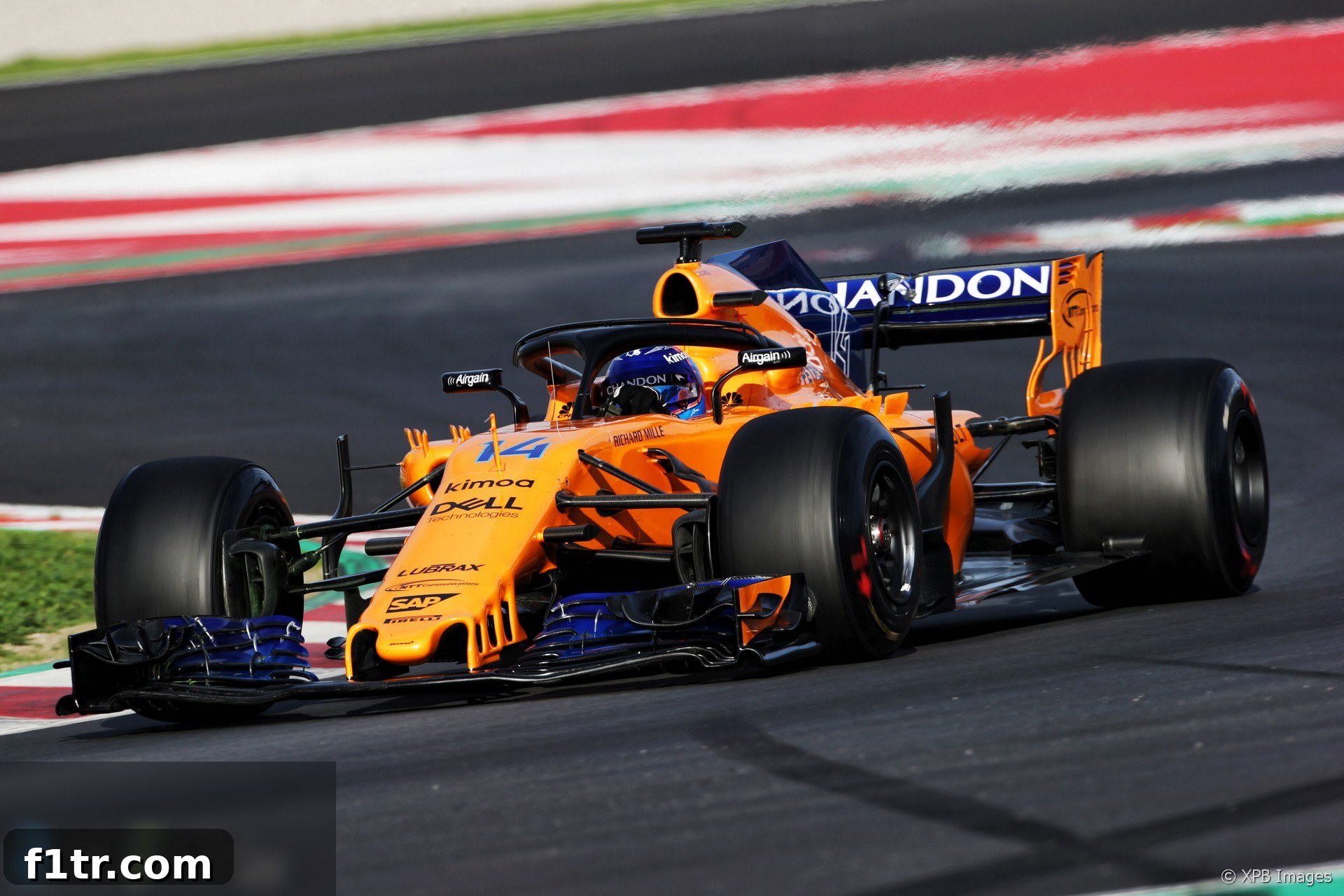
As the curtains closed on the 2018 Formula 1 pre-season testing, the paddock buzzed with a mix of anticipation and cautious optimism. The eight arduous days at Circuit de Barcelona-Catalunya offered the first real glimpse into the competitive landscape of the upcoming season, providing vital data for teams and tantalizing hints for fans. Among the many storylines, one team particularly captured attention: McLaren. With just a quarter of an hour remaining in the final testing session, two-time world champion Fernando Alonso delivered a lap time that not only turned heads but also earned McLaren the notable distinction of being the most-improved team in terms of raw lap time compared to their performance a year prior.
The Renault-powered MCL33, a stark departure from its Honda-engined predecessor, demonstrated a remarkable leap in pace. Alonso’s blistering lap was an astounding 3.5 seconds faster than what its 2017 counterpart managed during testing and a significant 3.2 seconds quicker than its best effort at the Spanish Grand Prix weekend in the previous season. This substantial improvement ignited hopes within the Woking-based outfit and among its loyal fanbase, suggesting a potential return to competitiveness after several challenging years.
The ‘Glory Run’ Debate: Separating Fact from Optimism
The immediate question that arose following McLaren’s impressive showing was whether this was a genuine reflection of their newfound pace or merely a “glory run” – a meticulously planned, low-fuel, soft-tyre lap designed to boost morale and generate positive headlines. Formula 1 pre-season testing is notoriously difficult to interpret, as teams pursue diverse objectives, from long-run reliability simulations to aerodynamic evaluations, often without revealing their true performance potential. Indeed, McLaren concluded the eight days of running having completed fewer laps than any other team, which naturally fueled skepticism about their outright pace. However, it’s worth noting that even in this metric, they were in a considerably better position than they were 12 months ago, having covered over 600km more distance. This increase in mileage, despite being the lowest overall, indicated an improvement in fundamental reliability compared to their immediate past struggles.
However, for McLaren to genuinely emerge as the second-fastest team on the grid based on these headline times would be a huge surprise to many seasoned observers. The true competitive order is rarely revealed in testing. A prime example of this cautious approach is Mercedes, the reigning champions, whose position in seventh on the overall times table, a full 1.2 seconds off Ferrari’s fastest lap, eloquently demonstrates how misleading headline times can be. Top teams often ‘sandbag,’ deliberately holding back their true pace, running heavier fuel loads, or using harder tyre compounds to avoid showing their full hand to rivals. This strategic discretion makes outright lap times a deceptive measure of genuine performance.
Analyzing the Fastest Lap Times from 2018 Pre-Season Testing
Despite the inherent caveats, the fastest lap times provide a snapshot of outright speed, offering a glimpse into the potential pecking order. The final leaderboard from Barcelona testing presented an intriguing picture:
| Position | Team | Model | Time | Gap | Tyre |
|---|---|---|---|---|---|
| 1 | Ferrari | SF71H | 1’17.182 | Hyper-soft | |
| 2 | McLaren | MCL33 | 1’17.784 | 0.602 | Hyper-soft |
| 3 | Red Bull | RB14 | 1’18.047 | 0.865 | Hyper-soft |
| 4 | Renault | RS18 | 1’18.092 | 0.910 | Hyper-soft |
| 5 | Haas | VF-18 | 1’18.360 | 1.178 | Super-soft |
| 6 | Toro Rosso | STR13 | 1’18.363 | 1.181 | Hyper-soft |
| 7 | Mercedes | W09 | 1’18.400 | 1.218 | Ultra-soft |
| 8 | Force India | VJM11 | 1’18.967 | 1.785 | Hyper-soft |
| 9 | Sauber | C37 | 1’19.118 | 1.936 | Hyper-soft |
| 10 | Williams | FW41 | 1’19.189 | 2.007 | Soft |
Ferrari’s SF71H topped the charts, showcasing impressive speed on the hypersoft compound and signaling their intent to challenge for the championship. Red Bull Racing also appeared competitive, closely trailing McLaren, while the factory Renault team demonstrated strong potential. The midfield battle promised to be exceptionally tight, with Haas, Toro Rosso, and Force India all showing flashes of speed. Mercedes, despite their low ranking, remained the benchmark, with their true performance capabilities widely expected to be unleashed only during the Grand Prix weekends.
How Much Quicker are the 2018 Cars Than Last Year’s?
The 2018 regulations, coupled with advancements in aerodynamic design and engine development, generally led to faster cars across the board. While a detailed visual comparison chart for “versus-2017” would illustrate the exact year-on-year lap time improvements for each team, the underlying data confirms a trend of significant gains. The cars felt quicker, handled better, and pushed the boundaries of track performance. Last year, Renault was identified as the most improved team year-on-year in testing, a statistic that proved to be an excellent indicator of their form throughout the subsequent season. Interestingly, despite appearing behind their two customer teams (McLaren and Red Bull) in terms of outright fastest lap this year, the factory Renault team has gained almost as much performance as McLaren relative to their 2017 benchmarks. This underscores the potency of the Renault power unit and the aerodynamic strides made by the Enstone-based squad.
Extending this analysis further, comparing the 2018 performance to the 2016 season highlights the relentless pace of development in Formula 1. Although a direct chart for “versus-2016” isn’t presented here, the progression over two years is even more pronounced. The cars have become considerably more aggressive and faster, thanks to wider tires, increased downforce, and refined power units, dramatically shrinking lap times at most circuits.
Mileage Watch: The Unsung Hero of Pre-Season Testing
While headline lap times grab attention, the true measure of a successful pre-season test often lies in the mileage accumulated. Reliability and the ability to gather extensive data through long runs are paramount for preparing a competitive car for the grueling season ahead. This is where McLaren faced a mixed bag of results.
In a significant turnaround, the Toro Rosso-Honda partnership demonstrated remarkable progress in engine reliability, covering almost 1,700km more this year than the ill-fated McLaren-Honda did in 2017. This achievement by Toro Rosso highlighted the strides Honda had made, making it all the more frustrating for McLaren that their newly Renault-powered car didn’t manage to cover a comparable distance. McLaren’s comparatively lower mileage figures for 2018 testing remained a point of concern, hinting at potential underlying reliability issues or prolonged setup work during their sessions.
However, there was a silver lining for McLaren: they were no longer the sole users of their engine. Unlike the exclusive and often problematic partnership with Honda, two other teams – Red Bull Racing and the factory Renault team – were also utilizing Renault’s power units. This shared engine platform instilled greater confidence in the reliability and overall performance of the Renault engine, as multiple teams putting plenty of laps on the motors provided a broader dataset and accelerated problem-solving for any issues that arose. This collaborative development and testing environment significantly reduced the burden on McLaren to single-handedly iron out engine-related kinks, a stark contrast to their isolated struggles with Honda.
Go ad-free for just £1 per month>> Find out more and sign up
2018 Pre-Season Testing Mileage
Below is a summary of the distances covered by each team during the 2018 pre-season testing, providing crucial insights into reliability and data acquisition efforts:
| Team | Distance |
|---|---|
| Mercedes | 4794.7km |
| Ferrari | 4315.2km |
| Toro Rosso | 3826.4km |
| Williams | 3803.1km |
| Sauber | 3658.8km |
| Red Bull | 3644.9km |
| Renault | 3468km |
| Force India | 3309.7km |
| Haas | 3225.9km |
| McLaren | 2779km |
2017 Pre-Season Testing Mileage Comparison
For context, here’s the total mileage from the previous year’s pre-season testing, highlighting shifts in reliability and testing efficiency:
| Team | Distance |
|---|---|
| Mercedes | 5101.9km |
| Ferrari | 4445.5km |
| Williams | 3724km |
| Sauber | 3663.5km |
| Force India | 3654.2km |
| Red Bull | 3184km |
| Haas | 3170.1km |
| Renault | 2774.4km |
| Toro Rosso | 2718.5km |
| McLaren | 2127.3km |
Comparing the 2018 and 2017 mileage figures reveals interesting trends. Mercedes and Ferrari once again led the pack, demonstrating their exceptional reliability and methodical testing programs. Toro Rosso’s monumental leap in mileage from 2017 to 2018 underscored the significant progress made by Honda. McLaren’s improved mileage compared to their own 2017 struggles was positive, yet their overall position at the bottom of the 2018 list indicated that there was still work to be done. Teams like Williams and Sauber showed consistent mileage, while Red Bull and Renault also put in solid distances.
Conclusion: A Glimpse into the 2018 F1 Season
The 2018 F1 pre-season testing provided a captivating blend of exciting lap times and cautious reality checks. McLaren’s performance, spearheaded by Fernando Alonso’s impressive lap, undoubtedly injected much-needed optimism into the team and its supporters, suggesting that the switch to Renault power had brought a significant performance boost. However, the relatively low mileage accumulated by the MCL33 served as a reminder that consistency and reliability are as crucial as outright speed.
Ferrari’s strong showing indicated they were ready to challenge for the top, while Mercedes’ typical strategy of not revealing their true hand left rivals guessing. The midfield promised intense competition, with several teams showing the potential to score regular points. As the teams packed up their gear from Barcelona, the overall sentiment was one of excitement for a potentially thrilling 2018 F1 season, where the true pecking order would only be definitively established when the lights went out for the first Grand Prix.
Related Articles on the 2018 F1 Season and Beyond
Here are some further insights and discussions related to the 2018 Formula 1 season and its lasting impact:
- F1 feared “death knell” for Drive to Survive after Ferrari and Mercedes snub
- McLaren staff told us we were “totally crazy” to take Honda engines in 2018 – Tost
- ‘It doesn’t matter if we start last’: How Red Bull’s junior team aided Honda’s leap forward
- Honda’s jet division helped F1 engineers solve power unit problem
- McLaren Racing losses rise after Honda split
Browse all 2018 F1 season articles