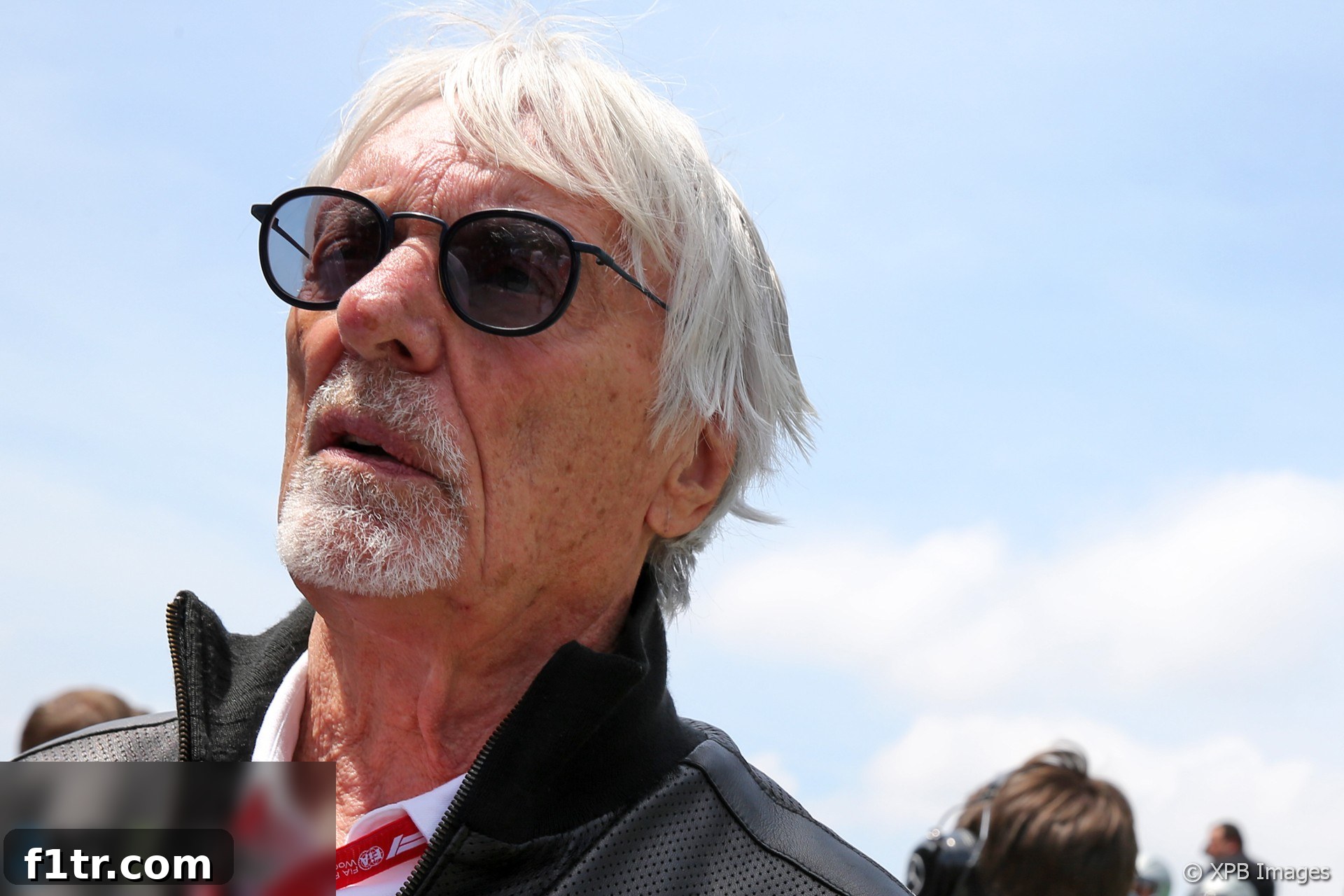
In an unexpected turn of events that sent ripples across the global motorsport community, Bernie Ecclestone, the venerable former supremo of Formula 1, was arrested in Brazil in May 2022. The 91-year-old Briton found himself in legal trouble after an unregistered firearm was discovered in his luggage as he prepared to board a private flight. The incident, first reported by Reuters, quickly became a focal point for media outlets worldwide, drawing attention once again to the larger-than-life figure who shaped modern Formula 1.
Ecclestone was attempting to depart Brazil on a private jet bound for Switzerland, where he maintains a residence in Gstaad. During a routine pre-flight X-ray scan at Viracopos International Airport in Campinas, located a short distance from São Paulo, authorities made the discovery. The item in question was identified as an LW Seecamp .32 gun, a type of compact automatic pistol measuring approximately 14 centimeters. This discovery immediately led to his arrest, as carrying an unregistered firearm is a serious offense under Brazilian law.
A Startling Incident in Brazil: Bernie Ecclestone’s Arrest
The news of Bernie Ecclestone’s arrest on firearm charges in Brazil was a significant development, especially given his advanced age and his iconic status within international sports. The incident occurred at Viracopos International Airport (VCP) in Campinas, São Paulo, a key logistics hub in Brazil. Authorities quickly moved to apprehend Ecclestone after the illicit weapon was detected by security personnel. Despite the gravity of the situation, the legal process unfolded with relative speed. Following his arrest, Ecclestone paid bail, an amount typically set to ensure a defendant’s appearance in court and prevent flight risk, and was subsequently released, allowing him to continue his journey to Switzerland. This swift resolution underscored the procedural aspects of Brazilian law concerning such offenses, often involving bail for non-violent crimes by individuals who are not considered immediate threats.
Advert | Become a Supporter & go ad-free
The Specifics: An Unregistered LW Seecamp .32 Pistol
The firearm found in Mr. Ecclestone’s luggage was an LW Seecamp .32, a particular model known for its compact size and design as a concealed carry weapon. Measuring a mere 14 centimeters (approximately 5.5 inches), its small stature made it easy to overlook, yet its presence without proper registration constituted a clear violation of Brazilian law. Brazil has stringent regulations regarding firearm ownership and transportation, requiring rigorous background checks, extensive permits, and strict adherence to usage guidelines. The discovery during a mandatory X-ray scan highlighted the effectiveness of airport security protocols, regardless of a traveler’s high profile. The fact that the gun was unregistered, rather than simply improperly declared, formed the core of the legal issue.
Bernie Ecclestone: A Titan’s Enduring Presence in Formula 1
To understand the full scope of this incident, it’s essential to contextualize Bernie Ecclestone’s colossal influence. Born in 1930, Ecclestone spent decades transforming Formula 1 from a niche motorsport into a multi-billion-dollar global phenomenon. Often referred to as “F1 Supremo” or “Mr. E,” he meticulously built the sport’s commercial empire, negotiating television rights, sponsorship deals, and race hosting agreements that made F1 one of the most-watched annual sporting series worldwide. His tenure was marked by shrewd business acumen, relentless drive, and a reputation for being a tough negotiator. He was instrumental in professionalizing F1, moving it beyond a gentleman’s club into a sophisticated corporate entity, forever changing the landscape of motorsport.
However, Ecclestone’s reign was not without its controversies. Throughout his career, he faced numerous legal challenges and criticisms regarding his business practices and authoritarian style. Despite these, his vision and unwavering dedication elevated Formula 1 to unprecedented heights of popularity and profitability. His departure from the helm came at the end of 2016 when Liberty Media completed its acquisition of Formula 1. Post-sale, he was appointed Chairman Emeritus, a largely honorary role that concluded at the beginning of 2020. Even after officially stepping down, Ecclestone has remained a vocal and often opinionated commentator on F1 affairs, offering insights and critiques that continue to capture media attention and demonstrate his enduring passion for the sport he so dominantly shaped.
Ecclestone’s Deep Ties to Brazil and the FIA
Bernie Ecclestone’s connection to Brazil is a significant aspect that adds layers of context to his arrest. He is married to Fabiana Ecclestone, a Brazilian national who herself holds a prominent position within international motorsport. In a testament to her growing influence and commitment to the sport, Fabiana Ecclestone was appointed the FIA’s (Fédération Internationale de l’Automobile) regional vice-president for South America in 2021. This role places her at the heart of motorsport governance in the region, working to promote and develop racing across various disciplines. Her position not only highlights the Ecclestone family’s continued deep engagement with global motorsport but also means Bernie frequently visits Brazil, making the location of his arrest particularly notable given his wife’s official capacity there.
During his stay in Brazil prior to the incident, Ecclestone demonstrated his continued interest in local motorsport by attending a stock car event at the iconic Interlagos circuit in São Paulo. Interlagos is not just a venue for domestic racing; it’s also the long-standing host of the Formula 1 Brazilian Grand Prix, a circuit deeply interwoven with F1 history and fan passion. At the stock car event, Ecclestone was photographed alongside Felipe Massa, a renowned former Ferrari F1 driver and ex-FIA karting president. Massa, a beloved figure in Brazilian motorsport, enjoyed a distinguished F1 career that included 11 Grand Prix victories and a runner-up finish in the 2008 World Championship. His presence with Ecclestone underscored the ongoing connections between the former F1 chief and key figures in the sport, both internationally and within Brazil. These strong personal and professional ties illustrate why Brazil remains a regular destination for Ecclestone, despite the recent legal entanglement.
Understanding Brazil’s Strict Firearms Regulations
Brazil operates under some of the strictest gun control laws in the world, a direct response to persistent issues with crime and violence. The country’s Statute of Disarmament (Lei nº 10.826/2003) is the primary legislation governing firearms, ammunition, and explosives. This law mandates rigorous requirements for firearm ownership, including a detailed psychological evaluation, technical capacity test, criminal background check, proof of a legitimate need for a weapon (such as self-defense or professional security), and regular renewals. Furthermore, the transportation of firearms requires specific authorization and must adhere to strict protocols, typically involving the weapon being unloaded and securely stored. Carrying a firearm openly or concealed without proper registration and a valid carry permit (Porte de Arma) is a serious offense, often punishable by imprisonment, fines, and immediate confiscation of the weapon.
For a non-resident, or even a resident without the necessary permits, possessing an unregistered firearm, as was the case with the LW Seecamp .32 found in Ecclestone’s luggage, constitutes a criminal act. The fact that Ecclestone was able to post bail and depart the country suggests that his offense was likely processed under Article 14 of the Statute of Disarmament (Illegal Carrying of Firearm), which allows for bail in many instances, particularly for first-time offenders or those with no prior criminal record in Brazil. While the incident led to his temporary arrest, the legal system generally distinguishes between various degrees of firearm offenses, and for someone of Ecclestone’s profile, a quick resolution via bail is not uncommon, pending further investigation or potential legal proceedings in absentia if required.
The Broader Context and Media Reaction
An incident involving a figure as globally recognized as Bernie Ecclestone inevitably generates significant media interest. The news of his arrest quickly spread across international news wires, highlighting the unique confluence of sport, celebrity, and legal drama. For many, it represented another chapter in Ecclestone’s long history of brushes with controversy and the law, which have ranged from allegations of bribery in Germany to various other legal disputes throughout his career. This incident, while perhaps less severe than some past challenges, reinforced his public image as an unpredictable and often enigmatic personality who lives life on his own terms.
The media narrative often focused on the irony of an individual who once commanded such immense power in a global sport now facing a relatively common, albeit serious, legal hurdle. It served as a reminder that even the most influential figures are subject to national laws and airport security protocols. The swiftness of his release on bail also became a talking point, with some questioning whether his status influenced the process, although such procedures are generally standard for similar offenses in Brazil. The coverage served to momentarily shift the focus from Formula 1’s on-track action to the personal life of one of its most pivotal historical figures.
Beyond the Headlines: Ecclestone’s Enduring Legacy
While the firearm incident provided a brief, dramatic interlude, it is unlikely to diminish Bernie Ecclestone’s profound and lasting legacy in the world of Formula 1. His career, spanning several decades, transformed a gentleman’s amateur sport into a global commercial behemoth. He single-handedly negotiated lucrative television deals, secured significant sponsorship, and expanded F1’s presence to new markets worldwide, cementing its status as a premier global sporting spectacle. His vision and often ruthless business tactics laid the foundation for the sport’s modern commercial success, attracting billions of fans and generating immense revenue. Even today, long after his official retirement from the sport’s top executive role, his opinions and pronouncements on F1 matters continue to carry weight and spark debate among fans, pundits, and current team principals alike.
This incident, therefore, should be viewed within the larger tapestry of a life lived intensely and often controversially. It is another anecdote in the storied career of a man who has consistently defied convention and navigated complex situations. His ability to move on quickly, in this instance, to pay bail and continue his travel, epitomizes the pragmatic and resilient nature that has defined his public persona for decades. While such events undoubtedly draw attention, they rarely overshadow the monumental achievements and the indelible mark he has left on motorsport. Bernie Ecclestone remains, for better or worse, a fascinating and enduring figure, whose presence continues to resonate far beyond the immediate headlines.
Don’t miss anything new from RaceFans
Follow RaceFans on social media:
- Join RaceFans on Facebook
- Follow RaceFans on Twitter
- Get daily email updates from RaceFans
Advert | Become a RaceFans supporter andgo ad-free
2022 F1 season
- Mercedes told me “you’re wrong” about 2022 car’s problems – Hamilton
- FIA confirms all 10 F1 teams complied with 2022 cost cap
- Steiner “not ashamed” of panning “slow” Schumacher in Drive to Survive
- Albon believes year out of F1 improved him as a driver
- Hamilton sees diversity gains in F1 years on from his ‘traumatising’ experience of racism
Browse all 2022 F1 season articles