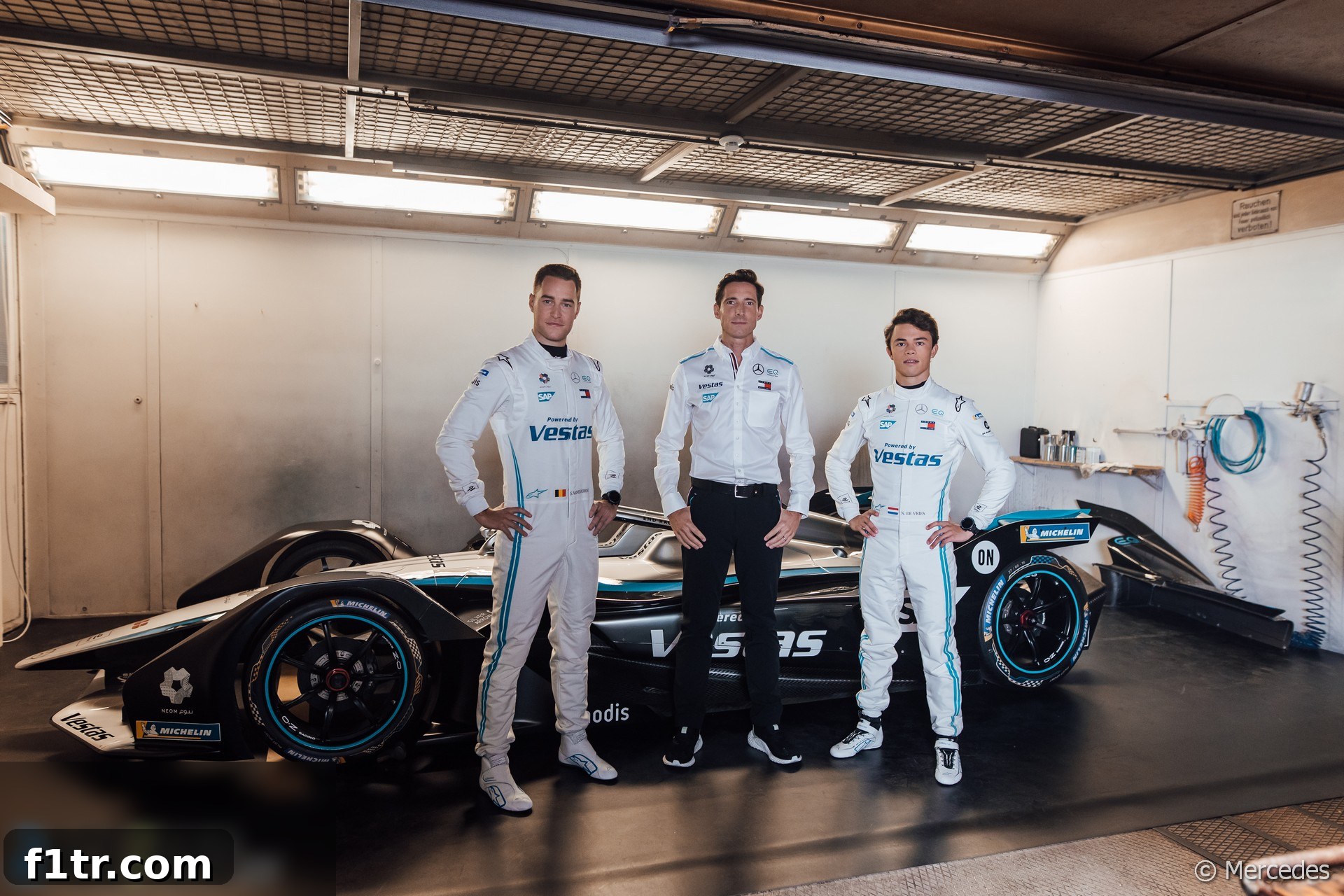
The Mercedes-EQ Formula E team has officially confirmed its formidable driver lineup for the upcoming season, retaining the skilled services of Stoffel Vandoorne and Nyck de Vries. This decision underscores the team’s commitment to continuity and stability as it prepares for its second season in the fiercely competitive ABB FIA Formula E World Championship. Both drivers played pivotal roles in Mercedes’ inaugural campaign, demonstrating their potential and contributing significantly to the team’s promising start in the all-electric racing series.
The re-signing of Vandoorne and de Vries signals Mercedes-EQ’s clear intent to build upon its foundational success. Their shared experience, combined with a deep understanding of the team’s unique powertrain and operational philosophies, provides a strong platform for challenging for championship honours. As Formula E continues to evolve with increasingly innovative technology and a global fan base, a consistent driver pairing is often a critical ingredient for sustained competitive advantage, allowing for incremental improvements and robust data gathering throughout the season.
Stoffel Vandoorne’s Dual Role: Navigating the Complexities of F1 and Formula E Commitments
While his Formula E future is now secure, Stoffel Vandoorne faces a period of uncertainty regarding his additional responsibilities as Mercedes’ Formula 1 reserve driver. This dual role, which he inherited earlier this year, allowed him to maintain a crucial link with the pinnacle of motorsport following his departure from McLaren’s Formula 1 team at the end of the 2018 season. His position as a reserve driver for the dominant F1 team provided a unique opportunity to stay sharp and contribute behind the scenes, offering simulator feedback and being on standby for potential race appearances.
A Missed Opportunity and the Reality of Reserve Duties
The complexities of his reserve duties were starkly highlighted earlier this month at the Eifel Grand Prix. When Lance Stroll fell ill, necessitating a replacement for Racing Point (a Mercedes customer team), Vandoorne was an obvious candidate due to his affiliation. However, the team ultimately opted for Nico Hulkenberg, citing his more recent experience with their specific car and his demonstrated ability to jump straight into action with minimal preparation. This incident underscored the practical challenges and the often-unpredictable nature of a reserve driver’s role, where immediate readiness and intimate familiarity with a specific chassis can outweigh broader affiliation.
When questioned about the likelihood of retaining his F1 reserve driver status for the upcoming year, Vandoorne’s response was candid, reflecting the fluid state of driver markets across motorsport. “I don’t know yet at the moment. I can’t tell you because I don’t know myself,” he admitted. His comments suggest that decisions at the highest levels of Formula 1 could significantly influence his prospects. “I guess things will depend on what happens in the Formula 1 driver market. It looks like there are some uncertainties, but we’ll wait and see.” This hints at the broader contractual discussions and potential movements that often characterise the off-season in F1, where a single driver change can trigger a domino effect throughout the grid.
Commitment to Simulator Work and Future Readiness
Despite the ambiguity surrounding his on-track F1 reserve role, Vandoorne affirmed his continued involvement with the Formula 1 team through simulator work. “In any case, I’ll still be working with the Formula 1 team on the simulator, and then we will see about the reserve drive role but I am here, I am ready.” Simulator duties are incredibly vital for modern F1 teams, providing crucial data for car development, track preparation, and strategy validation. This continuity ensures that Vandoorne remains an integral part of Mercedes’ technical ecosystem, even if his immediate trackside presence for F1 becomes less frequent. His readiness and experience make him a valuable asset, irrespective of the specific title he holds.
George Russell: A Potential Heir to the Mercedes F1 Reserve Throne?
The speculation around Vandoorne’s F1 reserve role has been further fuelled by the situation surrounding Mercedes junior driver George Russell. Russell, who has consistently impressed during his tenure with Williams, is widely regarded as one of Formula 1’s brightest young talents. Should he unexpectedly lose his seat at Williams for the coming season – a scenario that seemed improbable given his performances but not entirely out of the question in the cut-throat world of F1 driver contracts – Mercedes would likely seek to retain his talent within their fold, potentially placing him into a reserve role.
Toto Wolff’s Vision for Russell’s Future
Mercedes team principal Toto Wolff has consistently expressed his admiration for Russell’s capabilities, previously stating his commitment to ensuring Russell remains on the Formula 1 grid. However, speaking recently in Portugal, Wolff indicated that a comprehensive test role could be a highly appealing option for the young Briton. “If George were to slip through the system we would happily take him in our squad,” Wolff affirmed, clearly indicating Mercedes’ desire to keep Russell within their sphere of influence.
Wolff elaborated on the significant benefits such a role could offer both Russell and the team. “We would have a sensational reserve. I’d put him through a mega testing programme and prepare him in the best way for a 2022 blast.” This statement is particularly revealing. A “sensational reserve” like Russell would not merely be a standby driver; he would be actively involved in an intensive development programme, honing his skills and contributing directly to Mercedes’ future car development. The mention of a “2022 blast” strongly suggests that Mercedes views a reserve role for Russell as a strategic stepping stone, positioning him perfectly for a potential full-time F1 race seat with the works team or a customer team when new regulations are introduced in 2022, signifying a fresh start for all competitors.
A Return to Heritage: Mercedes-EQ Formula E Embraces Silver Arrow Livery
Beyond the driver market dynamics, Mercedes-EQ also made an aesthetic announcement, unveiling the striking new look for its 2021 Formula E car. For the upcoming season, the team will revert to its classic, iconic silver colours, a livery synonymous with the rich heritage of Mercedes-Benz in motorsport, affectionately known as the “Silver Arrows.” This marks a departure from the black livery adopted for the latter part of the 2019-20 season finale in Berlin, which mirrored the black-dominated design of the Mercedes-AMG Petronas Formula 1 team.
The decision to return to silver for Formula E is a significant one. While the black livery in F1 was a powerful statement in support of diversity and anti-racism initiatives, the return to silver for the Formula E team could signify a strategic move to differentiate the brand’s electric racing identity while simultaneously reinforcing its deep roots in motorsport excellence. The silver arrows have graced countless victories across different racing disciplines for decades, and this visual connection helps to embed the cutting-edge electric technology of Formula E within a storied legacy of engineering prowess and competitive success.
Looking Ahead: High Stakes for Mercedes in Formula E and F1
With its driver lineup confirmed for Formula E and the iconic silver livery set to return, the Mercedes-EQ team is poised for an exciting and challenging season ahead. The continuity with Stoffel Vandoorne and Nyck de Vries, coupled with the brand’s deep commitment to electric mobility, positions them as strong contenders for the championship. Simultaneously, the broader Mercedes motorsport empire continues to manage complex driver development pathways, with experienced talents like Vandoorne balancing multiple roles and rising stars like George Russell being meticulously prepared for future opportunities.
The intricate dance between Formula E and Formula 1 driver markets, logistical challenges, and strategic brand positioning highlights Mercedes’ comprehensive approach to global motorsport. Each decision, from driver contracts to livery choices, is carefully weighed to maximize both sporting success and brand impact. The forthcoming seasons promise thrilling competition on track and compelling narratives off it, as Mercedes continues to cement its legacy across different racing disciplines.
Related Motorsport Insights
- The Evolution of Driver Development Programs in F1 and Formula E
- Understanding the Strategic Importance of Reserve Drivers in Modern Motorsport
- Electric Racing’s Rise: How Formula E is Reshaping Global Motorsport
- Mercedes-AMG Petronas F1 Team’s Dominance and Future Challenges
- Key Moments and Driver Transfers from Recent Formula 1 Seasons
Explore more articles on Formula 1 and Formula E Driver Markets