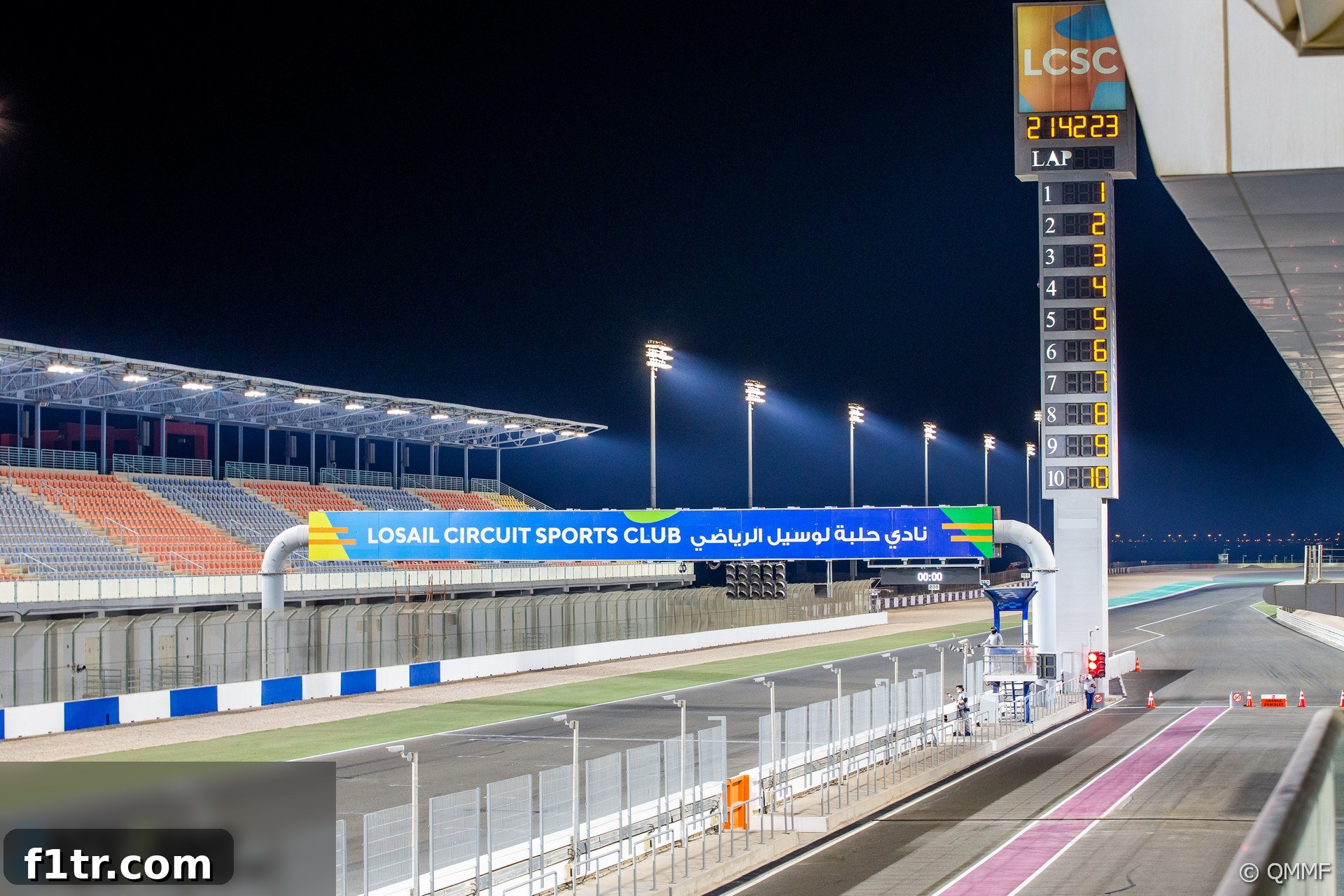
The Formula 1 circus makes its highly anticipated debut at the Losail International Circuit in Qatar, introducing a unique set of challenges that will test teams and drivers alike. While the circuit itself may be new to Formula 1 machinery, the dramatic temperature fluctuations between sessions will be a familiar, albeit intense, adversary, reminiscent of F1’s previous night races in other desert locales.
The Grand Debut: Formula 1 Arrives at Losail International Circuit
Formula 1’s inaugural visit to Qatar marks a significant milestone, bringing the pinnacle of motorsport to the Losail International Circuit. This state-of-the-art facility, renowned for hosting MotoGP events, presents a fresh canvas for F1 teams to master. As the sport steps onto this new stage, the intricate interplay of climate, track characteristics, and race timing will define the weekend’s strategic battles. The desert environment, though offering consistently dry weather, introduces complexities that demand meticulous preparation and agile adaptation from every team on the grid.
Navigating the Desert Night: Temperature Swings and Their Impact
A Familiar Challenge in a New Setting
Qatar, despite its scorching summer highs, will experience more moderate temperatures in November, making conditions somewhat akin to those MotoGP riders encounter during their traditional season-opening race in March. Maximum air temperatures this Grand Prix weekend are projected to hover around 29°C, possibly a touch lower on Friday and slightly higher on Sunday. However, the most profound influence on performance will stem from the significant temperature shifts between the daytime and nighttime sessions.
These fluctuations are a hallmark of desert racing, where circuits like Bahrain and Abu Dhabi have long taught teams the art of adapting to varied conditions. At Losail, the contrast will be particularly stark, as two out of the three practice sessions occur during the day, while qualifying and the main race unfold under the floodlights. Such rapid environmental changes fundamentally alter grip levels, tyre behaviour, and aerodynamic performance, necessitating a flexible approach to car setup and strategy. Drivers will need to recalibrate their feel for the track as temperatures plummet, demanding precision and adaptability throughout the weekend.
Coastal Proximity: Humidity, Dew, and Grip Dynamics
Unlike some circuits deep within the desert, Losail International Circuit’s proximity to the coast mitigates the most extreme overnight temperature drops. Yet, this coastal location introduces its own unique meteorological challenge: relatively high humidity. This humidity, combined with the cooling track surface after sunset, can lead to the formation of dew, a phenomenon well-documented in MotoGP history at Losail.
When dew forms, it creates a thin, almost imperceptible layer of moisture on the track, dramatically reducing grip and making the surface treacherous. MotoGP riders have experienced sudden and unexpected crashes as the track cools from dusk to nightfall, highlighting the potential for dramatic incidents. For Formula 1, this means that even without rain, the track can become acutely slippery, demanding heightened vigilance from drivers and a careful consideration of tyre pressures and car balance from engineers. The transition from day to night sessions isn’t just about temperature; it’s about managing the very nature of the track surface itself.
Session Strategy: Adapting to Varied Conditions
The Day-Night Divide: Practice vs. Race Realities
The schedule for the Qatar Grand Prix is strategically split to maximize viewership for the evening sessions. Second practice, qualifying, and the main race are all slated to commence approximately 15 minutes after sunset at Losail, ensuring they are run under the cooler, floodlit conditions. However, the first and third practice sessions will take place in the mid-afternoon sun, exposing the track to intense heat. This creates a critical divergence in conditions between practice and competitive sessions.
Teams will likely find that data gathered during FP1 and FP3, under scorching track temperatures that could exceed 45°C (as seen in early MotoGP races), will offer a poorer guide to the car’s true competitiveness and optimal setup for qualifying and the race. Much like in Bahrain and Abu Dhabi, where similar day-night transitions occur, the second practice session, held under conditions mirroring qualifying and the race, will become paramount for fine-tuning setups and understanding tyre performance. The challenge lies in accurately extrapolating data and making informed setup decisions that can perform across such a wide thermal spectrum, potentially leading to varied car performance throughout the weekend.
Learning from MotoGP: Track Temperature Extremes
The history of MotoGP at Losail offers invaluable insights for Formula 1 teams regarding the extreme variations in track temperatures. In its nascent years, MotoGP raced during the day, where track surface temperatures frequently soared past 45°C. The subsequent shift to night racing under powerful floodlights dramatically altered these conditions, with track temperatures often plummeting to below 23°C.
A similar, if not identical, drop is anticipated between F1’s daylight practice sessions and its nighttime competitive sessions. This significant temperature delta means tyres will behave entirely differently. Grip levels, tyre wear, and even the aerodynamic balance of the car can be profoundly affected. Teams will need to meticulously analyze how their car responds across this vast temperature range, with particular attention to how the track cools continuously during the three critical sessions after sunset: FP2, qualifying, and the race. Understanding this dynamic cooling process will be key to unlocking performance and managing tyre life effectively.
Tyre Management: Pirelli’s Hard Choices
The Pirelli Selection: Tackling Degradation and Graining
In anticipation of these challenging conditions and the potentially abrasive nature of the Losail circuit, Pirelli has supplied its hardest range of compounds for the Qatar Grand Prix. This selection – C1 (hard), C2 (medium), and C3 (soft) – reflects a strategic choice to combat what is often a high-degradation circuit for other motorsport series. The expectation is that the harder compounds will better withstand the stresses of the track layout and the intense temperatures experienced during the day sessions.
However, the dramatic drop in track temperatures during the evening sessions introduces another significant tyre management concern: graining. Graining occurs when the tyre surface cools down too much, causing the rubber to tear off in small chunks as it slides across the asphalt. This phenomenon severely reduces grip and can be more detrimental to performance than simple wear. Teams will face a delicate balancing act: managing degradation in the hotter daytime sessions and preventing graining as the track cools in the evening. This dual challenge will put immense pressure on engineers to find the optimal setup that preserves tyre integrity across varied thermal environments.
Finding the “Tyre Window”: A Tightrope Walk
Keeping tyres within their optimal operating window is a perennial challenge in Formula 1, and the Losail International Circuit will amplify this task. While air temperatures are not expected to fall below 21°C across any of the three race days, potentially offering some reprieve for teams trying to generate heat into their tyres, the fluctuating track temperatures present a more complex scenario. Finding the ‘sweet spot’ where tyres deliver maximum grip and minimal wear will be a tightrope walk.
If temperatures are too high, degradation becomes the primary concern. If they are too low, graining becomes rampant. The hardest compounds might mitigate degradation, but they are also more susceptible to graining if insufficient heat is maintained. Teams will be constantly monitoring tyre temperatures, adjusting driving styles, and modifying strategies to ensure their chosen compounds perform optimally throughout the various stages of the Grand Prix, particularly during the crucial nighttime segments.
Beyond Temperatures: Wind and Other Environmental Factors
The Shifting Sands: Wind Direction and Aerodynamics
While temperatures will dominate many discussions, another crucial environmental factor at Losail will be the wind. As is common in arid regions, the wind can be a significant force, and its direction is forecast to change across the weekend. On Friday, the wind is expected to blow from the northwest. However, it will shift direction, coming from the southeast on Saturday and Sunday. This change is far from trivial for Formula 1 cars.
Wind direction directly impacts aerodynamic balance, affecting stability in corners and efficiency on straights. A headwind on a straight can increase drag and reduce top speed, while a tailwind can make braking zones more challenging. In corners, a crosswind can destabilize the car, demanding greater precision from drivers and potentially forcing setup adjustments. Teams will need to account for these shifts in their aerodynamic packages and driver briefings, as even subtle changes in wind can have measurable effects on lap times and overtaking opportunities.
A Dry Affair: No Rain in Sight
As expected for such a dry country, there is virtually no chance of rain forecast across the Qatar Grand Prix weekend. This consistency in dry weather allows teams to focus entirely on the challenges presented by temperature, humidity, wind, and tyre management without the added variable of wet weather strategies. It guarantees a level playing field in terms of track conditions, placing the emphasis firmly on car performance, driver skill, and strategic acumen in the face of the desert’s unique climate.
The Race Weekend Unfolds: What to Watch For
The inaugural Formula 1 Qatar Grand Prix at the Losail International Circuit promises to be a captivating event, defined by its unique environmental challenges. From the dramatic day-to-night temperature swings and the potential for dew formation to the intricate demands of tyre management and the subtle influence of shifting winds, every aspect of the weekend will test the very limits of Formula 1 engineering and driver skill. Teams that can best adapt their setups, manage their tyres across wildly varying track temperatures, and extract consistent performance will undoubtedly gain a crucial advantage. Fans can anticipate a thrilling spectacle as the world’s best drivers and engineers grapple with the complexities of this new desert challenge.
For more real-time updates on the track conditions during each session, keep an eye on RaceFans Live and the RaceFans Twitter account.
2021 Qatar Grand Prix
- Pirelli’s investigation into Qatar tyre failures indicates kerbs caused punctures
- Horner rejects talk of title fight pressure after criticism over marshal comment
- “I don’t know how much slower I can go”: Inside Ricciardo’s unnecessary economy run
- ‘No regulator in the world will be popular’ with a title fight this intense – Masi
- Why drivers backed Hamilton’s call for clarity after meeting over Verstappen incident
Browse all 2021 Qatar Grand Prix articles