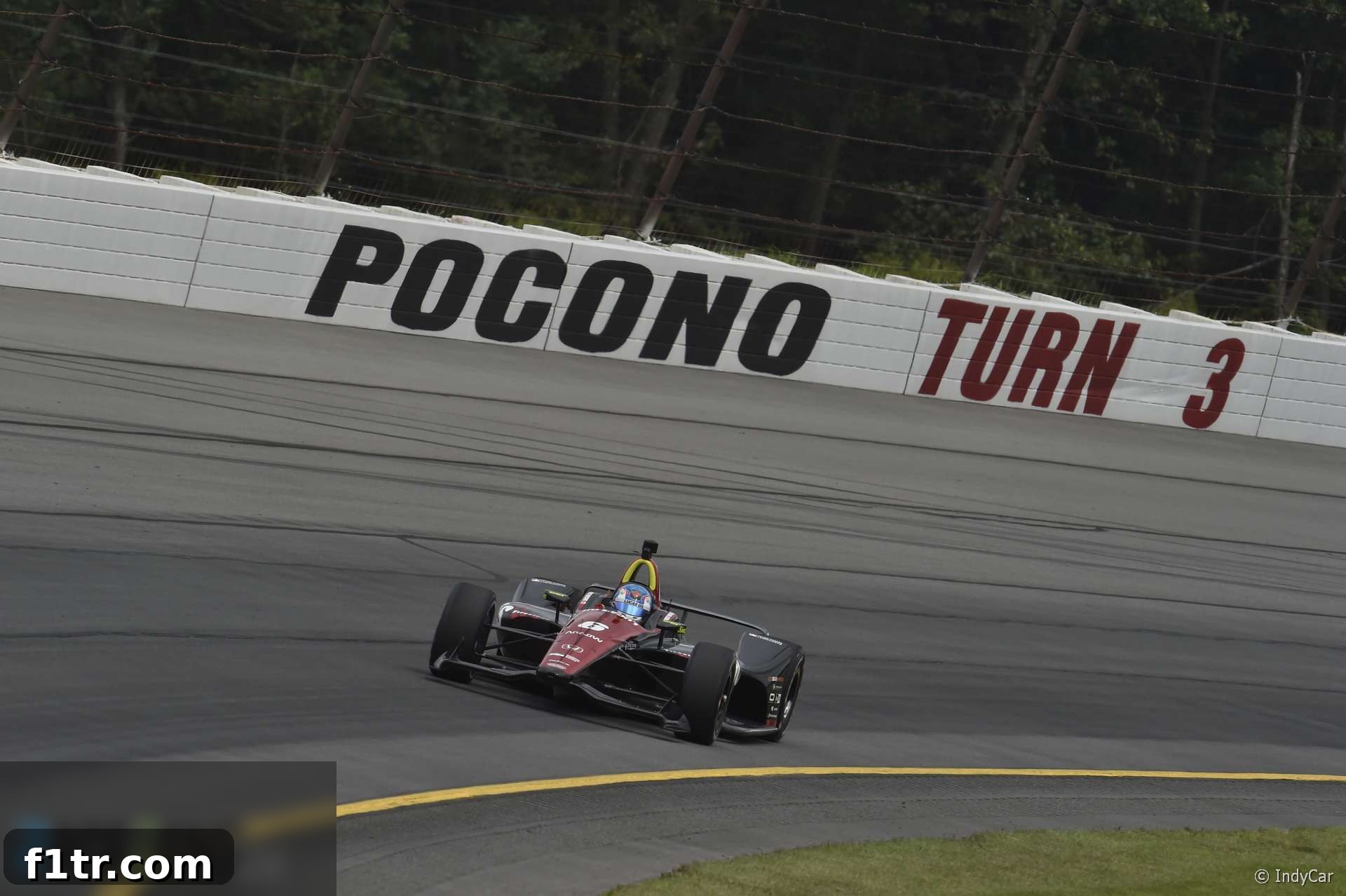
The motorsport world was profoundly shaken by the news confirming that IndyCar driver Robert Wickens sustained a spinal cord injury following a severe crash at the Pocono 500. The incident, which occurred last weekend, immediately cast a shadow over the high-octane racing event, drawing widespread concern from fans, fellow competitors, and the entire racing community. This report details the circumstances of the crash, Wickens’ current medical condition, the immediate aftermath, and the broader implications for both his career and motorsport safety.
Wickens, a highly promising 29-year-old rookie sensation, underwent emergency surgery on Monday, August 20th, to stabilize a thoracic spinal fracture directly linked to the spinal cord injury. This critical procedure, performed at Lehigh Valley Hospital – Cedar Crest, involved the successful placement of titanium rods and screws in his spine, reportedly without complication. While the immediate surgery was successful in stabilizing the fracture, the full extent and long-term implications of the damage to his spinal cord remain indeterminate at this time, leading to a cautious prognosis from medical professionals.
The harrowing incident unfolded on the seventh lap of the Pocono 500, a race known for its incredibly high speeds and challenging tri-oval layout. Wickens’ car made contact with Ryan Hunter-Reay, triggering a violent chain of events. At speeds exceeding 200 mph, Wickens’ vehicle was launched into the air, impacting the debris fence with immense force before being thrown back onto the circuit in a series of uncontrolled spins. The sheer violence of the impact highlighted the inherent dangers of open-wheel racing on superspeedways, where fractions of a second can separate triumph from tragedy.
Following the crash, medical teams were on the scene swiftly, extricating Wickens from his extensively damaged car. An official statement issued by IndyCar on Tuesday described the driver’s condition as “stable,” offering a sliver of relief amidst the gravity of his injuries. Beyond the critical spinal cord damage, Wickens also sustained multiple fractures, including broken legs and a broken right arm. He is expected to undergo further surgeries in the coming days and weeks to address these additional lower extremity and forearm fractures, marking the beginning of what is anticipated to be a long and challenging recovery journey.
Robert Wickens entered the IndyCar Series in 2018 with Schmidt Peterson Motorsports, quickly establishing himself as a formidable talent. His rookie season had been nothing short of spectacular, marked by a pole position in his debut race in St. Petersburg and a string of impressive performances that included several podium finishes and near-victories. Prior to IndyCar, Wickens had a distinguished career in various European racing series, notably in the DTM (Deutsche Tourenwagen Masters) where he was a consistent front-runner. His seamless transition to IndyCar, adapting rapidly to the demanding cars and diverse tracks, had many touting him as a future champion. The devastating injury at Pocono abruptly halted this meteoric rise, leaving the potential of his promising career hanging in the balance.
The Pocono Raceway, often dubbed the “Tricky Triangle,” is renowned for its unique three-turn configuration and its capacity for producing spectacular, high-speed racing. However, it has also been the site of several significant accidents over the years, underscoring the fine line between exhilarating competition and catastrophic risk. The incident involving Wickens has once again brought the critical issue of motorsport safety to the forefront. While IndyCar, like other top-tier racing series, has made immense strides in driver and spectator safety over the decades – introducing innovations such as the HANS device, SAFER barriers, improved chassis designs, and enhanced catch fencing – every major incident serves as a stark reminder that the quest for ultimate safety is an ongoing and evolving process.
The nature of spinal cord injuries presents unique challenges for recovery. The term “indeterminate” signifies that while the initial surgical intervention was successful in stabilizing the fracture, the precise extent of neurological damage and the potential for recovery of function cannot be fully assessed in the immediate aftermath. These injuries often require extensive, long-term rehabilitation, involving physical therapy, occupational therapy, and potentially the adaptation of assistive technologies. The road ahead for Wickens is undoubtedly arduous, demanding immense resilience, patience, and a dedicated medical support team. The global motorsport community has rallied around him, offering an outpouring of support, encouragement, and practical assistance to aid him through this difficult period.
While the focus remains squarely on Robert Wickens’ recovery, the IndyCar Series must continue. The championship is scheduled to resume this Saturday at the Gateway oval. For the drivers, teams, and fans, there will be an undeniable somberness and heightened awareness of the risks involved. Such incidents are a potent reminder of the courage and dedication exhibited by these athletes every time they strap into their machines. The motorsport family is a tight-knit one, and while the competition on track is fierce, off-track, there is an unparalleled sense of camaraderie and mutual support, especially in times of crisis. Wickens’ teammates, competitors, and fans around the globe will undoubtedly carry him in their thoughts as the season progresses, hoping for the best possible outcome for his recovery.
The entire racing community holds its breath, sending its collective strength and support to Robert Wickens as he embarks on this formidable journey of healing and rehabilitation. His fighting spirit, evident throughout his racing career, will undoubtedly serve him well in the challenges that lie ahead. The incident at Pocono is a powerful testament to the inherent risks of motorsport, but also to the unwavering spirit of those who participate and the tireless efforts to make the sport as safe as possible without compromising its thrilling essence.
Stay Connected with Motorsport Updates
Follow RaceFans on social media:
- Join RaceFans on Facebook
- Follow RaceFans on Twitter
- Discover RaceFans on Instagram
- Get daily email updates from RaceFans
Explore More IndyCar Insights
- McLaughlin Reports No Injury After Barber Barrier Crash
- Schumacher Compares IndyCar to Upgraded F2 Experience
- Grosjean Highlights IndyCar’s Cornering Speed Advantage Over F1
- FIA Boosts Superlicence Points for IndyCar Drivers From 2026
- Schumacher Confirmed for Full-Time IndyCar Season with RLL in 2026
- The Evolving Future of Aeroscreen and IndyCar Cockpit Safety
- Pato O’Ward Discusses Championship Ambitions and Series Demands
Browse all IndyCar articles