Kevin Magnussen’s Historic F1 Ban: Decoding the Penalty Point System and Its Impact
Formula 1 has witnessed an unprecedented moment as Haas driver Kevin Magnussen became the first competitor in the sport’s history to incur a race ban under the current penalty point system. His absence from the recent Azerbaijan Grand Prix in Baku, a direct consequence of accumulating 12 penalty points on his Super Licence, has sparked widespread discussion among fans, pundits, and fellow drivers. Magnussen’s teammate, Nico Hulkenberg, and his temporary replacement, Oliver Bearman, have both weighed in on the controversy, with strong opinions on the fairness of the penalties that led to this landmark ban.
The Unprecedented Ban: Magnussen Reaches the 12-Point Threshold
The penalty point system in Formula 1 was introduced a decade ago, designed to penalize drivers for repeated breaches of sporting regulations, particularly dangerous driving or incidents causing collisions. Under this system, drivers accumulate points for infractions, and reaching a total of 12 points within a 12-month period automatically triggers a one-race ban. Despite its existence for years, no driver had ever reached this critical threshold until Kevin Magnussen’s recent transgression at Monza.
Magnussen’s journey to 12 penalty points highlights a pattern of aggressive driving that has, at times, drawn the ire of stewards. His ban was sealed by his fifth penalty incurred across just 15 rounds of the championship. Alarmingly, four of these five penalties were directly attributed to contact with another driver, underscoring a consistent theme in his recent racing incidents. The final two points that tipped him over the edge were awarded following a collision with Pierre Gasly at the Italian Grand Prix in Monza. This particular incident, like several others before it, raised questions about the fine line between hard racing and avoidable contact, a debate central to the sport’s ethos.
The significance of Magnussen being the first driver to face such a ban cannot be overstated. It serves as a stark reminder of the FIA’s commitment to driver safety and fair play, demonstrating that the regulations, however rarely invoked to this extreme, carry real consequences. For many, it validates the system’s purpose, proving its capacity to enforce discipline when a pattern of rule infringements emerges. For others, it reignites the discussion about the subjective nature of stewarding decisions and whether certain racing incidents truly warrant such severe repercussions.
Oliver Bearman Steps Up: A Golden Opportunity for a Rising Star
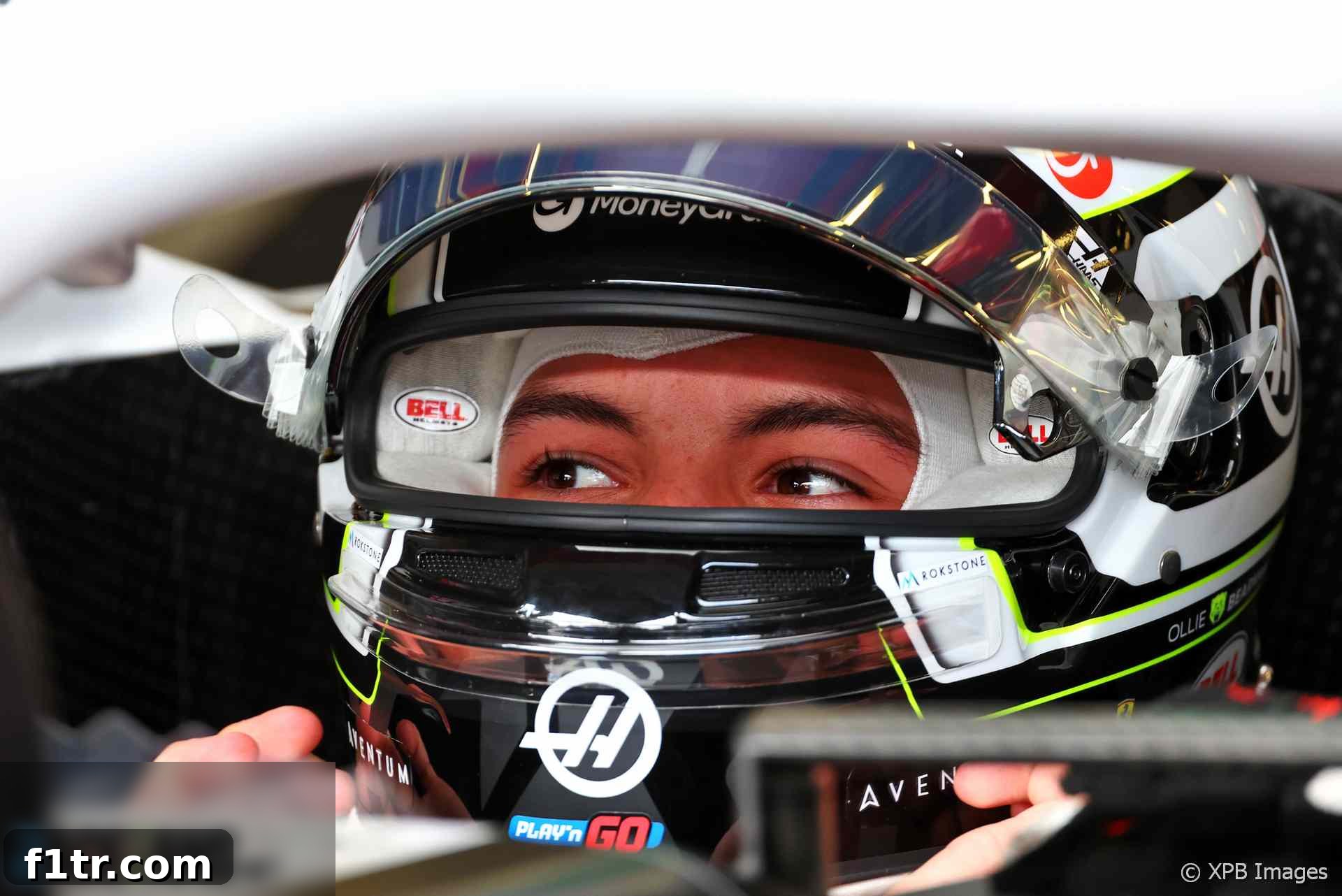
In Magnussen’s absence, the spotlight shifted to young British talent Oliver Bearman, who was called upon to fill the void for Haas at the Baku event. This wasn’t a sudden, unexpected call-up for Bearman; he revealed he had been on standby since Magnussen reached 10 penalty points at the Miami Grand Prix in May. From that moment, the risk of a ban for the Dane became a palpable possibility, making Bearman’s preparation all the more critical.
Speaking to Sky, Bearman expressed his feelings about the opportunity with a mix of excitement and measured reflection. “It’s a great opportunity,” he stated, acknowledging the foresight of the situation. “I knew it was coming at some stage, it had been on the cards, I knew it was a possibility.” Despite the circumstances, Bearman didn’t shy away from the challenge. “Despite the fact that I think it was quite a harsh penalty for Kevin in Monza, of course I was happy to get the chance. When you get a call to go in F1, you take it with both hands.”
For Bearman, this temporary F1 seat is more than just a substitute role; it’s a pivotal moment in his burgeoning career. Already a promising talent in Formula 2, with impressive performances and victories, this F1 outing provided invaluable experience and a chance to prove his mettle on the biggest stage. His respectful comments towards Magnussen – “But I wish Kevin the best and I’ll give him his car back in Singapore, nice and smooth” – also showcased a maturity beyond his years, understanding the human element behind the competitive opportunity. This debut further solidifies his credentials ahead of his confirmed full-time F1 seat with Haas in 2025, allowing him to gain crucial insights and build rapport with the team earlier than anticipated.
Nico Hulkenberg’s Defense: Questioning the Severity of Penalties
Adding another layer to the debate, Magnussen’s regular teammate, Nico Hulkenberg, openly questioned the justification behind the two penalty points Magnussen received for the Monza collision with Pierre Gasly. Hulkenberg, a seasoned veteran with a deep understanding of on-track dynamics, believes the incident was a typical “racing incident” and not deserving of the severity of the penalty, particularly given its cumulative effect.
“The penalty that he received wasn’t entirely justified,” Hulkenberg asserted. “I think it was racing, and then quite unfortunate to get a penalty of that magnitude with that consequence for it.” His comments reflect a common sentiment among drivers who often feel that some stewarding decisions are overly harsh, failing to account for the split-second decisions and competitive nature inherent in Formula 1 racing. Hulkenberg’s perspective highlights the ongoing tension between enforcing strict regulations for safety and allowing drivers the latitude to race hard and push the limits. The outcome of a penalty, in this case, a historic ban, amplifies the scrutiny on every call made by the race stewards.
This debate over what constitutes a “racing incident” versus a penalizable offense is as old as motorsport itself. Drivers often argue that contact is an unavoidable part of wheel-to-wheel racing, and excessive penalties can stifle aggressive, exciting competition. Hulkenberg’s defense of Magnussen underscores this viewpoint, suggesting that the stewards’ interpretation of the Monza incident might have been overly punitive, especially considering the severe implications for his teammate.
Haas F1 Team’s Future: No Early Change for Bearman, Focus on 2025
Amidst the discussions surrounding Magnussen’s ban and Bearman’s temporary role, the Haas F1 team moved quickly to address speculation about Bearman’s long-term immediate future with the team. There had been whispers that Haas might consider retaining Bearman for the remainder of the season, particularly given his strong potential and confirmed 2025 contract. However, Haas definitively denied any such plans, clarifying that Bearman’s appearance in Baku was strictly a one-off substitute arrangement.
This decision, while seemingly straightforward, reinforces the team’s commitment to their existing plans and driver lineup. Magnussen remains a valuable asset to the team, and his return to the cockpit for the Singapore Grand Prix is anticipated. The confirmation of Bearman’s full-time drive for 2025 provides stability and a clear path for his integration, without prematurely altering the current season’s driver dynamics. Haas’s stance ensures that Magnussen will return to his seat, with both drivers focusing on maximizing their performance for the remainder of the championship, even as the team strategically looks towards a promising future with Bearman.
Advert | Become a RaceFans supporter andgo ad-free
The Broader Implications of F1 Penalty Points and Driver Conduct
Kevin Magnussen’s historic ban sends a powerful message throughout the Formula 1 paddock. It highlights the serious implications of accumulating penalty points and reinforces the FIA’s regulatory framework designed to govern driver conduct and ensure safety. While the system aims for consistency, the subjective nature of stewarding decisions will always be a point of contention, leading to ongoing debates about fairness and the spirit of racing.
This incident will undoubtedly prompt drivers to reassess their approach to wheel-to-wheel battles, potentially influencing their risk assessment on track. The psychological burden of carrying penalty points, knowing that one wrong move could lead to a ban, adds another layer of pressure. For the FIA, it may lead to a review of the penalty point system itself, ensuring it strikes the right balance between maintaining discipline and allowing for the thrilling, aggressive racing that fans crave. The case of Magnussen serves as a precedent, reminding everyone that Formula 1, for all its speed and spectacle, operates under a stringent set of rules with tangible consequences.
Miss nothing from RaceFans
Get a daily email with all our latest stories – and nothing else. No marketing, no ads. Sign up here:
2024 Azerbaijan Grand Prix Related Articles
- Verstappen: “Important” for FIA to clarify legality of McLaren’s ‘mini DRS’ wing
- Hamilton explains suspension set-up change behind “miserable” Baku weekend
- Piastri needs “crazy” results to become title contender despite Baku win
- FIA taking new look at flexing bodywork amid intrigue over McLaren’s rear wing
- Norris knew Verstappen broke VSC rules in Baku because he did the same in Melbourne
Browse all 2024 Azerbaijan Grand Prix articles