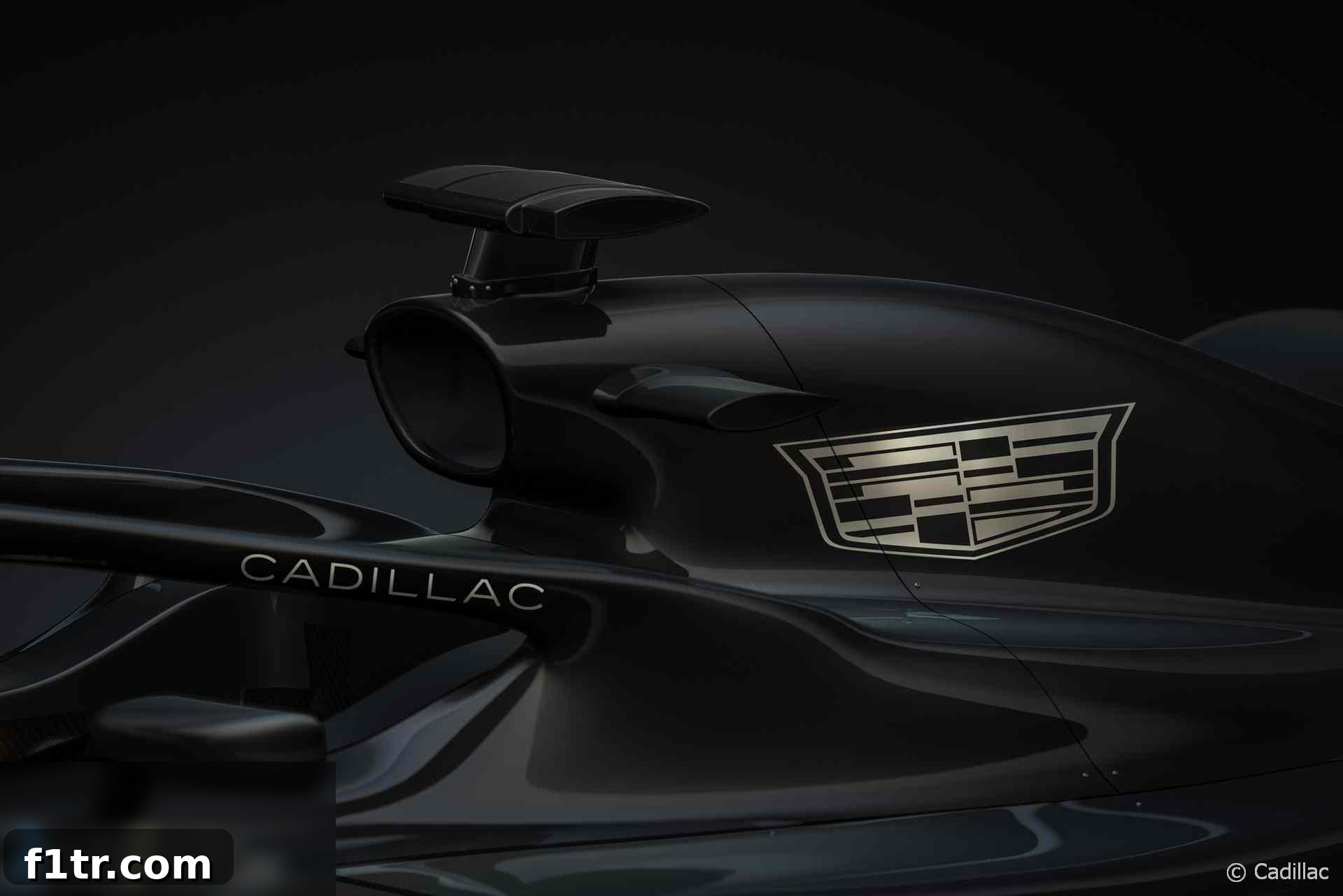
In a landmark announcement poised to send ripples across the global motorsport landscape, General Motors (GM), the venerable American automotive giant, has officially declared its intention to enter Formula 1 as a power unit manufacturer, starting from the 2028 season. This strategic move marks a significant deepening of GM’s commitment to the pinnacle of motor racing, promising to bring a formidable new challenger to the highly competitive grid.
The power units, which will bear the iconic Cadillac branding, are being developed in strict adherence to the radical new technical regulations for engines that Formula 1 is set to introduce in 2026. This forward-looking approach positions GM to compete at the cutting edge of hybrid technology and sustainable fuel innovation from its very first race as a supplier.
Crucially, GM underscored that its entry into F1 is inextricably linked to the successful establishment of the new team proposed by Andretti Global. While the Fédération Internationale de l’Automobile (FIA) gave its nod of approval to Andretti’s ambitious F1 team bid last month, the endeavor still awaits the critical agreement on commercial terms with Formula One Management (FOM). This conditional commitment highlights the symbiotic relationship envisioned between two of America’s most storied motorsport entities.
A Powerful Partnership: Andretti Cadillac and GM’s Vision
Mark Reuss, president of General Motors, articulated the profound excitement surrounding this new venture. “We are thrilled that our new Andretti Cadillac F1 entry will be powered by a GM power unit,” Reuss stated, emphasizing the strategic alignment. He further expressed confidence in GM’s capabilities, remarking, “With our deep engineering and racing expertise, we’re confident we’ll develop a successful power unit for the series, and position Andretti Cadillac as a true works team.” This declaration signifies GM’s ambition not just to supply engines, but to fully integrate its technological prowess with Andretti’s racing acumen, fostering a synergistic relationship that aims for top-tier performance.
The vision of a “true works team” is paramount. In Formula 1, a works team enjoys unparalleled advantages, including direct control over engine development, seamless integration of chassis and power unit, and priority access to technological updates. For Andretti Global, partnering with a manufacturer of GM’s caliber transforms their bid from a customer team seeking an engine supply into a fully integrated, factory-backed operation, substantially enhancing their competitive prospects and long-term stability in the sport.
The 2026 Power Unit Regulations: A Catalyst for New Entrants
GM’s decision to enter as a power unit manufacturer is heavily influenced by the new regulations slated for 2026. These rules were meticulously crafted to attract new manufacturers by making the sport more relevant to road car technology, more sustainable, and more economically viable. Key changes include:
- Increased Electrical Power: A significant boost in the electrical component of the power unit, with power from the MGU-K (Motor Generator Unit – Kinetic) increasing to 350kW (approximately 470 horsepower). This aligns F1 technology closer to the hybrid and electric powertrains increasingly prevalent in commercial vehicles.
- 100% Sustainable Fuels: A commitment to fully sustainable fuels from 2026 ensures that Formula 1 remains a cutting-edge platform for developing environmentally conscious automotive solutions. This aligns perfectly with GM’s broader corporate sustainability goals and investment in green technologies.
- Removal of MGU-H: The complex and expensive MGU-H (Motor Generator Unit – Heat), which recovers energy from the turbocharger, will be removed. This simplification reduces development costs and makes entry more accessible for new manufacturers, removing a significant technical barrier.
- Financial Regulations: A power unit cost cap is also being implemented, designed to control expenditure and prevent an arms race in engine development, fostering a more level playing field for all suppliers.
These regulations create an opportune moment for a powerhouse like General Motors to enter Formula 1. They offer a fresh starting point, mitigating the immense advantage held by current manufacturers with years of experience under the outgoing rules. GM can leverage its vast engineering resources and automotive research and development to design a cutting-edge power unit from a relatively blank slate.
Expanding the F1 Manufacturer Grid: A New Era of Competition
The arrival of General Motors will elevate the total number of power unit manufacturers participating in Formula 1 to seven. This expanded roster of engine suppliers promises to intensify competition both on track and in the highly technical development factories. GM’s Cadillac-branded power units will vie for supremacy against established titans and fellow new entrants:
- Ferrari
- Mercedes-AMG High Performance Powertrains
- Honda (expected to continue with Aston Martin)
- Audi (entering in 2026 with Sauber)
- Renault
- Red Bull-Ford Powertrains
This diverse field of manufacturers signals a vibrant future for Formula 1, fostering innovation and pushing the boundaries of automotive engineering. Each manufacturer brings its unique philosophies and technological approaches, promising thrilling technological battles alongside the racing action. Reuss underscored GM’s intent to compete at the highest level, adding, “We will run with the very best, at the highest levels, with passion and integrity that will help elevate the sport for race fans around the world.”
The Growing American Influence in Formula 1
The announcement carries particular weight for the growing American interest in Formula 1. Made just ahead of the highly anticipated Las Vegas Grand Prix – which joins Miami and Austin as the third F1 round in the United States this year – it perfectly encapsulates the sport’s burgeoning popularity across the Atlantic. The prospect of an American team (Andretti Global), powered by an American manufacturer (GM) and branded with an iconic American marque (Cadillac), represents a dream scenario for many U.S. racing enthusiasts and a significant strategic victory for F1’s global expansion efforts.
Reuss reiterated GM’s steadfast commitment to the partnership: “We are committed to partnering with Andretti to race in F1.” He further elaborated on the strength of this alliance, stating, “The collaboration between Andretti-Cadillac brings together two unique entities built for racing, both with long pedigrees of success in motorsport globally.” Indeed, Andretti’s legacy spans decades across various top-tier series, while GM, through brands like Cadillac, Corvette, and Chevrolet, boasts an illustrious history in endurance racing, IndyCar, and NASCAR.
FIA President Mohammed Ben Sulayem was quick to welcome the news, highlighting its significance for the sport. “This is a further endorsement of the FIA’s PU regulations,” he wrote on social media. “The presence of iconic American brands Andretti and GM is good for the sport.” His comments underline the strategic success of the new power unit regulations in attracting major automotive players, fulfilling one of the FIA’s primary objectives.
Challenges and the Road Ahead
While the excitement is palpable, the path to the F1 grid for Andretti Cadillac and GM is not without its challenges. The crucial next step remains the final commercial agreement between Andretti Global and Formula One Management (FOM). This negotiation involves significant financial considerations, including the “anti-dilution fee” that new teams are expected to pay to compensate existing teams for a share of F1’s prize money. While the FIA has approved Andretti’s technical and operational readiness, FOM’s commercial endorsement is the final hurdle.
For General Motors, the technical challenge of designing and developing a competitive Formula 1 power unit is immense. Even with vast resources, the precision, performance, and reliability required in F1 are unparalleled. The established manufacturers have decades of continuous development, and GM will be racing against time and experience to be ready for the 2028 season, building upon the 2026 regulatory framework. However, GM’s extensive experience in other high-performance categories, including IMSA, IndyCar, and the World Endurance Championship, provides a strong foundation.
Conclusion: A New Chapter for Formula 1 and American Motorsport
General Motors’ official declaration to enter Formula 1 as a power unit manufacturer from 2028, under the prestigious Cadillac banner and in partnership with Andretti Global, represents a monumental moment for the sport. It validates F1’s strategic direction towards sustainable technology and global market expansion, particularly in the United States. While significant challenges lie ahead, the prospect of a fully integrated American works team competing at the apex of motorsport injects a thrilling new narrative into Formula 1. It promises to captivate fans, foster intense competition, and push the boundaries of automotive engineering for years to come, heralding an exciting new chapter for both Formula 1 and American motorsport globally.
Related Formula 1 Content
- F1 Returning to India Soon After 2027 Sounds Like Wishful Thinking
- Verstappen Loathes F1’s New Generation of Cars – But What Do His Rivals Reckon?
- The ‘Throwback Weekend’ is Back in Fashion. But It’s a Flawed Concept – Especially for F1
- Is Formula 1’s Double Race Cancellation a Blessing in Disguise?
- Todt Admits Schumacher Crashed on Purpose – But Did It Really Cost Him Two Titles?
Browse all Formula 1 articles