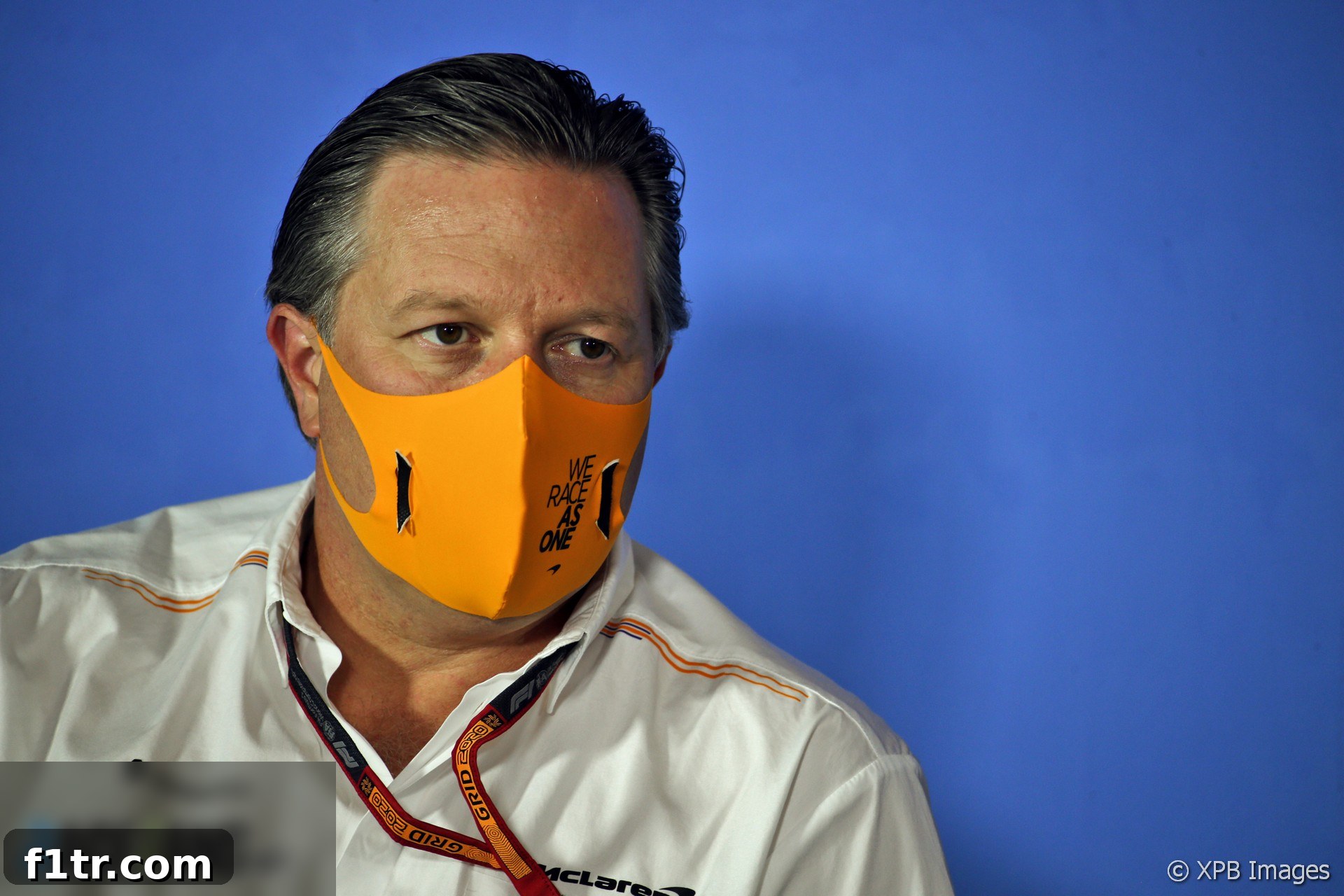
F1’s COVID-19 Protocols Under Scrutiny: Brown Criticizes Racing Point’s Handling of Stroll’s Absence
The highly competitive world of Formula 1 faced unprecedented challenges in 2020, adapting to a global pandemic that reshaped its operations, calendar, and fundamental safety protocols. Amidst these changes, a significant point of contention emerged following the Eifel Grand Prix concerning Racing Point’s management of Lance Stroll’s absence due to illness. McLaren CEO Zak Brown publicly criticized Racing Point, arguing that Stroll should have been tested for Covid-19 immediately upon feeling unwell. This incident sparked a broader debate within the paddock about the efficacy of existing protocols, the importance of transparency, and the collective responsibility of all teams to safeguard the entire Formula 1 community.
Zak Brown’s Firm Stance: Prioritizing Health and Transparency
Zak Brown, known for his forthright communication, did not mince words when addressing the situation. Speaking during a press conference, he underscored McLaren’s unwavering commitment to health and safety, drawing parallels to his team’s own difficult experience at the start of the season. McLaren was the first team to withdraw from a Grand Prix, the Australian Grand Prix in March, after a team member tested positive for Covid-19, an action that ultimately led to the race’s cancellation. This pivotal moment deeply influenced McLaren’s approach to the virus.
McLaren’s Proactive Principles and Experience
Brown articulated McLaren’s philosophy: “For McLaren, we put our people first and foremost, we will not take any risks, we won’t gamble. We recognise how dangerous this is and we want to make sure that everyone stays healthy and we can continue to put on grand prix.” He acknowledged the commendable efforts of the FIA and Formula 1 in establishing robust measures to control the virus’s spread, noting that F1 had, in some respects, managed the pandemic better than other major sports. However, he emphasized that the success of these measures hinges critically on strict compliance and unwavering cooperation among all teams.
He recounted McLaren’s swift decision-making in Australia: “When in Australia we had someone that didn’t feel well – Andreas [Seidl, team principal] and I aren’t doctors, but we took the very quick decision to isolate and then once the test came back, positive isolate the team and ultimately we knew that would shut us down for the race.” This proactive stance, despite the severe competitive implications, demonstrated McLaren’s dedication to its staff’s well-being and the broader paddock’s health. Brown suggested that this level of caution should be universal, especially when any symptoms arise.
The Call for Immediate Testing and Clarity
The core of Brown’s criticism stemmed from Stroll’s delayed testing. Stroll withdrew from the Eifel Grand Prix on Saturday morning due to feeling unwell. Yet, following a consultation with his private doctor, he initially decided against immediate testing. It wasn’t until he had flown home to Switzerland the following day that he eventually underwent a test, which later came back positive. This timeline raised significant red flags for Brown.
“If I look at the Racing Point incident or incidents, I would probably test anyone that isn’t feeling well daily,” Brown stated firmly. He humorously, yet pointedly, questioned the judgment: “I know [Stroll’s] doctor didn’t think a test [would be] positive – maybe in hindsight, that should be different. I don’t know who the doctor was, I don’t know if it was Dr Mallya, Dr Seuss, maybe it was Dr Dre. But maybe next time around we should be testing when anyone has any sorts of symptoms because we know how dangerous this is.” This statement underscored the critical importance of a low threshold for testing, particularly in a high-stakes, closed-community environment like the F1 paddock.
Transparency: A Moral and Practical Obligation
Beyond the timing of the test, Brown also questioned Racing Point’s delay in disclosing Stroll’s positive result, which was not revealed until the following Wednesday. He highlighted McLaren’s swift communication during their Australian incident, stressing a “moral obligation to people’s health that they need to have high level of awareness.” He praised Mercedes for a similar transparent approach when they experienced positive cases within their team, noting, “That’s I think exactly what Mercedes did when they had their incidents.”
Brown’s argument for transparency was twofold: it’s an ethical duty to inform potentially exposed individuals, and it’s a practical necessity to prevent wider outbreaks. He concluded his thoughts on the matter by reiterating, “It looks like there wasn’t immediate transparency and for an entity that tests as much as they do, all I know is we would be testing anyone at McLaren who doesn’t feel well daily and to make sure that that person is healthy and that they’re not transmitting and then would isolate anyone that was around them immediately.” This sentiment highlighted a perceived gap in Racing Point’s actions compared to the rigorous standards Brown believes are necessary.
Racing Point’s Counter-Argument: A Defense of Rigorous Testing
In the same press conference, Racing Point CEO Otmar Szafnauer offered a robust defense of his team’s actions and their extensive testing protocols, countering Brown’s criticisms. Szafnauer painted a picture of a team that goes above and beyond industry standards in its efforts to contain the virus.
An Unprecedented Testing Regimen
Szafnauer emphasized the sheer volume of tests conducted by Racing Point, stating, “I think we’ve now done nearly 20,000 tests, 15,000 at the factory and however many that we do here, because we test more than once.” He boldly claimed, “We test more than any other business, more than any other Formula 1 team, on the planet.” To substantiate this, he detailed their routine: all employees are tested every Tuesday and Friday, and everyone attending the track is tested upon landing in Britain. Furthermore, he mentioned Eurofins conducting tests every Monday when their plane lands, ensuring “everyone has peace of mind when they go home to their families that they’re not bringing the virus with them.”
This extensive testing program, according to Szafnauer, proves Racing Point’s commitment to safety, despite both their drivers (Lance Stroll and Sergio Perez) having tested positive and missed races during the season. He implied that the frequency of testing would naturally lead to more detected cases, but also that their system was effective in identifying and isolating infected individuals.
Medical Decisions and Incident Management
Regarding Stroll’s specific incident at the Eifel Grand Prix, Szafnauer implicitly defended the decision not to test immediately, deferring to the judgment of Stroll’s private doctor. While he didn’t directly challenge Brown’s call for immediate testing, his team’s overall testing frequency was presented as a blanket measure that should provide sufficient protection, even if an individual test was delayed based on medical advice. The implication was that Stroll’s situation was handled appropriately within the team’s established procedures, which include robust pre- and post-event testing for all personnel. The delay in public disclosure was not directly addressed in this snippet beyond the general defense of their comprehensive internal protocols.
The Broader Implications for Formula 1’s Paddock Safety
The exchange between Zak Brown and Otmar Szafnauer brought to light the inherent tensions and complexities of conducting a global sporting championship during a pandemic. Formula 1 and the FIA had worked tirelessly to create a “bio-bubble” environment, implementing rigorous testing, social distancing, and contact tracing protocols to ensure the season could proceed safely. However, this incident underscored that even with the best intentions and robust frameworks, adherence, interpretation, and transparency remain critical variables.
Navigating a Novel Threat
The 2020 season served as a living laboratory for managing a novel virus in a high-performance, international environment. The differing approaches and opinions from team principals like Brown and Szafnauer highlight the learning curve faced by all. While both McLaren and Racing Point expressed a commitment to safety, their interpretations of “best practice” in a specific scenario, such as an unwell driver, diverged significantly. This divergence sparked a necessary conversation about standardizing responses and reinforcing collective responsibility.
Consistency in Protocol Adherence
Brown’s critique essentially called for greater consistency and a lower threshold for preventative action across the paddock. The argument is that while individual medical decisions are important, in a communal setting where highly contagious diseases can spread rapidly, the precautionary principle should always take precedence. The incident highlighted the need for clarity on when and how teams should react to symptoms, regardless of initial medical assessments, to protect the entire F1 ecosystem.
The Trust Factor in the Paddock
Ultimately, the smooth running of Formula 1 relies on a high degree of trust and cooperation among teams. Incidents that question transparency or protocol adherence can erode this trust, making collective action more challenging. Brown’s emphasis on “trust, transparency and communication and responsibility from all the teams” speaks to the essential foundation required for Formula 1 to navigate not just the pandemic, but any future crisis that demands a unified response for the safety of its personnel and the continuity of the sport.
A Tale of Two Philosophies in a Pandemic
The debate between Zak Brown and Otmar Szafnauer illustrates two distinct philosophies in managing health risks during the pandemic: Brown’s emphasis on immediate, hyper-vigilant testing and absolute transparency as a moral obligation, contrasted with Szafnauer’s confidence in a high-volume, continuous testing regime that he believes offers unparalleled protection. While both approaches aim for safety, the incident with Lance Stroll underlined the critical difference that interpretation and rapid response can make in a fast-evolving situation. The discussions ignited by this event served as a crucial reminder for Formula 1 to continuously evaluate and strengthen its health and safety protocols, ensuring not only the welfare of its participants but also the integrity and continuation of the championship.
The 2020 season showcased Formula 1’s remarkable resilience and adaptability. Yet, episodes like the Stroll controversy served as poignant reminders that vigilance, open communication, and a shared commitment to robust health practices are paramount for safeguarding the sport’s future in an unpredictable world. The lessons learned from these challenging moments undoubtedly continue to shape the sport’s approach to global health crises moving forward.
Join the RaceFans Supporters Drive!
If you’ve enjoyed our motorsport coverage, please consider supporting independent journalism. We’re aiming to welcome more Supporters to help fund quality, original, independent motorsport coverage.
- Find out more about our Supporter Drive and how to sign up!
2020 Portuguese Grand Prix
Browse all 2020 Portuguese Grand Prix articles