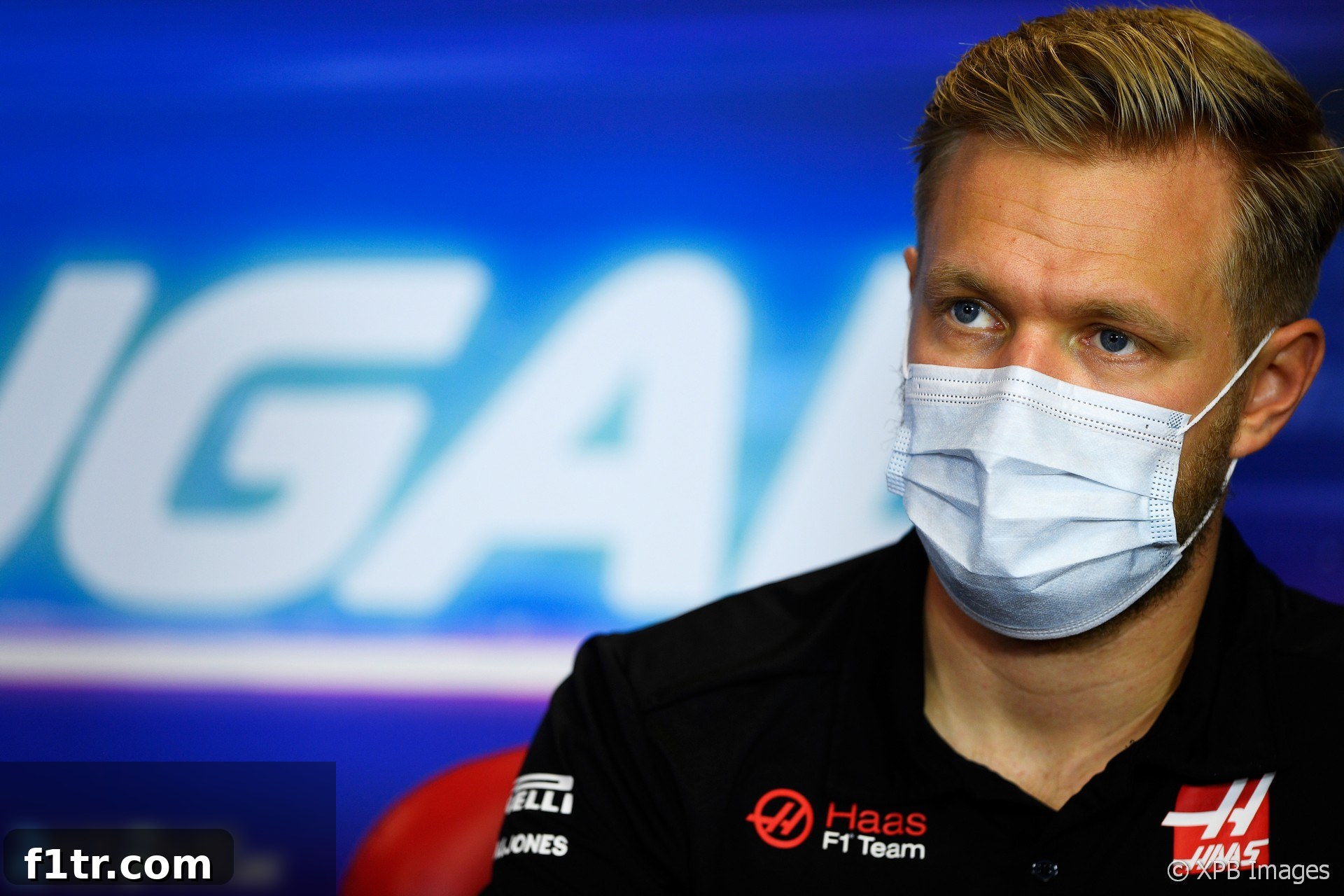
Kevin Magnussen’s IndyCar Dream: McLaren SP Door Closed, But Opportunities Abound
The exhilarating world of motorsport often sees drivers weighing their options as careers evolve, and Kevin Magnussen is no exception. As his tenure with Haas in Formula 1 draws to a close at the end of the current season, the Danish driver has openly expressed a keen interest in exploring a move to IndyCar racing. However, despite his obvious talent and suitability for the series, a reunion with his former team, McLaren, in their IndyCar outfit, McLaren SP, is definitively not on the cards, according to McLaren Racing CEO Zak Brown.
Magnussen, who made his Formula 1 debut with McLaren back in 2014, has long harbored an affinity for American open-wheel racing. This passion stems from a deep family connection, as his father, Jan Magnussen, was an IndyCar driver in the nineties. Kevin vividly recalls attending races with his father as a young child, developing an early fascination with the high-speed, intense competition that defines the series. “IndyCar has been something that I’ve been interested in always,” Magnussen shared. “My dad was an IndyCar driver back in the nineties, and I’ve been to IndyCar races with him as a small child and just always thought it was super cool. I would love to have a go in that sometime.”
Advert | Become a Supporter & go ad-free
While the allure of IndyCar is strong, Magnussen remains realistic about the challenges of securing a competitive seat, especially in the current global climate. The motorsport world, much like many other industries, has been significantly impacted by the events of this year, leading to a tightening of budgets and fewer opportunities for new driver deals. “But at the moment, I think even outside of Formula 1, the whole motorsport world is hit by these times that we have this year, and it doesn’t look easy to get good deals over there,” Magnussen conceded. “So we’ll see. I’m not saying no to it at all and not saying it’s impossible, but it looks slightly difficult.” This candid assessment highlights the complex landscape drivers navigate when seeking new professional avenues, where talent must often be coupled with opportune timing and strong commercial backing.
McLaren SP’s Driver Lineup Solidified: No Room for Magnussen
The primary reason for the closed door at McLaren SP stems from the team’s already solidified driver lineup for the upcoming season. McLaren SP, co-owned by Zak Brown, is set to part ways with one of its full-time 2020 drivers, Oliver Askew, at the end of the year. While this might appear to open a window for a driver like Magnussen, Brown has confirmed that the vacant seat alongside the confirmed Pato O’Ward has already been allocated to another driver, whose identity is yet to be announced.
“Kevin is a very fast driver, very aggressive, which I think fits IndyCar driving style,” Brown acknowledged, praising Magnussen’s capabilities. This sentiment suggests that Magnussen possesses the raw speed and racing temperament well-suited for the demanding and often wheel-to-wheel nature of IndyCar racing. However, Brown added, “But we do have our driver line-up sorted. One of those drivers is announced, Pato, one yet to be announced. So I don’t think there is a window of opportunity for Kevin in our IndyCar team. Had there been, he would definitely have been considered.” This clear statement underlines the team’s forward planning and commitment to its existing strategy, leaving no immediate opening for the Dane.
Zak Brown’s Broader Vision: McLaren Racing’s Global Ambitions
Zak Brown’s leadership at McLaren Racing has been characterized by an ambitious expansion beyond its traditional Formula 1 stronghold. Under his guidance, McLaren has re-entered IndyCar racing and has explored other categories, showcasing a strategic vision to build a multi-series racing empire. Brown’s comments on Magnussen, and indeed on other drivers, reflect a continuous assessment of talent across various disciplines. His appreciation for Magnussen’s aggressive style is a testament to the Dane’s reputation as a hard racer, a trait highly valued in IndyCar’s competitive environment.
The McLaren SP team, in particular, aims to be a front-runner in IndyCar. Securing top-tier talent like Pato O’Ward and strategically filling the second seat are crucial steps in achieving this goal. Brown’s methodical approach to driver selection emphasizes not just raw speed but also experience, consistency, and the ability to integrate seamlessly into the team’s culture and development trajectory. While Magnussen ticks many of these boxes, the timing simply did not align with McLaren SP’s predetermined plans.
Sergio Perez and the IndyCar Conundrum: F1’s Enduring Pull
The conversation around Formula 1 drivers potentially moving to IndyCar also extends to Sergio Perez, who, like Magnussen, finds himself without a confirmed seat for the 2021 F1 season. Brown had previously indicated an interest in potentially running an additional car for Perez, another highly regarded F1 talent. Perez has been linked to a possible move to Williams, suggesting he too is exploring options to remain in the pinnacle of motorsport.
“I think Sergio, too, is an extremely good talent and someone that would be great to have in an IndyCar,” said Brown, acknowledging Perez’s skill set. However, Brown suspects that Perez will ultimately remain in Formula 1. “I don’t know that for sure, but I think a third car for us, other than at the Indy 500, is unlikely.” Running a third full-time car in IndyCar presents significant logistical, financial, and personnel challenges for any team. While special entries for iconic races like the Indy 500 are common, committing to a third car for a full season requires a substantial investment and strategic shift that McLaren SP does not currently appear ready to undertake.
Magnussen’s Broader Horizon: The Pursuit of Victory Beyond F1
For Kevin Magnussen, the current situation represents a pivotal moment in his career. While he still believes he has more to offer in Formula 1, the diminishing number of available seats necessitates exploring alternatives. Crucially, a significant part of the appeal of moving to another series for Magnussen is the chance to experience the thrill of winning once again. His last victory came in 2013, when he clinched the Formula Renault 3.5 championship, a testament to his undeniable talent in junior categories.
“I would say I’m very open at the moment to do anything, really,” he stated, signifying a broad perspective on his future. “I feel that I have more to bring in Formula 1. I’m only just 28 years old, and I still feel that I have more to give in F1. But we’ll see. There’s not a lot of seats left. And also, I really miss winning. I miss the feeling of winning races. That’s kind of really something that I’ve started to think about quite a lot recently, how much I missed that.”
This yearning for victory is a powerful motivator for any competitive driver. The F1 midfield, where Magnussen has spent much of his career, offers limited opportunities for podiums or wins, often requiring drivers to extract maximum performance from cars that are inherently not designed to challenge for top honors. In contrast, series like IndyCar, the World Endurance Championship (WEC), DTM, or Formula E can offer a more level playing field and a realistic chance to compete for race wins and championships. For a driver of Magnussen’s caliber, re-engaging with that winning sensation could be transformative for his career.
“We’ll see where that opportunity is and what comes my way, and then I’ll take a decision sometime,” Magnussen concluded, indicating a careful and considered approach to his next career move. His youth, combined with his experience and hunger, makes him an attractive prospect for various top-tier racing categories around the world.
The Allure of IndyCar: Why F1 Drivers Look Across the Atlantic
IndyCar racing holds a unique appeal for many Formula 1 drivers seeking new challenges. The series is renowned for its ultra-competitive nature, with multiple winners throughout a season and championship battles often going down to the wire. The diverse calendar, featuring high-speed ovals, challenging road courses, and exciting street circuits, demands a versatile skill set from its drivers. The cars themselves are physically demanding, requiring immense precision and bravery, particularly on the unforgiving ovals.
Historically, numerous F1 drivers have transitioned to IndyCar with great success, including legends like Emerson Fittipaldi, Nigel Mansell, and Jacques Villeneuve. More recently, drivers like Alexander Rossi, Marcus Ericsson, and Romain Grosjean have found renewed careers and success in the series. This trend underscores IndyCar’s reputation as a viable and rewarding alternative for drivers seeking to extend their careers at the highest level of motorsport outside of Formula 1. The close racing, often decided by razor-thin margins, offers a purity of competition that many drivers cherish.
While the door at McLaren SP is closed for Kevin Magnussen, his interest in IndyCar is genuine and well-founded. His talent, aggression, and desire to win make him an ideal candidate for the series. The challenge now lies in finding the right team and the right financial backing in a global motorsport landscape that remains unpredictable. Regardless of where he lands, Magnussen’s future career path will undoubtedly be one to watch, as he embarks on a quest to rediscover the winning feeling that drives every true racer.
Advert | Become a RaceFans supporter andgo ad-free
2020 Portuguese Grand Prix
Browse all 2020 Portuguese Grand Prix articles