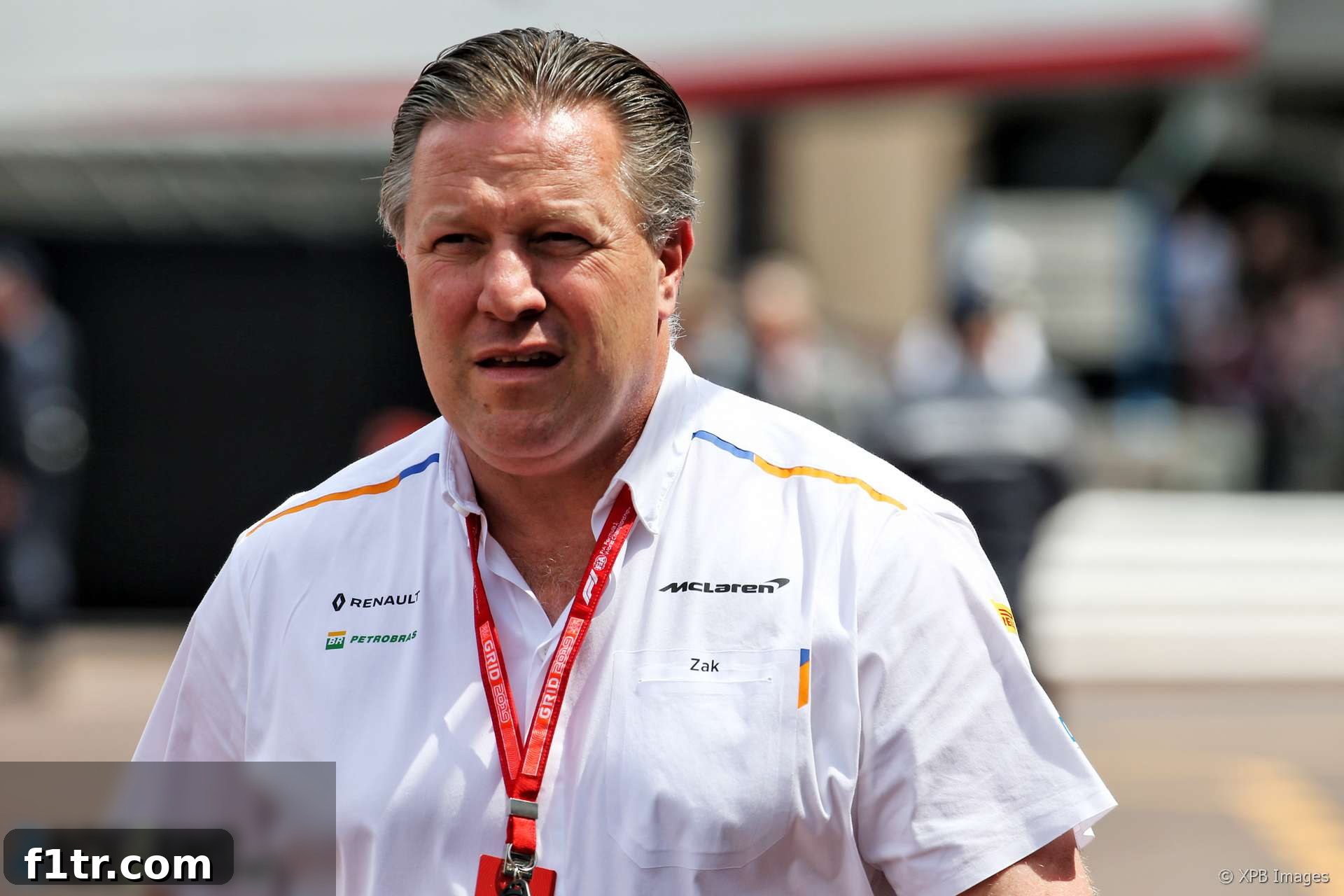
Formula 1 stands at a critical juncture as it grapples with finalizing its comprehensive rules package for the 2021 season and beyond. Amidst ongoing discussions and a looming deadline, McLaren Racing CEO Zak Brown has voiced strong opinions, asserting that the sport needs to “get on with” agreeing its future regulations. Brown believes that waiting for complete consensus among all teams on every intricate detail is an exercise in futility, and that the governing bodies, Formula 1 and the FIA, must ultimately make the crucial decisions for the betterment of the sport.
The Impasse: A Repeating Cycle of Discussion and Delay
The original deadline for the sign-off of these pivotal new rules was previously extended until the end of October. However, Brown remains deeply skeptical about the likelihood of any significant breakthrough or shift in team positions between now and then. His observations point to a cyclical pattern of debate where entrenched stances rarely evolve.
“We’re talking about the same issue time and time again,” Brown articulated, his frustration evident. “Very little progress is made because all the teams have stated their position, and that’s not going to change. So it seems like we revisit the same issues that the various teams have.” This sentiment highlights a core challenge in Formula 1 governance: balancing the collective good of the sport with the individual competitive interests of ten highly ambitious teams, each vying for supremacy.
Brown’s assessment suggests that further delays will not yield new insights or foster greater alignment. He argues that Formula 1 and the FIA have heard every conceivable argument over the past year and are unlikely to encounter novel perspectives in upcoming Strategy Group meetings. The fundamental positions, shaped by each team’s unique resources, competitive strategy, and long-term vision, are seemingly immutable.
The notion that “the 10 teams are somehow going to converge for the first time in the history of Formula 1 in the next three months is just not going to happen,” Brown declared. This bold statement underscores the historical difficulty of achieving unanimous agreement in a sport renowned for its fierce rivalries and self-interest. From rule interpretations to strategic direction, F1 teams have rarely found complete common ground, making the current quest for consensus particularly challenging. Brown’s call is clear: “I think it’s just time to get the show on the road.”
Critical Areas of Regulation: Financial, Sporting, and Technical
The proposed 2021 regulations are comprehensive, spanning three major pillars: financial, sporting, and technical. Each area aims to reshape the landscape of Formula 1, fostering greater sustainability, competitive balance, and exciting racing. While some progress has been made, significant hurdles remain.
Financial Regulations: The Budget Cap Breakthrough (Mostly)
One of the most significant advancements in the rule-making process occurred in June when teams largely agreed to accept the new financial regulations, crucially including a budget cap. This landmark decision marks a pivotal moment for Formula 1, addressing years of escalating costs that threatened the financial viability of many teams and exacerbated the performance gap between the sport’s giants and its smaller outfits.
The budget cap is designed to limit team spending, aiming to create a more level playing field where success is determined more by ingenuity and efficiency rather than sheer financial muscle. For McLaren, a team that has openly advocated for greater cost control and a more equitable distribution of resources, this agreement was a welcome step forward. Brown highlighted McLaren’s proactive stance, stating, “Ultimately we went with the flow the best of the sport. I would have been happy to lock down the regulations in June because I’m of the opinion [that] we’ll make some progress between June and October but I don’t think we’ll make substantial change.”
This commitment from McLaren reflects a broader understanding that the sport’s long-term health depends on financial sustainability. Without such measures, the risk of teams collapsing or the competitive ladder becoming unscalable for new entrants remains high. The budget cap, while complex to implement and police, represents a fundamental shift towards a more responsible and balanced economic model for Formula 1.
Sporting and Technical Regulations: The Unresolved Debates
While the financial framework has seen significant movement, elements of the sporting and technical regulations remain hotly debated. These areas are often the most contentious because they directly impact car performance, design philosophy, and race day strategies. Technical regulations govern everything from aerodynamics and engine specifications to chassis design, directly influencing how fast cars go and how easily they can follow and overtake each other. Sporting regulations dictate race procedures, weekend formats, and penalties.
Discussions in these areas often involve intricate details where a minor change can have profound implications for a team’s competitive advantage. For instance, varying philosophies on aerodynamic freedom, standardized parts, or engine development pathways can lead to fierce disagreements. Teams with larger budgets and more advanced R&D capabilities might push for greater technical freedom, while smaller teams might advocate for more restrictive rules to curb spending and promote parity. This inherent conflict of interest is precisely what makes achieving unanimous consent so challenging, as each team seeks to maximize its own potential within the regulatory framework.
The Elusive Nature of “Perfect Rules” and the Need for Decisive Action
Zak Brown also offered a pragmatic perspective on the nature of F1 regulations, acknowledging that perfection is an unattainable goal. “You’re never going to end up with perfect rules,” he conceded. “You’re going to have to modify along the way anyway.” This insight suggests that an excessive pursuit of an ideal, flawless rulebook is counterproductive. Formula 1, by its very nature, is a dynamic sport where innovation is constant, and regulations inevitably require adjustments and refinements over time.
The history of Formula 1 is replete with examples of rules being introduced, exploited, and subsequently revised to maintain competitive balance or address unintended consequences. From ground effect aerodynamics to double diffusers, teams have consistently found ingenious ways to interpret and push the boundaries of the rulebook. Therefore, the focus should be on establishing a robust foundational framework that can be adapted rather than getting bogged down in endless deliberation over every minute detail. Brown’s assertion that “this extra five months that we have is going to make that much different” reinforces this view, suggesting that prolonged debate often leads to stagnation rather than genuine improvement.
He starkly predicted, “I think we’ll be arm-wrestling on October 30th just like we were on June 20th or whatever the date is.” This vivid imagery encapsulates the deep-seated divisions and the difficulty of finding common ground when competitive stakes are so high. It serves as a strong plea for F1 and the FIA to exercise their authority as governing bodies. Their role is to steward the sport, ensuring its long-term health, excitement, and fairness, even if it means making unpopular decisions that override individual team interests.
The Role of F1 and FIA: Guardians of the Sport’s Future
The call for F1 and the FIA to make a definitive decision underscores their critical responsibility. As the commercial rights holder and the regulatory body, respectively, they possess the mandate to shape the future direction of Formula 1. While stakeholder input from teams is invaluable, the ultimate authority and responsibility to act in the sport’s best interest lie with them. Delaying the finalization of crucial regulations creates uncertainty, impacts long-term planning for teams and manufacturers, and can erode confidence among fans and potential investors.
The 2021 regulations are not merely about next season; they represent a bold vision for the next era of Formula 1. They aim to address issues such as competitive disparity, cost inflation, environmental sustainability, and the spectacle of racing. A clear, well-defined regulatory framework is essential for manufacturers to commit their resources, for teams to develop their cars, and for the sport to market itself effectively to a global audience. Brown’s urgency stems from a genuine concern for the sport’s trajectory, emphasizing that prolonged indecision ultimately harms everyone involved.
The decision to impose rules, even without full consensus, is a testament to strong leadership. It demonstrates a commitment to a predefined vision for Formula 1’s future, one that prioritizes overarching goals like closer racing and financial stability over the temporary competitive advantage of a few. Ultimately, for Formula 1 to thrive, it needs a clear pathway forward, and that pathway is currently being obstructed by an inability to conclude discussions on its foundational rules.
McLaren’s Stance and the Path Ahead
McLaren, under Zak Brown’s leadership, has consistently positioned itself as a proponent of progressive change aimed at enhancing the sport’s long-term health and competitiveness. Their willingness to accept and even push for more stringent regulations, particularly the budget cap, highlights their commitment to a more sustainable and equitable future for Formula 1. Brown’s statements are not simply a reflection of McLaren’s individual interests but rather a broader appeal for decisive action that benefits the entire grid and, most importantly, the fans.
As the October deadline approaches, all eyes will be on Formula 1 and the FIA. The expectation, as articulated by Brown, is that they will step up and make the necessary decisions to finalize the 2021 regulations, allowing teams to move forward with certainty. The future success of Formula 1 hinges on these crucial choices, and the time for consensus-building may very well have run its course.
Related F1 Articles
- Crying in the Melbourne car park at 2019 grand prix was my career low – Ocon
- McLaren Racing reports reduced £71 million loss in 2019
- Kvyat: Hockenheim podium last year was “my biggest achievement” so far
- How the FIA’s new encrypted fuel flow meter targets Ferrari’s suspected ‘aliasing’ trick
- “He smashed my office door”: 23 must-see moments from ‘Drive to Survive’ season two
Browse all 2019 F1 season articles