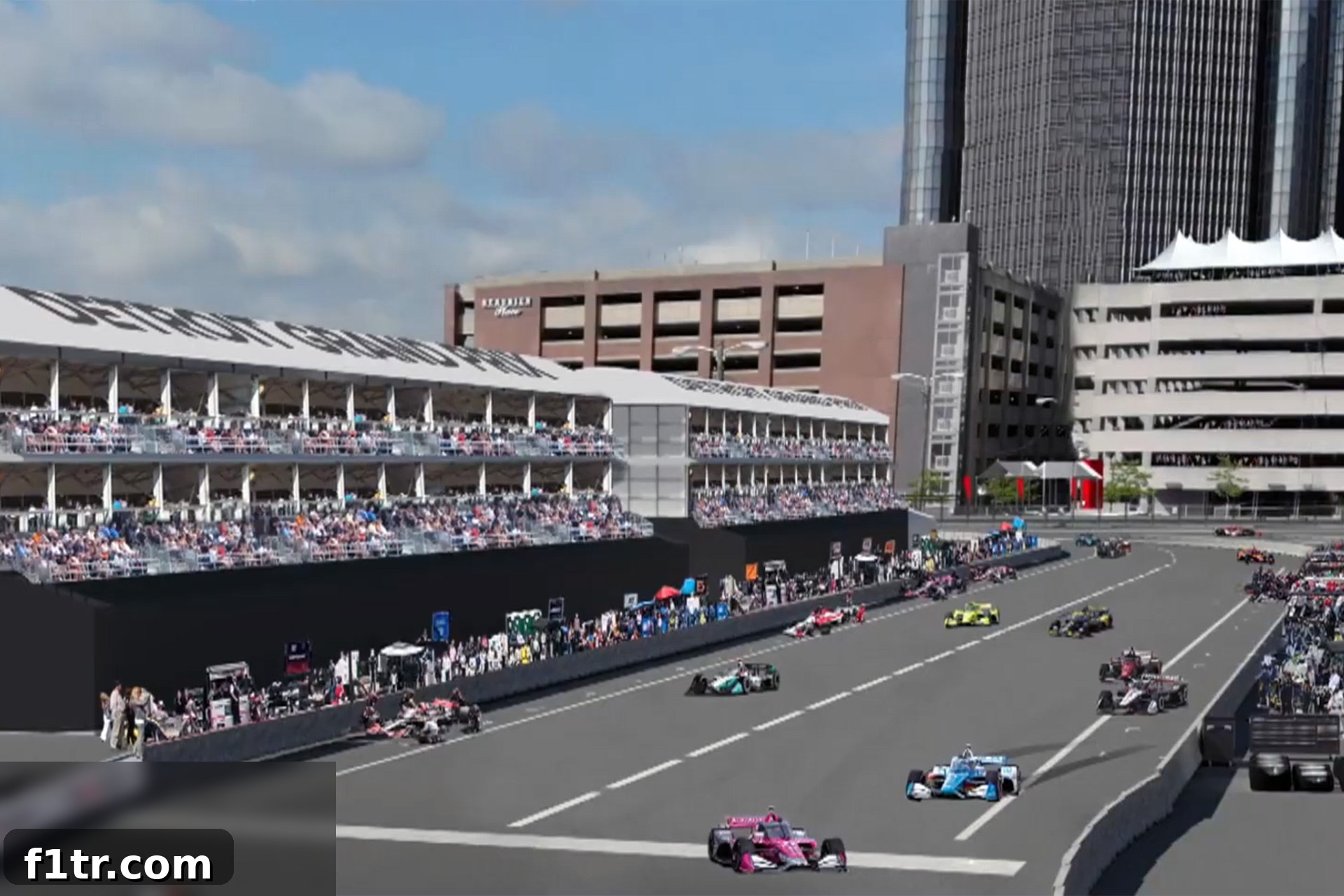
IndyCar’s Unprecedented Dual-Sided Pit Lane: A Game-Changer for the Detroit Grand Prix
The highly anticipated return of the Detroit Grand Prix to its downtown street circuit promises not just thrilling wheel-to-wheel action but also an unprecedented challenge for IndyCar drivers: a revolutionary double-sided pit lane. This innovative design, necessitated by the unique urban environment, is set to be a focal point of strategy, drama, and potential controversy, making the 27-car field’s refuelling stops a spectacle unlike any other in motorsports.
Detroit Grand Prix’s Downtown Revival: A Historic Move
For decades, the Detroit Grand Prix carved out its identity on the scenic Belle Isle circuit, hosting some of the most memorable races since 1992. However, 2023 marks a significant homecoming, as the event relocates to a vibrant street course directly within the heart of the city. This move is not merely a change of venue; it’s a re-engagement with Detroit’s rich racing heritage. The new circuit incorporates segments of the very same urban thoroughfares that once roared with the sound of Formula 1 engines between 1982 and 1988, before the prestigious event transitioned into a cornerstone of the CART IndyCar series.
The shift back to downtown Detroit is more than just logistical; it’s a statement. It brings the high-octane excitement of IndyCar racing directly to the fans, weaving through iconic landmarks and revitalized urban landscapes. This move aims to elevate the fan experience, making the race more accessible and embedding it deeper into the city’s cultural fabric. But with the allure of a downtown setting comes inherent logistical complexities, particularly when it comes to the crucial infrastructure of a modern motorsport event: the pit lane.
The Genesis of Innovation: Overcoming Urban Constraints
The heart of any racing operation lies within its pit lane, a meticulously choreographed ballet of mechanics, strategists, and drivers. Conventionally, a pit lane demands a substantial linear stretch of road, typically around 1,000 feet, to accommodate garages, pit boxes, and safe entry/exit zones for multiple cars. This is where the Detroit Grand Prix organizers faced their most significant hurdle. The chosen location for the pit lane – a car park adjacent to the iconic Renaissance Center – simply lacked the expansive footprint required for a traditional, single-sided setup.
Detroit Grand Prix chairman Bud Decker articulated the challenge in a video produced by the event promoters, stating, “The problem was there wasn’t 1,000 feet of pit lane. We have 500 feet.” This severe space limitation forced a radical rethinking of pit lane design. Instead of compromising safety or drastically reducing the grid size, the organizers embraced an ingenious solution: a dual-sided pit lane. This meant reimagining the very geometry of the pit stop, a decision that promises to redefine strategic approaches and driver precision.
Unpacking the Dual-Sided Pit Lane: How It Works
The concept is as audacious as it is simple in its premise: instead of all cars pitting on one side, the 27-car IndyCar field will split. Some teams will occupy pit boxes on the right side of the central aisle, while others will pit on the left. This effectively doubles the available pit box capacity within the constrained 500-foot length. Drivers will approach the pit lane entry, then be directed to their designated left or right-hand pit stall for refuelling, tire changes, and any necessary adjustments.
The real challenge, and where the “drama” predicted by Bud Decker is most likely to unfold, will be at the pit lane exit. Decker noted, “At the end of pit lane they’ll all come together in a single file and find their way back to the race track. How? I’m sure they’ll figure that out.” This merger point represents a critical bottleneck. Drivers exiting their left or right-sided stalls will need to converge seamlessly into a single line before rejoining the race track. This will demand exceptional spatial awareness, quick reactions, and precise timing from every driver and team member.
Strategic Implications and Potential Pitfalls
The dual-sided pit lane is not just a logistical workaround; it’s a strategic enigma. Teams will need to meticulously plan their pit stop timing, not only in relation to their competitors on track but also to those in adjacent pit stalls on both sides of the lane. Will pitting on the left offer a fractional advantage over pitting on the right, or vice versa? Will teams strategically choose their pit box side based on driver preference or typical entry speeds?
The potential for incidents in this novel setup is undeniable. Close quarters, high-pressure environments, and the inherent competitiveness of IndyCar racing mean that minor misjudgments could lead to significant consequences. Picture multiple cars simultaneously leaving their stalls, converging towards the exit. Even a fraction of a second’s hesitation or an overly aggressive maneuver could result in collisions, penalties, and race-altering damage. This unique configuration elevates the role of the pit crew, not just in speed but also in guiding their driver safely through a potentially chaotic environment.
Precedents and Parallels: Lessons from Hong Kong Formula E
While Decker asserts that “this has never been done before” in the context of refuelling and the specific challenges of IndyCar, the concept of a twin-sided pit lane isn’t entirely without precedent in top-tier motorsports. Formula E, the all-electric racing series, successfully implemented a similar configuration in Hong Kong when it raced there between 2016 and 2019. The tight confines of the Hong Kong street circuit also necessitated an innovative approach to the pit lane, which featured cars pitting on both sides.
However, there’s a crucial distinction. In Formula E’s earlier seasons, the twin-sided pits were used for mandatory car swaps, not refuelling. Drivers would pull into a pit box, jump out of their depleted car, and immediately enter a fully charged replacement. While this involved different pressures – the speed of the driver swap and team coordination – it lacked the combustible element of refuelling and the potential for fuel spills, which adds another layer of complexity and risk to IndyCar’s Detroit setup. Nonetheless, the Hong Kong example provides valuable insight into managing traffic flow and driver awareness in a bifurcated pit environment. Teams and organizers will likely study the operational aspects of the Formula E setup to glean any relevant lessons for Detroit.
Pit Lane Drama: A History of High Stakes
IndyCar racing is no stranger to high-stakes drama within the confines of the pit lane, even with conventional layouts. This year alone, the Texas round saw a controversial collision between Alexander Rossi and Kyle Kirkwood during pit stops. Rossi, who was penalized for the incident, vehemently maintained that the collision was Kirkwood’s fault. Such incidents underscore the intense pressure and tight margins involved in pit lane operations.
Now, magnify that pressure with a never-before-seen dual-sided configuration. Bud Decker’s prediction that the Detroit pit lane “is going to be where the action is going to occur because you win and you can lose on pit lane” seems almost an understatement. Every pit stop will be a mini-race within the race, a high-wire act where precision, nerve, and perhaps a touch of luck will dictate fortunes. The unique layout is poised to be a defining characteristic of the Detroit Grand Prix, distinguishing it from any other event on the IndyCar calendar.
The Spectacle for Fans and the Future of Urban Racing
For spectators, the dual-sided pit lane promises an unparalleled viewing experience. Positioned strategically, fans will have a direct view of the intricate choreography of pit stops unfolding on both sides, doubling the visual excitement. The potential for dramatic overtakes, strategic gambits, and even minor mishaps within this confined space will keep viewers on the edge of their seats, adding another layer of unpredictability to an already thrilling sport.
Beyond the immediate spectacle, the Detroit Grand Prix’s innovative pit lane design could serve as a blueprint for future urban motorsport events. As cities increasingly embrace racing to revitalize downtown areas and engage new audiences, the challenge of integrating complex racing infrastructure into existing urban landscapes will only grow. Detroit’s solution demonstrates a forward-thinking approach, proving that with ingenuity, seemingly insurmountable logistical challenges can be transformed into unique features that enhance the event rather than detract from it.
Conclusion: Detroit’s Defining Innovation
The Detroit Grand Prix, returning to its downtown roots, is poised to deliver a unique blend of heritage and innovation. While the street circuit itself offers a thrilling challenge, it is the groundbreaking dual-sided pit lane that truly sets this event apart. It’s a testament to creative problem-solving, transforming a limitation into a defining feature that will undoubtedly add layers of strategy, drama, and excitement to the race weekend. Drivers, teams, and fans alike will be watching closely as IndyCar navigates this unprecedented pit lane, cementing Detroit’s place as a pioneer in modern motorsports.
Formula E’s Twin Pit Lane Example
Related IndyCar Content
- IndyCar driver McLaughlin cleared of injury after crashing through barrier at Barber
- Schumacher says his IndyCar feels like ‘an F2 car, just with better tyres’
- IndyCar “way faster than Formula 1” in some corners, says Grosjean
- FIA to award more F1 superlicence points to IndyCar drivers from 2026
- Schumacher to race full-time in IndyCar with RLL in 2026
Browse all IndyCar articles