Zak Brown Condemns Helmut Marko’s ‘Inappropriate’ Comments on Lando Norris’s Mental Toughness Amidst Intense F1 Title Chase
McLaren CEO Zak Brown has issued a sharp rebuke to Red Bull advisor Helmut Marko following his recent remarks concerning Lando Norris’s mental resilience. Brown categorically labeled Marko’s comments as “inappropriate,” highlighting the critical importance of mental health advocacy within the high-stakes world of Formula 1, particularly as Norris continues to battle for the championship lead.
The controversy arises during a thrilling period for McLaren, with Norris delivering standout performances, including two victories in the last four races and a recent triumph in Singapore. His teammate Oscar Piastri also added to the team’s success with a win in Baku, signaling McLaren’s formidable return to contention. Norris, celebrated for his exceptional talent on track, is equally recognized for his candidness about the psychological pressures inherent in elite motorsport. He has openly discussed the nerves he experiences before qualifying sessions and races, and has never shied away from admitting when he feels he hasn’t performed to his own exacting standards.
Lando Norris: A Champion of Self-Awareness in Formula 1
Lando Norris has emerged not just as a prodigious racing talent but also as a refreshing voice in the sport, particularly regarding the often-overlooked subject of mental well-being. In an environment where drivers are expected to project an image of unwavering strength and invincibility, Norris has consistently chosen a path of transparency. His willingness to speak openly about the mental challenges he faces – from managing pre-race anxieties to coping with the immense self-imposed pressure for perfection – has resonated widely with fans and fellow competitors alike. This honesty has positioned him as an unofficial ambassador for mental health, helping to destigmatize discussions around psychological struggles in a traditionally stoic industry.
His impressive recent performances, including key victories that have propelled him into the thick of the championship fight against the formidable Max Verstappen, underscore his ability to perform at the highest level despite, or perhaps even because of, his reflective approach to his own mental state. These victories are not just testaments to his skill and the McLaren team’s engineering prowess, but also to his capacity to manage the immense psychological demands of competing for a Formula 1 world title. His proactive engagement with his mental health is, for many, a sign of strength and maturity, rather than any form of weakness.
Helmut Marko’s Provocative Statements: A Red Bull Strategy?
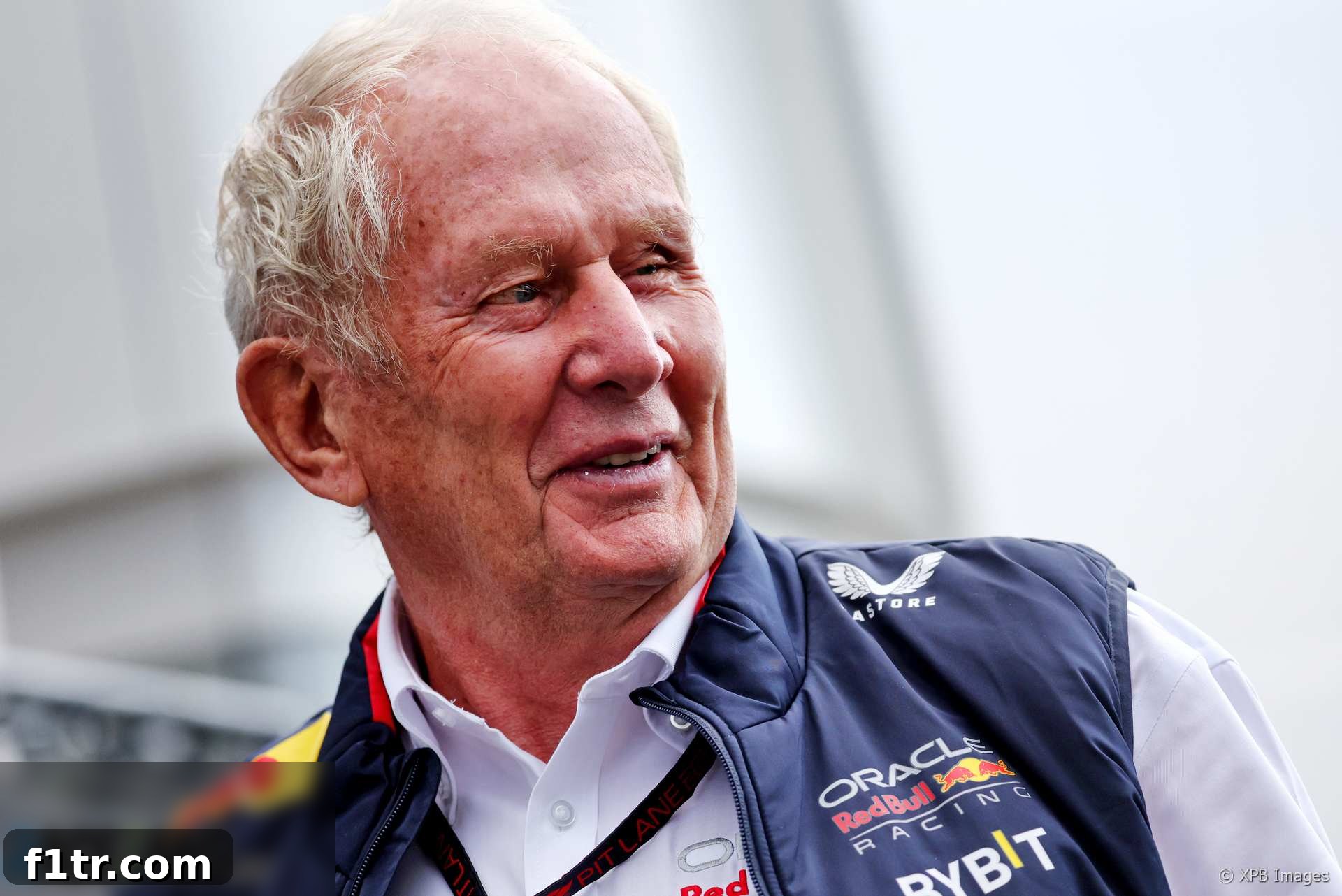
Helmut Marko, the long-standing and often outspoken advisor to the dominant Red Bull Racing team, is known for his candid and occasionally provocative remarks. In a recent interview with Motorsport Magazin, Marko suggested that Max Verstappen held a significant advantage in the championship battle due to his “mental strength.” He then proceeded to target Norris directly, stating, “We know Norris has some mental weaknesses. I’ve read about some of the rituals he needs to do to perform well on race day.”
These comments, delivered by a key figure from a rival team, were immediately perceived by many as a deliberate psychological tactic. In the intensely competitive arena of Formula 1, verbal jabs and attempts to unsettle opponents are not uncommon. However, Marko’s choice to focus on an area as sensitive as a driver’s mental fortitude, particularly given Norris’s openness on the subject, quickly drew widespread criticism. Such remarks can be interpreted as an attempt to undermine a competitor’s confidence or to create a narrative that favors their own driver, particularly when a championship is on the line. The implication that Norris’s self-awareness and coping mechanisms are “weaknesses” sparked a debate about the ethics of such commentary in professional sports.
Zak Brown’s Decisive Rebuttal: Championing Mental Health Advocacy in F1
Speaking passionately at the FIA’s team principal press conference at the Circuit of the Americas, McLaren CEO Zak Brown did not mince words in his condemnation of Marko’s statements. “I read elements, comments which I thought were disappointing – but not surprising,” Brown stated, acknowledging Marko’s history of controversial remarks.
Brown then went on to draw a clear line in the sand, emphasizing the collective efforts within Formula 1 to promote mental health awareness. “Lando has been kind of an ambassador for mental health. Toto [Wolff]’s spoken about mental health. So I think it’s a serious issue that we’ve tried to talk about to bring to the forefront, make it okay to talk about.” He highlighted the significant progress made in destigmatizing mental health discussions in recent years, not just in sports but across society.
The McLaren boss argued that Marko’s comments represented a significant regression. “So to maybe kind of choose [to] poke at that situation I think is pretty inappropriate and kind of sets us back ten, 20 years. But it’s all fun and games in how some people go racing and what tactics they use from a sporting perspective. But I thought that one was in pretty poor taste.” Brown’s firm stance underscores the growing belief within the sport that while fierce competition is essential, there are boundaries, especially when it comes to sensitive personal topics. His words served as a powerful defense of his driver and a broader call for respect and empathy in the F1 paddock.
The Evolving Dialogue on Mental Health in Elite Sports
Brown’s strong reaction to Marko’s comments also highlights a crucial shift in how mental health is perceived and discussed within elite sports, and particularly in Formula 1. For decades, athletes were expected to maintain an impenetrable facade of strength, with any admission of vulnerability often seen as a sign of weakness. However, this outdated perspective is rapidly changing. High-profile athletes across various sports have begun to openly share their struggles, paving the way for a more compassionate and understanding environment.
In Formula 1, the pressure on drivers is immense and multifaceted. It extends beyond the physical demands of controlling a high-speed machine to include constant public scrutiny, relentless travel, intense media obligations, and the psychological burden of a sport where fractions of a second can determine success or failure. Drivers live under a microscope, with their every move, decision, and emotion analyzed by millions globally. This unique environment makes mental resilience not just an asset, but a fundamental requirement for survival and success. Consequently, initiatives to support drivers’ mental health, alongside broader campaigns to normalize these conversations, have gained significant traction.
Figures like Lando Norris, George Russell, and Mercedes Team Principal Toto Wolff have all contributed to this evolving dialogue, advocating for greater openness and support. Their willingness to discuss mental well-being has helped create a safer space for others to do the same. Against this backdrop, remarks like Marko’s are seen as not only personally disrespectful but also as a step backward for the sport’s progressive efforts. They risk reinforcing harmful stereotypes and undermining the hard-won progress made in promoting mental health awareness, making Brown’s condemnation all the more pertinent and timely.
Norris’s Unwavering Focus Amidst Championship Pressure
Despite the external noise and pointed criticism from a rival camp, Zak Brown asserted that Lando Norris remains entirely unfazed and acutely focused on the task at hand. With only six rounds and several sprint races remaining in the championship, and Norris currently trailing Max Verstappen by 52 points, the McLaren driver’s commitment is absolute.
“Lando’s very excited for these final six races and the sprints,” Brown affirmed. “He’s as focused as ever.” This steadfast dedication is evident in Norris’s meticulous approach to each race weekend. Brown elaborated on his driver’s routine, emphasizing his professionalism and singular devotion to his craft: “He comes into the race weekends like Oscar – and like I would imagine all the grand prix drivers – very focused on the job at hand, sitting down with his engineers, doing his commercial work, his media work, relaxing, et cetera. So he’s very focused.”
This portrayal contradicts any notion of “mental weakness,” instead painting a picture of a highly disciplined athlete who understands the demands of his profession. The pressures of a championship fight are immense, and every driver employs strategies – internal and external – to manage them. Norris’s openness about his mental processes, rather than being a flaw, is arguably a testament to his self-awareness and his mature approach to an incredibly demanding career. His consistent performance, even under the intense glare of the F1 spotlight, speaks volumes about his underlying strength and determination to close the gap to Verstappen before the season concludes.
Strategic Play or Unforced Error? The Impact on F1 Dynamics
Helmut Marko’s comments on Lando Norris’s mental toughness raise pertinent questions about the strategic landscape of Formula 1. Were these remarks a calculated psychological tactic aimed at unsettling a rival driver and boosting Red Bull’s own championship narrative, or an unforced error reflecting a generational divide in understanding mental health? In the hyper-competitive world of F1, mind games are not uncommon, but the target and nature of Marko’s statements appear to have crossed a line for many, including Zak Brown.
Such public commentary can have varied effects. For Norris, it could serve as further motivation, transforming perceived weaknesses into fuel for performance. Alternatively, it could add an unnecessary layer of pressure, forcing him to address external narratives while navigating an already intense championship battle. For Red Bull, the intended effect might have been to assert dominance and perhaps even subtly undermine McLaren’s morale. However, the strong backlash from Zak Brown and the broader F1 community suggests that this particular “tactic” may have backfired, generating negative publicity and potentially galvanizing support around Norris rather than diminishing it.
The incident also highlights the evolving ethics of professional sports. While competitive banter and rivalry are integral, there’s an increasing expectation for respect and professionalism, especially regarding sensitive personal issues. This episode serves as a reminder that in modern sports, remarks about a competitor’s mental state are fraught with peril and can significantly impact team dynamics, public perception, and the overall sporting narrative.
Conclusion: Beyond the Grid, Respect and Resilience Prevail
The sharp exchange between Zak Brown and Helmut Marko underscores a significant point of contention in contemporary Formula 1: the balance between fierce competition and human empathy, particularly concerning mental health. Brown’s steadfast defense of Lando Norris and his strong advocacy for mental well-being in sports resonated deeply, highlighting that progress in destigmatizing these conversations is paramount. While the pursuit of a world championship inherently involves psychological warfare, there is a clear consensus that certain lines, especially those pertaining to an individual’s mental state, should not be crossed.
Lando Norris, with his remarkable talent and refreshing transparency, continues to embody resilience and dedication. His ability to perform at the pinnacle of motorsport while openly discussing his mental experiences is not a weakness, but a testament to his strength and authenticity. As the Formula 1 season hurtles towards its thrilling conclusion, the focus remains firmly on the track, where Norris and McLaren are committed to pushing Max Verstappen and Red Bull to their absolute limits. This incident, while momentarily diverting attention, ultimately reinforces the idea that true champions are not only defined by their speed and skill but also by their integrity, their support networks, and their unwavering spirit in the face of both on-track challenges and off-track scrutiny.
Related Articles: 2024 United States Grand Prix
- McLaren insist stewards made ‘provable error’ after losing bid for review of Norris’ penalty
- Why McLaren’s focus on Verstappen’s driving failed to overturn Norris’ penalty
- Stewards reject McLaren’s request to review Norris’ United States GP penalty
- McLaren know Norris’ penalty is likely to stand – so what do they hope to gain?
- McLaren request review of Norris’ penalty for off-track pass on Verstappen
Browse all 2024 United States Grand Prix articles