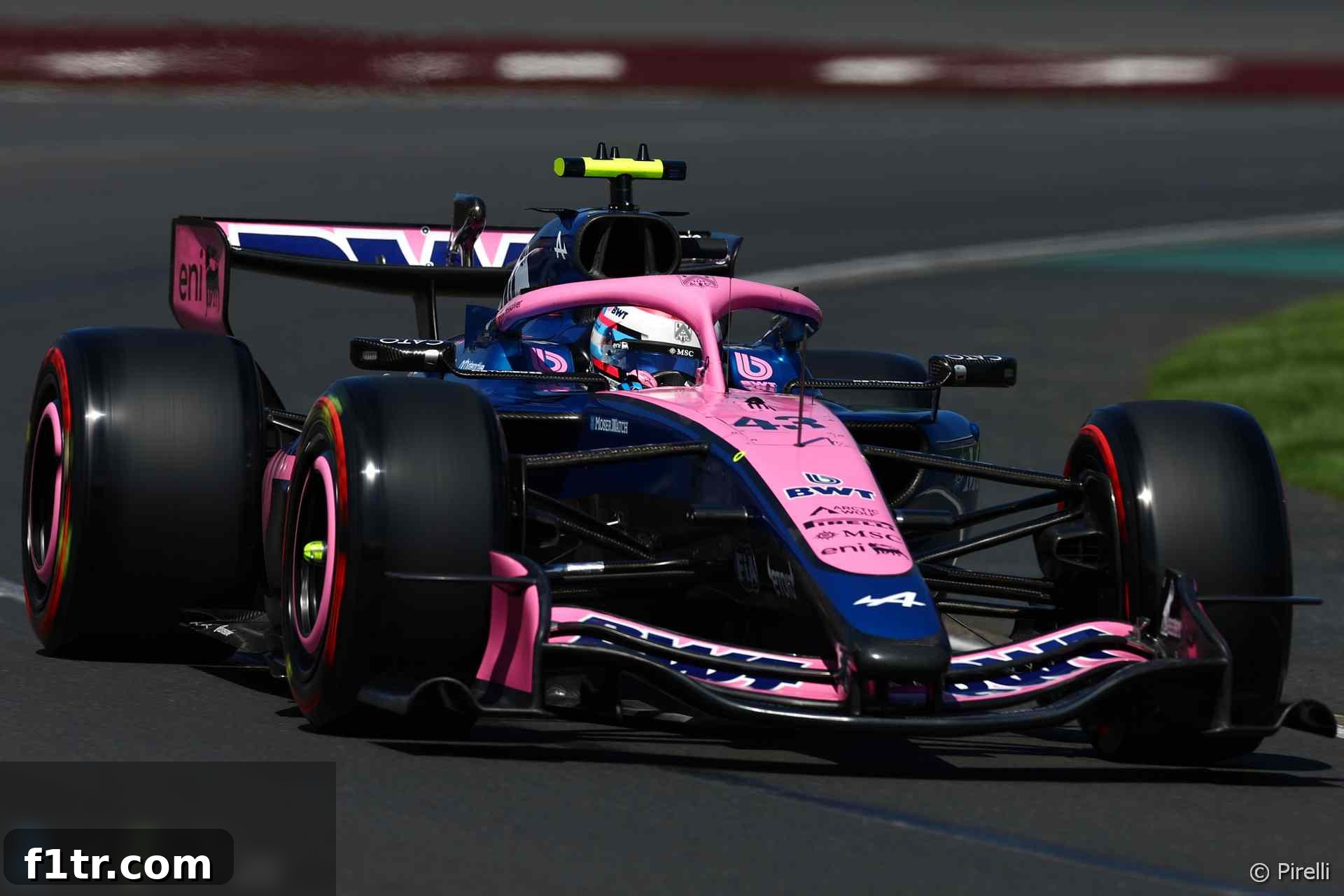
Alpine’s Rocky Start to the 2026 F1 Season: Briatore’s Disappointment and the Path Ahead
The dawn of the 2026 Formula 1 season presented a moment of truth for the Alpine F1 team, a moment that, according to executive advisor Flavio Briatore, fell significantly short of expectations. The performance displayed in the first race in Melbourne, Australia, served as a major disappointment, casting a shadow over the team’s ambitious strategy shift.
Advert | Become a Supporter & go ad-free
The 2025 Sacrifice: A Risky Bet on the Future
Alpine’s current predicament is not an overnight development but rather the culmination of a high-stakes strategic gamble. The team concluded the 2025 championship in the unenviable position of last place, a direct consequence of a deliberate decision to sacrifice car development throughout that season. This unprecedented move was made with a singular focus: to channel all available resources and engineering expertise into preparing for the radical new technical regulations slated to come into force for the 2026 season. It was a calculated risk, betting that a fresh start under new rules would offer a more fertile ground for success than incremental gains on an outgoing platform.
Further compounding this monumental strategic shift was the decision to scrap its long-standing in-house engine programme. For a factory team, this was a particularly bold and challenging move, signifying a complete overhaul of their technical philosophy. In its place, Alpine opted to forge a new partnership, transitioning to Mercedes power units. This decision was undoubtedly driven by a desire for a more competitive and reliable engine, hoping to eliminate a perceived weakness and allowing the chassis department to focus purely on aerodynamic and mechanical design. The integration of a new power unit, however, is a complex undertaking, requiring seamless collaboration and significant adjustments to the car’s entire architecture, from cooling to weight distribution.
Melbourne’s Reality Check: Performance Falls Short
Despite these extensive preparations and the immense investment in a future-focused approach, the initial results from Melbourne painted a grim picture. Neither Alpine driver managed to progress beyond Q2 in the qualifying sessions, failing to reach the crucial Q3 segment which separates the top ten contenders. This outcome was a stark indicator that the team’s new package was not yet delivering the expected performance. Flavio Briatore, a figure synonymous with F1 success and known for his outspoken nature, did not mince words when assessing the team’s debut performance.
“We are not happy at all,” Briatore candidly stated, his disappointment palpable. He elaborated on the shortcomings, acknowledging that “Our performance was very weak and it was a combination of different factors.” This admission hints at a multi-faceted problem, suggesting that issues are not confined to a single area but rather span across various aspects of the car’s design and operation. His assertion that “We know what is the major problem we have in the car” suggests that the team has identified a critical flaw, offering a glimmer of hope that a targeted solution can be pursued, but also underscoring the severity of the challenge. Briatore’s commitment to swift action was evident: “We are trying to resolve this as quickly as possible.”
Pierre Gasly’s Tenacious Drive and Critical Insights
Amidst the widespread disappointment, there was a solitary ray of light for the Alpine team in Melbourne: Pierre Gasly’s tenacious drive to secure the final point for 10th place. This single point, though modest, carried significant weight for a team that had scored only once over the final eleven rounds of the preceding season. Briatore acknowledged this small victory, stating, “It was the first race and for a long time we had no points in the race in Formula 1. At least we have one point with Pierre.” This brief moment of satisfaction underscores the low baseline from which Alpine is currently operating and highlights the immense journey ahead.
Advert | Become a RaceFans supporter andgo ad-free
Beyond the single point, Gasly provided invaluable insights into the car’s performance and potential. He expressed a strong belief that the team was “pretty far from being at the maximum potential of the package we’ve got in our hands” in Australia. This indicates that while the car itself may have inherent challenges, the team has not yet fully optimized its setup or extracted its ultimate speed. Gasly’s detailed analysis points to a broad spectrum of areas requiring immediate attention: “There are a lot of things which we’ve got to improve car-wise: car understanding, set-up-wise, engine, maximising the energy, quali, race. I think it’s good to have some sort of baseline.” This comprehensive list underscores the complexity of the task ahead, touching upon fundamental aspects of car performance, driver-team synergy, and power unit optimization.
Looking Ahead: The Urgent Need for Improvement in China and Beyond
The team now faces intense pressure to translate Gasly’s insights into tangible performance gains, starting with the upcoming Chinese Grand Prix. Gasly himself conveyed a sense of cautious optimism for the next race: “Objectively, we feel that we slightly underperformed in Melbourne and I expect us to be in a better place here in China. We’ve got already a couple of things which should bring us more performance into the car, like everybody, I think, in the paddock.” His performance in the first practice session in China, where he was 10th quickest, just under two seconds slower than pace-setter George Russell, offered a tentative sign of progress, though still highlighting a significant gap to the front-runners.
Briatore’s vision for Alpine is clear, even in these challenging times. He articulated the team’s aspiration to compete more consistently within the midfield: “looking to be P7, P8, P6 – this range of competition” more frequently in the future. Achieving this, however, will require a monumental effort. The transition to a new power unit is notoriously difficult, demanding precise integration and calibration across all vehicle systems. Furthermore, a major technical regulation change often sees significant performance swings as teams uncover optimal design philosophies and unlock hidden potential. Alpine’s decision to commit fully to 2026 was a gamble on mastering these new regulations faster than their rivals. The initial results suggest they are currently behind the curve.
The F1 calendar is relentless, offering little time for complacency. Alpine must now embark on an aggressive development trajectory, leveraging every piece of data from Melbourne and the ongoing sessions in China. The “major problem” identified by Briatore must be addressed with surgical precision, while the broader range of issues highlighted by Gasly – from fundamental car understanding to intricate energy management – demands a holistic and collaborative approach across all engineering departments. The success of this ambitious strategy, and indeed Alpine’s credibility as a front-running factory team, hinges on their ability to rapidly unlock the potential of their new package and climb back into the competitive midfield where they aspire to belong.
The early struggles underscore the cut-throat nature of Formula 1. Even with a focused strategy and significant investment, there are no guarantees of immediate success. Alpine’s journey in 2026 is set to be a compelling narrative of resilience, engineering prowess, and the relentless pursuit of performance in the world’s most demanding motorsport series. The team’s ability to overcome these initial hurdles will define their season and set the tone for their long-term aspirations in Formula 1.
Miss nothing from RaceFans
Get a daily email with all our latest stories – and nothing else. No marketing, no ads. Sign up here:
2026 Australian Grand Prix – Related Articles
- Briatore “not happy at all” with Alpine’s “very weak” performance
- Drivers want rules changes to cut “dangerous” risk of crash at start
- Russell becomes the 68th different Formula 1 driver to lead the world championship
- Hadjar told Red Bull his car’s performance was “embarrassing” and “just c***”
- “How did you not call the pit?” Ups and downs in Hamilton’s first race with new engineer
Browse all 2026 Australian Grand Prix articles