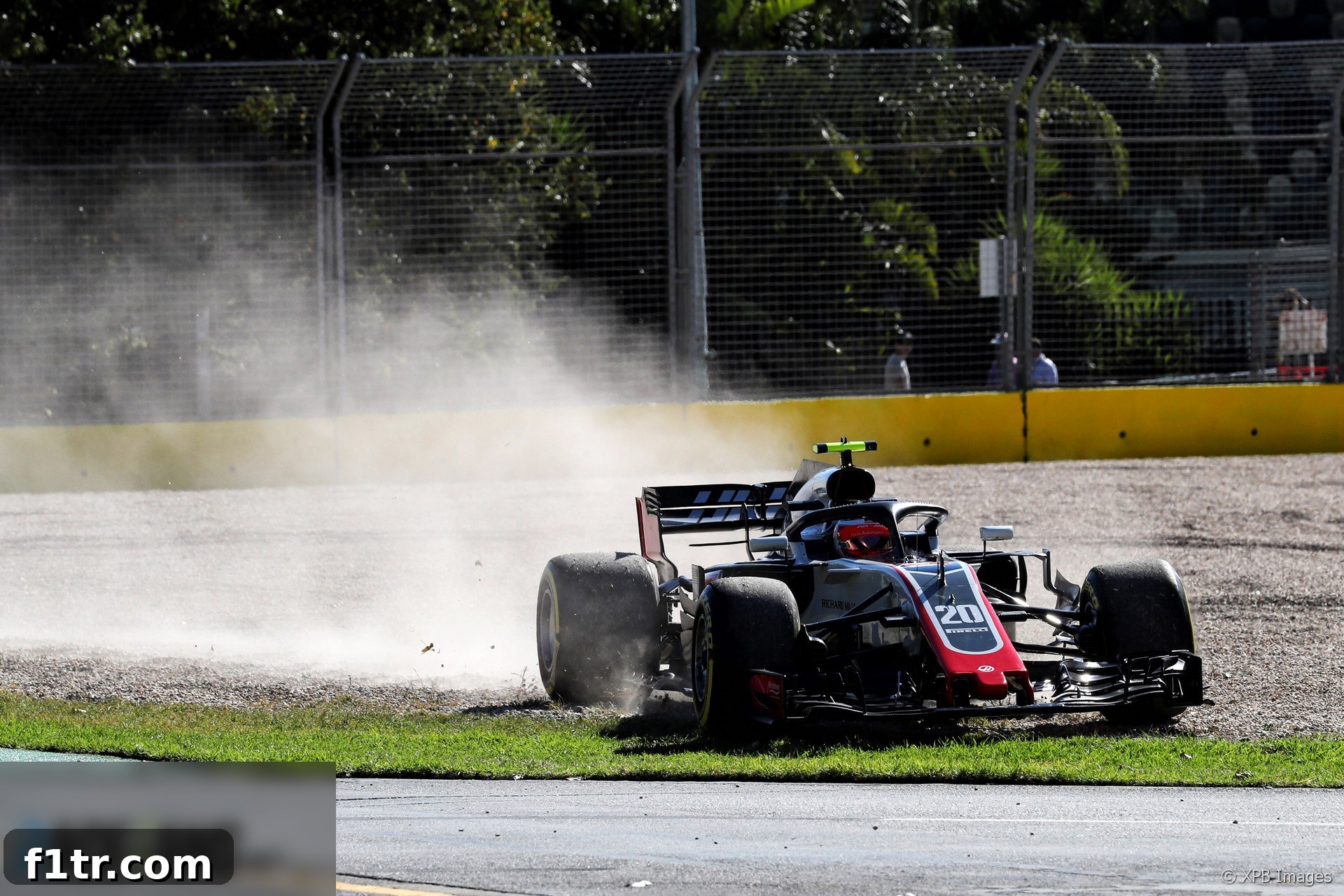
Haas F1’s Promising Start: Navigating the VF-18 at the Australian Grand Prix
The dawn of a new Formula 1 season always brings a mix of anticipation and uncertainty, and the opening weekend of the Australian Grand Prix is no exception. While pre-season testing provides a glimpse into teams’ potential, it’s the free practice sessions on a grand prix circuit that truly begin to reveal the competitive order. Haas F1, with its striking VF-18, has certainly turned heads early on, displaying a level of performance that has many cautiously optimistic about their prospects. However, as is often the case in the highly competitive world of F1, the team itself maintains a measured perspective, understanding that early pace doesn’t always guarantee sustained success.
The spotlight has been firmly on the American squad, especially after a strong showing in Friday’s practice sessions. The early indications suggest that the VF-18 is a well-balanced and potent machine, capable of challenging the established midfield. This initial surge of performance is a significant boost for Haas, a team that has consistently aimed to solidify its position as a strong contender in the Constructor’s Championship. Yet, amidst the positive data and encouraging lap times, a sense of prudence permeates their internal discussions, a valuable lesson learned from the sport’s inherent unpredictability.
Kevin Magnussen’s Cautious Optimism for the VF-18
While Romain Grosjean impressively secured the ‘best of the rest’ position during yesterday’s sessions, his teammate Kevin Magnussen encountered a few frustrating snags that hampered his otherwise promising day. These minor setbacks included a rather unusual issue with his crash helmet lining, which detached during a run, limiting his track time and focus. Despite these disruptions, Magnussen’s comments after Friday’s running paint a picture of a driver who recognizes the car’s underlying strength while remaining acutely aware of the need for consistency.
Even though it’s a grand prix track and it’s the first race, we’re still cautious because it’s FP2 and not qualifying. This initial performance is undoubtedly positive, but we understand the nuances of early practice sessions. It’s reassuring, however, to see the car running so well and to feel that the balance is inherently good. That’s a fundamental building block for any successful race weekend.
Neither Romain nor I had a truly perfect day, and particularly for myself, it was a bit more challenging. I encountered several minor problems with the car, which inevitably led to limited running. My first proper stint, where I exited the pits and immediately pushed on the ultra-soft tyres without cooling laps, yielded a competitive first lap straight away. This was a significant indicator of the VF-18’s immediate pace and adaptability.
There was definitely a lot more to extract from that lap. It was my very first push lap, and I wasn’t even close to pushing the car to its absolute limit. That in itself is a strong confirmation that the car is performing effectively here in Melbourne, just as it did in Barcelona during testing. This consistency across different circuits is a highly encouraging sign for us.
However, we must also remember that last year we had some competitively strong races mixed with periods of struggle. The inconsistency we experienced throughout the previous season is precisely what keeps us cautious now. It’s a vital reminder that F1 is a marathon, not a sprint. While the initial signs are overwhelmingly positive, we need to maintain this momentum and ensure reliability. For now, though, it’s undeniably a positive start, and we’ll build on this foundation.
Magnussen’s detailed reflections underscore a mature approach from both driver and team. The early pace of the VF-18 is undeniable, suggesting that Haas has engineered a competitive package for the 2018 season. The fact that the car proved quick on its first flying lap on new tyres, even with Magnussen not pushing to the limit, highlights its inherent speed. However, his emphasis on last year’s inconsistencies serves as a critical reminder that sustained performance is the ultimate goal, and one good Friday does not make a season. The team will undoubtedly be working hard overnight to fine-tune the car and maximize its potential for qualifying and Sunday’s race, aiming to convert this promising start into tangible results.
F1 News & Views: A Daily Digest from Around the Web
Stay informed with our daily compilation of the most compelling Formula 1 news, insightful views, in-depth features, and much more, curated from hundreds of top motorsport sites across the web. Here’s what’s making headlines today:
Chase Carey Is Making Some Big Plans for Formula One (The New York Times)
Liberty Media’s chairman, Chase Carey, discusses his ambitious vision for the future of Formula 1. His commentary touches upon the need to re-engage with the core sporting aspect of F1, moving away from what he perceives as a tendency towards ‘perfection’ that might have inadvertently stifled true competitive action. Carey’s plans aim to inject more excitement and unpredictability back into the sport, ensuring F1 remains a thrilling spectacle for both long-time fans and new audiences alike. This signals a strategic shift towards prioritizing genuine on-track competition and fan experience.
Raikkonen was ‘scared to move’ in Bottas FP2 near-miss (Crash.net)
Kimi Raikkonen recounts a heart-stopping moment during Free Practice 2, where he experienced a close call with Valtteri Bottas. Raikkonen admitted to being “scared to move” due to a lack of visibility, emphasizing the critical importance of clear communication from the pit wall. He explained that despite knowing Bottas was somewhere near, he couldn’t physically see him, and the warning from his team came quite late. This incident highlights the inherent dangers of high-speed racing, particularly during practice sessions when drivers are on different programs, and the absolute necessity of precise and timely information for driver safety.
FIA F1 Future Stars take centre stage (Formula1.com)
A heartwarming initiative sees young boys and girls, aged between seven and ten years old, stepping into the limelight as “FIA F1 Future Stars.” These aspiring talents are carefully selected by local motorsports clubs and race promoters, offering them an unforgettable opportunity to be part of the Grand Prix weekend. This program is designed not only to inspire the next generation of motorsport enthusiasts but also to provide a unique fan engagement experience, bridging the gap between the heroes on track and their youngest admirers, fostering a love for F1 from an early age.
Are F1’s hands tied over latest halo irritation? (Autosport)
The controversial Halo safety device continues to spark debate, particularly concerning its visual impact on F1 broadcasts. This article delves into whether Formula 1 is constrained in addressing the ongoing “irritation” surrounding the Halo’s aesthetic. While many observers acknowledge that the traditional main overhead camera shots from all twenty cars largely remain acceptable, and the Halo’s presence doesn’t cause excessive disruption from that angle, the broader discussion about its visual integration and its effect on the perception of the sport persists. The piece explores the complex balance between enhanced driver safety and the traditional visual identity of Formula 1 cars.
Assen moves forward with Dutch GP endeavor, names promoter (F1i)
The renowned TT Circuit Assen is making significant strides in its bid to host a future Dutch Grand Prix. This report confirms that the circuit’s board has officially entrusted “The Netherlands Grand Prix Foundation” with the crucial task of organizing a potential Formula 1 race at their iconic venue. This development marks a concrete step forward in bringing F1 back to the Netherlands, signaling strong intent and strategic planning from the Assen circuit to meet the rigorous demands of hosting a Formula 1 event, much to the excitement of Dutch motorsport fans.
20 years ago I wrote to every F1 team — this is what they sent back (Duncan Stephen)
A fascinating retrospective piece by Duncan Stephen revisits a childhood project: writing to every single F1 team two decades ago and documenting their responses. The article provides a nostalgic glimpse into a bygone era of motorsport fan engagement, showcasing the unique memorabilia and information sent back by the teams. Among the various curiosities, Stephen humorously points out one particularly “shocking” detail: the technical information he received was presented in the distinctly non-technical and much-maligned Comic Sans typeface, offering a lighthearted reflection on the past and the evolution of F1’s public relations.
Got a tip for a compelling link to feature in the next RaceFans round-up? We’re always eager to discover fresh perspectives and breaking news. Send it in here:
- Contact RaceFans
F1 on Social Media: Capturing the Moment
The world of Formula 1 extends far beyond the track, with teams, drivers, and fans actively sharing their experiences and insights across various social media platforms. Here’s a look at some notable posts making waves on Twitter, Instagram, and more, offering a direct glimpse into the paddock and fan perspectives:
#F1 drivers practising their starts earlier today with the new, lower ‘repeater lights’ in the background:https://t.co/nDJ1pA2HVf#AusGP
— RaceFans (@racefansdotnet) March 23, 2018
This tweet from RaceFans captures a crucial aspect of race preparation: drivers diligently practicing their starts. The image accompanying the tweet (linked within the tweet) would likely show the drivers lining up on the grid, focusing intently on the starting lights. The mention of “new, lower ‘repeater lights'” highlights an interesting technical detail, indicating an adaptation for better visibility or official mandates. These practice starts are vital for honing reaction times and minimizing the risk of errors when the lights go out on Sunday, potentially making or breaking a race. Social media provides fans with these behind-the-scenes moments, enhancing their connection to the sport and its intricate details.
- For an even deeper dive into official F1 accounts and driver profiles to follow, explore our comprehensive F1 Twitter Directory.
The Daily Debate: Helmet Designs & FIA Consistency
Our “Comment of the Day” section highlights the most engaging and thought-provoking discussions from our community. Today’s featured comment dives into a recurring point of contention within Formula 1: the seemingly contradictory stance of the sport’s governing body, the FIA, regarding driver helmet designs. The debate centers on a core question: If, as has been suggested, driver helmets are no longer deemed essential for identifying drivers, then what is the rationale behind the strict ban on drivers changing their helmet designs?
Behold a link from this very site in which the same organisation claimed that drivers would not be allowed to change their helmet “in order for drivers to be easily distinguished from one another”.
They just make this up as they go along don’t they…
Ben Needham (@ben-n)
Ben Needham’s comment perfectly encapsulates the frustration felt by many fans and observers when faced with what appears to be inconsistent policymaking from the FIA. He directly references a previous statement and rule implementation where the ban on helmet design changes was explicitly justified by the need for driver identification. To then hear arguments that helmets aren’t crucial for identification creates a clear conflict, leading to the perception that rules are being improvised or altered without a consistent logical framework. This ongoing dialogue underscores the importance of transparent and consistent governance in Formula 1 to maintain credibility with its dedicated global fanbase.
Community Corner: Engaging with the F1 World
Our vibrant forum is a hub for passionate Formula 1 fans to connect, share experiences, and discuss all aspects of the sport. If you’re currently immersed in the electrifying atmosphere of the season-opening Australian Grand Prix, we want to hear from you!
- Are you at Albert Park this weekend? Tell us what you think of the action – Share your live insights, observations, and overall experience from Melbourne with fellow enthusiasts.
Happy Birthday!
We love celebrating our community members! A very happy birthday goes out to Gman, Sam, and Harvey Pizey today. We hope you all have a fantastic day filled with joy and perhaps some exciting F1 action.
If you’d like to receive a special birthday shout-out in our daily round-up, simply let us know when your birthday is via the contact form or by adding your date to our dedicated list here. Join our global F1 family in celebrating these special milestones!
On This Day in F1 History
Formula 1 is rich with dramatic moments and unforgettable events. Looking back, “On This Day in F1” commemorates significant historical occurrences that have shaped the sport. Today’s spotlight falls on a particularly controversial race:
- Controversy on this day in 2013 as Sebastian Vettel ignored team orders and beat Mark Webber in the Malaysian Grand Prix. This infamous incident, famously dubbed “Multi-21,” saw Sebastian Vettel defy strict team instructions from Red Bull Racing, overtaking his teammate Mark Webber in the closing stages of the race to snatch victory. The event ignited a heated debate about driver ethics, team loyalty, and the pursuit of individual glory, leaving an indelible mark on F1 history and the relationship between the two drivers.