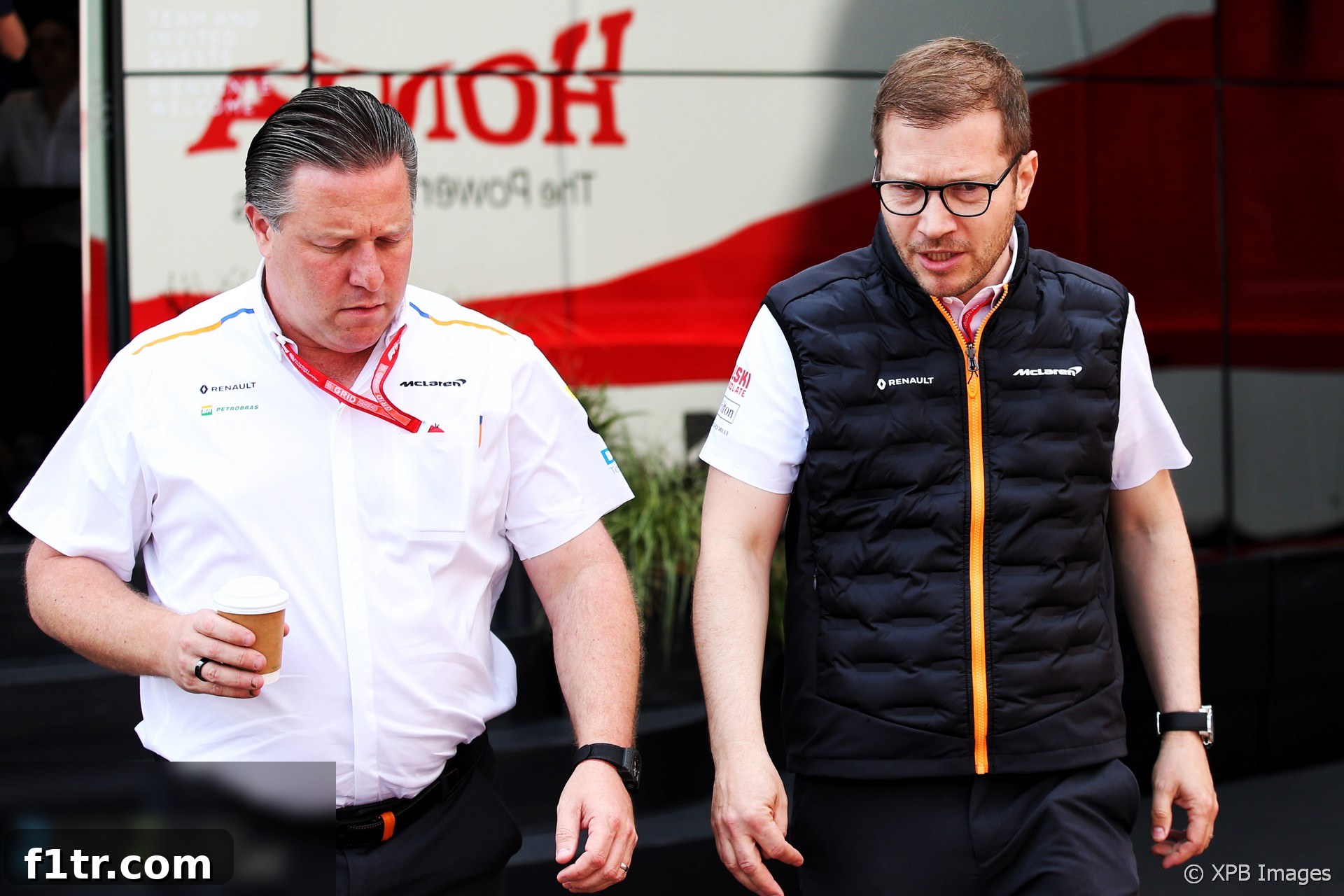
In the high-stakes world of Formula 1, financial sustainability has long been a contentious topic. Amidst ongoing discussions surrounding the sport’s future, Andreas Seidl, the esteemed Team Principal of McLaren’s F1 team, has voiced a strong opinion regarding the proposed budget cap. Seidl firmly believes that the currently tabled budget cap figure needs to be “a lot lower” to truly foster a sustainable operating environment for the majority of teams competing in the pinnacle of motorsport.
This statement from a figure of Seidl’s caliber carries considerable weight. His arrival at McLaren earlier this year, joining the team in May and navigating his initial months with the squad as they approached the French Grand Prix, marked a new chapter for the Woking-based outfit. Before taking the helm at McLaren, Seidl enjoyed an incredibly successful tenure as the boss of Porsche’s LMP1 programme. Under his leadership, Porsche achieved a remarkable hat-trick of drivers’ and constructors’ world championships, alongside securing the coveted Le Mans outright victory each year, consecutively, between 2015 and 2017. This proven track record of efficient resource management and high-performance delivery at the elite level positions him as a credible and influential voice in the budget cap debate.
Andreas Seidl: A Proven Leader at McLaren’s Helm
Andreas Seidl’s journey to the forefront of Formula 1 is a testament to his strategic prowess and engineering acumen. His most celebrated period prior to F1 was undoubtedly his leadership of Porsche’s return to top-tier endurance racing. Overseeing the 919 Hybrid LMP1 project, Seidl cultivated a culture of precision, innovation, and relentless pursuit of excellence. The string of victories, culminating in three consecutive Le Mans 24 Hours triumphs and world championship doubles from 2015 to 2017, firmly established him as one of motorsport’s most effective team principals.
This success was not merely about brute force and financial might; it was about meticulous planning, optimizing resources, and extracting maximum performance from a highly complex technical package. Such experience makes Seidl uniquely qualified to comment on the financial structures required for sustainable high-performance motorsport. His move to McLaren, a storied F1 team in the midst of its own rebuilding phase, was met with significant anticipation. Tasked with steering the team back to its former glories, Seidl brings a fresh perspective and a results-driven philosophy, which undoubtedly informs his views on the sport’s financial health.
Speaking from Canada, Seidl acknowledged the sensitive nature of the ongoing discussions. He stated, “First of all I want to mention that we have an agreement with the FIA and Formula 1 that we don’t speak about any details of what has been presented. So it’s down to them to actually speak about the figures and so on.” This adherence to confidentiality underscores the intricate and often politically charged negotiations taking place behind closed doors between the sport’s governing body, the commercial rights holder, and the ten competing teams. Despite the inability to disclose specific numbers, Seidl’s subsequent confirmation made McLaren’s position unequivocally clear.
The Imperative of an F1 Budget Cap: Ensuring Sustainability and Fair Play
The concept of a budget cap in Formula 1 is not new, but its implementation has become a critical focal point for the sport’s long-term viability. For decades, F1 has been characterized by an escalating spending arms race, primarily driven by the top teams with manufacturer backing or significant private investment. This unchecked expenditure has led to a dramatic disparity in resources, creating a two-tiered system where a handful of teams can outspend their rivals by hundreds of millions of dollars annually. The consequence is often a predictable championship battle and immense financial pressure on smaller, independent teams, some of whom struggle to simply survive season to season.
The primary objective behind introducing a budget cap is to curb this unsustainable spending spiral and create a more level playing field. By limiting the financial resources available to teams, the sport aims to reduce the barrier to entry for potential new competitors, safeguard the existence of current independent outfits, and ultimately foster a more competitive and exciting spectacle on track. It is a fundamental shift towards a business model that prioritizes long-term health over short-term financial might, aiming to transform Formula 1 into a genuinely sustainable sport and business for all stakeholders.
McLaren’s Stance: A Call for a Significantly Lower Threshold
Andreas Seidl’s strong stance reflects McLaren’s vision for a more equitable and robust Formula 1. While unable to disclose specific figures due to the aforementioned confidentiality agreement, he unequivocally confirmed that McLaren advocates for a budget cap “a lot lower” than what has been currently proposed. “I think in general we would have been in favour of the number being a lot lower,” Seidl articulated. “Because I think the objectives that have been set out, from the beginning have been to really create a sustainable sport and business. For most of the teams, I think the number has to be a lot lower but let’s see what the outcome is in the end.”
This position suggests that McLaren believes the proposed cap, while a step in the right direction, may not go far enough to achieve the stated objectives of creating a truly sustainable and competitive environment. A lower cap, from McLaren’s perspective, would have a more profound impact on bringing down operating costs across the grid, allowing smaller teams to not only survive but also invest in talent and infrastructure more effectively. It would force all teams, including the larger ones, to become more efficient, innovative, and disciplined in their spending, shifting the focus from sheer financial power to clever engineering and strategic excellence – qualities that Andreas Seidl championed so successfully at Porsche.
Navigating the 2021 Regulations: Financial Framework Takes Priority
The budget cap is an integral component of the broader 2021 regulations package, which seeks to overhaul Formula 1’s technical, sporting, and financial frameworks. The process of agreeing on these sweeping changes has been complex and protracted, involving extensive negotiations between the FIA, Formula 1, and the ten teams. In a significant development, teams unanimously agreed to delay the presentation of the comprehensive 2021 regulations to the World Motor Sport Council meeting last week. This delay was primarily driven by requests for further alterations, particularly concerning the technical and sporting rules, allowing more time for refinement and consensus building.
However, an important distinction was made regarding the financial regulations. After some initial requested alterations, the financial regulations were effectively taken out of further debate or change for the immediate future. This move signals a clear intent to finalize and present the financial framework separately and with greater urgency, with a view to having them ratified by October. This prioritization underscores the recognition that financial stability is the bedrock upon which any successful technical or sporting reforms must be built. Without a robust and enforceable budget cap, the risk of technical advantages simply being bought rather than earned through ingenuity remains ever-present, undermining the very spirit of fair competition.
Unpacking the Proposed F1 Cost Cap: $175M with Key Exclusions
As detailed in various reports, including Dieter’s column last week, the proposed ‘hard’ cost cap is set at $175 million per annum. This cap is slated to become operational from January 1, 2021, though it may be subject to minor adjustments based on the F1 calendar’s length. The introduction of a hard cap signifies a firm commitment to controlling expenditure, but its effectiveness lies in understanding what exactly falls under this limit and, crucially, what is excluded.
Specific exclusions are a critical component of the proposed cap, designed to allow teams flexibility in certain areas while strictly controlling core car development and operational costs. These exclusions include:
- Driver Salaries: The astronomical salaries commanded by top F1 drivers are not included in the $175 million cap. The rationale is to prevent teams from simply reallocating funds from driver contracts to car development, and to maintain the market value of the sport’s biggest stars.
- Salaries of the Top Three Personnel: Similar to drivers, the salaries of a team’s three highest-earning individuals (typically the Team Principal, Technical Director, and perhaps another key executive) are also excluded. This aims to protect the competitive market for elite leadership and technical talent.
- Marketing and Hospitality Costs: Expenditure directly attributable to marketing, promotional activities, and corporate hospitality is generally excluded. These are often essential for sponsors and for the commercial appeal of the sport, and controlling them too tightly could stifle revenue generation.
- Engine Costs: For customer teams, the cost of purchasing power units from engine manufacturers (like Mercedes, Ferrari, or Renault) is excluded from their cap. For manufacturer teams, the cost of developing and producing their own engines is also treated separately. This acknowledges the immense R&D investment required for engine development and ensures that engine suppliers are not unduly penalized or forced to compromise on technology.
- Non-F1 Activities: Any activities unrelated to the F1 team, such as classic car divisions or other motorsport ventures, are naturally excluded.
While these exclusions are intended to streamline the cap’s application and focus it on areas where excessive spending creates performance disparities, they also mean that the *effective* total budget for the largest teams will still significantly exceed $175 million. This nuance is precisely why teams like McLaren, through Andreas Seidl, argue that the core cap figure itself needs to be “a lot lower” to truly impact the majority of the grid and bring down overall spending.
To aid in the transition and allow both the governing body and the teams to adapt to the new financial procedures, a ‘soft’ cap will apply during 2020. This preparatory phase will enable teams to acclimatize to the reporting requirements, fine-tune their internal accounting processes, and understand the nuances of the new rules. Crucially, no penalties will be incurred for spend during this soft cap period, providing a learning curve before the hard cap comes into full force with strict enforcement and sanctions from January 2021.
The Road Ahead: A More Balanced and Sustainable Formula 1?
Andreas Seidl’s compelling argument for a lower F1 budget cap underscores a broader vision for a more competitive and financially resilient sport. McLaren, under his leadership, is advocating for reforms that would not only ensure their own long-term prosperity but also foster a healthier ecosystem for every team on the grid. The goal is clear: to shift the paradigm from an arms race of expenditure to a battle of ingenuity, efficiency, and driving talent, thereby enhancing the spectacle for fans worldwide.
The journey towards a truly sustainable Formula 1 is fraught with challenges, as conflicting interests among teams, manufacturers, and commercial stakeholders continue to shape the final regulations. However, the commitment to introducing a budget cap, even with its complexities and exclusions, represents a monumental step forward. The eventual figure and the meticulousness of its enforcement will dictate whether this reform package truly levels the playing field or merely trims the edges of the financial Goliath that F1 has become. As the sport moves closer to finalizing its 2021 framework, the calls from influential figures like Andreas Seidl serve as a vital reminder of the ultimate prize: a Formula 1 that is exciting, unpredictable, and sustainable for generations to come.