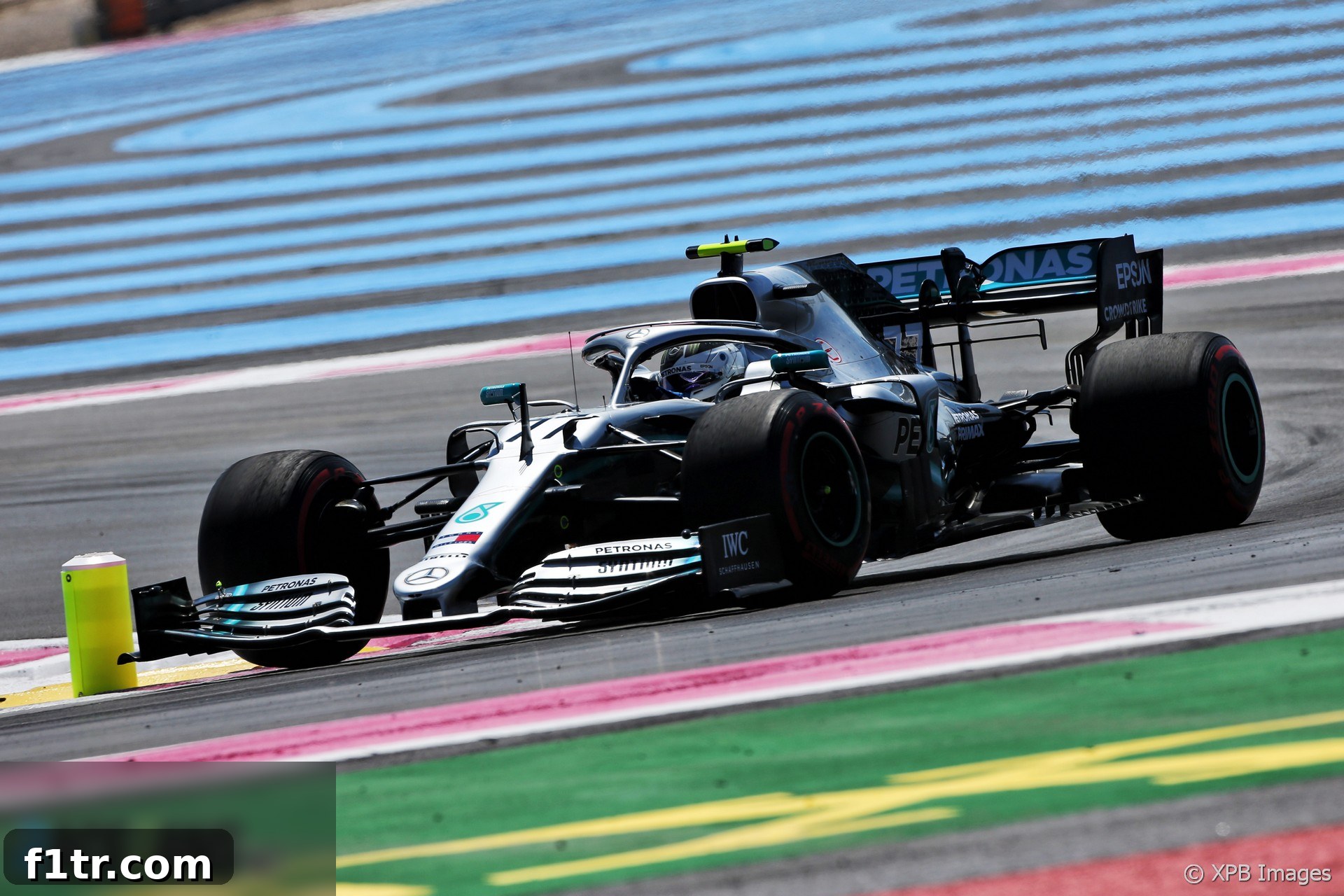
Valtteri Bottas Dominates French Grand Prix Practice 2 as Mercedes Maintains Grip
The 2019 Formula 1 season continued its high-octane drama at the iconic Paul Ricard circuit for the French Grand Prix. Following a strong showing in the first free practice session, Mercedes once again asserted its authority in the crucial second practice session. This time, it was Valtteri Bottas who sensationally seized the top spot, setting a formidable pace that underscored the Silver Arrows’ unwavering command over the field. This session was paramount for teams to fine-tune their setups, gather critical data under various fuel loads, and assess tire performance in preparation for qualifying and Sunday’s main event.
Bottas Leads Mercedes One-Two in a Statement Performance
Finnish ace Valtteri Bottas, arriving in France positioned second in the fiercely contested World Championship standings, demonstrated exceptional form and a renewed sense of confidence. He comfortably led the session with a blistering lap time of 1’30.937, outpacing his championship-leading teammate Lewis Hamilton by a significant four-tenths of a second. Bottas’s impressive effort wasn’t just quick; it was a staggering one-and-a-half seconds faster than the best time recorded on Friday during the previous year’s French Grand Prix at Paul Ricard. This significant improvement highlights both the advancements in car performance over a year and potentially the circuit’s improved grip characteristics. Such a dominant performance from Bottas clearly signals his strong intent to close the gap in the drivers’ championship and firmly stake his claim as a serious contender for the 2019 title.
The Mercedes W10’s outright speed and impeccable balance around the demanding corners of Paul Ricard were evident throughout the session. Mercedes’ unparalleled ability to extract maximum performance from both of its drivers, even as Hamilton encountered various hurdles, further cemented their status as the team to beat. The combination of long, high-speed straights and technically challenging, sweeping turns unique to the Paul Ricard circuit seemed to perfectly suit the aerodynamic efficiency and potent power unit of the Mercedes package, allowing them to stretch their advantage over the rest of the grid. Drivers were constantly pushing the limits, making every lap count in their quest for optimal car setup and ultimate performance before the pivotal qualifying session.
Hamilton’s Session Marred by Spin and Technical Glitches
Despite Mercedes’ overarching supremacy in the session, Lewis Hamilton’s Friday afternoon was not without its moments of drama and unexpected technical setbacks. As he commenced his critical qualifying simulation run, aiming to challenge Bottas’s impressive benchmark, Hamilton experienced a sudden half-spin at the notoriously tricky Turn 4. The incident saw his car slide wide, inadvertently taking out a bollard strategically positioned at the apex of the corner. While he skillfully managed to regain control and rejoin the track without major damage, the misstep certainly cost him valuable track time and momentarily disrupted his rhythm during a crucial phase of practice. The incident also had a ripple effect on another competitor on track.
Upon rejoining the circuit, Hamilton’s movement seemingly impeded Max Verstappen, who was rapidly approaching in his Red Bull. The Dutch driver, appearing to take immediate evasive action, subsequently ran off the circuit at the following Turn 5. This interaction immediately caught the attention of the vigilant race stewards, who promptly announced they would thoroughly investigate the incident after the session concluded. Such close calls and track incidents are always carefully scrutinized to ensure fair play and driver safety, and any potential penalties could have significant implications for Sunday’s starting grid. These fine margins and high-pressure situations are an intrinsic part of competitive Formula 1.
Further compounding Hamilton’s challenges, his dedicated Mercedes team discovered a misfire on his car upon his return to the pits. Although the technical issue was eventually diagnosed and remedied by the skilled Mercedes engineers, it regrettably cost the reigning world champion additional, crucial track time. In a practice session where every lap is vital for data collection, setup validation, and long-run simulations, any interruption can be profoundly costly. However, Hamilton’s vast experience and the team’s swift and efficient response minimized the long-term impact, allowing him to get back out on track and continue his program, albeit having lost some valuable running compared to his teammate.
Paul Ricard’s Demands: Extreme Heat and Tricky Conditions Test All Drivers
The Paul Ricard circuit, known for its sprawling run-off areas and unique layout, presented a formidable challenge to all drivers and teams during Free Practice 2. This challenge was significantly exacerbated by the prevailing weather conditions; tricky track characteristics, combined with punishing track temperatures soaring to a scorching 55 degrees Celsius, tested the very limits of both machinery and human endurance. Such elevated temperatures significantly affect tire performance across all compounds, leading to increased degradation, thermal stress, and making it considerably harder for drivers to maintain consistent grip levels throughout their extended runs. This often translates into more drivers making uncharacteristic mistakes and running wide, as was observed frequently throughout the session.
The circuit’s distinctive layout, featuring a mix of high-speed straights, various corner radii, and technically demanding chicane sections, requires a perfectly balanced car setup. The high track temperatures further accentuated the importance of meticulous tire management, optimal aerodynamic configuration, and precise brake cooling. Engineers were observed constantly monitoring live data, attempting to find that delicate balance between outright single-lap speed and crucial tire longevity – a factor that will undoubtedly be critical for race strategy on Sunday. The conditions served as a true barometer of car and driver capability, ensuring that only those who could master these demanding elements would truly succeed at the French Grand Prix.
Ferrari Trails While McLaren Delivers a Shocking Midfield Performance
Ferrari, often regarded as Mercedes’ closest rival and a perennial championship contender, found themselves trailing the Silver Arrows by a substantial margin in FP2, albeit only in a relative sense. Both Charles Leclerc and Sebastian Vettel were over six-tenths of a second slower than Hamilton’s time, indicating a significant performance gap that the Scuderia would desperately need to address before Saturday’s all-important qualifying session. While they commendably held the third and fourth fastest times, their inability to genuinely match Mercedes’ outright pace in a straight fight suggests ongoing challenges in extracting maximum performance from their SF90, especially under these high-temperature conditions. Tyre strategy, overall car balance, and finding the optimum operating window for their tires appeared to be areas of significant concern for the Italian outfit, as they continued their determined pursuit of closing the performance deficit to their dominant German rivals.
In a surprising and highly encouraging turn of events for the midfield, the next-fastest driver wasn’t from the expected Red Bull camp but rather a resurgent McLaren. Young British sensation Lando Norris delivered an outstanding performance, securing a remarkable fifth-fastest time for McLaren. His impressive lap came after he was one of the last drivers to strategically switch from the more durable medium compound tires to the grippier, but significantly more fragile, softs. This shrewd strategic timing, combined with Norris’s undeniable talent and consistent driving, allowed him to relegate the formidable Max Verstappen to sixth place. Adding to McLaren’s stellar day, Carlos Sainz Jnr also put in a strong showing, placing his car ahead of Red Bull’s Pierre Gasly, securing seventh place and emphatically underlining McLaren’s significant progress and resurgence in the fiercely competitive midfield battle. This performance indicates a potential shift in the pecking order and promises a strong weekend ahead for the Woking-based team, delighting their fans and signaling a bright future.
Midfield Scrambles, Haas’s Struggles, and the Rest of the Pack
The top 10 positions were rounded out by experienced campaigners Kimi Raikkonen in his Alfa Romeo and Kevin Magnussen for Haas. Raikkonen continued to demonstrate his trademark consistent performance and race craft, placing his Alfa Romeo-Ferrari in ninth position, a testament to his enduring skill and the team’s incremental yet steady improvements. Antonio Giovinazzi, in the sister Alfa Romeo, also performed admirably to secure 11th position, narrowly missing out on the coveted top ten by a mere two-tenths of a second, highlighting the tight competition.
However, it was a particularly torrid and frustrating time for the other Haas driver, local hero Romain Grosjean. The Frenchman endured a session filled with numerous complaints about his tires being broadcast audibly over team radio, indicating significant struggles with grip and balance. His difficulties were vividly evident in his ultimate position, finishing a lowly 17th fastest and a considerable eight-tenths of a second slower than his teammate Magnussen. This significant performance gap within the same team suggests deeper issues with car setup or specific tire management challenges that Grosjean faced, highlighting the immense pressure on drivers to extract maximum performance from their machines in every session, especially on home soil.
Other notable performances in the extended midfield included Daniel Ricciardo and Nico Hulkenberg for Renault, who both finished just outside the top 10, indicating their ongoing fight for consistency and improved performance. The Toro Rosso drivers, Alexander Albon and Daniil Kvyat, showed promising pace, while the Racing Point duo of Sergio Perez and Lance Stroll continued to grapple with their car’s balance and setup. At the very back of the grid, the Williams team, with George Russell and Robert Kubica, continued their arduous development work, focusing primarily on gathering crucial data for future improvements rather than outright pace.
Official Second Practice Session Results: 2019 French Grand Prix
| Pos. | No. | Driver | Car | Best lap | Gap | Laps |
|---|---|---|---|---|---|---|
| 1 | 77 | Valtteri Bottas | Mercedes | 1’30.937 | 34 | |
| 2 | 44 | Lewis Hamilton | Mercedes | 1’31.361 | 0.424 | 25 |
| 3 | 16 | Charles Leclerc | Ferrari | 1’31.586 | 0.649 | 31 |
| 4 | 5 | Sebastian Vettel | Ferrari | 1’31.665 | 0.728 | 32 |
| 5 | 4 | Lando Norris | McLaren-Renault | 1’31.882 | 0.945 | 31 |
| 6 | 33 | Max Verstappen | Red Bull-Honda | 1’32.049 | 1.112 | 29 |
| 7 | 55 | Carlos Sainz Jnr | McLaren-Renault | 1’32.432 | 1.495 | 27 |
| 8 | 10 | Pierre Gasly | Red Bull-Honda | 1’32.448 | 1.511 | 29 |
| 9 | 7 | Kimi Raikkonen | Alfa Romeo-Ferrari | 1’32.677 | 1.740 | 34 |
| 10 | 20 | Kevin Magnussen | Haas-Ferrari | 1’32.789 | 1.852 | 30 |
| 11 | 99 | Antonio Giovinazzi | Alfa Romeo-Ferrari | 1’32.973 | 2.036 | 34 |
| 12 | 3 | Daniel Ricciardo | Renault | 1’33.020 | 2.083 | 34 |
| 13 | 23 | Alexander Albon | Toro Rosso-Honda | 1’33.023 | 2.086 | 35 |
| 14 | 27 | Nico Hulkenberg | Renault | 1’33.081 | 2.144 | 32 |
| 15 | 26 | Daniil Kvyat | Toro Rosso-Honda | 1’33.254 | 2.317 | 37 |
| 16 | 11 | Sergio Perez | Racing Point-Mercedes | 1’33.300 | 2.363 | 30 |
| 17 | 8 | Romain Grosjean | Haas-Ferrari | 1’33.591 | 2.654 | 27 |
| 18 | 18 | Lance Stroll | Racing Point-Mercedes | 1’33.884 | 2.947 | 32 |
| 19 | 63 | George Russell | Williams-Mercedes | 1’34.614 | 3.677 | 33 |
| 20 | 88 | Robert Kubica | Williams-Mercedes | 1’35.195 | 4.258 | 32 |
Second Practice Visual Gaps
Valtteri Bottas – 1’30.937
+0.424 Lewis Hamilton – 1’31.361
+0.649 Charles Leclerc – 1’31.586
+0.728 Sebastian Vettel – 1’31.665
+0.945 Lando Norris – 1’31.882
+1.112 Max Verstappen – 1’32.049
+1.495 Carlos Sainz Jnr – 1’32.432
+1.511 Pierre Gasly – 1’32.448
+1.740 Kimi Raikkonen – 1’32.677
+1.852 Kevin Magnussen – 1’32.789
+2.036 Antonio Giovinazzi – 1’32.973
+2.083 Daniel Ricciardo – 1’33.020
+2.086 Alexander Albon – 1’33.023
+2.144 Nico Hulkenberg – 1’33.081
+2.317 Daniil Kvyat – 1’33.254
+2.363 Sergio Perez – 1’33.300
+2.654 Romain Grosjean – 1’33.591
+2.947 Lance Stroll – 1’33.884
+3.677 George Russell – 1’34.614
+4.258 Robert Kubica – 1’35.195
Drivers more than ten seconds off the pace are omitted for clarity in this visual representation.
Anticipating Qualifying and Race Day at Paul Ricard
As the second practice session concluded, the paddock was left with much to ponder and analyze. Valtteri Bottas’s exceptional pace and comfortable lead firmly position him as a strong contender for pole position, potentially setting up a thrilling intra-team battle with Lewis Hamilton, provided the latter can iron out his technical issues and avoid further incidents. Mercedes’ overall performance continues to suggest they remain the benchmark team, a familiar sight in the dominant 2019 Formula 1 season.
Ferrari faces a significant challenge to close the performance gap to Mercedes, and their engineers will undoubtedly be working tirelessly overnight to find the crucial tenths of a second needed to genuinely compete at the very front. The surprising and impressive form of McLaren, led by the rising star Lando Norris, adds an exciting dynamic to the midfield, promising intense competition for the highly sought-after ‘best-of-the-rest’ position. Red Bull, with Max Verstappen, will also be looking to make considerable improvements, particularly in light of the stewards’ investigation into his incident with Hamilton, which could affect his starting position.
The challenging conditions at Paul Ricard, especially the persistently high track temperatures, mean that meticulous tire management and shrewd strategic choices will be absolutely paramount come race day. All eyes now turn to Saturday’s Free Practice 3 session, where teams will finalize their setups, followed by the all-important qualifying session, where the grid for the 2019 French Grand Prix will be determined. The stakes are undeniably high, and the thrilling battle for supremacy at Paul Ricard is far from over.
Related Articles: 2019 French Grand Prix
- 2019 French Grand Prix Star Performers
- Top ten pictures from the 2019 French Grand Prix
- Hamilton urges change in F1 after supreme display in France
- Mercedes poised to equal McLaren’s 31-year-old consecutive wins record
- Paddock Diary: French Grand Prix day four
Browse all 2019 French Grand Prix articles