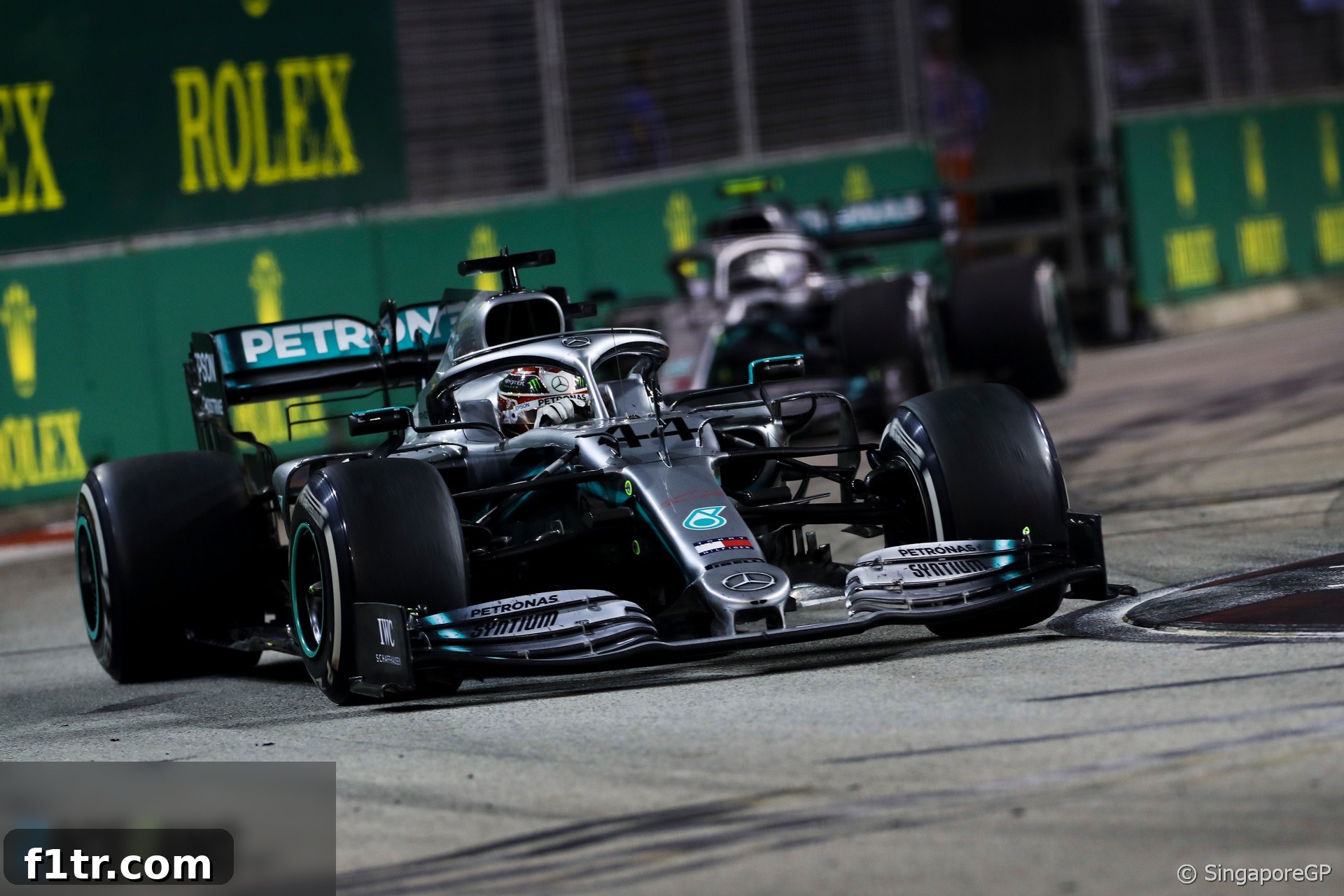
Valtteri Bottas’s Stance on Mercedes Team Orders at the Singapore Grand Prix
In a candid reflection on a pivotal moment in the Formula 1 season, Valtteri Bottas has shared his perspective on the controversial team orders issued by Mercedes during the Singapore Grand Prix. The Finnish driver confirmed his understanding of the strategic decision that required him to slow his pace, thereby preventing him from overtaking his teammate, Lewis Hamilton, during the crucial pit stop phase of the race. This incident ignited considerable debate among fans and pundits, highlighting the complex interplay between individual driver ambition and overarching team objectives in the high-stakes world of Formula 1.
The 2019 Singapore Grand Prix was a race filled with strategic intrigue and unexpected outcomes. While Ferrari secured a surprise 1-2 finish, much of the post-race discussion centered on Mercedes’ internal dynamics, particularly the instruction given to Bottas. For many, such an order, especially one that dictates a driver to slow down, runs counter to the very spirit of racing. However, from Mercedes’ perspective, it was a calculated move aimed at maximizing their championship prospects, ensuring Hamilton maintained his advantage over key rivals and preserving constructor points. This decision, while strategically sound for the team, placed Bottas in an ethically challenging position, forcing him to prioritize team success over his inherent competitive drive.
The Driver’s Dilemma: Valtteri Bottas on Team Priority and Personal Instinct
Advert | Become a Supporter & go ad-free
When questioned about whether Mercedes should have allowed him to challenge Hamilton, especially after Bottas had played a crucial role in helping his teammate stay ahead of competitors like Alexander Albon by managing his pace, Bottas offered a pragmatic view. He acknowledged the long-standing protocol within the team: “No because the car ahead before the pit stops has the priority in any case, always.” This statement underscores a fundamental principle often employed by top F1 teams, particularly when a championship battle is underway. It’s a policy designed to streamline strategy and avoid internal conflicts that could jeopardize overall team success, ensuring a clear hierarchy when strategic calls are made.
Bottas was adamant that this rule is applied universally within Mercedes, regardless of which driver is leading. He stressed that the same scenario would unfold if he were in Hamilton’s position, leading the race, reinforcing his belief in the team’s commitment to fairness, even if it presents a difficult personal challenge:
I know it will be the same if it’s vice-versa. I will make sure it will be the same vice-versa and I trust it will be.
But obviously from outside it looks pretty bad. And obviously from my side being in that situation is completely against your instinct to back off not to overtake your team mate. It doesn’t make any sense.
But it’s been there that kind of the rule since I don’t know how long in the team, at least since I joined so. But it is both ways, it’s just not for Lewis. It’s always so.
This candid admission reveals the immense personal challenge faced by drivers under such circumstances. For a racing driver, whose very essence is to compete and win, deliberately slowing down to allow a teammate to gain an advantage goes against every competitive instinct. It’s a testament to Bottas’s professionalism and understanding of his role within the team’s broader objectives, even when it means sacrificing his own immediate racing ambitions. The perception “from outside” is indeed often critical, as fans yearn for pure, unadulterated racing without interference, contrasting sharply with the strategic realities that define a modern F1 season.
The “vice-versa” assertion is critical for team harmony. If Bottas truly believes the roles would be reversed and Hamilton would follow the same protocol, it fosters a sense of fairness and trust, crucial elements for a successful partnership in a highly competitive environment. This unwritten rule, a cornerstone of Mercedes’ strategy for years, dictates that the leading car, especially during critical phases like pit stop windows, maintains its strategic priority. This approach aims to minimize variables and maximize the team’s chances of securing maximum points, often with one driver as the designated “lead” in the championship fight. Bottas’s acceptance, despite the internal conflict it causes, highlights the mental fortitude required to be a successful F1 driver operating within a team structure.
Quotes: Dieter Rencken
Advert | Become a RaceFans supporter andgo ad-free
Social Media Buzz and Fan Reactions to F1 Team Orders
The digital age ensures that every controversial decision in Formula 1 is immediately amplified across social media platforms. Team orders, particularly those that impact race outcomes, invariably spark intense debates among the global F1 fanbase. Discussions rage on platforms like Twitter and Instagram, with fans expressing everything from outrage and disappointment to understanding and strategic analysis. While some champion the purity of racing and demand unfettered competition, others recognize the strategic realities and championship imperatives that often drive such decisions, weighing the balance between individual glory and team success.
pic.twitter.com/LJ0SOBsE2C
— Lando Norris (@LandoNorris) September 23, 2019
Posts from drivers and teams often add to the conversation, sometimes subtly, sometimes directly. Even a simple image, like the one posted by Lando Norris after the Singapore GP, can resonate with fans, offering a glimpse into the paddock’s atmosphere or a driver’s mood without explicitly stating a position. These social media interactions form a vital part of the F1 ecosystem, allowing fans to engage directly with the sport and its personalities, sharing immediate reactions and shaping the narrative around key moments, influencing public opinion and driver perception.
- Find more official F1 accounts to follow in the F1 Twitter Directory
F1 Paddock Insights: News and Developments from Around the Grid
Beyond the immediate controversies of team orders, the world of Formula 1 is constantly buzzing with news, technical developments, and strategic discussions. The Singapore Grand Prix, despite its internal Mercedes drama, also provided a backdrop for other significant stories from across the paddock, offering a broader view of the sport’s health and future trajectory. These diverse news items highlight the multi-faceted nature of F1, encompassing driver performance, commercial relationships, talent development, and technological transfer.
Verstappen: ‘Wake-up call’ for Red Bull (Sky Sports)
Max Verstappen’s assessment of Red Bull’s performance in Singapore served as a stark reminder of the relentless pursuit of perfection in F1. Despite often being a strong contender, Verstappen openly stated, “Not good enough. We came here to win and clearly didn’t. I would say it’s a little wake-up call.” This reflects the high expectations within top teams and the immediate, sometimes harsh, self-analysis that follows every race. Such candid feedback from a lead driver underscores the constant pressure to perform and the ongoing efforts to address shortcomings to stay competitive at the pinnacle of motorsport, even when a podium finish is achieved.
Sky Sports Happy with ‘Extraordinary’ F1 Relationship (Motorsport Broadcasting)
The commercial landscape of Formula 1 is as dynamic as its on-track action. Major broadcasters like Sky Sports play a crucial role in bringing the sport to millions globally. This insight into their relationship with F1 highlights the complexities of long-term broadcasting rights, especially with significant regulatory and technical changes on the horizon for future seasons. The uncertainty surrounding “what we bought for 2021 onwards” underscores the challenging nature of investing in a sport undergoing potential transformative periods, from new car designs to engine regulations, and how these changes impact the long-term viability of media partnerships.
Lundgaard Debuts in F1 Machinery (FIA Formula 3)
The journey from junior categories to Formula 1 is a dream for many aspiring drivers, representing the pinnacle of motorsport ambition. Christian Lundgaard’s debut in F1 machinery marked a significant milestone in his career development, a crucial step for any young talent. His initial impressions, “I felt comfortable straight away, which was pleasing. It was unbelievable driving down the straight for the first time and then feeling the brake power the car has,” beautifully capture the awe and exhilaration of experiencing the raw power and sophistication of an F1 car for the first time. Such test opportunities are vital for nurturing future talent, providing invaluable experience and data for teams assessing their next generation of drivers.
Aviation Innovation: Williams Advanced Engineering’s Partnership for New Aircraft Seat (Williams F1)
Formula 1’s technological prowess extends far beyond the racetrack, with teams often leveraging their expertise in advanced engineering for other industries. Williams F1’s collaboration with Airbus and British Airways on an innovative new aircraft seat exemplifies this transfer of technology. The focus on creating lighter products aims to combat significant carbon emissions and yield substantial annual savings for airlines. This demonstrates how F1’s relentless drive for efficiency, lightweighting, and aerodynamic excellence, developed through years of intense competition, can contribute to broader sustainability goals and industrial innovation, showcasing the diverse impact of motorsport research and development on everyday life and other high-tech sectors.
We always endeavour to credit original sources. If you have a tip for a link to feature in the next RaceFans round-up please send it in via the contact form.
Advert | Become a RaceFans supporter andgo ad-free
Fan’s Voice: The Ongoing Debate on F1 Team Orders
The discussion surrounding team orders in Formula 1 is a perennial one, often polarizing the fanbase. While teams argue for strategic necessity, citing championship ambitions and constructor points, many fans view such interventions as detrimental to the sport’s integrity and the thrill of pure racing. The incident involving Bottas and Hamilton in Singapore reignited this passionate debate, with many echoing sentiments like the one expressed below, reflecting a desire for unadulterated competition.
Regarding the Bottas call I absolutely loathe hearing a team telling a driver to drive slower. Absolutely disgusts me. That’s not racing it’s pure management interference. I’ve been wanting so much to see Vettel win a race this season after messing up chances so far but not this way. Didn’t feel good at all.
Was kinda really hoping Vettel would show consistency here and reverse the 1st and 2nd car position boards like he did in Canada. That would shown pure class and a sense of humor. Plus Leclerc would no doubt be mightily impressed.
@Sloppysmusic
This comment encapsulates the frustration felt by a significant portion of the F1 community. For these fans, the sport should prioritize uninhibited competition, where drivers are free to battle for every position without external directives. The idea of “pure management interference” strikes a chord, as it suggests an artificial manipulation of the race outcome, diminishing the spectacle and authenticity of motorsport. The reference to Sebastian Vettel and Charles Leclerc highlights a desire for drivers to challenge each other, even within the same team, showcasing skill and genuine racing prowess rather than adhering to strategic dictates, which many believe undermines the very essence of competition.
The emotional investment of fans in their chosen sport means that decisions perceived as unfair or anti-competitive often lead to strong reactions. While team principals and strategists are tasked with securing the best possible outcome for their constructors and championship contenders, the delicate balance between sporting integrity and strategic advantage will always be a source of tension and fervent discussion among the dedicated followers of Formula 1, proving that the human element of racing extends far beyond the cockpit.
Engaging with the F1 Community: Forum Discussions and Future Speculations
The passion of Formula 1 fans extends far beyond race weekends, finding a vibrant outlet in online forums and community discussions. These platforms provide a dedicated space for enthusiasts to delve deeper into various aspects of the sport, from dissecting intricate race strategies and technical regulations to speculating on future developments and hypothetical driver lineups. The collaborative environment allows for a diverse range of opinions and insights, enriching the overall fan experience by fostering a sense of shared community and collective engagement.
- New F1 team Panthera could arrive in 2021 – who should drive for them?
One such intriguing topic that often sparks lively debate is the prospect of new teams entering the grid and the hypothetical driver pairings that might emerge. Discussions around potential new entrants like “Panthera” and the speculative selection of drivers highlight the fans’ keen interest in the sport’s evolution and their imaginative engagement with its future. These forum discussions are a testament to the enduring appeal of F1 and the strong sense of community it fosters, demonstrating how fans actively participate in shaping the narrative and future aspirations of their beloved sport.
Celebrating Milestones: Happy Birthday to F1 Enthusiasts!
The global Formula 1 family is built on a shared passion, and within this vast and dedicated community, individual celebrations are also recognized. It’s a small but heartwarming tradition to acknowledge the birthdays of dedicated fans and contributors, fostering a sense of camaraderie and personal connection that extends beyond the competitive drama on the track. This practice reinforces the idea that F1 is not just a sport, but a community.
Happy birthday to Christian Mateus, Selidor and Michael!
If you want a birthday shout-out tell us when yours is via the contact form or adding to the list here.
F1 Rewind: On This Day in Motorsport History
Formula 1’s rich history is filled with iconic moments, dramatic races, and unforgettable controversies that have shaped its legendary status. Looking back at key events that occurred “on this day” provides a fascinating glimpse into the sport’s storied past, reminding us of the legends and the legendary incidents that have defined F1 through the decades. These historical footnotes add depth and context to the ongoing narrative of the sport.
- 30 years ago today Gerhard Berger won a highly controversial Portuguese Grand Prix: Ayrton Senna collided with Nigel Mansell, who was being shown a black flag at the time for reversing in the pit lane. This particular incident stands out as a prime example of the intense rivalries, unpredictable nature, and occasional rule-breaking that have characterized F1 racing. It involved infractions and penalties that dramatically altered the race outcome, adding layers of drama to an already thrilling championship battle between titans of the sport. Such moments become etched in the annals of F1 history, remembered for their controversy, the personalities involved, and their lasting impact on the sport’s narrative.