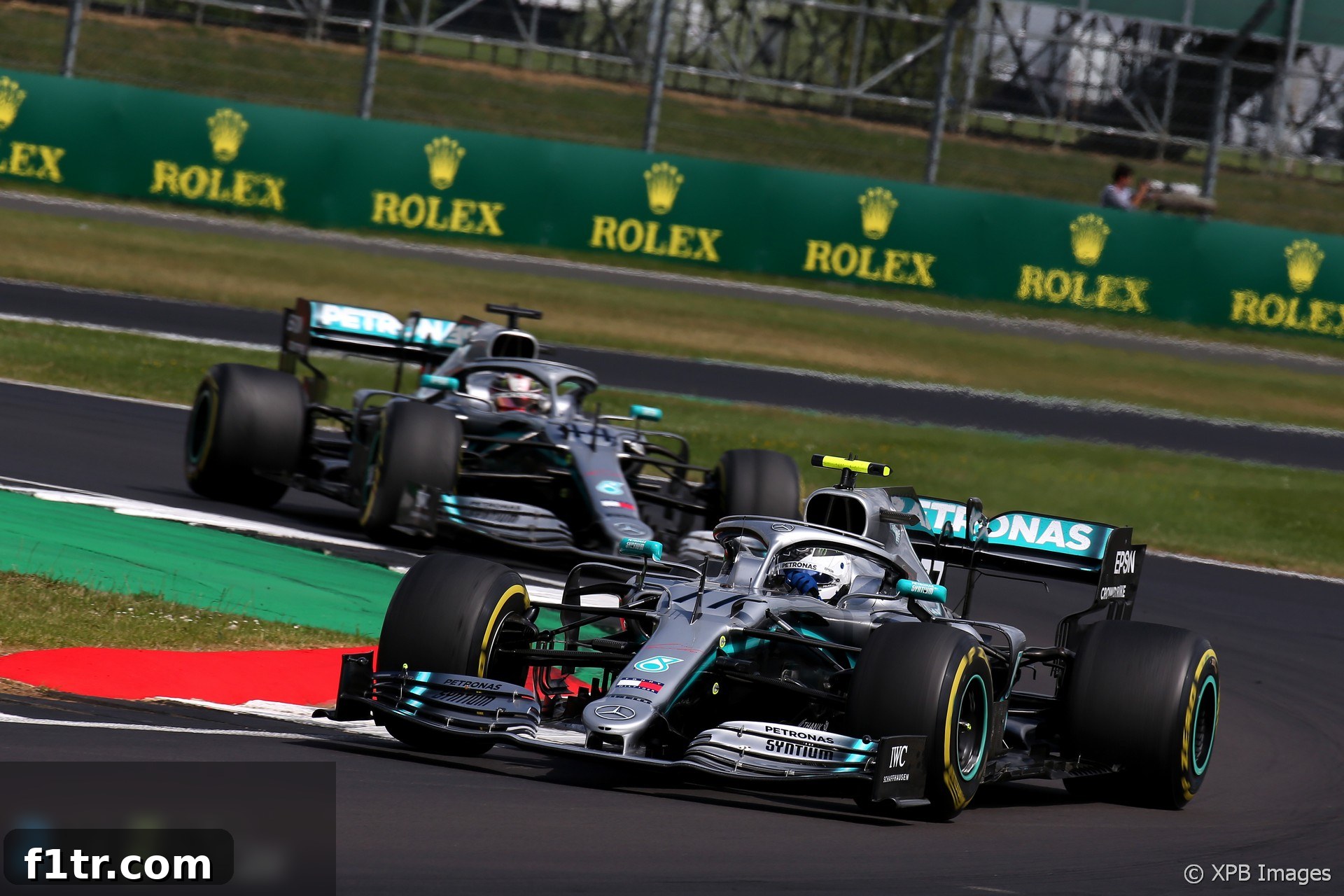
Valtteri Bottas: “I Had the Pace to Win” – The Strategic Miss at the 2019 British Grand Prix
Valtteri Bottas expressed strong conviction that he possessed the raw pace and skill required to clinch victory at the 2019 British Grand Prix. However, his aspirations were ultimately thwarted by a fixed two-stop strategy, a decision he believes cost him the top step of the podium against his teammate, Lewis Hamilton, who successfully transitioned to a winning one-stop approach.
The Finnish driver’s post-race reflections painted a picture of frustration, acknowledging the fine margins and unforeseen circumstances that can dictate the outcome of a Formula 1 race. While praising his own performance and the thrill of battling Hamilton on track, Bottas couldn’t shake the feeling that he was denied a well-deserved win due to strategic inflexibility and a stroke of bad luck.
Advert | Become a Supporter & go ad-free
The Pre-Race Strategic Landscape: A Two-Stop Consensus
Before the lights went out at Silverstone, the Mercedes-AMG Petronas F1 Team, like all competitors, conducted extensive simulations and analyses to determine the optimal race strategy. Bottas revealed that their pre-race models overwhelmingly pointed towards a two-stop strategy as the fastest route to the checkered flag. The primary reason for this consensus was the team’s belief that a one-stop race would be significantly slower and hence, not a viable option for victory.
“Approaching the race we had no concerns on the flexibility because we thought one-stop would be a lot slower than a two-stop,” Bottas explained, outlining the foundational belief that guided their initial strategy. The theoretical quickest way to complete the race, based on their data, involved a medium-medium-hard tyre compound sequence. This suggested a preference for the softer compounds in the early stages, with the expectation that the harder tyre would not deliver optimal performance.
This early assessment, however, proved to be fundamentally flawed. The race conditions, combined with the characteristics of the new Tarmac at Silverstone, presented an unexpected twist. The medium-hard combination, initially discounted, would ultimately become the winning formula, underscoring the dynamic and unpredictable nature of Formula 1 strategy.
The Safety Car: A Game-Changer for Hamilton
The pivotal moment in the British Grand Prix that irrevocably altered the strategic landscape came with the deployment of the Safety Car. This neutralisation of the race created a unique window of opportunity, particularly for Lewis Hamilton. Hamilton capitalized on this period to make a pit stop, switching to the durable hard compound tyre. This move proved to be a masterstroke, enabling him to complete the remainder of the race on a single set of tyres.
For Bottas, however, the Safety Car period offered no such advantage. Having already committed to a sequence of medium-compound tyres for his first two stints, he was effectively “locked into” a two-stop strategy. The regulations mandate that drivers must use at least two different dry tyre compounds during a race. By running medium-medium, Bottas still needed to use another compound, meaning a third stop was inevitable to comply with the rules and utilize the hard tyre. This pre-existing tyre usage prevented him from emulating Hamilton’s strategic pivot.
Bottas later revealed that he only pitted for a third set of tyres right at the very end of the race, purely to meet the mandatory two-compound rule, as his original strategy necessitated it. Mercedes’ internal simulations had initially shown “not much difference” between the two drivers’ intended strategies, implying that both paths seemed viable on paper. Yet, as the race unfolded, “it obviously proved out Lewis in the end was on the best strategy,” Bottas conceded, highlighting the stark contrast in outcomes.
The Unexpected Performance of the Hard Tyre
A significant factor in Hamilton’s strategic success was the unexpectedly strong performance of the hard compound tyre. Heading into the event, the consensus within the paddock, including the Mercedes camp, was that the hard tyre would not be the ideal choice for Silverstone’s new Tarmac. This assessment was based on extensive data from previous weekends and winter testing, which often indicates how different compounds will behave.
“Coming to the event we all have one set of the hards and that’s all based on all the analysis from the weekends before [and] winter testing that it would be not the ideal tyre to be on,” Bottas explained, detailing the team’s rationale. However, the track conditions on race day, possibly influenced by temperature changes or the specific abrasive characteristics of the new surface, allowed the hard tyre to deliver far more grip and longevity than anticipated. Hamilton’s ability to run on this durable compound before Bottas and exploit its surprising resilience was a critical differentiator.
This revelation meant that while Bottas found himself needing to make an additional stop, Hamilton, already on the hard tyre, could simply carry on, maintaining his track position and extending his lead. This confluence of the Safety Car timing and the unforeseen tyre performance created a “double unlucky” scenario for Bottas, solidifying his strategic disadvantage.
Bottas’s Undeterred Confidence: “I Could Have Won Today”
Despite the strategic setback and the ultimate loss of the lead, Valtteri Bottas remained remarkably confident in his own driving prowess and the inherent speed of his Mercedes W10. He firmly believes that, on an equal footing, he had the capability to defeat Hamilton and claim the victory.
“The pace was good,” he stated emphatically. “Obviously quickest [in qualifying] which is always nice.” Bottas had indeed secured pole position, demonstrating his raw speed over one lap. He felt this strong qualifying form translated directly into his race performance. “The race pace was there. We had some good battles on track with Lewis which I really enjoyed.” This direct competition and the wheel-to-wheel action further solidified his belief that he was a genuine contender.
“Honestly I think with the pace I had I could have won today,” Bottas asserted, his conviction unwavering. He acknowledged that it “would have been a hard battle for sure towards the end of the race,” implying a thrilling contest between the two teammates. However, the potential for such a battle, and his belief in his ability to emerge victorious, remained a significant “positive” to take away from an otherwise frustrating race.
Strategic Learnings and the Fine Margins of F1
The 2019 British Grand Prix served as a potent reminder of the critical role strategy plays in Formula 1 and how quickly pre-race predictions can be rendered obsolete. The Mercedes team, despite its dominance, learned valuable lessons about adaptability and real-time decision-making in the face of evolving track conditions and race incidents. The unexpected durability of the hard tyre on the new Silverstone Tarmac highlighted the need for teams to remain flexible and open to revising their plans, even when initial data suggests otherwise.
For Valtteri Bottas, the race was a bittersweet experience. He showcased immense speed and fighting spirit, engaging in thrilling duels with his championship rival. Yet, the strategic cards dealt to him meant he was playing a different game, ultimately leaving him to ponder what could have been. His performance reinforced his status as a formidable driver, capable of challenging for wins, but also underscored the brutal reality that sometimes, even with blistering pace, victory can slip away due to factors beyond a driver’s immediate control.
The 2019 season saw an intense battle between Bottas and Hamilton, and this race, while a win for Hamilton, was a stark illustration of the strategic intricacies that often decide championships. Bottas’s claim of having the pace to win was not merely an excuse, but a testament to his belief in his abilities and a clear message that he was a force to be reckoned with, regardless of the strategic hand he was dealt.
Advert | Become a RaceFans supporter andgo ad-free
2019 F1 Season Insights and Related Articles
- Crying in the Melbourne car park at 2019 grand prix was my career low – Ocon
- McLaren Racing reports reduced £71 million loss in 2019
- Kvyat: Hockenheim podium last year was “my biggest achievement” so far
- How the FIA’s new encrypted fuel flow meter targets Ferrari’s suspected ‘aliasing’ trick
- “He smashed my office door”: 23 must-see moments from ‘Drive to Survive’ season two
Browse all 2019 F1 season articles